 Written and reviewed by Dr. Vaishnavi Karmawat, B.V.Sc. & A.H., Registered Veterinary Practitioner
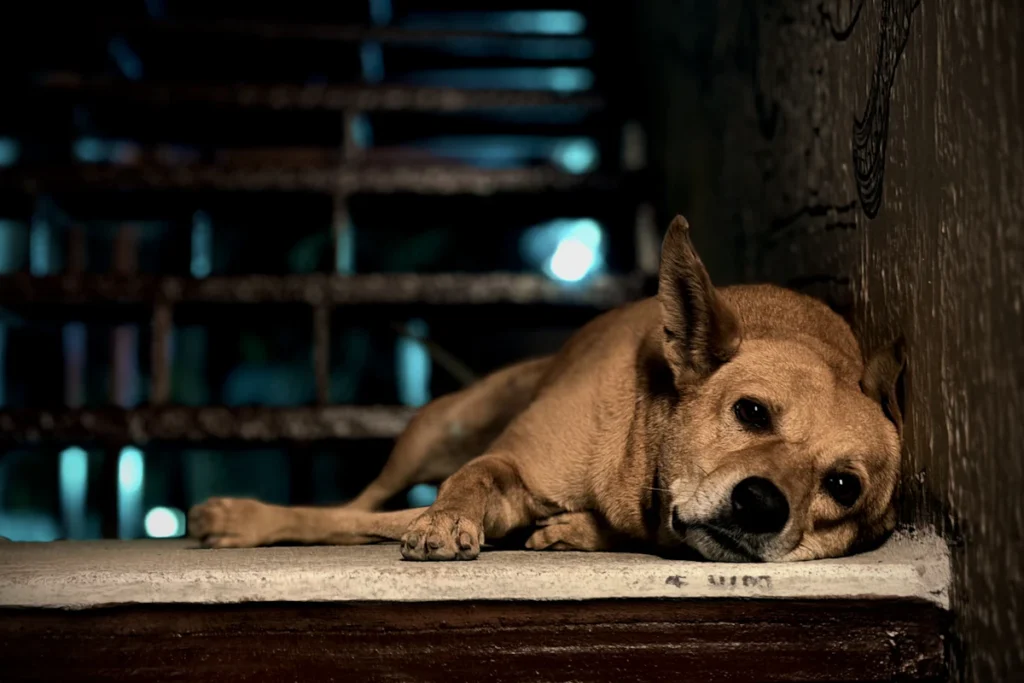
Short answer: pancreatitis is painful inflammation of the pancreas. In Indian homes it often follows a fatty meal: leftover biryani, mutton curry, ghee-laden sweets during festivals, or fried snacks. Typical signs are repeated vomiting, belly pain, refusing food, and sometimes a “praying” posture with the front end down and the rear raised. Mild cases recover in a few days with treatment, but severe pancreatitis can be life-threatening, so a dog that keeps vomiting and seems painful needs a vet the same day.
In this article
- What the pancreas does
- Acute vs chronic pancreatitis
- Causes and risk factors
- Symptoms
- How vets diagnose pancreatitis
- Treatment
- Feeding after pancreatitis
- Preventing pancreatitis
- Complications and outlook
- Pancreatitis in cats
- Lab tests explained
- Frequently asked questions
- When to call a vet
- Related Articles
- References
Key takeaways
- The pancreas makes digestive enzymes and insulin. In pancreatitis, enzymes activate too early and start digesting the pancreas and nearby tissue.
- High-fat food, obesity, certain breeds (Miniature Schnauzer, Cocker Spaniel, Yorkshire Terrier), hormonal diseases and some drugs increase the risk. Often no single cause is found.
- Diagnosis combines signs, a pancreas-specific lipase blood test (SNAP cPL or Spec cPL) and abdominal ultrasound.
- Treatment is supportive: IV fluids, anti-vomiting drugs, strong pain relief and early feeding of a low-fat diet. Repeated attacks can lead to diabetes or poor digestion (EPI).
What the pancreas does
The pancreas is a small organ beside the stomach and first part of the small intestine. It has two jobs:
- Exocrine: it produces digestive enzymes (trypsin, lipase, amylase) that break down protein, fat and starch. These are made in an inactive form (zymogens) and should only switch on once they reach the intestine.
- Endocrine: special cell clusters (islets) make insulin and glucagon to control blood sugar.
In pancreatitis, trypsin activates inside the pancreas. That sets off a chain reaction of self-digestion, inflammation, swelling and leaking enzymes. In severe cases, inflammation spreads through the body (systemic inflammatory response), with risk of shock, blood-clotting problems (DIC), kidney injury and breathing difficulty.
Acute vs chronic pancreatitis
| Acute pancreatitis | Chronic pancreatitis | |
|---|---|---|
| Onset | Sudden, often within 1–4 days of a trigger | Smouldering, with repeated mild flare-ups |
| Signs | Severe vomiting, belly pain, dehydration, fever or low temperature, collapse | Intermittent poor appetite, mild vomiting, loose stool, lethargy |
| Pancreas | Can recover fully | Permanent scarring (fibrosis) |
| Long-term risks | Usually none if mild; complications if severe | Diabetes mellitus, exocrine pancreatic insufficiency (EPI) |
Causes and risk factors
- High-fat food: table scraps, festive sweets made with ghee, mutton fat, chicken skin, fried pakoras, biryani, butter or malai, and raiding the dustbin.
- Obesity and high blood fats (hypertriglyceridaemia), especially in Miniature Schnauzers.
- Breed: Miniature Schnauzer, Cocker Spaniel, Yorkshire Terrier, Dachshund, Poodle, Boxer.
- Hormonal disease: diabetes mellitus, Cushing’s disease, hypothyroidism.
- Medicines: potassium bromide, phenobarbital, azathioprine, L-asparaginase, some diuretics and antibiotics. The role of steroids is debated.
- Other: abdominal surgery or trauma, low blood pressure, some poisons (organophosphate insecticides, zinc).
- Idiopathic: in many dogs no cause is found.
Symptoms
- Repeated vomiting (the most common sign), sometimes yellow bile or foam
- Not eating; turning away from food
- Belly pain: hunched back, restlessness, the “praying position” (front legs and chest on the floor, rear up), crying when picked up
- Diarrhoea, sometimes greasy or with blood
- Lethargy and weakness
- Fever, or a low temperature in shock
- Dehydration: dry gums, sunken eyes. See how to check dehydration.
- Yellow gums or eyes (jaundice) if the bile duct is swollen
- Fast breathing, pale gums and collapse in severe cases
Cats with pancreatitis are much subtler: often just hiding, not eating and lethargy, usually without obvious vomiting.
How vets diagnose pancreatitis
- Pancreas-specific lipase (cPL): the in-clinic SNAP cPL is a quick yes/no screening test. The laboratory Spec cPL gives a number: about 200 µg/L or below is normal, 201–399 is a grey zone, and 400 or above is consistent with pancreatitis. A raised result must be interpreted alongside the signs.
- Abdominal ultrasound: an enlarged, darker (hypoechoic) pancreas with bright surrounding fat, fluid, or a swollen bile duct. Normal ultrasound does not rule out mild pancreatitis.
- Blood tests (CBC and biochemistry): check dehydration, white cells, liver values, kidney function, blood sugar, electrolytes, triglycerides and calcium. Older lipase and amylase tests are not specific.
- X-rays: mainly to rule out a foreign body or blockage, which can look very similar.
- Clotting tests in severe cases.
Treatment
There is no single drug that “switches off” pancreatitis. Treatment supports the body while the inflammation settles. Mild cases may be managed as outpatients; moderate to severe cases need hospital care, often for 3–7 days.
| Treatment | Why | Examples |
|---|---|---|
| IV fluids | Correct dehydration and electrolytes, and maintain blood flow to the pancreas | Balanced crystalloids such as Ringer’s lactate, with potassium added as needed |
| Anti-vomiting drugs | Control nausea so the dog can eat | Maropitant 1 mg/kg once daily by injection; ondansetron 0.5–1 mg/kg every 8–12 hours |
| Pain relief | Pancreatitis is very painful; pain slows recovery | Opioids such as buprenorphine, methadone or fentanyl infusion. No NSAIDs in dehydrated dogs |
| Early nutrition | Feeding within 24–48 hours of admission heals the gut faster than prolonged fasting | Small amounts of a low-fat diet by mouth, or a feeding tube if the dog will not eat |
| Antacids | If stomach ulceration is suspected | Pantoprazole or omeprazole |
| Antibiotics | Only for proven or strongly suspected infection; not routine | |
| Newer drugs | Fuzapladib (Panoquell-CA1) reduces neutrophil-driven inflammation and has conditional US approval; not widely available in India | |
| Plasma, surgery | Severe cases (clotting problems, infected necrosis, bile duct obstruction) |
Prognosis: most mild to moderate cases recover well. Severe necrotising pancreatitis with multi-organ involvement carries a significant risk of death even with intensive care, which is why early treatment matters.
Feeding after pancreatitis
Your vet will usually recommend a low-fat, highly digestible diet, often a veterinary gastrointestinal low-fat food. A common target is under about 20 g of fat per 1,000 kcal (roughly under 10% fat on a dry-matter basis) for dogs that have had pancreatitis or have high blood fats.
If your vet approves a short-term home-cooked option, typical ingredients are:
- Boiled, skinless chicken breast or boiled egg white, with all visible fat removed
- Plain boiled rice (or rice kanji in the first days)
- Boiled pumpkin (kaddu) or bottle gourd (lauki) in small amounts
- No ghee, oil, butter, malai, paneer, whole milk, mutton, skin, or fried items
Home-cooked diets are not complete for long-term use. Ask your vet about a balanced recipe or a commercial low-fat diet. Feed 3–4 small meals a day.
Preventing pancreatitis
- No fatty table scraps, especially during Diwali, Eid, weddings and parties. Tell guests not to feed the dog.
- Keep dustbins closed and out of reach.
- Keep your dog lean. See what to feed your dog in India.
- Make diet changes gradually over 7–10 days.
- High-risk breeds and dogs with a previous attack should stay on a low-fat diet for life.
- Manage diabetes, Cushing’s disease and hypothyroidism.
- Have triglycerides checked in Miniature Schnauzers.
Complications and outlook
| Severity | What it looks like | Outlook |
|---|---|---|
| Mild | Vomiting, tummy pain, eating within a few days | Excellent with treatment; many dogs go home in 2 to 4 days |
| Moderate | Repeated vomiting, dehydration, needs hospital fluids and anti-nausea medicines | Good, though relapses are possible |
| Severe | Shock, fever, jaundice, breathing problems, bleeding problems (DIC), kidney injury | Guarded; needs intensive care; a proportion of dogs do not survive |
Possible long-term effects after repeated attacks:
- Exocrine pancreatic insufficiency (EPI): the pancreas can no longer make digestive enzymes, causing large, pale, greasy stools and weight loss despite a big appetite. Treated with enzyme powder mixed into food for life.
- Diabetes mellitus: if insulin-producing cells are destroyed. See our guide to diabetes and Cushing’s disease in dogs.
- Bile duct obstruction: swelling around the pancreas can block bile flow, causing jaundice.
Pancreatitis in cats
- Cats usually show vague signs: not eating, hiding, lethargy and weight loss. Vomiting and tummy pain are much less obvious than in dogs.
- It often occurs together with inflammatory bowel disease and liver or bile duct inflammation, a combination called “triaditis”.
- Cats that stop eating for several days are at risk of fatty liver (hepatic lipidosis), so early feeding, sometimes by tube, is a key part of treatment. Fasting is not recommended for cats.
- Diagnosis uses the feline pancreatic lipase test (fPLI) and ultrasound.
Lab tests explained
- Specific pancreatic lipase (Spec cPL or SNAP cPL): the most useful blood test. A normal result makes pancreatitis unlikely; an abnormal result supports the diagnosis along with signs and ultrasound.
- Amylase and lipase on a routine panel: can be raised by many other conditions, including kidney disease, so they are less reliable.
- Abdominal ultrasound: shows a swollen, dark pancreas with bright surrounding fat in many cases, and rules out obstructions or tumours.
- Blood tests for triglycerides and calcium: high triglycerides are a risk factor, especially in Miniature Schnauzers.
Frequently asked questions
Can a dog get pancreatitis from one fatty meal?
Yes. A single large high-fat meal, such as leftover mutton curry or a box of sweets, can trigger acute pancreatitis in a susceptible dog, typically within a day or two.
Is pancreatitis in dogs curable?
Acute pancreatitis can resolve completely. Chronic pancreatitis is managed rather than cured, with a low-fat diet and prompt treatment of flare-ups.
Should my dog fast during pancreatitis?
Not for long. Older advice was to fast for days, but current evidence shows that feeding a low-fat diet early (within 24–48 hours, once vomiting is controlled) helps recovery. Your vet will guide this.
Can I give pain killers at home?
No. Human painkillers like paracetamol, ibuprofen and diclofenac are dangerous for dogs and can worsen a sick dog’s kidneys. Pancreatitis pain needs vet-prescribed medicines.
Can pancreatitis cause diabetes?
Repeated or severe attacks can destroy insulin-producing cells and cause diabetes. Watch for increased thirst and urination after recovery.
When to call a vet
Go the same day if your dog vomits more than twice, refuses food and seems painful or dull, especially after a fatty meal. Go immediately for collapse, pale or yellow gums, a swollen belly or repeated retching. Also consider bloat and swallowed objects, which can look similar.
Related Articles
- Kidney Disease in Dogs and Cats: IRIS Stages, Symptoms, Renal Diet and Treatment
- Parvo in Dogs and Puppies: Stages, Treatment, Recovery Diet and Home Care (Day by Day)
- Tick Fever in Dogs: Ehrlichia, Babesia and Anaplasma, Symptoms, Treatment and Platelet Recovery Diet
- Bloody Diarrhoea in Dogs (Raspberry Jam Stool): Colitis vs Hookworms vs Parvo vs AHDS in Indian Dogs
References
- Cridge H, et al. ACVIM consensus statement on the diagnosis and management of acute canine pancreatitis. J Vet Intern Med 2024.
- Xenoulis PG. Diagnosis of pancreatitis in dogs and cats. J Small Anim Pract 2015;56:13–26.
- Mansfield CS, et al. A pilot study to assess tolerability of early enteral nutrition via esophagostomy tube feeding in dogs with severe acute pancreatitis. J Vet Intern Med 2011.
- Steiner JM, et al. Sensitivity of serum markers for pancreatitis in dogs with macroscopic evidence of pancreatitis. Vet Ther 2008.
- Merck Veterinary Manual: Pancreatitis in small animals.
- Xenoulis PG. Diagnosis of pancreatitis in dogs and cats. Journal of Small Animal Practice. 2015;56(1):13-26.
- Forman MA, Steiner JM, Armstrong PJ, et al. ACVIM consensus statement on pancreatitis in cats. Journal of Veterinary Internal Medicine. 2021;35(2):703-723.
More on Dog Diseases and Infections
Pyometra in Dogs and Cats: Early Signs After Heat, Open vs Closed Pyometra, Surgery Cost in India and Why Heat-Stopping Injections Are Risky
Unspayed dog drinking more, off food or with discharge after heat? Pyometra signs, why it is an emergency, surgery cost in India…
UTI in Dogs: Signs, Urine Tests, Right Antibiotics and Why Chemist Norflox or Cipro Can Backfire
Dog peeing often or with blood? Signs of urinary infection, urine culture, antibiotics, why UTIs recur, and when straining is an emergency.