 Written and reviewed by Dr. Vaishnavi Karmawat, B.V.Sc. & A.H., Registered Veterinary Practitioner

When Indian summers cross 42 to 45 °C, dogs suffer far more than we do. They have sweat glands mainly in their paw pads and lose heat chiefly by panting, which stops working well in hot, humid air. Heatstroke can kill a healthy dog in less than an hour, and dogs that survive the first hours can still develop kidney failure or bleeding problems a day or two later. This guide explains the stages of heat illness, what heat does inside the body, which dogs are most at risk (including those on certain heart medicines), first aid that improves survival, what happens at the clinic, and the water, food and routine that prevent it.
In this article
- Normal temperature and the three stages of heat illness
- What heat does inside the body
- Causes and situations in India
- Dogs at higher risk
- Signs of heatstroke
- Heatstroke first aid before you reach the clinic
- What happens at the vet clinic
- How much water does my dog need in summer?
- 10 cooling foods for dogs
- Summer appetite: why dogs eat less in heat
- Daily summer routine to prevent heatstroke
- Frequently asked questions
- Related Articles
- References
Key Takeaways
- Dogs lose heat mainly by panting, which works poorly in hot, humid Indian summers.
- Heatstroke can kill a healthy dog in less than an hour; kidney failure and bleeding problems can follow a day or two later.
- Heavy panting that does not settle, bright red or purple gums, vomiting, wobbling or collapse in heat is an emergency.
- Start cooling with room-temperature or cool tap water and a fan, then drive to a vet with the AC on.
- Walk early or late, never leave dogs in cars, and give shade and plenty of fresh water.
Emergency: heavy panting that does not settle in shade, bright red or purple gums, vomiting, wobbling or collapse in hot weather means heatstroke until proven otherwise. Start cooling with room-temperature or cool tap water and a fan, and drive to a vet with the AC on.
Normal temperature and the three stages of heat illness
A dog’s normal rectal temperature is about 38.3 to 39.2 °C (101 to 102.5 °F). Heat illness is a continuum:
| Stage | Typical rectal temperature | What you see |
|---|---|---|
| Heat stress | Slightly raised | Heavy panting, seeking shade and water, restlessness, tiredness. Recovers quickly with rest, shade and water. |
| Heat exhaustion | About 39.5 to 41 °C (103 to 106 °F) | Marked panting, weakness, thick drool, dark red gums, fast heart rate, sometimes vomiting or diarrhoea. Muscle cramps may occur. Needs cooling and a vet check. |
| Heatstroke | Usually above 41 °C (106 °F), sometimes lower if cooling has started | Collapse, confusion, wobbling, seizures, vomiting or bloody diarrhoea, small bleeding spots on the gums, very fast heart rate, shock. Life-threatening emergency. |
Temperature alone does not decide severity. A dog found collapsed with a temperature of 40 °C after someone has already cooled it may still have heatstroke.
What heat does inside the body
Once body temperature climbs past about 41 to 42 °C, proteins inside cells start to unfold and stop working. The body’s own protective proteins (heat shock proteins) are overwhelmed. Blood is sent to the skin to lose heat, so the gut, kidneys and brain get less. The results:
- Gut: the lining of the intestine is damaged and becomes leaky. Bacteria and toxins enter the blood. This shows up as vomiting and bloody diarrhoea, and can trigger sepsis.
- Blood clotting (DIC): clotting factors are activated everywhere at once and then used up. Dogs may show tiny red spots on the gums or belly, bruising, nose bleeds or blood in stools. DIC is a major cause of death.
- Kidneys: low blood flow and muscle breakdown products damage the kidneys, sometimes causing acute kidney failure 1 to 3 days later.
- Liver: liver cells are damaged; liver values can rise for days.
- Brain: swelling and bleeding cause confusion, blindness, seizures or coma.
- Muscles: muscle breakdown (rhabdomyolysis) releases myoglobin, which can darken urine and harm the kidneys.
- Heart: fast and irregular heart rhythms.
- Lungs: fluid in the lungs can make breathing harder.
Causes and situations in India
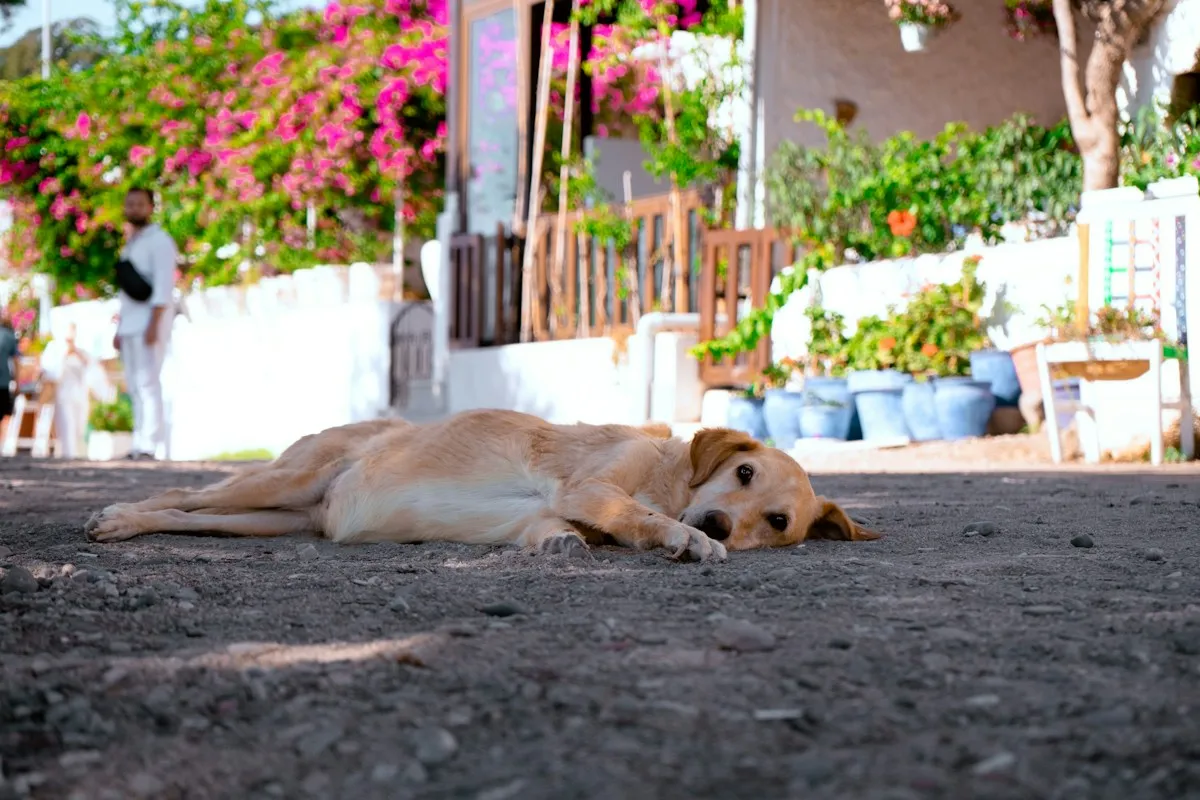
- Walks, play or training in the late morning or afternoon, or on hot, humid monsoon days
- Dogs left in parked cars, even with windows open or for a few minutes. Car interiors heat up within minutes.
- Dogs tied on terraces, in sunny courtyards or near tin sheds without shade and water
- Car journeys without AC, and long walks on hot roads to a clinic
- Dogs locked in closed rooms during power cuts
- Prolonged seizures, which generate a lot of heat even in cool weather
Dogs at higher risk
- Flat-faced (brachycephalic) breeds: Pugs, Bulldogs, French Bulldogs, Shih Tzus, Boxers. Their narrow airways make panting less effective.
- Thick double-coated breeds: Huskies, Malamutes, Saint Bernards, Golden Retrievers, German Shepherds.
- Overweight dogs, puppies and senior dogs.
- Dogs with airway or heart disease: laryngeal paralysis, collapsing trachea, heart failure.
- Dogs on certain medicines, such as diuretics (furosemide), beta-blockers (for example atenolol or propranolol), and some sedatives. These reduce the body’s ability to handle heat or fluid loss. If your dog takes heart medicine, ask your vet for a summer plan.
- Working and very active dogs that keep going even when overheated.
- Dogs not used to heat, for example in the first hot weeks of April and May, or after moving from a cooler state.
Signs of heatstroke
- Excessive panting that does not stop with rest
- Bright red, purple or later pale or grey gums and tongue
- Thick, ropey drool
- Fast heartbeat
- Vomiting or diarrhoea, which may contain blood
- Wobbling, confusion, staring, not responding to their name
- Small red bleeding spots on gums or belly skin
- Collapse, seizures or unconsciousness
Flat-faced dogs can go from panting to collapse very quickly. Treat any noisy, heavy breathing in a Pug or Bulldog in summer as serious.
Heatstroke first aid before you reach the clinic
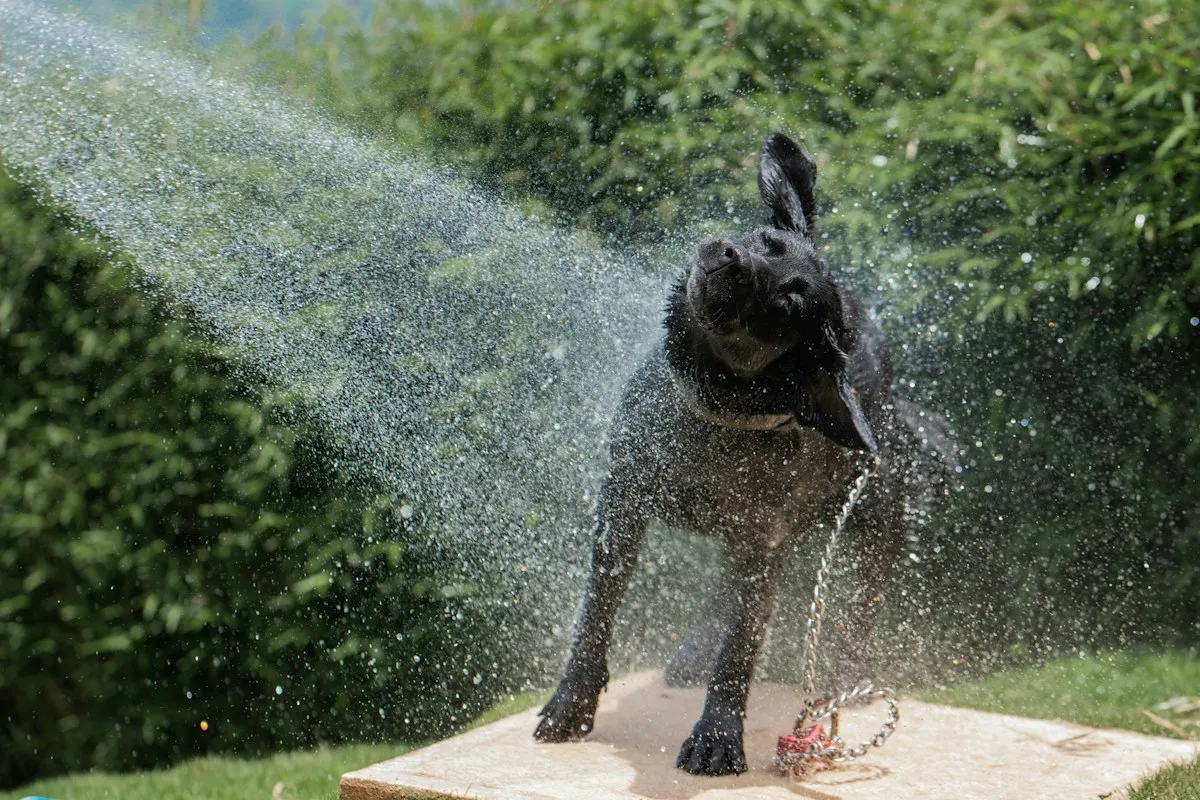
Early, effective cooling saves lives. In a large study of dogs with heatstroke, dogs cooled by their owners before arriving at the hospital were much more likely to survive than dogs that were not cooled.
- Move the dog into shade or an air-conditioned room immediately.
- Call the vet on the way and tell them you are bringing a dog with heatstroke.
- Wet the dog all over with room-temperature or cool tap water, especially the belly, armpits, groin and paws. Keep re-wetting.
- Use moving air: a fan, cooler or the car AC. Evaporation is what cools.
- Do not use ice or ice-cold water. Very cold water makes blood vessels in the skin tighten, which traps heat inside, and can trigger shivering.
- Do not leave a wet towel lying on the back for long. It warms up and traps heat. Wet towels are fine if you keep changing them.
- Offer small sips of water if your dog is alert. Never force water into the mouth of a weak or collapsed dog.
- Check rectal temperature if you have a thermometer. Stop active cooling at about 39.5 °C (103 °F) to avoid over-cooling.
- Go to the clinic even if your dog seems to recover. Damage to the kidneys, liver and clotting system can show up hours to days later.
What happens at the vet clinic
- Controlled cooling continues until the temperature reaches about 39.5 °C, then stops.
- IV fluids to treat shock and dehydration and to protect the kidneys.
- Oxygen, and sometimes sedation and airway support for flat-faced dogs.
- Blood tests: packed cell volume, blood glucose (often low), electrolytes, kidney and liver values, platelet count and clotting times. Tests are often repeated over 24 to 72 hours.
- Plasma transfusion for clotting problems (DIC).
- Gut protection and anti-nausea medicines, and antibiotics if the gut barrier is damaged.
- Seizure control and, in some cases, medicines to reduce brain swelling.
- ECG monitoring for heart rhythm problems, and treatment if needed.
- Urine output monitoring to catch kidney failure early.
Prognosis
Survival depends on how high the temperature went, how long it lasted and how quickly cooling and treatment started. Most dogs that survive the first 24 hours recover well. Warning signs of a poorer outcome include coma or seizures, very low blood sugar, severe clotting problems, acute kidney failure and a delay of more than about 90 minutes before treatment. Dogs that have had heatstroke may be more sensitive to heat afterwards, so take extra care in future summers. Your vet may advise repeat blood tests one to two weeks later.
How much water does my dog need in summer?
A simple guide: a dog needs roughly 50 to 60 ml of water per kg of body weight per day, and more in extreme heat.
| Dog’s weight | Normal day | Hot day (40 °C+) |
|---|---|---|
| 5 kg (Pug, Shih Tzu) | 250 to 300 ml | 400 to 500 ml |
| 15 kg (Indie, Beagle) | 750 to 900 ml | 1.2 to 1.5 litres |
| 30 kg (Labrador, GSD) | 1.5 to 1.8 litres | 2.5 to 3 litres |
Summer water calculator
Based on the table above: about 50 to 60 ml per kg on a normal day and about 80 to 100 ml per kg on a 40°C+ day. Puppies, nursing mothers and dogs with kidney disease or diabetes may need different amounts; ask your vet.
Keep two or three water bowls in shaded spots and change the water often. Add a few ice cubes in the afternoon. Puppies, nursing mothers and dogs with kidney disease or diabetes may need different amounts; ask your vet. To check whether your dog is already short of water, see how to check if your dog or cat is dehydrated.
10 cooling foods for dogs
- Unsalted chaas (buttermilk): plain, thin buttermilk without salt, masala or jeera. A few spoons to half a cup, depending on size.
- Cucumber slices: mostly water, low in calories, crunchy.
- Watermelon without seeds and rind: small cubes only, as a treat. See can dogs eat watermelon.
- Tender coconut water: natural electrolytes. Small amounts only, as it is high in potassium; avoid in dogs with kidney or heart disease.
- Curd (dahi): a spoon or two with rice cools the gut and adds good bacteria.
- Bael (wood apple) pulp: a small spoon of plain pulp, without sugar, can soothe the stomach.
- Boiled bottle gourd (lauki): light and full of water.
- Frozen treats: freeze chaas or plain chicken broth (no onion, no salt) in ice trays.
- Muskmelon (kharbuja): peeled, seedless, small pieces.
- Wet food or soaked kibble: soak dry food in water for 10 minutes to add moisture.
Simple chaas recipe for dogs: blend 2 tablespoons of plain curd with 1 cup of water. No salt, sugar, jeera or masala. Serve cool, or freeze in ice trays. Never give grapes, sugary drinks, salted lassi, ice cream with chocolate, or onion and garlic.
Choosing a dog for Indian summers? See our guide to the best dog breeds for Indian climate and apartments.
Summer appetite: why dogs eat less in heat
It is normal for dogs to eat 10 to 20 percent less in summer. Feed main meals early in the morning and late at night when it is cooler. Lighter meals with more water are better than one heavy meal. If your dog stops eating completely for more than a day, see your vet; see also dog not eating.
Daily summer routine to prevent heatstroke
- Walk before 7 AM and after sunset. Avoid walks between 11 AM and 5 PM.
- Test the road with the back of your hand for 7 seconds. If it is too hot for you, it will burn paw pads.
- Never leave a dog in a parked car, not even for 5 minutes.
- Do not shave double-coated dogs to the skin; the coat protects from sunburn. Brush out the loose undercoat instead.
- Provide a cooling mat, a wet cloth on a tiled floor under a fan, or a shallow tub of water in the shade.
- Keep flat-faced, overweight, senior and heart-patient dogs indoors with a fan or AC on the hottest days.
- Plan for power cuts: an inverter-backed fan, a cool room, frozen water bottles wrapped in cloth.
- Let dogs get used to heat gradually in early summer, and cut exercise on humid days.
- Keep your dog at a healthy weight.
🩺 Dr. Vaishnavi’s Clinical Picks (Available on Amazon India)
Keep your dog cool: a raised bed and frozen curd on a lick mat.
Raised mesh bed lets air flow under your dog in summer
Spread curd or mashed fruit on it; licking is calming
Protects paw pads from cracking on hot or cold ground
As an Amazon Associate, I earn from qualifying purchases. This costs you nothing extra.
Frequently asked questions
What temperature is too hot for a dog in India?
Risk rises sharply above about 30 to 32 °C, especially with high humidity, and many Indian afternoons are far hotter. Flat-faced, overweight, old and heart-patient dogs can get into trouble at lower temperatures. Plan walks for early morning and after sunset.
Can I give chaas to my dog every day?
Yes, a small amount of plain, unsalted chaas is safe for most dogs. Stop if it causes loose motions.
Is coconut water good for dogs in summer?
In small amounts, yes. Too much can upset the stomach. Dogs with kidney or heart problems should avoid it because of its potassium.
Should I put ice on my overheated dog?
No. Use room-temperature or cool tap water and a fan. Ice and ice-cold water can slow heat loss and cause shivering. A few ice cubes in the drinking water of a healthy dog are fine.
My dog recovered after cooling. Does it still need a vet?
Yes. Heatstroke can damage the kidneys, liver, gut and blood clotting, and these problems may appear 24 to 72 hours later. Blood tests and monitoring are important.
Which breeds are most at risk in Indian summer?
Pugs, Bulldogs, French Bulldogs, Shih Tzus, Boxers, Huskies, Saint Bernards, Golden Retrievers, German Shepherds, and any overweight, senior or heart-patient dog.
Worried about your dog in the heat? Contact Dr. Vaishnavi Karmawat for summer care advice.
Related Articles
- Dog Ate Chocolate, Grapes, Onion, Rat Poison or Paracetamol? Vet First Aid and Treatment
- Can Dogs Eat Watermelon (Tarbooz) in Indian Summer? Safe Quantity and Rind Danger
- Dog Seizures (Mirgi / Fits) First Aid Guide in India: What To Do During a Fit, Distemper vs Epilepsy and Safe Anti-Seizure Care
- Dog Bite in India: First Aid and Rabies Vaccine Schedule
References
- Bruchim Y, Klement E, Saragusty J, Finkeilstein E, Kass P, Aroch I. Heat stroke in dogs: a retrospective study of 54 cases (1999-2004) and analysis of risk factors for death. Journal of Veterinary Internal Medicine. 2006;20(1):38-46.
- Bruchim Y, Horowitz M, Aroch I. Pathophysiology of heatstroke in dogs: revisited. Temperature. 2017;4(4):356-370.
- Hall EJ, Carter AJ, Bradbury J, et al. Proposing the VetCompass clinical grading tool for heat-related illness in dogs. Scientific Reports. 2021;11:6828.
- Hall EJ, Carter AJ, O’Neill DG. Incidence and risk factors for heat-related illness (heatstroke) in UK dogs under primary veterinary care in 2016. Scientific Reports. 2020;10:9128.
- Drobatz KJ, Macintire DK. Heat-induced illness in dogs: 42 cases (1976-1993). Journal of the American Veterinary Medical Association. 1996;209(11):1894-1899.
- Cornell University College of Veterinary Medicine. Heatstroke: a medical emergency.
- Merck Veterinary Manual. Heatstroke in Animals.
More on Dog Food and Diet

Best Supplements for Dogs in India: Calcium for Puppies vs Glucosamine and Omega-3 for Joints vs Probiotics
Which dog supplements work: calcium risks in puppies, glucosamine and omega-3 for joints and skin, probiotics, and human supplements that poison dogs.
Homemade Diet Chart for Indie Puppies in India: Month by Month
Need a homemade diet chart for Indie puppies in India? Dr. Vaishnavi shares a month-by-month desi puppy nutrition plan, toxic foods &…