 Written and reviewed by Dr. Vaishnavi Karmawat, B.V.Sc. & A.H., Registered Veterinary Practitioner
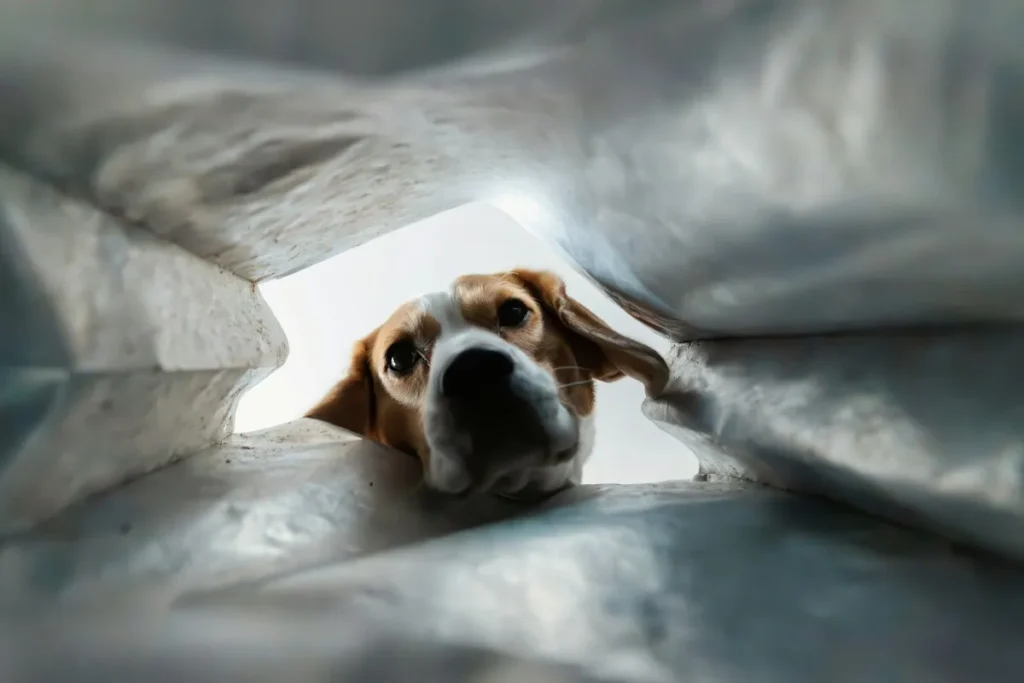
Your dog has just swallowed chocolate, a pill, rat poison or a toy. The instinct is to make them throw it up immediately. Sometimes that is exactly the right thing to do, and done quickly it can save your dog’s life. But in other situations, making a dog vomit can burn the food pipe a second time, fill the lungs with poison, or tear the stomach.
In this article
Here is when vets induce vomiting, how they do it, the six situations where it is dangerous, and what to do in the first few minutes after your dog eats something it should not have.
Key Takeaways
- Never make your dog vomit without first speaking to a vet. Call your vet or the nearest 24-hour veterinary hospital straight away.
- Inducing vomiting works best within one to two hours of eating the substance; for some foods, such as chocolate and grapes, vets may still try a little later.
- Never induce vomiting after corrosives (Harpic, bleach, drain cleaner, batteries), petroleum products (kerosene, petrol), sharp objects, or if your dog is already vomiting, drowsy, seizing or a flat-faced breed.
- Never try to make a cat vomit at home. Hydrogen peroxide can cause severe, bleeding stomach ulcers in cats.
- Salt, mustard, oil, ipecac syrup and fingers down the throat are dangerous and do not work reliably.
- Even after a successful vomit, your dog may still need treatment, because some poisons are absorbed within minutes.
Should You Ever Induce Vomiting in a Dog?
Yes, but only on a vet’s advice. Making a dog vomit (veterinarians call it emesis) empties the stomach before a poison is absorbed. It is useful when:
- You saw your dog eat a known toxin, such as chocolate, grapes or raisins, rat poison, human medicines, or xylitol gum, or a small smooth object
- It happened recently, ideally within the last one to two hours
- Your dog is alert, breathing normally and not yet showing signs of poisoning
- The substance is one that is safe to bring back up
The timing matters because the stomach usually empties into the intestine within a few hours, after which vomiting brings up little. Chocolate and grapes can clump and stay in the stomach longer, so vets sometimes induce vomiting up to about four hours later.
Six Situations Where Making a Dog Vomit Can Kill

| Situation | Examples | Why vomiting is dangerous |
|---|---|---|
| 1. Corrosive or caustic substances | Toilet cleaners such as Harpic, bleach, drain cleaner, acid, lime (chuna), button and phone batteries | They burn the food pipe on the way down and burn it again on the way up, causing ulcers and perforation |
| 2. Petroleum products and oils | Kerosene, petrol, diesel, paint thinner, lamp oil, some insecticide liquids | They are easily breathed into the lungs during vomiting, causing severe aspiration pneumonia |
| 3. Sharp or large objects | Cooked bones, needles, glass, sticks, corn cobs, large socks or toys | They can tear or lodge in the food pipe on the way back up |
| 4. Dogs already sick or drowsy | Dogs already vomiting, drowsy, wobbly, having tremors or seizures, or unconscious | They cannot protect their airway and may inhale vomit; some poisons such as xylitol act within 30 minutes |
| 5. High-risk dogs | Pugs, French Bulldogs, Shih Tzus and other flat-faced breeds; dogs with megaoesophagus, breathing problems or recent stomach surgery | Much higher risk of inhaling vomit or other complications |
| 6. All cats | Any cat, any poison | Home hydrogen peroxide can cause severe bleeding ulcers of the stomach and food pipe in cats; vets use injectable drugs instead |
Also do not induce vomiting if there is blood in your dog’s recent vomit or stool, or if too much time has passed for the substance to still be in the stomach.
What To Do Right Away
- Move your dog away from the substance and remove anything left in its mouth, if it is safe to do so.
- Find the packet, label or leftover and estimate how much was eaten and when. Take it with you.
- Call your vet or the nearest 24-hour veterinary hospital immediately, even if your dog seems fine. Say what was eaten, how much, when, and your dog’s weight.
- Follow the vet’s instructions exactly. In most cases they will ask you to bring your dog in so they can induce vomiting safely.
- Do not give milk, oil, salt water or home remedies. Milk does not neutralise most poisons, and salt can cause salt poisoning.
Specific first-aid advice for common poisons is in our guide to dogs that ate chocolate, grapes or onion, and for swallowed objects see dogs that swallowed a sock, toy or bone.
How Vets Induce Vomiting Safely
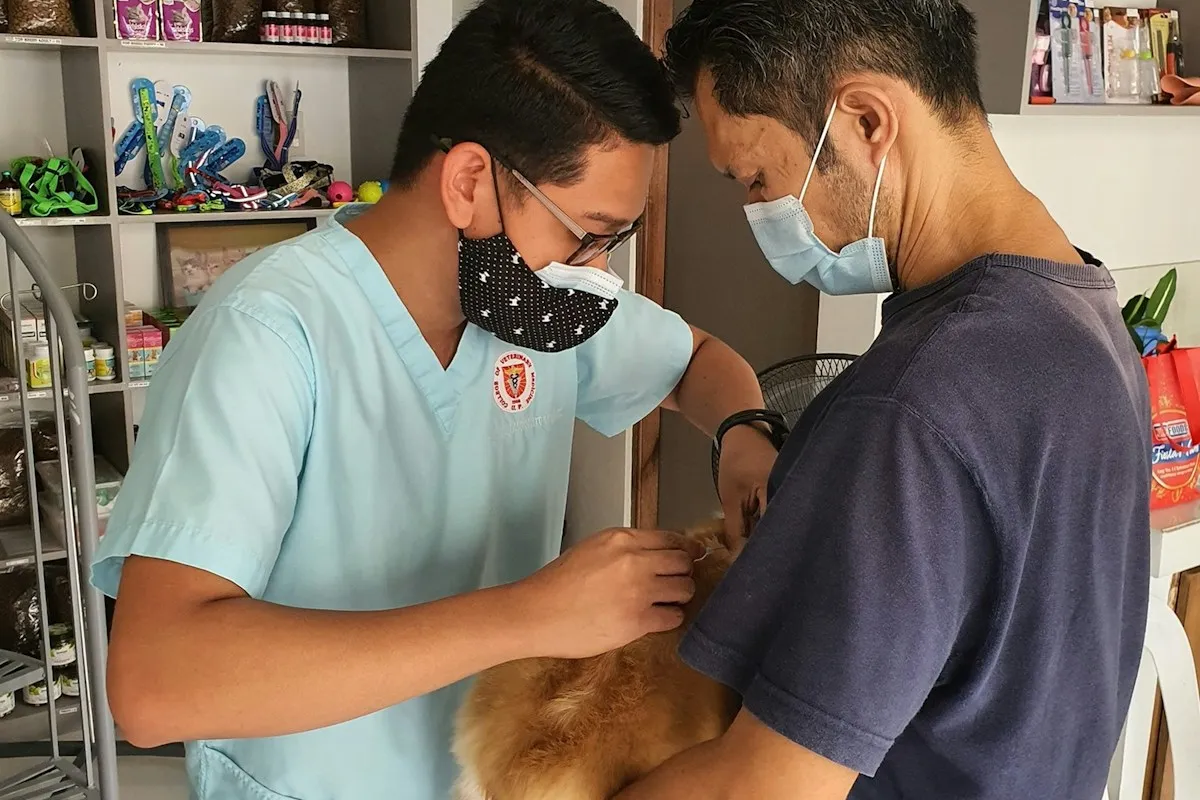
At the clinic, vets use medicines that trigger the brain’s vomiting centre directly. These work quickly and predictably and can be reversed if needed:
- Apomorphine is the most common drug for dogs. Given into a vein it usually works within one to five minutes; under the skin or in the eye, within about 10 to 15 minutes. Dogs often seem sleepy afterwards, which is normal.
- Ropinirole eye drops are used in some countries as an alternative for dogs.
- Cats are given drugs such as dexmedetomidine or xylazine, which work better in cats and can be reversed afterwards.
After vomiting, the vet checks what came up, may give activated charcoal to bind poison left in the intestine, and decides whether your dog needs blood tests, fluids, an antidote (for example, vitamin K1 for rat poison) or monitoring. If an object did not come up, endoscopy or surgery may be needed.
What About Hydrogen Peroxide at Home?
If you are far from a clinic, a vet may occasionally talk you through using 3 percent hydrogen peroxide at home. Only do this when a vet has told you to, and only at the dose they calculate for your dog’s weight, because:
- It works by irritating the stomach lining and can cause gastritis and ulcers.
- Stronger hair-bleach solutions are far more corrosive and must never be used.
- Dogs can inhale the foam and vomit, causing pneumonia.
- It is dangerous for cats and must never be used in them.
- It does not always work, and repeated doses increase the damage.
Even if your dog vomits at home, ring your vet again and follow their advice. Some poisons, including xylitol and certain human medicines, are absorbed so quickly that treatment is still needed.
Home Methods That Are Unsafe
| Method | Why it should not be used |
|---|---|
| Salt or salt water | Can cause salt poisoning, with seizures, brain swelling and death |
| Mustard or spices | Unreliable and irritating |
| Oil, ghee or milk | Do not neutralise poisons; oil can be inhaled into the lungs |
| Fingers or objects down the throat | Rarely works, can injure the throat and lead to bites |
| Ipecac syrup | Unpredictable, can cause prolonged vomiting and heart problems |
| Waiting to see what happens | Many poisons look harmless at first and become deadly hours later |
When Vomiting Itself Is an Emergency
Sometimes the problem is not making a dog vomit but stopping a dog that will not stop vomiting. Go to a vet immediately if your dog:
- Retches without bringing anything up, especially with a swollen belly (possible bloat, an emergency in large deep-chested breeds)
- Vomits repeatedly, or has vomiting and diarrhoea together
- Has blood or coffee-ground material in the vomit
- Is lethargic, collapsed, dehydrated or in pain
- Is a puppy, a senior, or has diabetes, kidney or other illness
Read more about vomiting and acidity medicines and what different vomit colours mean in our dog vomit colour guide.
Frequently Asked Questions
How long after eating something can vomiting still be induced?
Usually within one to two hours. Some foods, such as chocolate and grapes, may remain in the stomach longer. Your vet will decide based on what was eaten.
Can I make my dog throw up with salt?
No. Salt can cause salt poisoning, which can be fatal.
My dog ate rat poison. Should I make it vomit?
Call your vet immediately. For common anticoagulant rat poisons, early vomiting and vitamin K1 treatment can prevent internal bleeding, which may only appear days later. Other rat poisons need different treatment.
My dog swallowed a sock. Should I make it vomit?
Speak to a vet first. A small, soft object in a healthy dog may be brought up safely at the clinic, but large or sharp objects may need endoscopy or surgery.
Is there a pet poison helpline in India?
There is no single national animal poison helpline in India. Save your vet’s number and the number of the nearest 24-hour veterinary hospital in your phone before an emergency happens.
This article is for education and does not replace veterinary advice. Never give your pet any medicine, including human medicines, without your vet’s advice and dose.
Related Articles
- Dog Bite in India: First Aid and Rabies Vaccine Schedule
- Carprofen (Rimadyl) and Safe Painkillers for Dogs: Why Combiflam, Ibuprofen, Diclofenac and Voveran Are Dangerous
- Meloxicam (Melonex, Metacam) for Dogs and Cats: Safe Dosing and Why You Must Never Mix Painkillers With Steroids
- Dog Seizures (Mirgi / Fits) First Aid Guide in India: What To Do During a Fit, Distemper vs Epilepsy and Safe Anti-Seizure Care
References
- Koehler R. How To Induce Vomiting in Dogs: Dos, Don’ts, and When To Call Your Vet. PetMD, 2026.
- Khan SA, McLean MK, Slater M, et al. Effectiveness and adverse effects of the use of apomorphine and 3% hydrogen peroxide solution to induce emesis in dogs. JAVMA, 2012;241(9):1179–1184.
- Obr TD, et al. Necroulcerative hemorrhagic gastritis in a cat secondary to the administration of 3% hydrogen peroxide as an emetic agent. Journal of Veterinary Emergency and Critical Care, 2017;27(5):605–608.
- Lee JA. Emergency management and treatment of the poisoned small animal patient. Veterinary Clinics of North America: Small Animal Practice, 2013;43(4):757–771.
- Plumb’s Veterinary Drug Handbook, 10th ed. Wiley-Blackwell, 2023.
More on Dog Poisoning and Emergencies

Pyometra in Dogs and Cats: Early Signs After Heat, Open vs Closed Pyometra, Surgery Cost in India and Why Heat-Stopping Injections Are Risky
Unspayed dog drinking more, off food or with discharge after heat? Pyometra signs, why it is an emergency, surgery cost in India…
Dog or Cat Ate Rat Poison? Bromadiolone Cakes, Zinc Phosphide and Phosphorus Paste: Symptoms, What To Do Now and Treatment in India
Dog ate rat poison? Which Indian rat poisons are most dangerous, first steps, why vomiting must be induced fast, vitamin K treatment…