 Written and reviewed by Dr. Vaishnavi Karmawat, B.V.Sc. & A.H., Registered Veterinary Practitioner
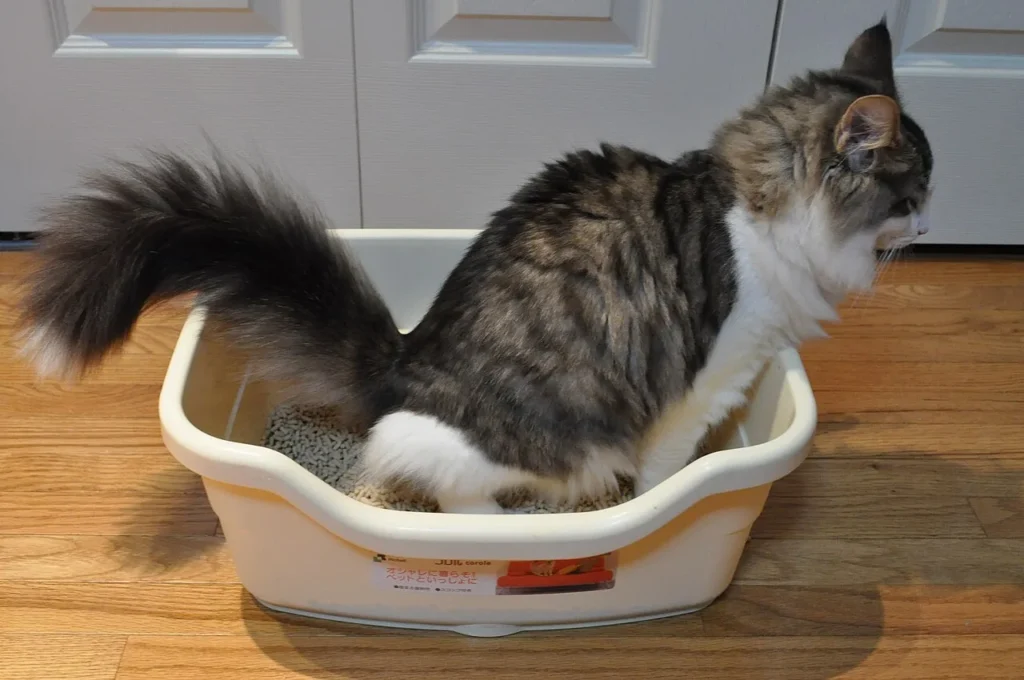
Quick answer: A constipated cat passes small, hard, dry stools less often than usual, strains in the litter box, and may vomit or stop eating. Most healthy cats pass stool every 12 to 24 hours (up to 36 hours in some). If your cat has not passed stool for more than 24 to 48 hours, or is straining with little result, see a vet. A male cat straining in the litter box may actually be unable to urinate, which can kill within 24 to 72 hours. Never use a human enema on a cat.
In this article
- What is constipation in cats?
- Symptoms of a constipated cat
- Straining in the litter box: constipation or urinary blockage?
- Causes of constipation in cats
- When to see a vet
- How vets diagnose constipation and its cause
- Treatment of constipation in cats
- Safe home care: hydration, fibre and the litter box
- Recovery and long-term outlook
- Frequently asked questions
- Related Articles
- References
- Constipation that is ignored can progress to obstipation (stool so impacted it cannot be passed) and finally megacolon, a permanently stretched colon that no longer contracts.
- Common causes include dehydration, a dirty or hard-to-reach litter box, arthritis, hairballs, kidney disease, obesity and old pelvic fractures from road accidents.
- Vomiting plus constipation is an emergency.
- Human phosphate enemas, liquid paraffin given by mouth, and human laxatives can be dangerous or fatal for cats.
What is constipation in cats?
Constipation means infrequent, difficult or painful passage of stool. As stool sits longer in the colon, the colon keeps absorbing water from it, so the stool becomes harder, drier and larger, which makes it even more difficult to pass. This creates a vicious cycle. Vets describe three stages:
| Stage | What is happening | Typical signs | Outlook |
|---|---|---|---|
| Constipation | Slow, difficult passage of hard stool | Small hard pellets, straining, fewer stools | Usually responds well to hydration, diet and treating the cause |
| Obstipation | Colon packed with hard stool that the cat cannot pass on its own | No stool for days, repeated straining, vomiting, poor appetite, dullness | Needs veterinary removal of stool, often under sedation or anaesthesia |
| Megacolon | Colon permanently dilated and weak, loses its ability to push stool | Recurrent obstipation, large firm colon felt in the belly, weight loss | Lifelong management; some cats need surgery (subtotal colectomy) |
Most cats with megacolon are middle-aged males, and in many of them no single cause is found (idiopathic megacolon). That is why it is important to treat even “simple” constipation early.
Symptoms of a constipated cat
- Straining in the litter box with little or no stool
- Small, hard, dry, dark stool balls, sometimes with a little blood or mucus on them
- Going in and out of the litter box many times
- Passing stool outside the box (because the box is linked with pain)
- Crying or growling while trying to pass stool
- Vomiting, often after straining or eating
- Reduced appetite or refusing food
- Low energy, hiding, less interest in the family
- Hunched posture, tense or painful belly
- Poor grooming, a dull, unkempt coat (common in arthritic or dehydrated cats)
- Sometimes a little liquid stool around the hard mass, which owners mistake for diarrhoea
Straining in the litter box: constipation or urinary blockage?
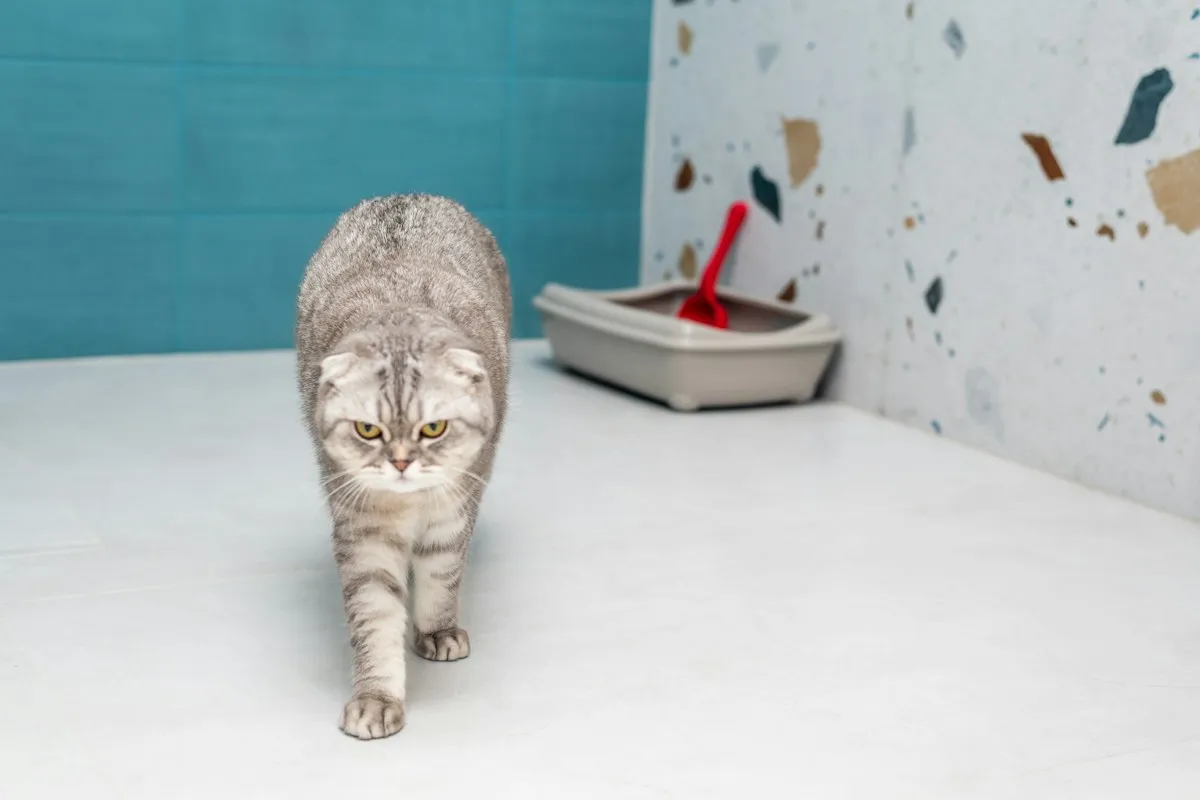
This is the single most important point in this article. A cat squatting and straining may be trying to pass urine, not stool. In male cats, crystals, mucus plugs or stones can block the narrow urethra completely. Urine backs up, potassium rises in the blood, and the heart can stop within 1 to 3 days.
| Clue | More likely constipation | More likely urinary problem |
|---|---|---|
| What you find in the litter | No clumps of stool, or tiny hard pellets; urine clumps are normal size | No urine clumps, or many tiny clumps; urine may be pink or red |
| Posture | Hunched, tail raised, straining for longer | Squatting repeatedly, short visits, licking the genital area |
| Belly | Firm tube-like stool felt along the lower belly | Firm, painful, large bladder |
| Who | Any cat, often older | Very often young to middle-aged male cats on dry food |
If you cannot tell the difference, treat it as a urinary emergency and go to a vet immediately.
Causes of constipation in cats
1. Dehydration
Cats evolved from desert ancestors and have a low natural thirst drive. Cats eating only dry food, cats in hot Indian summers, and cats with kidney disease, diabetes or hyperthyroidism lose more water than they replace, and the colon pulls that water from the stool. Chronic kidney disease (CKD) is one of the commonest reasons older cats become constipated, partly through dehydration and partly through low blood potassium (hypokalaemia), which weakens gut muscles.
2. Litter box problems
Cats are fussy about toilets. If the box is dirty, too small, has high sides, is placed next to a noisy washing machine, generator or inverter, is shared with a bully cat, or the litter brand was suddenly changed, many cats simply hold their stool. Holding becomes constipation.
3. Pain and reduced mobility
Arthritis of the hips and spine is very common in older cats but rarely obvious. Climbing into a high-sided box or squatting hurts, so the cat avoids it. Back injuries and tail-pull injuries can also damage the nerves that control defecation.
4. Narrowed pelvic canal
Many Indian street and rescued cats have healed pelvic fractures from road accidents or falls. If the pelvis heals narrowed, stool cannot pass easily, and these cats often develop recurring constipation or megacolon months or years later.
5. Hairballs and foreign material
Long-haired cats such as Persians swallow large amounts of hair while grooming. Hair mixed with stool forms firm, fibrous masses. Thread, ribbon, rubber bands and bones can cause partial obstructions.
6. Obesity and inactivity
Overweight, indoor cats that rarely play have slower gut movement. Obesity is also linked to low-grade inflammation and arthritis.
7. Diet
Both too little fibre and an abrupt change in diet can contribute. Feeding bones (for example fish or chicken bones) produces hard, chalky stool.
8. Medicines
Opioid painkillers, some antihistamines, diuretics, iron supplements and sucralfate can slow the gut or dry the stool.
9. Other medical causes
Tumours or polyps in the colon or rectum, anal sac disease, perineal hernia, nerve diseases, and congenital problems such as the shortened spine of tailless (Manx-type) cats.
When to see a vet
- Immediately if your cat is vomiting, very dull, refusing all food, has a swollen or painful belly, or might be unable to urinate.
- Within 24 hours if your cat is straining with little result or has passed no stool for 24 to 48 hours.
- Book an appointment if stools are repeatedly small and hard, or constipation keeps coming back.
How vets diagnose constipation and its cause
- History: diet, water intake, last normal stool, litter box set-up, other pets, medicines, previous injuries.
- Physical examination: the vet can often feel hard stool in the colon, and will check the bladder size, hydration, body condition, joints and spine. A gentle rectal exam (often under sedation) assesses the pelvic canal, anal sacs and masses.
- Abdominal X-rays: show how much stool is present, how wide the colon is, old pelvic fractures, foreign material and bone fragments. Vets compare the colon’s diameter with the length of the fifth lumbar vertebra; a colon much wider than this suggests megacolon.
- Blood tests and urinalysis: kidney values, potassium, calcium, blood glucose and, in cats over about 8 years, thyroid hormone (T4).
- Ultrasound, colonoscopy or biopsy if a mass or stricture is suspected.
Treatment of constipation in cats
Step 1: Remove the impacted stool
- Mild cases: fluids under the skin or into a vein to rehydrate, plus an oral stool softener.
- Moderate cases: a cat-safe enema given in the clinic. Vets use warm water, saline, lactulose or small volumes of specific products.
- Severe cases (obstipation): manual removal of stool (deobstipation) under general anaesthesia with a protected airway, as cats may vomit during the procedure. Some vets give a polyethylene glycol (PEG) solution by feeding tube over several hours to soften the mass first.
Why human enemas are dangerous
Most pharmacy enemas sold for people contain sodium phosphate. Cats absorb this phosphate through the colon wall, which causes a sudden rise in phosphate and sodium and a drop in calcium. The result can be severe weakness, seizures, heart rhythm problems and death, sometimes within hours. Soap-water and other home-made enemas can also injure the colon. Leave enemas to your vet.
Step 2: Keep the stool soft and moving
- Lactulose: an osmotic laxative that draws water into the colon. The dose is adjusted until stools are soft but formed.
- Polyethylene glycol 3350 (PEG): a tasteless powder mixed into food, widely used by vets for long-term softening.
- Prokinetic drugs: cisapride (usually compounded where available) helps the colon contract in early megacolon.
- Fibre: psyllium husk (isabgol) or plain cooked pumpkin (kaddu), on your vet’s advice and only after blockage has been ruled out.
- Potassium supplements if blood potassium is low, common in CKD.
Step 3: Treat the underlying cause
This is what prevents relapse: managing kidney disease, pain relief for arthritis, weight loss, fixing litter box issues, hairball control, and surgery for strictures or pelvic narrowing where appropriate.
Surgery for megacolon
Cats that keep becoming obstipated despite good medical care may benefit from subtotal colectomy, removal of most of the colon. Most cats do well afterwards, with softer but manageable stools within a few weeks to months.
Safe home care: hydration, fibre and the litter box
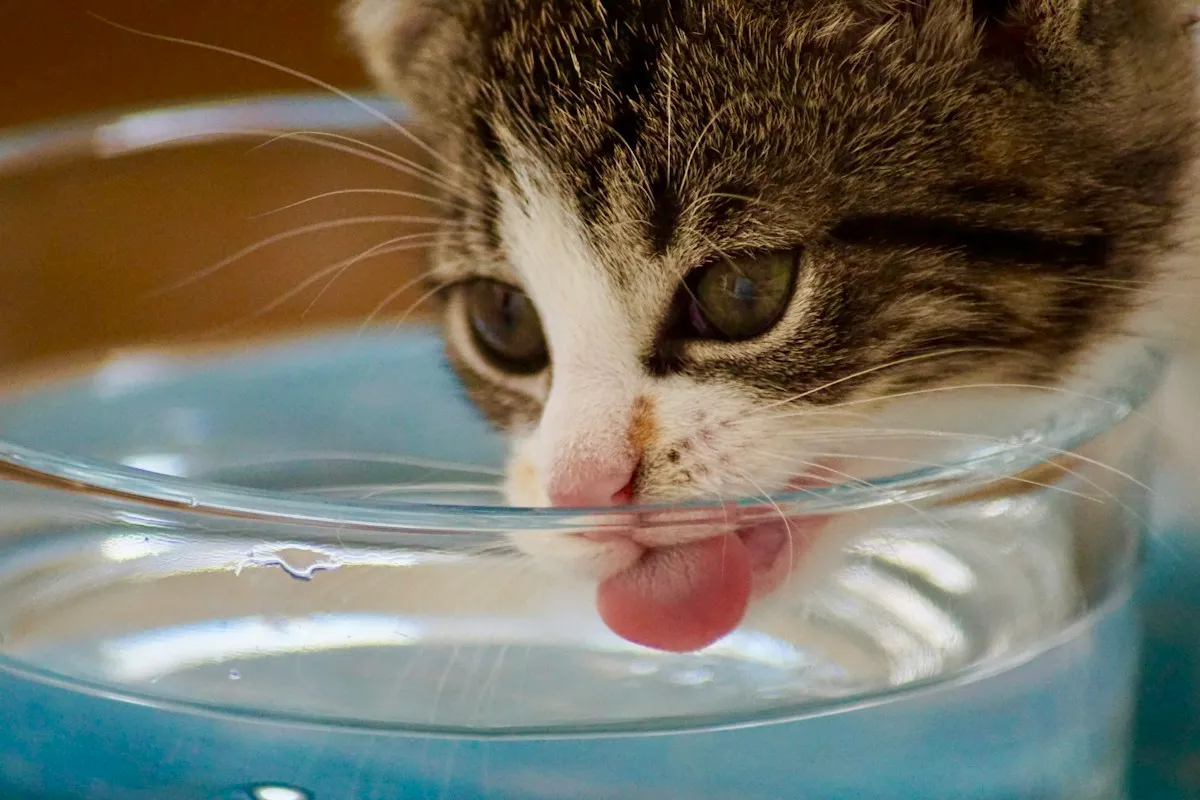
Use these steps after your vet has examined your cat and ruled out a blockage.
Increase water intake
- Feed wet food (pouches or cans) for at least half of the daily diet. Wet food is about 75 to 80 percent water, dry food about 10 percent.
- Add a few spoons of lukewarm water or unsalted homemade chicken or fish broth (no onion, garlic or masala) to meals.
- Offer water in several places, in wide shallow ceramic, steel or glass bowls; many cats dislike their whiskers touching the sides.
- Try a pet water fountain; many cats prefer running water.
- Change water at least twice a day in summer.
Add fibre carefully
- Plain cooked pumpkin: about 1 to 2 teaspoons mixed into wet food once or twice daily for an average adult cat.
- Psyllium husk (isabgol): typically a quarter to half a teaspoon mixed thoroughly into wet food with extra water, once or twice daily. Psyllium must always be given with plenty of water, or it can make stool firmer.
- Your vet may suggest a prescription high-fibre or highly digestible gastrointestinal diet instead.
Avoid these common Indian home remedies
- Liquid paraffin or mineral oil by mouth: it is tasteless, so cats may inhale it without coughing, causing a serious lipid pneumonia.
- Castor oil, ghee “to lubricate”, cow’s milk: may cause vomiting, diarrhoea, pancreatitis or dehydration; milk is not a safe laxative for cats.
- Human laxative tablets or syrups: such as bisacodyl or senna products, unless your vet prescribes and doses them.
Fix the litter box
- One box per cat plus one extra.
- Large boxes, at least one and a half times the cat’s body length; low-entry sides for seniors and arthritic cats.
- Unscented, fine-grained clumping litter, 2 to 3 inches deep.
- Scoop at least once daily; wash weekly with mild soap and water.
- Place boxes in quiet spots away from food, water, washing machines and inverters, with an easy escape route.
- Do not change litter type suddenly.
Encourage movement
Play with your cat for 10 to 15 minutes, two or three times a day, using wand toys, balls and treat puzzles. Cat trees and window perches encourage climbing and natural activity.
Control hairballs
Brush long-haired cats daily and short-haired cats a few times a week. Your vet may recommend a hairball diet or a petroleum-free hairball gel.
Pro tip: Keep a simple poop diary near the litter box. Note each stool and its consistency. Most owners only notice constipation days late; a diary lets you act on day one.
Recovery and long-term outlook
Once the impacted stool is removed, most cats feel better within a day. However, if the cause is not addressed, constipation tends to come back, and each episode stretches the colon a little more. Many cats, especially those with CKD, old pelvic injuries or early megacolon, need lifelong stool softeners and diet changes. Do not stop medicines just because your cat seems better; check with your vet first.
Frequently asked questions
How long can a cat go without pooping?
Most cats pass stool once or twice daily. Going more than 24 to 48 hours without a stool, especially with straining, warrants a vet visit.
My cat is constipated and vomiting. What should I do?
Go to a vet immediately. Vomiting suggests severe impaction or a blockage, and your cat can quickly become dehydrated.
Can I give my cat milk for constipation?
No. Most adult cats are lactose intolerant. Milk may cause stomach upset and diarrhoea rather than safe relief, and it can worsen dehydration.
Is olive oil or coconut oil safe for a constipated cat?
Small amounts are unlikely to be harmful but are not reliable laxatives and add calories. Oils can also cause diarrhoea or pancreatitis in some cats. Use vet-recommended options such as PEG or lactulose instead.
Can kittens get constipated?
Yes, especially orphaned kittens on formula, kittens that are dehydrated, or kittens with heavy roundworm burdens. Very young kittens (under 3 to 4 weeks) need their bottom gently stimulated with a warm damp cloth after feeds. See your vet promptly if a kitten strains or has a bloated belly.
This article is for education and does not replace a veterinary examination. If your cat is straining in the litter box, contact your vet the same day.
Related Articles
- Cat Not Peeing or Straining in the Litter Box? Urinary Blockage and FLUTD Emergency Guide
- Cat Diarrhoea (Loose Motion): Causes, Why Milk Upsets Cats, Vet Treatment and Home Care
- Cat Flu (Sneezing, Runny Eyes) in Cats: Herpesvirus vs Calicivirus, Carrier Cats, Treatment and Home Care
- Cat Peeing Outside the Litter Box: Medical Causes, Spraying, 10 Litter Box Rules and How To Litter Train a Kitten
- Why Is My Cat Vomiting? Hairballs, Yellow Bile, Worms and When To Worry
References
- Elfenbein H. Cat Constipation: Symptoms and Causes. PetMD, updated 2026.
- Washabau RJ, Day MJ. Canine and Feline Gastroenterology. Elsevier, 2013.
- Merck Veterinary Manual. Constipation and obstipation in small animals.
- Little SE. The Cat: Clinical Medicine and Management. Elsevier.
More on Cat Health and Symptoms
Prednisolone (Wysolone) for Dogs and Cats: Uses, Side Effects, Tapering, and the Truth About Steroid Injections
Uses and side effects of prednisolone, why it must be tapered, the danger of mixing with painkillers, and the truth about steroid…
FIP (Feline Infectious Peritonitis) in Kittens and Cats: Wet vs Dry Signs, A:G Ratio Test and Modern Antiviral Treatment
FIP in cats: how coronavirus mutates, wet vs dry signs, key blood and fluid tests, modern antiviral treatment, and prevention in multi-cat…