 Written and reviewed by Dr. Vaishnavi Karmawat, B.V.Sc. & A.H., Registered Veterinary Practitioner
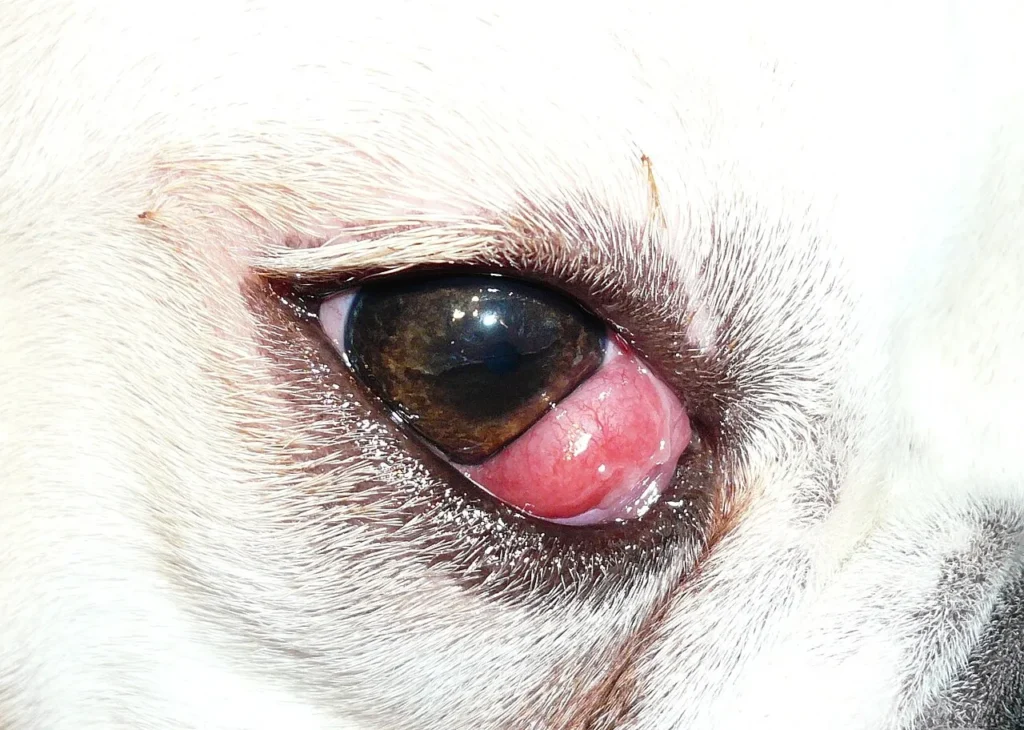
Quick answer: A little clear or brownish crust in the corner of your dog’s eye each morning is normal. Thick yellow or green discharge (kichad), a red or cloudy eye, squinting, pawing at the eye, or a pink lump in the inner corner (cherry eye) all need a vet. Never put steroid eye drops from a chemist into your dog’s eye without a vet first checking for an ulcer, because steroids can make a corneal ulcer “melt” and the eye can be lost within days.
In this article
- How a dog’s eye protects itself
- The 5 types of dog eye discharge and what they mean
- Cherry eye in dogs
- Common dog eye problems at a glance
- India-specific eye problems we see often
- How vets examine eyes
- Treatment overview
- Why human steroid eye drops can blind dogs
- How to clean your dog’s eyes safely
- When to see a vet urgently
- Frequently asked questions
- Related Articles
- References
- The colour and texture of the discharge is one of the best clues to the cause.
- Squinting is a sign of pain. A dog that keeps one eye closed should be seen the same day.
- Cherry eye is a slipped tear gland, not an infection. It needs surgery to put the gland back, not removal.
- Flat-faced breeds common in India (Pugs, Shih Tzus, Lhasa Apsos, French Bulldogs) are at high risk for ulcers, dry eye and eye injuries.
How a dog’s eye protects itself
Understanding a few parts of the eye makes the rest of this guide easier:
- Cornea: the clear front window of the eye. It has no blood vessels and gets oxygen and nutrients from the tear film. It is packed with pain nerves, which is why corneal injuries are so painful.
- Conjunctiva: the pink lining inside the eyelids and over the white of the eye. When inflamed, this is “pink eye” (conjunctivitis).
- Tear film: a three-layer coating of oil, water and mucus that keeps the cornea moist, clear and protected from infection.
- Third eyelid (nictitating membrane): a protective fold in the inner corner of each eye that sweeps across the surface. It holds a tear gland that makes roughly a third to half of the watery part of the tears.
- Tear ducts (nasolacrimal ducts): small drainage channels at the inner corner that carry tears into the nose.
The 5 types of dog eye discharge and what they mean
| Type | What it looks like | Common causes | What to do |
|---|---|---|---|
| 1. Small morning crust | A little clear, grey or reddish-brown dried material at the inner corner, easy to wipe off | Normal dried tears, oil, dust and cells | Wipe gently with a clean cloth dampened in boiled-and-cooled water. Normal if the eye is not red or painful. |
| 2. Clear, watery tears (epiphora) | Wet fur under the eye, constant tearing | Dust, smoke, pollen, allergies, eyelashes or hair rubbing the eye, rolled-in eyelids (entropion), blocked tear ducts, early ulcer, glaucoma | Watch for 24 to 48 hours if the eye looks otherwise normal. See a vet if it continues or the eye becomes red or painful. |
| 3. Reddish-brown tear stains | Rust-coloured streaks below the eyes, most visible in white dogs such as Maltese, Spitz, Shih Tzu and Poodles | Porphyrins in tears that turn reddish-brown on air exposure; shallow eye sockets, hair wicking tears onto the face | Usually cosmetic. Wipe twice daily, keep facial hair trimmed. See a vet if staining suddenly increases or the skin becomes red or smelly. |
| 4. White-grey, thick, stringy mucus | Sticky mucus strands that come back after cleaning, a dull, dry-looking eye, sometimes brown pigment on the cornea | Dry eye (keratoconjunctivitis sicca, KCS), foreign body under the eyelid, chronic conjunctivitis | See a vet for a Schirmer tear test. Dry eye needs lifelong treatment. |
| 5. Yellow or green pus | Thick yellow-green discharge, often with red eyes, crusted eyelids or squinting | Bacterial conjunctivitis, infected corneal ulcer, dry eye with secondary infection, canine distemper, respiratory infections | Vet visit within 24 hours. In a young or unvaccinated dog, especially with cough or fever, think distemper. |
Bloody discharge or blood inside the eye is an emergency. Causes include trauma, tick fever (which lowers platelets and inflames the eye), rat poison, high blood pressure and tumours.
Cherry eye in dogs
What is cherry eye?
Cherry eye is the common name for prolapse of the gland of the third eyelid. The ligament that normally anchors this tear gland is weak, so the gland flips up and out, appearing as a smooth, round, pink-red swelling in the inner corner of the eye. It usually appears in dogs under 2 years old, often in one eye first, and frequently in the other eye weeks to months later.
Breeds most at risk
- English and French Bulldogs
- Beagles
- Cocker Spaniels
- Shih Tzus and Lhasa Apsos
- Pugs and Boston Terriers
- Neapolitan Mastiffs, Bullmastiffs, Saint Bernards and Great Danes (in giant breeds, a bent or “scrolled” third-eyelid cartilage can look similar)
Is cherry eye painful or dangerous?
It is not usually painful at first and is not an emergency, but it should not be ignored. The exposed gland dries out, swells and becomes irritated, and the dog may rub it. Over time the gland’s tear production falls, increasing the risk of lifelong dry eye.
Why vets put the gland back instead of cutting it off
In the past, many cherry eyes were simply snipped off. We now know that removing the gland significantly raises the risk of dry eye, a painful, lifelong condition that can lead to blindness. Modern surgery aims to save the gland:
- Pocket technique (Morgan pocket): the surgeon creates a small pocket in the conjunctiva of the third eyelid and tucks the gland inside. This is the most widely used method.
- Anchoring (tacking) techniques: the gland is stitched to deeper tissue near the eye socket. Often used for large breeds or recurrences, sometimes combined with the pocket.
- Cartilage correction: if the third-eyelid cartilage is scrolled, the bent portion is removed at the same time.
Earlier surgery generally gives better results, as a long-prolapsed gland becomes swollen and scarred. Recurrence happens in a small percentage of dogs and may need a second operation, sometimes by a veterinary ophthalmologist.
After cherry eye surgery
- The eye usually looks normal within a few days; healing takes 10 to 14 days.
- Your vet will prescribe antibiotic or anti-inflammatory eye drops or ointment.
- Your dog must wear a cone (Elizabethan collar) for 7 to 14 days to prevent rubbing.
- Some dogs (estimated at around 1 in 5) still develop reduced tear production later and need tear-stimulating medicine.
Home care until surgery
Keep the gland moist with a vet-recommended lubricating gel or artificial tears, clean any discharge gently, and stop your dog rubbing it. Do not keep trying to push the gland back yourself; it rarely stays and you can injure the eye.
Common dog eye problems at a glance
| Problem | Key signs | Urgency |
|---|---|---|
| Conjunctivitis (pink eye) | Red, swollen conjunctiva; clear to green discharge; mild itch | Vet within 1 to 2 days |
| Corneal ulcer | Squinting, tearing, pawing, a cloudy or bluish spot on the cornea | Same day |
| Dry eye (KCS) | Thick mucus, dull eye, redness, brown pigment on the cornea | Vet within days; lifelong care |
| Glaucoma | Red, painful, cloudy or bluish eye, dilated pupil, enlarged eye, sudden blindness | Emergency: vision can be lost within 24 to 48 hours |
| Proptosis (eye popped out) | Eyeball pushed forward out of the socket, often after a fight, fall or being held tightly by the neck; common in Pugs and Shih Tzus | Emergency: keep the eye moist with clean water or saline and go now |
| Uveitis (inflammation inside the eye) | Red eye, cloudy eye, small pupil, squinting; can be linked to tick fever, infections, cancer | Same day |
| Entropion | Eyelid rolls inward, hair rubs the eye: tearing, squinting, ulcers. Common in Chow Chows, Shar-Peis, Labradors, Rottweilers, Bulldogs | Vet soon; usually needs surgery |
| Ectropion | Lower lid droops outward, exposing pink tissue; common in Saint Bernards, Bloodhounds, Basset Hounds | Vet check; manage dryness and infection |
| Distichiasis / ectopic cilia | Extra eyelashes rubbing the cornea; tearing, recurrent ulcers | Vet; hairs may need removal |
| Cataract | Cloudy white lens, bumping into things; often linked to diabetes in older dogs | Vet check; urgent if diabetic or painful |
| Nuclear sclerosis | Bluish-grey haze in the lens of senior dogs, but vision is good | Normal ageing; mention at check-ups |
| Eyelid lumps | Small growths on the lid margin (often benign meibomian adenomas) in older dogs | Vet check; remove if rubbing or growing |
| Sudden blindness | Bumping into things, dilated pupils | Emergency: causes include retinal detachment, high blood pressure, glaucoma, ivermectin toxicity, SARDS |
| Visible third eyelid in both eyes | Third eyelid covering part of the eye | Vet; can signal pain, dehydration, weight loss, nerve problems (Horner’s syndrome) or tetanus |
India-specific eye problems we see often
- Canine distemper: thick yellow-green eye and nose discharge with fever and cough in young, unvaccinated dogs. Later it can cause dry eye and blindness.
- Tick fever (ehrlichiosis, anaplasmosis, babesiosis): red eyes, bleeding inside the eye, uveitis and cloudy eyes, sometimes with nosebleeds and fever. See our tick fever guide.
- Dust, smoke and heat: roadside dust, firecracker smoke, crop-burning smog and hot, dry summers irritate the eyes and worsen dry eye.
- Flat-faced breed injuries: Pugs and Shih Tzus have shallow sockets and prominent eyes that are easily scratched by grass, cat claws or play.
- Ivermectin injections given by non-vets: overdose, especially in Collie-type dogs, can damage the retina and cause temporary blindness.
How vets examine eyes
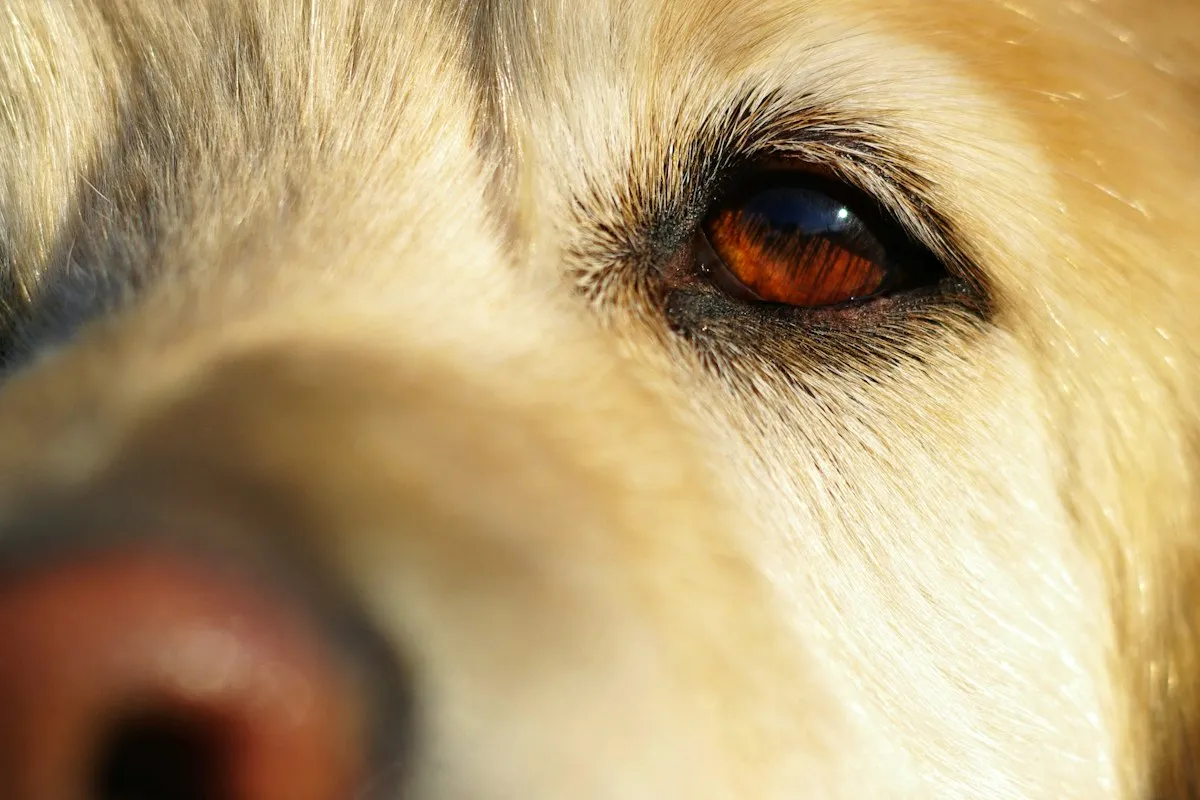
| Test | What it checks |
|---|---|
| Schirmer tear test (STT) | A small paper strip in the lower lid for 1 minute measures tear production. Normal is generally above 15 mm per minute; below 10 mm suggests dry eye. |
| Fluorescein stain | An orange dye that turns bright green where the cornea is damaged, revealing ulcers and scratches. It also checks whether tear ducts are open, as dye should appear at the nostril. |
| Tonometry | Measures pressure inside the eye. Normal is roughly 10 to 25 mmHg. High pressure means glaucoma; low pressure suggests uveitis. |
| Ophthalmoscopy / slit lamp | Examines the lens, retina and inner structures. |
| Eyelid and third-eyelid check | Looks for foreign bodies, extra lashes, entropion and cherry eye, often after a numbing drop. |
| Swab culture, blood tests, blood pressure | For stubborn infections, tick fever, distemper, high blood pressure and other whole-body diseases. |
Treatment overview
- Bacterial conjunctivitis: antibiotic eye drops or ointment, plus treating any cause such as dry eye or allergy.
- Corneal ulcer: antibiotic drops, pain relief, atropine for spasm in some cases, a cone, and close rechecks. Deep or melting ulcers may need surgery such as a conjunctival graft. No steroids.
- Dry eye: cyclosporine or tacrolimus ointment to stimulate tears, artificial tear gels several times a day, and antibiotics if infected. Treatment is usually lifelong.
- Allergic conjunctivitis: anti-inflammatory drops only after an ulcer has been ruled out, and allergy control.
- Glaucoma: emergency pressure-lowering drops and medicines, often followed by surgery; painful blind eyes may need removal for comfort.
- Entropion, distichiasis, cherry eye, eyelid tumours: surgery.
- Systemic causes: treating distemper, tick fever, diabetes or high blood pressure.
Why human steroid eye drops can blind dogs
Many combination eye drops sold over the counter at Indian chemists contain an antibiotic plus a steroid such as dexamethasone, betamethasone or prednisolone. Steroids reduce redness quickly, so the eye looks better for a day or two. But if your dog has a corneal ulcer, steroids slow healing and activate enzymes that dissolve the cornea. A shallow scratch can become a deep “melting” ulcer and rupture, and the eye may be lost. Only use any eye drop after your vet has done a fluorescein stain.
Other home remedies to avoid
- Rose water, kajal or surma, honey, ghee, breast milk, tea leaves or turmeric in the eye
- Leftover drops from a family member or a previous pet
- Cotton buds inside the eyelids
- Ointment from a different tube “because it worked last time”
How to clean your dog’s eyes safely

- Wash your hands.
- Use a soft cotton pad or gauze dampened with boiled-and-cooled water or a vet-approved sterile eye wash. Use a fresh pad for each eye.
- Wipe from the inner corner outward, gently, without pressing on the eyeball.
- Soften dried crusts by holding the damp pad against them for 30 seconds first.
- Dry the fur under the eye. For long-haired breeds, keep hair around the eyes trimmed by a groomer.
- To apply drops: tilt the head up, rest your hand on the head, and drop from above without touching the eye. Wait at least 5 minutes between different drops, and use ointments last.
When to see a vet urgently
- Squinting, holding the eye shut, or pawing at it
- Cloudy, blue or white patch on the eye
- Red eye with a large or enlarged-looking eyeball
- Eye bulging or popped out of the socket
- Blood in or around the eye
- Sudden loss of vision
- Yellow-green discharge in a puppy, or with fever, cough or poor appetite
- Any eye injury, chemical splash (rinse with clean water for 10 to 15 minutes on the way), or cat scratch
Frequently asked questions
Will cherry eye go away on its own?
Rarely. The gland may pop in and out at first but usually stays out over time. Surgery to replace it protects long-term tear production.
How much does cherry eye surgery cost in India?
Costs vary widely by city and clinic. Ask your vet for an estimate per eye that includes anaesthesia, medicines and a cone; referral ophthalmology centres usually charge more than general practices.
Can I treat my dog’s eye infection without a vet?
No. Eye infections often have an underlying cause, such as an ulcer, dry eye or eyelid problem, that needs to be found. The wrong drops can make things worse.
Are tear stains a sign of infection?
Usually not. Rust-coloured tear staining is common and mostly cosmetic. A sudden increase, a bad smell, or red skin under the eye should be checked.
Can dog eye infections spread to humans?
Most dog eye infections are not passed to people, but wash your hands after cleaning your dog’s eyes and before touching your own face.
This article is for education and does not replace a veterinary eye examination. If your dog is squinting or has a cloudy or bulging eye, see a vet the same day.
Related Articles
- Dog Not Eating: Causes, What To Do, and When To See a Vet
- Dog Ear Infection (Otitis): Yeast vs Bacteria, Ear Mites, Treatment and Safe Cleaning
- Dog Pooping Blood in India: Red Blood (Hematochezia) vs Black Tarry Stool (Melena), Causes and When To See a Vet
- Why Is My Dog Coughing (Khansi)? Kennel Cough vs Heart Cough vs Tracheal Collapse vs Throat Blockage, and Safe Steam Care
References
- Beal A. Cherry Eye in Dogs: What Does It Look Like, and Why Does It Happen? PetMD, 2025.
- Fassbaugh EA. 22 Common Dog Eye Problems. PetMD, updated 2025.
- Coates J. 5 Types of Dog Eye Discharge and When To Go to the Vet. PetMD, 2023.
- Maggs DJ, Miller PE, Ofri R. Slatter’s Fundamentals of Veterinary Ophthalmology. Elsevier.
- Gelatt KN. Veterinary Ophthalmology. Wiley-Blackwell.
More on Dog Symptoms and What They Mean
UTI in Dogs: Signs, Urine Tests, Right Antibiotics and Why Chemist Norflox or Cipro Can Backfire
Dog peeing often or with blood? Signs of urinary infection, urine culture, antibiotics, why UTIs recur, and when straining is an emergency.
Nursing Mother Dog Trembling (Milk Fever / Eclampsia), Distemper Twitching and Swollen Glands in Dogs: Indian Vet Triage Guide
Nursing mother dog trembling? Eclampsia (milk fever) vs seizures, distemper twitching, poisoning, swollen lymph nodes and when to rush.