 Written and reviewed by Dr. Vaishnavi Karmawat, B.V.Sc. & A.H., Registered Veterinary Practitioner
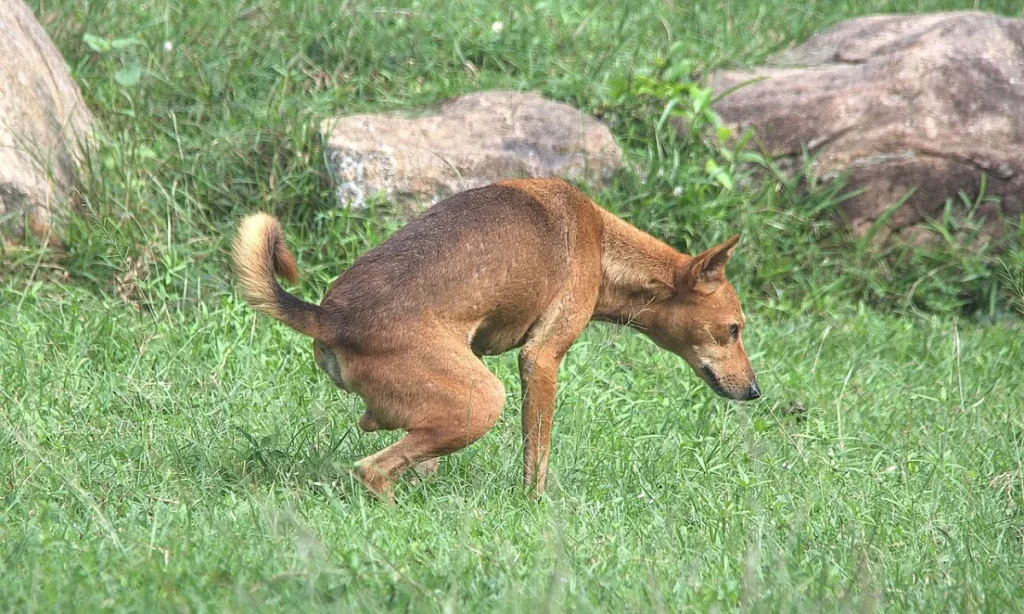
Quick answer: A urinary tract infection (UTI) usually shows as peeing small amounts often, straining, accidents indoors, licking the genitals, or pink or smelly urine. About 1 in 7 dogs gets a UTI in its lifetime, most often females, seniors and dogs with diabetes, Cushing’s disease or bladder stones. A urine test confirms it, and a short course of the right antibiotic usually clears it within days. A dog, especially a male, straining with little or no urine coming out is an emergency, because a stone may be blocking the urethra.
In this article
- Do not start leftover or chemist antibiotics such as norfloxacin or ciprofloxacin; they breed resistant bacteria and spoil the urine test.
- Many “UTIs” are actually bladder stones, crystals, pyometra or prostate problems; a urine test tells them apart.
- Repeated UTIs always have a reason worth finding.
- In cats, true bacterial UTIs are uncommon under 10 years of age; straining cats need a different approach.
How UTIs happen
The urinary tract includes the kidneys, ureters, bladder and urethra. Normally, flowing urine, a tight urethral sphincter and the bladder’s lining keep bacteria out. Bacteria from the dog’s own skin and rectum, most commonly E. coli, followed by Staphylococcus, Proteus, Enterococcus and Klebsiella, can climb up the urethra into the bladder when these defences weaken. The infection inflames the bladder wall (cystitis), causing pain and the urge to urinate. If it travels up to the kidneys (pyelonephritis) or into the prostate, it becomes much more serious.
Types of UTI
| Type | Description | Typical treatment |
|---|---|---|
| Sporadic (simple) bacterial cystitis | An occasional bladder infection in an otherwise healthy dog, fewer than 3 per year | Short antibiotic course, often 3 to 5 days |
| Recurrent UTI | 3 or more infections a year, or one that returns soon after treatment | Culture-guided antibiotics plus finding the underlying cause |
| Pyelonephritis (kidney infection) | Infection in the kidneys; fever, back pain, dullness, vomiting | Longer antibiotics, often 10 to 14 days; sometimes hospital care |
| Bacterial prostatitis (unneutered males) | Infection of the prostate; straining, blood from the penis, fever | Antibiotics that reach the prostate for weeks, and neutering |
| Subclinical bacteriuria | Bacteria in urine with no signs at all | Often no antibiotics needed |
Symptoms
- Peeing small amounts many times, or asking to go out often
- Straining or squatting for a long time
- Crying, restlessness or pain when peeing
- Accidents indoors in a house-trained dog
- Pink, red, cloudy or strong-smelling urine
- Frequent licking of the vulva or penis; rust-coloured saliva staining around the area
- Drinking more water
- With kidney or prostate infection: fever, dullness, poor appetite, vomiting, back pain
When it is an emergency
- Straining with only drops or no urine for more than a few hours, especially in a male dog
- A swollen, painful belly
- Vomiting, collapse or severe dullness
- An unspayed female, 2 to 8 weeks after heat, who is drinking a lot and unwell (possible pyometra)
Risk factors
- Female dogs: shorter, wider urethra
- Recessed or hooded vulva: common in overweight females and dogs spayed very young; skin folds trap moisture and bacteria
- Diabetes and Cushing’s disease: sugar in urine and lowered immunity
- Bladder stones and crystals: Shih Tzus, Lhasa Apsos, Miniature Schnauzers, Yorkies, Bichons, Dalmatians
- Long-term steroids or other immune-suppressing medicines
- Kidney disease and dilute urine
- Spinal problems such as IVDD or paralysis, so the bladder does not empty fully
- Urinary incontinence in spayed females
- Holding urine for long hours, low water intake and dehydration, especially in Indian summers
- Unneutered male dogs (prostate disease)
How vets diagnose a UTI
Urinalysis
A dipstick and microscope check for blood, white blood cells, bacteria, crystals, protein, sugar and how concentrated the urine is.
Urine culture and sensitivity
The lab grows the bacteria and tests which antibiotics kill them. It is strongly recommended for recurrent infections, sick dogs, kidney or prostate infections, and any dog that was recently on antibiotics. The best sample is collected by cystocentesis, a quick, sterile needle sample through the belly wall into the bladder, which is generally well tolerated.
Collecting a urine sample at home
- Ask your vet for a sterile container, or use a new, clean, dry container.
- Collect the first morning urine if possible.
- For females, slide a clean, shallow steel plate or ladle under her as she squats; for males, hold the container in the stream.
- Collect midstream, not the first few drops.
- Close the lid, label it, and take it to the vet within 1 to 2 hours, or refrigerate it for up to about 6 hours. Do not freeze.
Free-catch samples are fine for a basic urinalysis but can be contaminated for culture.
Further tests
- X-rays and ultrasound for stones, tumours, kidney changes and the prostate
- Blood tests for diabetes, Cushing’s disease and kidney function
- Rectal exam in male dogs for the prostate
- Cystoscopy (a camera into the bladder) in stubborn cases
Treatment
- Antibiotics: for simple bladder infections, international guidelines now support short courses of amoxicillin or trimethoprim-sulfa, often for only 3 to 5 days. Complicated, kidney and prostate infections need longer courses chosen from culture results.
- Pain relief to make peeing comfortable, as prescribed.
- Treating the cause: dissolving or removing bladder stones, controlling diabetes or Cushing’s disease, weight loss and skin-fold care for hooded vulvas, sometimes surgery to correct the vulva.
- More water: wet food, broth without onion or salt, more water bowls, extra toilet breaks.
Give every dose, even if signs disappear in a day. Your vet may recheck the urine after treatment, especially for recurrent or complicated infections.
Why chemist antibiotics are a problem
In India it is easy to buy norfloxacin, ciprofloxacin or ofloxacin over the counter. Using them without a test, at the wrong dose or for the wrong length of time can hide the symptoms for a while, select resistant bacteria and make the next infection much harder and costlier to treat. Fluoroquinolones are best reserved for culture-proven cases, and some are unsafe for growing puppies.
Home remedies: what helps and what does not
- Helps: more water, frequent toilet breaks, keeping the genital area clean and dry, weight loss in overweight dogs.
- Weak evidence: cranberry extracts and probiotics may reduce recurrences in some dogs but do not cure an active infection.
- Avoid: baking soda, lemon water, apple cider vinegar, and human cranberry juice with sugar. These can change urine pH in harmful ways or upset the stomach, and none treat infection.
Prevention
- Fresh water always available; several bowls in summer.
- Toilet breaks at least every 6 to 8 hours; do not make your dog hold urine all day.
- Keep fur around the vulva or prepuce trimmed, and wipe skin folds clean and dry.
- Keep your dog at a healthy weight.
- Annual urine tests for seniors and dogs with diabetes, Cushing’s or kidney disease.
- Follow your vet’s diet advice if your dog has had stones or crystals.
Cats are different
Most young and middle-aged cats that strain or pee outside the litter box do not have a bacterial infection; they have feline idiopathic cystitis, crystals or stones. Male cats can become blocked and die within days. See our guide to cat urinary blockage and FLUTD.
Frequently asked questions
Can a dog’s UTI go away on its own?
Some mild cases may settle, but untreated infections can spread to the kidneys or prostate. A vet check and urine test are the safest path.
How fast do antibiotics work?
Most dogs feel better within 24 to 48 hours. If there is no improvement in 2 to 3 days, call your vet; a culture may be needed.
Why does my dog keep getting UTIs?
Usually because of an underlying problem such as bladder stones, a recessed vulva, diabetes, Cushing’s disease, incontinence or an incomplete earlier course. These need investigation.
Is blood in the urine always a UTI?
No. It can also come from stones, tumours, tick fever, rat poison, prostate disease, heat in females or injury.
Can people catch a UTI from their dog?
Dog UTIs are not considered contagious to people, but wash your hands after handling urine.
This article is for education and does not replace a veterinary examination. If your dog is straining without passing urine, go to a vet immediately.
References
- Kearley M. UTI in Dogs: Signs, Causes, and Treatment. PetMD, updated 2025.
- Weese JS, et al. International Society for Companion Animal Infectious Diseases (ISCAID) guidelines for the diagnosis and management of bacterial urinary tract infections in dogs and cats. Vet J, 2019.
- Byron JK. Urinary tract infection. Vet Clin North Am Small Anim Pract, 2019.
- Seguin MA, et al. Persistent urinary tract infections and reinfections in 100 dogs. J Vet Intern Med, 2003.
More on Dog Diseases and Infections
Pyometra in Dogs and Cats: Early Signs After Heat, Open vs Closed Pyometra, Surgery Cost in India and Why Heat-Stopping Injections Are Risky
Unspayed dog drinking more, off food or with discharge after heat? Pyometra signs, why it is an emergency, surgery cost in India…
Hypothyroidism in Dogs: Weight Gain, Hair Loss and Low T4, Why One Test Is Not Enough, and Using Thyronorm or Eltroxin Safely
Weight gain, hair loss, low energy? Why one T4 test is not enough, how thyroid tablets like Thyronorm are used, and monitoring…