 Written and reviewed by Dr. Vaishnavi Karmawat, B.V.Sc. & A.H., Registered Veterinary Practitioner
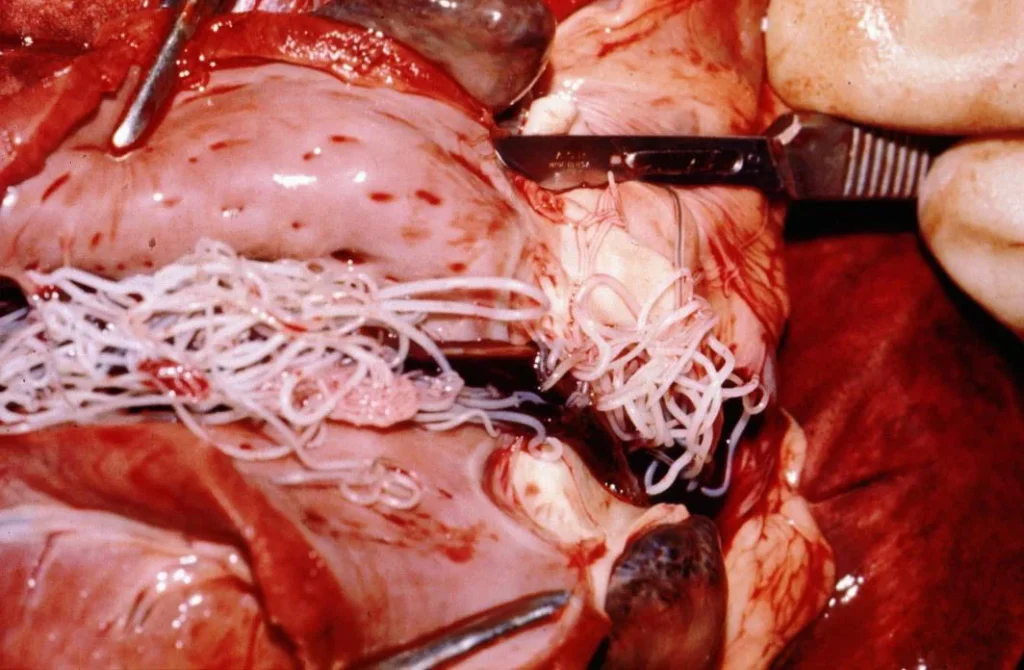
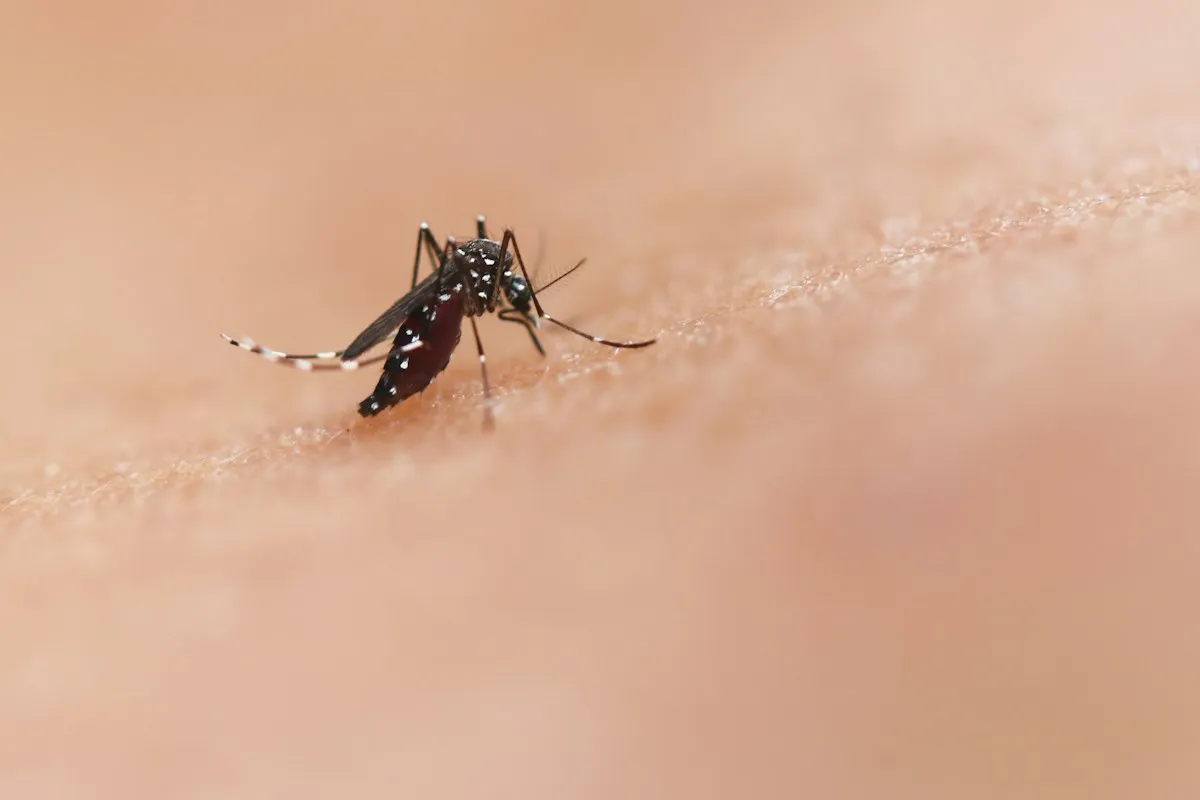
- Heartworm (Dirofilaria immitis) is spread by mosquitoes, not by contact between dogs. Any dog bitten by mosquitoes can get it.
- Adult worms live in the heart and lung arteries and can reach 25 to 30 cm long; damage builds silently for months to years.
- Early heartworm has no signs; later signs are cough, tiring easily, weight loss, a swollen belly and collapse.
- A blood antigen test detects infection from about 5 to 7 months after the infective bite.
- Treatment is long, costly and carries risk; monthly prevention is far safer and cheaper.
- India also has Dirofilaria repens, a skin worm spread the same way that can occasionally infect people’s eyes and skin.
Heartworm disease is a serious, sometimes fatal infection of the heart and lungs. In India it is reported most often from coastal and humid regions such as Kerala, Karnataka, Tamil Nadu, Goa, West Bengal and the North-East, but mosquitoes are everywhere and cases are found well inland too. Because it gives no warning signs for a long time, many owners only learn about it when the dog is already ill. This article explains how heartworm develops, the stages of disease, how it is tested and treated, and how to prevent it.
In this article
Go to a vet immediately if a dog suddenly collapses, has pale gums, breathes with difficulty, or passes dark red or coffee-coloured urine. In heavily infected dogs, worms can block blood flow into the heart (caval syndrome), which is an emergency needing surgery.
How heartworm spreads: the life cycle
- An infected dog carries baby worms called microfilariae in its blood.
- A mosquito (species of Culex, Aedes and Anopheles can all transmit it) takes a blood meal and swallows them.
- Inside the mosquito the larvae develop for about 10 to 14 days in warm weather into the infective third-stage larvae (L3).
- When the mosquito bites another dog, the larvae enter through the bite wound.
- They migrate through the tissues for several months, growing as they go, and reach the pulmonary arteries (the vessels from the heart to the lungs).
- About 6 to 7 months after the bite, adult worms mate and release new microfilariae. Adults can live 5 to 7 years in dogs.
Warm, humid climates speed up larval development in mosquitoes, which is why tropical India has a long or year-round transmission season.
What the worms do to the body
- Adult worms irritate the lining of the lung arteries, causing inflammation, thickening and narrowing (pulmonary arterial disease).
- The right side of the heart has to pump harder and may enlarge and eventually fail (right-sided heart failure).
- Dead worms break into fragments that lodge in the lungs, causing clots and inflammation (thromboembolism). This is why exercise must be restricted during treatment.
- A bacterium living inside heartworms, Wolbachia, adds to the inflammation; this is why vets use the antibiotic doxycycline as part of treatment.
- Very heavy infections can cause caval syndrome, where worms back up into the right atrium and great veins, destroying red blood cells.
Symptoms and stages
| Stage (class) | What you may see | What the vet may find |
|---|---|---|
| 1. Mild | No signs, or an occasional cough | Normal or mild changes on X-ray |
| 2. Moderate | Occasional cough, tires on exercise | Visible changes in the lung arteries on X-ray, mild changes in blood tests |
| 3. Severe | Persistent cough, breathlessness, weight loss, poor coat, fainting after exercise | Enlarged right heart, abnormal lung arteries, signs of right heart failure |
| 4. Caval syndrome | Sudden collapse, pale gums, laboured breathing, dark red or brown urine | Worms visible in the heart on ultrasound; needs emergency removal |
The number of worms, how long the dog has been infected and how active the dog is all affect how severe the disease becomes. Active, working and sporting dogs often show signs earlier.
How heartworm is diagnosed

| Test | What it detects | Notes |
|---|---|---|
| Antigen test (ELISA, rapid snap tests) | A protein from adult female worms | The main screening test. Turns positive about 5 to 7 months after infection. May miss very light or all-male infections |
| Microfilaria test (modified Knott test or blood smear) | Baby worms in the blood | Confirms an active infection; also helps tell D. immitis from D. repens and other filarial worms common in India |
| Chest X-ray | Enlarged lung arteries and right heart | Helps stage the disease |
| Echocardiogram (heart ultrasound) | Worms in the heart and arteries; heart function | Essential when caval syndrome is suspected |
| Blood and urine tests | Kidney, liver and red blood cell health | Before treatment |
In India, a dog that tests positive for microfilariae may have D. repens rather than heartworm, so a vet may need both an antigen test and a careful look at the microfilariae (or a PCR) to be sure.
Treatment
Heartworm treatment must be planned and supervised by a vet. The approach recommended by the American Heartworm Society, used by many vets worldwide, follows these steps:
- Stabilise dogs with heart failure using medicines for the heart and lungs.
- Start a heartworm preventive (a macrocyclic lactone) to kill new larvae and reduce microfilariae, under observation because killing many microfilariae at once can cause a reaction.
- Give doxycycline for about 4 weeks to weaken the worms by targeting Wolbachia.
- Kill the adult worms with a series of melarsomine injections into the back muscles, usually one injection and then two more about a month later. Availability of this drug in India is limited, so your vet will discuss what can be obtained locally.
- Strict exercise restriction (cage or leash rest) from diagnosis until several weeks after the last injection, to reduce the risk of fatal lung clots as worms die.
- Retest for microfilariae and antigen months after treatment to confirm success.
The “slow-kill” method, using only a preventive with doxycycline for months to years, is not recommended as a first choice because the worms continue to damage the arteries while they slowly die. Vets sometimes use it when the standard drug is unavailable or the dog cannot tolerate it. Surgery to remove worms is used for caval syndrome.
Never give large doses of ivermectin (including livestock injections) to “treat” heartworm at home. In collies, shelties, Australian shepherds and their crosses with the MDR1 gene mutation, this can cause seizures, coma and death, and in dogs with many microfilariae it can trigger shock.
Prevention
Prevention is safe, simple and much cheaper than treatment.
- Options: monthly chewable tablets (ivermectin, milbemycin oxime or moxidectin, often combined with other wormers or tick medicines), monthly spot-ons (selamectin, or moxidectin with imidacloprid) and long-acting moxidectin injections where available.
- When to start: as early as the label allows, often from 6 to 8 weeks old. Puppies started before 6 months do not need a test first.
- Test first: dogs older than about 7 months should have an antigen test before starting prevention, and yearly tests afterwards are recommended.
- Year-round: in most of India mosquitoes are active all year, so give prevention every month without gaps. A late dose leaves larvae time to mature beyond the stage that preventives kill.
- Reduce mosquito bites: keep dogs indoors at dusk and dawn, use mosquito nets on kennels, remove stagnant water from coolers, pots and tyres, and ask your vet about tick products that also repel mosquitoes. For tick and flea choices, see our tick and flea control guide.
Heartworm in cats
- Cats are less suitable hosts, so they usually carry only 1 to 3 worms, but even a single worm can cause severe disease.
- Many signs come from the immature worms dying in the lungs, called heartworm-associated respiratory disease (HARD); it looks like asthma, with coughing and breathing difficulty.
- Other signs include vomiting, weight loss and sometimes sudden death.
- Diagnosis is difficult and often uses a combination of antigen and antibody tests, X-rays and ultrasound.
- There is no safe medicine to kill adult worms in cats; treatment supports the cat while the worms die naturally. Prevention with a cat-labelled monthly product is the only reliable protection, even for indoor cats, since mosquitoes come inside.
Dirofilaria repens: the “other” heartworm in India
- Spread by mosquitoes in the same way but lives under the skin, forming nodules, itchy skin or no signs at all.
- It is common in dogs in South India and is the main cause of human dirofilariasis in India, typically a worm in or around the eye or a small lump under the skin, reported especially from Kerala.
- Monthly heartworm preventives also protect against it, which protects your family too.
Frequently asked questions
Can my dog catch heartworm from another dog?
No. It only spreads through mosquito bites. An infected dog nearby does increase the chance that local mosquitoes carry it.
My dog lives indoors. Does it still need prevention?
Yes. Mosquitoes enter homes, and indoor dogs have been diagnosed with heartworm. The same applies to cats.
How long does it take for a dog to test positive?
Antigen tests usually become positive about 5 to 7 months after the infective bite, so a test soon after a suspected exposure may be falsely negative.
Can heartworm be cured?
Yes, most dogs diagnosed early and treated properly recover well. Dogs with advanced disease may have permanent lung and heart damage.
Is heartworm the same as the worms seen in stool?
No. Roundworms, hookworms and tapeworms live in the intestine. Heartworms live in the heart and blood vessels and never appear in stool.
Related Articles
- Giardia and Coccidia in Dogs and Cats: Symptoms, Stool Tests, Treatment and Stopping Re-infection
- Kidney Disease in Dogs and Cats: IRIS Stages, Symptoms, Renal Diet and Treatment
- Flea Allergy Dermatitis in Dogs and Cats: Signs, Flea Life Cycle, Treatment and Prevention in India
- Is My Dog or Cat Dehydrated? 1-Minute Gum and Skin Tent Check, ORS and When To See a Vet
References
- American Heartworm Society. Current Canine Guidelines for the Prevention, Diagnosis, and Management of Heartworm (Dirofilaria immitis) Infection in Dogs. 2024.
- American Heartworm Society. Current Feline Guidelines for the Prevention, Diagnosis, and Management of Heartworm (Dirofilaria immitis) Infection in Cats.
- McCall JW, Genchi C, Kramer LH, Guerrero J, Venco L. Heartworm disease in animals and humans. Advances in Parasitology. 2008;66:193-285.
- Simón F, Siles-Lucas M, Morchón R, et al. Human and animal dirofilariasis: the emergence of a zoonotic mosaic. Clinical Microbiology Reviews. 2012;25(3):507-544.
- Sabu L, Devada K, Subramanian H. Dirofilariosis in dogs and humans in Kerala. Indian Journal of Medical Research. 2005;121(5):691-693.
- Tropical Council for Companion Animal Parasites (TroCCAP). Guidelines for the Diagnosis, Treatment and Control of Canine Endoparasites in the Tropics. 2019.
More on Cat Health and Symptoms

FIP (Feline Infectious Peritonitis) in Kittens and Cats: Wet vs Dry Signs, A:G Ratio Test and Modern Antiviral Treatment
FIP in cats: how coronavirus mutates, wet vs dry signs, key blood and fluid tests, modern antiviral treatment, and prevention in multi-cat…

Heart Disease (HCM) in Cats: Silent Signs, Open-Mouth Breathing and Sudden Back-Leg Paralysis (Saddle Thrombus)
HCM heart disease in cats: at-risk breeds, open-mouth breathing, saddle thrombus paralysis, diagnosis, treatment and home breath counting.