 Written and reviewed by Dr. Vaishnavi Karmawat, B.V.Sc. & A.H., Registered Veterinary Practitioner
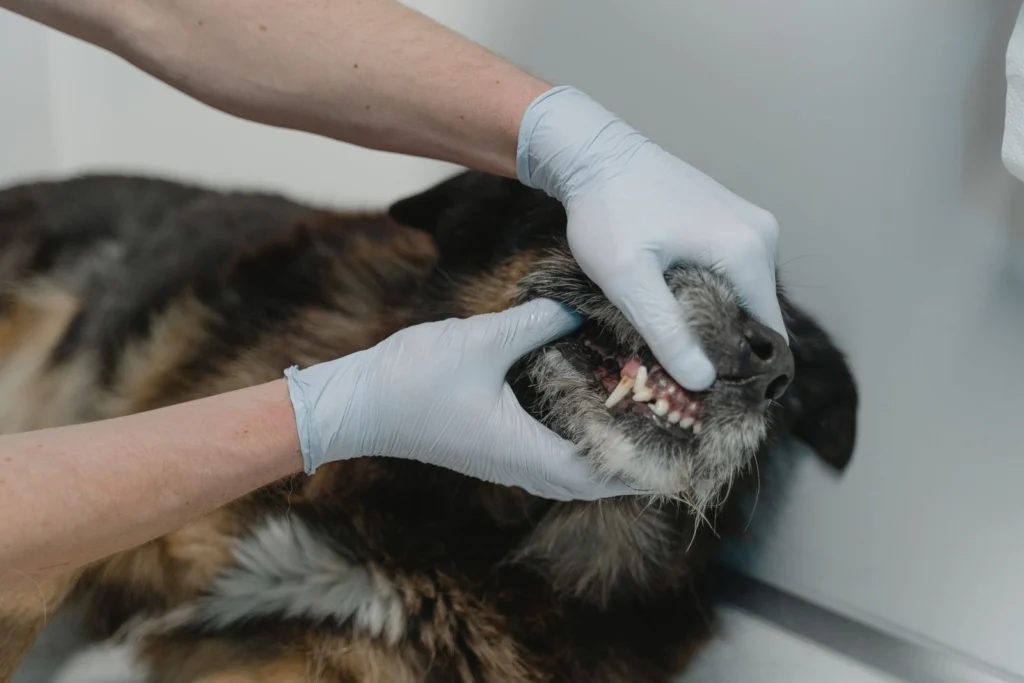
Rabies is present in every part of India, and dog bites cause almost all human rabies cases. Once symptoms appear, rabies is almost always fatal, in people and in animals. Yet it is completely preventable if a bite is handled correctly and quickly. Every family with children, pets or street dogs nearby should know these steps. This guide is written by a veterinarian to help you act fast; the medical treatment of people must always come from a doctor or government health centre.
In this article
- First aid: the first 15 minutes matter
- Which exposures need treatment?
- The vaccine schedule
- What about the dog?
- Signs of rabies in dogs
- How rabies develops in a dog
- The three clinical stages
- Diseases that can look like rabies
- Cats and rabies
- If your pet is bitten by another animal
- Prevention
- Frequently asked questions
- When should you call a vet?
Key Takeaways
- Rabies is almost always fatal once symptoms appear, but it is completely preventable after a bite if handled quickly.
- Wash any bite or scratch with soap and running water for 15 minutes, then go to a doctor or government hospital the same day.
- Do not apply chilli, turmeric, oil, lime, mud or other home remedies to the wound.
- Complete the full rabies vaccine course (and immunoglobulin if advised), even if the dog seems healthy.
- Vaccinate your pets against rabies every year and report a suspected rabid animal to local authorities.
After any bite or scratch from a dog, cat or other mammal: wash the wound with soap and running water for 15 minutes, then go to a doctor or government hospital the same day.
First aid: the first 15 minutes matter

- Wash immediately with plenty of soap and running water for 15 minutes. This alone removes much of the virus.
- Apply an antiseptic such as povidone-iodine if available.
- Do not apply chilli, turmeric, oil, lime, mud, herbs or other home remedies.
- Do not cover tightly or stitch the wound unless a doctor decides it is necessary.
- Go to a doctor or government health facility the same day, even if the wound is small or the dog looks healthy.
Anti-rabies vaccine is available at government hospitals and many health centres across India.
Which exposures need treatment?
Doctors in India use three categories:
| Category | Type of contact | What usually happens |
|---|---|---|
| I | Touching or feeding an animal, licks on unbroken skin | No vaccine needed; wash the area |
| II | Nibbling of uncovered skin, minor scratches or grazes without bleeding | Wound washing and rabies vaccine |
| III | Bites or scratches that break the skin and bleed, licks on broken skin, saliva in the eyes, mouth or nose, any bat contact | Wound washing, rabies vaccine and rabies immunoglobulin (RIG) injected into and around the wound |
Your doctor decides the category and treatment. Do not decide for yourself that a bite is "too small".
The vaccine schedule
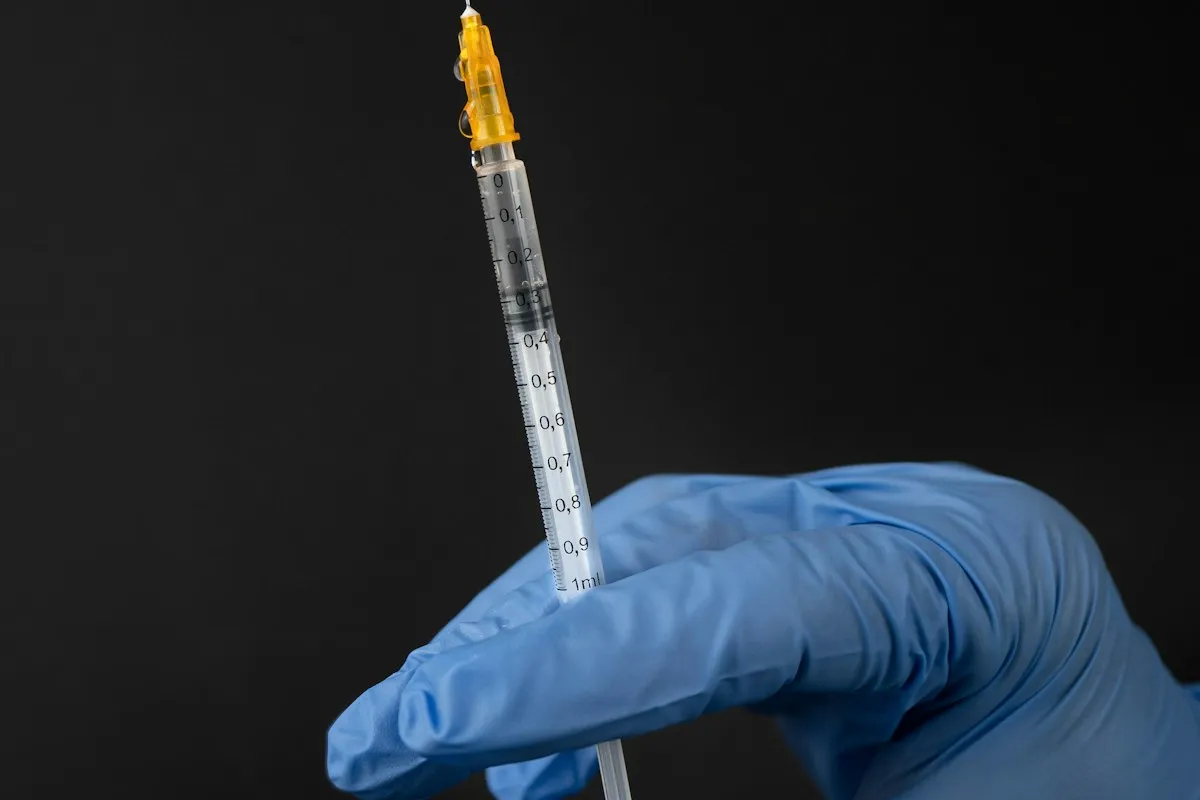
India uses two schedules for people who have not been vaccinated before:
| Route | Days given |
|---|---|
| Intramuscular (into the arm muscle) | Day 0, 3, 7, 14 and 28 |
| Intradermal (into the skin, two sites each visit) | Day 0, 3, 7 and 28 |
- Day 0 is the day of the first dose, ideally the day of the bite
- Complete every dose on time. Missing doses can leave you unprotected
- Pregnant women, babies and elderly people can and should receive the vaccine
- If you were fully vaccinated before, you usually need only two booster doses (day 0 and 3) and no immunoglobulin; your doctor will confirm
- If treatment starts late, start anyway. It is never too late to begin before symptoms appear
What about the dog?
- Do not kill the dog. If it is your pet or a known dog, keep it safely confined and watch it for 10 days
- A healthy dog or cat that remains well for 10 days after the bite was not able to pass rabies at the time of the bite. Your doctor may use this information, but never delay starting the vaccine to wait for the observation period
- If the dog becomes sick, changes behaviour or dies, tell your doctor and local animal husbandry or municipal authorities
- Report bites by stray dogs to your local municipality so the animal can be checked
Signs of rabies in dogs
- Change in behaviour: unusual aggression or unusual friendliness, hiding
- Biting at air or objects, restlessness
- Drooling, difficulty swallowing, change in bark
- Weakness and paralysis, often starting in the back legs
- Death within about 10 days of signs starting
Never handle a dog showing these signs. Call your municipal animal control or a veterinarian.
How rabies develops in a dog
Rabies is caused by a lyssavirus carried in the saliva of an infected animal. In India, dogs are the source of the large majority (about 96 percent) of human rabies cases, and India is estimated to account for around a third of the world’s rabies deaths. The national plan aims to end dog-mediated rabies by 2030, largely by vaccinating dogs.
- Entry: the virus enters through a bite, scratch or saliva on broken skin or the eyes and mouth.
- Silent travel (incubation): it moves slowly along the nerves towards the spinal cord and brain. This usually takes 3 to 8 weeks in dogs but can range from about 10 days to several months. Bites on the face and neck have shorter incubation than bites on the legs. The dog looks completely normal and is not infectious during most of this time.
- Brain infection: once the virus reaches the brain, behaviour changes begin.
- Spread to the salivary glands: the dog becomes infectious, usually only a few days before the first signs appear. This is the basis of the 10-day observation rule.
The three clinical stages
| Stage | How long | What you may see |
|---|---|---|
| Prodromal (early) | 2 to 3 days | Subtle change in temperament: a friendly dog becomes shy or irritable, a shy dog becomes clingy; fever; licking or chewing at the old bite site; restlessness |
| Furious (excitative) | 1 to 7 days | Aggression without reason, biting at objects, air or cage bars, roaming, eating stones or wood, sensitivity to light and sound, hoarse or changed bark, seizures |
| Paralytic (dumb) | 2 to 4 days | Paralysis of the jaw and throat causing a dropped jaw, drooling and inability to swallow (often mistaken for a bone stuck in the throat), weakness spreading to the legs, coma, death |
Not every dog goes through all three. Many dogs show mainly the dumb form, which is quieter and easily missed, and is a common way for owners and vets to be exposed while examining the mouth. Once signs start, rabies is almost always fatal, usually within 7 to 10 days.
Never put your hand in the mouth of a dog with a dropped jaw or drooling to look for a bone unless you and your vet have ruled out rabies and are wearing gloves. Treat any such exposure as a possible rabies exposure and see a doctor.
Diseases that can look like rabies
- Canine distemper: twitching, seizures and behaviour change, very common in unvaccinated Indian dogs
- Something stuck in the throat or mouth, causing drooling and pawing at the mouth
- Poisoning (for example organophosphate, metaldehyde or strychnine)
- Head injury, brain tumours, meningitis and tick-borne infections
- Low blood sugar or liver disease causing odd behaviour
Only a vet can tell these apart, and even then rabies cannot be ruled out for certain in a living animal. Rabies is confirmed by testing brain tissue after death (the direct fluorescent antibody test), which is why suspected cases must be reported to the local animal husbandry department rather than buried or discarded.
Cats and rabies
Cats can get and spread rabies too, usually after a bite from a rabid dog or another animal. Cats often show the furious form, with sudden attacks and biting. Cats in India should be vaccinated against rabies from about 12 weeks of age with yearly boosters, and cat bites and scratches need the same first aid and medical care as dog bites.
If your pet is bitten by another animal
- Wash the wound with soap and water and see your vet the same day
- Your vet will check your pet's rabies vaccination record and may give a booster
- Keep your pet's vaccination card safe; it can save a lot of worry after a bite
Prevention
- Vaccinate your dogs and cats against rabies every year, or as your vet advises. See our vaccination schedule
- Teach children not to disturb eating, sleeping or nursing dogs, and to tell an adult about every bite or scratch
- Do not run from or stare at an unfamiliar dog; stand still and move away slowly
- Support local sterilisation and vaccination programmes for street dogs
- Veterinarians, animal handlers and people who work with street animals should get pre-exposure vaccination
🩺 Dr. Vaishnavi’s Clinical Picks (Available on Amazon India)
For minor scratches only. A dog bite always needs a doctor and rabies vaccination.
First-aid spray for minor wounds and to keep flies away
As an Amazon Associate, I earn from qualifying purchases. This costs you nothing extra.
Frequently asked questions
Do I need a rabies vaccine if my vaccinated pet dog bit me?
Wash the wound and see a doctor the same day. A vaccinated pet with a valid record lowers the risk, but only a doctor should decide whether you need treatment.
Is the rabies vaccine still 14 injections in the stomach?
No. That was the old nerve-tissue vaccine. Modern vaccines are given in the arm, in 4 or 5 doses depending on the schedule.
Can I get rabies from a scratch?
Yes, if the animal's claws or paws carry saliva. Scratches that break the skin are treated like bites.
Can I drink milk from a rabid cow or eat food touched by a rabid animal?
Indian guidelines state that milk from a rabid animal does not need rabies treatment. Do not eat or handle meat from a rabid animal, and ask your doctor about any direct contact.
I was bitten weeks ago and did nothing. What should I do now?
Go to a doctor today. Rabies can take weeks or months to appear, and starting the vaccine late is still far better than not starting.
When should you call a vet?
See a doctor the same day after any bite or scratch that breaks the skin. Call a vet if your pet has been bitten, if a dog or cat that bit someone becomes ill during the 10-day observation, or if your pet's rabies vaccine is overdue.
Recommended reading
- The Ultimate Dog Owner’s Handbook by Dr. Vaishnavi Karmawat (Kindle eBook on Amazon)
- See all titles on the Books page.
Related Articles
- Dog Seizures (Mirgi / Fits) First Aid Guide in India: What To Do During a Fit, Distemper vs Epilepsy and Safe Anti-Seizure Care
- Heatstroke in Dogs in India: Stages, First Aid, Vet Treatment and 10 Cooling Foods
- Dog Ate Chocolate, Grapes, Onion, Rat Poison or Paracetamol? Vet First Aid and Treatment
- Can Dogs Eat Grapes or Kishmish (Raisins)? Why Even a Few Can Cause Kidney Failure
References
- National Rabies Control Programme, MoHFW, Government of India. National Guidelines for Rabies Prophylaxis.
- World Health Organization. WHO Expert Consultation on Rabies: Third Report. WHO Technical Report Series 1012. Geneva: WHO; 2018.
- National Centre for Disease Control and Ministry of Fisheries, Animal Husbandry and Dairying, Government of India. National Action Plan for Dog Mediated Rabies Elimination from India by 2030 (NAPRE). 2021.
- Hampson K, Coudeville L, Lembo T, et al. Estimating the global burden of endemic canine rabies. PLoS Neglected Tropical Diseases. 2015;9(4):e0003709.
- Fooks AR, Cliquet F, Finke S, et al. Rabies. Nature Reviews Disease Primers. 2017;3:17091.
More on Dog Poisoning and Emergencies

Vomiting and Acidity Medicines for Dogs and Cats: Maropitant (Cerenia), Ondansetron, Pantoprazole and Famotidine
How vets use maropitant, ondansetron, famotidine and pantoprazole for vomiting and acidity in dogs and cats, and why diagnosis must come first.

How To Induce Vomiting in Dogs (And 6 Situations Where Making a Dog Vomit Is Deadly)
When and how vets make a poisoned dog vomit, when you must never induce vomiting, why cats are different, and which home…