 Written and reviewed by Dr. Vaishnavi Karmawat, B.V.Sc. & A.H., Registered Veterinary Practitioner

The first four months shape a puppy’s health and personality for life. In these weeks a puppy goes from a blind, deaf newborn that cannot even keep itself warm to a curious youngster learning about people, sounds, toilet habits and the outside world. In India, puppies also face a serious extra risk: parvovirus and distemper are common, and unvaccinated street dogs share many of the places puppies want to explore.
In this article
Here is a stage-by-stage guide to puppy care from birth to 16 weeks, including orphan puppy feeding (and why not cow’s milk or Cerelac), deworming and vaccines, and when it is safe to start walks outside.
Key Takeaways
- Newborn puppies cannot control their own body temperature until about 3 to 4 weeks old. Keep them warm, and never feed a chilled puppy until it has been warmed.
- Puppies need their mother’s first milk (colostrum) in the first 24 hours for protective antibodies.
- Orphan puppies need a puppy milk replacer. Cow’s or buffalo milk and Cerelac do not provide what puppies need and often cause diarrhoea.
- Weaning starts at about 3 to 4 weeks; puppies should stay with their mother and litter until at least 8 weeks.
- Deworm from 2 weeks of age, every 2 weeks until 12 weeks, then monthly until 6 months, or as your vet advises.
- Vaccines (DHPPi and others) start at 6 to 8 weeks and are repeated every 3 to 4 weeks until about 16 weeks; rabies from 12 weeks.
- Keep puppies off public ground and away from unknown dogs until about 2 weeks after the final puppy vaccine, but socialise them safely in the meantime.
Puppy Care From Birth to 7 Weeks
Week 1–2: the newborn stage
- Colostrum: puppies must nurse within the first few hours. Colostrum provides antibodies that protect them for their first weeks and is absorbed only during the first 24 hours or so.
- Warmth: newborns cannot shiver effectively or regulate their body temperature, and rely on their mother and littermates. A chilled puppy cannot digest milk properly, and feeding it can be dangerous.
- Weight: weigh puppies daily on a kitchen scale. Healthy puppies gain about 5 to 10 percent of their body weight a day and roughly double their birth weight in 7 to 10 days. A puppy that loses weight or cries constantly needs a vet.
- Eyes and ears: the eyes open at about 10 to 14 days and the ear canals at about 14 to 17 days. Do not force them open.
- Toileting: the mother licks puppies to make them pass urine and stool. Orphans need this done for them (see below).
Week 3–4: waking up
- Puppies begin to walk, play, bark and explore. Baby teeth start to appear.
- The socialisation period begins at about 3 weeks. Gentle handling by people, household sounds and new surfaces help puppies grow into confident dogs.
- Weaning can begin with a soft gruel of good-quality puppy food soaked in warm water or milk replacer, offered in a shallow dish.
Week 5–7: weaning and learning
- Gradually make the food thicker and reduce soaking, so puppies are eating moistened puppy food by about 6 to 7 weeks.
- The mother and littermates teach important lessons, including bite inhibition (learning how hard is too hard). Puppies separated too early are more likely to have behaviour problems.
- Keep the area clean; puppies start leaving the nest to toilet.
- The first vet visit, deworming and the first vaccine usually happen around this time.
Caring for Orphan Puppies
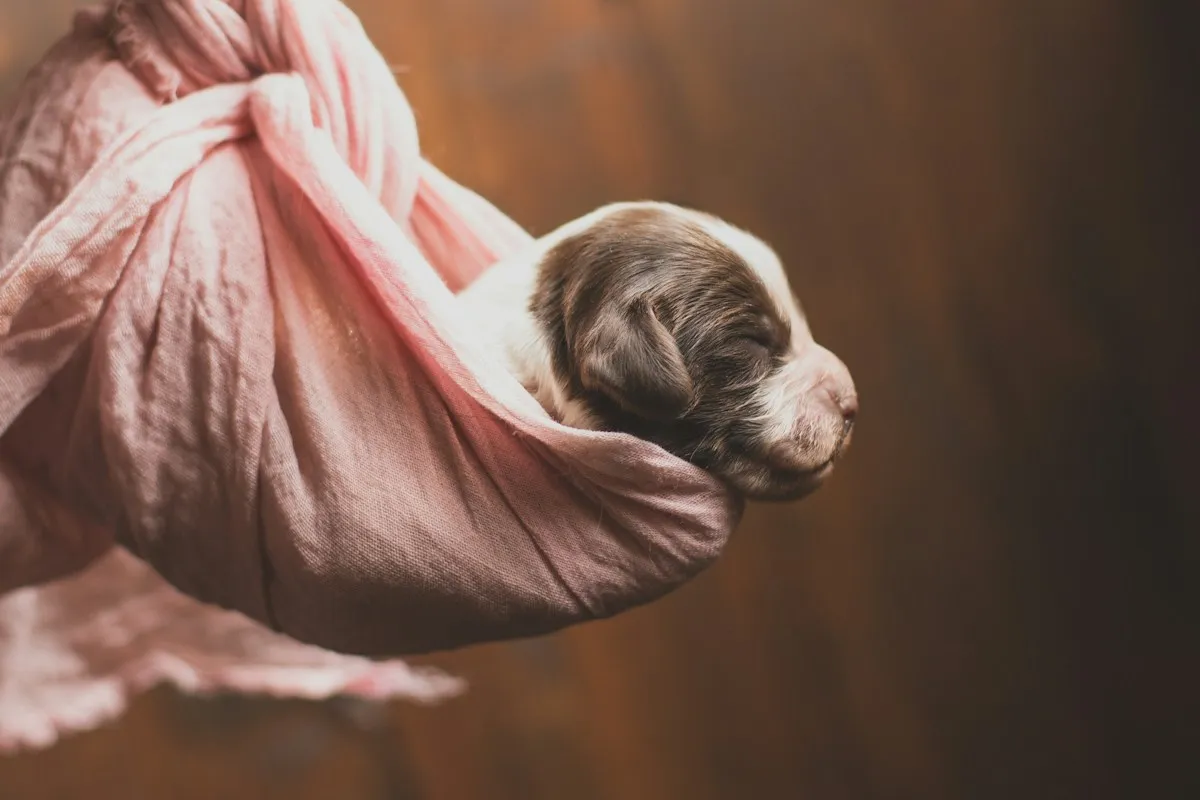
If the mother has died, rejected the litter or has no milk, puppies need round-the-clock care. Contact your vet early; very young orphans are fragile.
Keep them warm
| Puppy’s age | Suggested environment temperature |
|---|---|
| First week | About 29–32°C |
| Weeks 2–3 | About 27°C |
| Week 4 onwards | About 24°C |
Use a box with soft bedding and a heat source under only one half, such as a heating pad on low covered with a towel, or a warm water bottle wrapped in cloth, so puppies can move away if they get too warm. Check the temperature with your hand regularly to avoid burns, and keep the box out of draughts and direct sun.
Feed the right milk
Use a commercial puppy milk replacer, mixed exactly as directed, and a puppy feeding bottle or syringe. Feed with the puppy on its tummy, never on its back, to avoid milk going into the lungs. Newborns usually need feeding every 2 to 3 hours, day and night, in the first week, with the interval gradually lengthening.
Why not cow’s or buffalo milk? Dog milk is much richer in protein and fat and higher in energy than cow’s milk. Cow’s or buffalo milk, even when diluted, does not provide enough of these nutrients, and puppies often get diarrhoea, which can quickly become life-threatening at this age. Homemade egg-yolk and milk recipes are only an emergency stop-gap for a few hours until you can get a proper replacer.
Why not Cerelac or other baby cereal? Human infant cereals are designed for human babies. They are high in starch and sugar, low in the protein, fat and specific nutrients puppies need, and puppies under about 4 weeks cannot digest starch well. They are not a substitute for milk replacer or puppy food.
Help them toilet
After every feed, gently rub the puppy’s lower belly and genital area with a soft cloth or cotton wool dipped in warm water until it passes urine and stool. This replaces the mother’s licking and is needed until about 3 weeks of age.
Puppy Care From 8 to 16 Weeks
Most puppies go to their new homes at about 8 to 10 weeks. This is a period of rapid growth and learning.
Feeding
- Feed a complete puppy food (a large-breed puppy food for breeds expected to weigh over about 25 kg as adults).
- Give 3 to 4 small meals a day until about 4 months, then 3 meals until 6 months.
- Change foods gradually over a week to avoid diarrhoea.
- Do not add calcium or other supplements to a complete puppy food. Read about calcium and puppies.
- Fresh water should always be available.
House training and crate training
- Take your puppy out after waking, after meals and play, and every 1 to 2 hours during the day.
- Praise and reward immediately after it toilets in the right place. Never punish accidents. See puppy potty training problems.
- A crate just big enough to stand, turn and lie down in becomes a safe den and speeds house training. Keep crate time short and pleasant.
Teething and play biting
Puppies explore with their mouths. Offer safe chew toys, redirect biting onto toys, and stop play briefly if teeth touch skin. Permanent teeth replace baby teeth between about 3 and 7 months.
Deworming and Vaccination Schedule
| Age | Deworming | Vaccines (typical Indian schedule; your vet may adjust) |
|---|---|---|
| 2, 4, 6 weeks | Deworm every 2 weeks | — |
| 6–8 weeks | Deworm | First DHPPi (distemper, hepatitis/adenovirus, parvovirus, parainfluenza), often with leptospirosis (DHPPi+L) |
| 9–12 weeks | Deworm | Second DHPPi+L |
| 12–14 weeks | Deworm, then monthly | Third DHPPi+L; first rabies vaccine (not before 12 weeks) |
| 16 weeks | Monthly | Final puppy DHPPi booster recommended by most guidelines; rabies booster as advised |
| 6 months | Then every 3 months or as advised | — |
| 1 year | — | Annual boosters |
Puppies from mothers with good immunity carry maternal antibodies that can block early vaccines, which is why boosters continue until at least 16 weeks. See our puppy and kitten vaccination schedule and deworming schedule. Start flea and tick prevention with products labelled for your puppy’s age and weight; see tick tablets for dogs.
When Can a Puppy Go Outside?
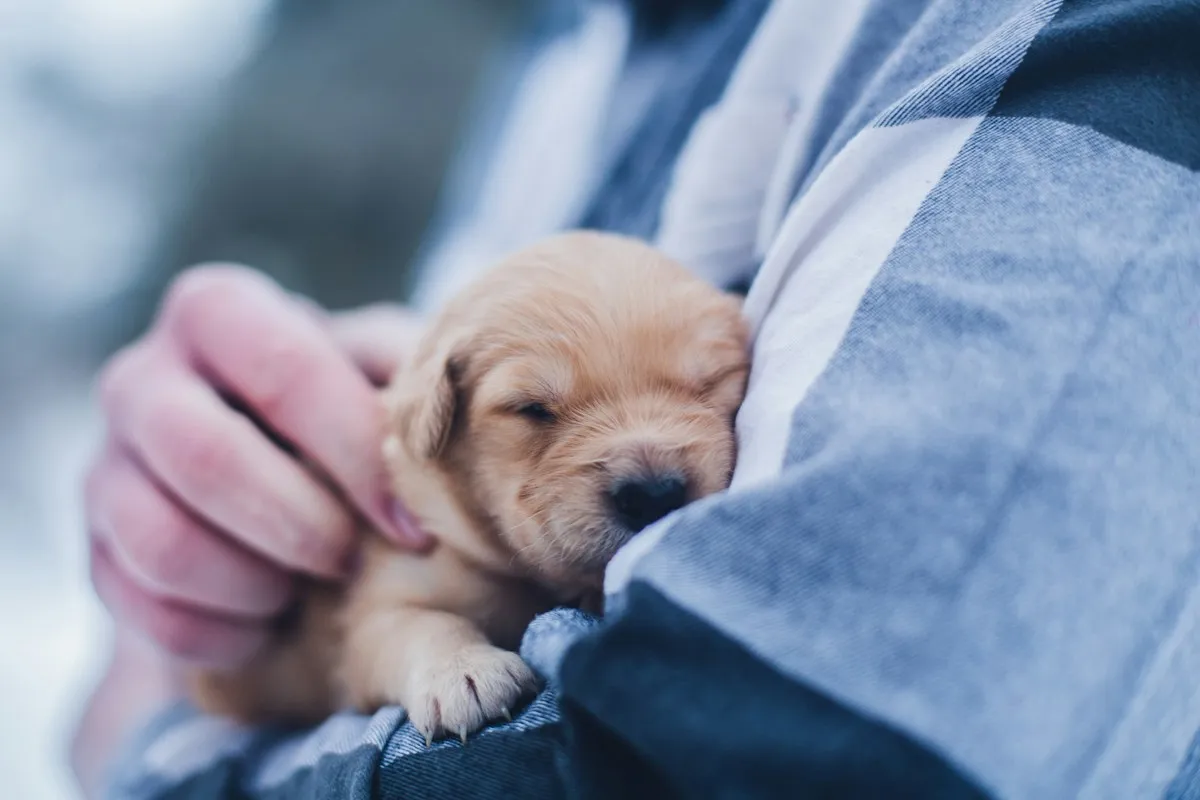
Puppies are considered fully protected about two weeks after their final puppy vaccine, typically around 18 to 20 weeks of age. Until then, they should not walk on the ground in public places, such as roads, parks, colony lanes and parking areas, or meet dogs of unknown vaccination status. Parvovirus survives for months in soil and on surfaces, and street dogs’ stool is a major source of infection.
Safe socialisation before vaccines are complete
The most important window for socialisation is roughly 3 to 12 weeks of age. Puppies that miss it are more likely to grow up fearful. Socialise safely by:
- Carrying your puppy in your arms, a sling or a carrier to see traffic, people, bikes, markets and sounds
- Inviting healthy, fully vaccinated, friendly dogs to your home
- Introducing many gentle visitors, children (supervised), and different floors, stairs and sounds at home
- Joining a puppy class that checks vaccination records
- Letting your puppy toilet on your own balcony, terrace or a clean private yard, not on the street
- Carrying your puppy into and out of the vet clinic
Once your vet confirms your puppy is protected, start with short walks and gradually build up, continuing to avoid areas with sick dogs.
When To See the Vet Urgently
- A newborn that is cold, weak, not suckling, crying constantly or losing weight
- Vomiting, diarrhoea (especially bloody), refusing food or lethargy in any puppy (possible parvovirus)
- Eye or nose discharge, coughing or twitching (possible distemper)
- Pale gums, a pot belly or worms in stool
- Difficulty breathing or milk coming from the nose after feeding
Frequently Asked Questions
Can I give cow’s milk to a puppy?
It is not suitable as the main food for orphan puppies and often causes diarrhoea. Use a puppy milk replacer, and after weaning, puppies do not need milk at all.
Is Cerelac good for puppies?
No. It is designed for human babies and does not meet a puppy’s nutritional needs. Use puppy food softened with water during weaning.
At what age can a puppy leave its mother?
Ideally not before 8 weeks. Puppies learn important social skills from their mother and littermates.
Can my puppy go out to pee before vaccines are complete?
Yes, in a clean private area such as your balcony, terrace or a yard where no sick dogs have been. Avoid streets and shared lawns.
How often should I deworm my puppy?
Every 2 weeks from 2 weeks of age until 12 weeks, then monthly until 6 months, unless your vet recommends otherwise.
This article is for education and does not replace veterinary advice. Schedules vary with your puppy’s health and local disease risk, so follow your vet’s plan.
Related Articles
- How To Increase Fat and SNF in Cow and Buffalo Milk Naturally
- Homemade Diet Chart for Indie Puppies in India: Month by Month
- Dog Pooping Blood in India: Red Blood (Hematochezia) vs Black Tarry Stool (Melena), Causes and When To See a Vet
- Giardia and Coccidia in Dogs and Cats: Symptoms, Stool Tests, Treatment and Stopping Re-infection
References
- Grenus B, Price M. When Can a Puppy Go Outside Safely? PetMD, 2026.
- PetMD. New Puppy Care: 0–7 Weeks; New Puppy Care: 8–12 Weeks.
- Squires RA, Crawford C, Marcondes M, Whitley N. 2024 Guidelines for the vaccination of dogs and cats, compiled by the Vaccination Guidelines Group (VGG) of the World Small Animal Veterinary Association (WSAVA). Journal of Small Animal Practice, 2024;65(5):277–316.
- Companion Animal Parasite Council (CAPC). Intestinal Parasites Guidelines for Puppies.
- Lawler DF. Neonatal and pediatric care of the puppy and kitten. Theriogenology, 2008;70(3):384–392.
- Howell TJ, King T, Bennett PC. Puppy parties and beyond: the role of early age socialization practices on adult dog behavior. Veterinary Medicine: Research and Reports, 2015;6:143–153.
More on Dogs
Dog and Cat Spay/Neuter Guide: Right Age, Laparoscopic vs Traditional Spay, 10-Day Stitch Care and Cone Rules
When to spay or neuter dogs and cats, open vs laparoscopic surgery, a day-by-day recovery plan, cone rules and warning signs at…

How To Check and Clean Your Dog’s Ears Safely: Step-by-Step Guide and Breeds Prone to Ear Infections
How to check and clean your dog's ears safely, how often to do it, what never to put in the ear, prone…