 Written and reviewed by Dr. Vaishnavi Karmawat, B.V.Sc. & A.H., Registered Veterinary Practitioner
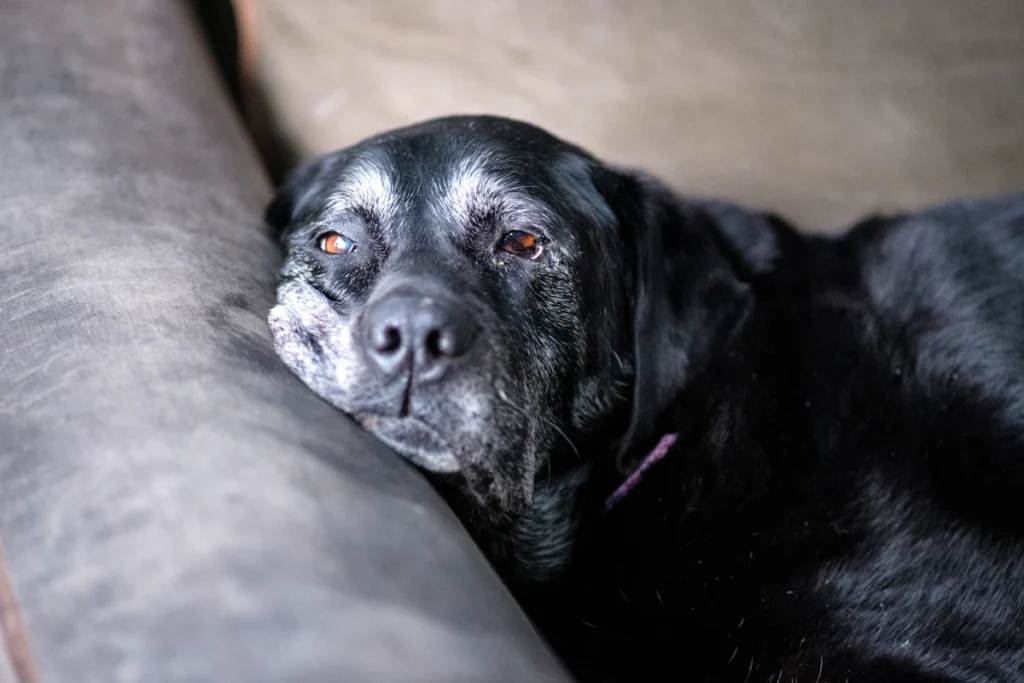
Short answer: if your middle-aged or older dog has started drinking much more water and peeing more, perhaps having accidents indoors, the two most common hormonal causes are diabetes mellitus and Cushing’s disease (hyperadrenocorticism). Kidney disease, infections and some medicines can cause the same signs. Both conditions are diagnosed with blood and urine tests, and both can be managed long term with daily medication and monitoring.
In this article
Key takeaways
- Diabetes: the dog cannot make enough insulin, so blood sugar rises and spills into the urine. Signs are thirst, frequent urination, big appetite with weight loss, and later cloudy eyes (cataracts). It needs insulin injections twice daily for life.
- Cushing’s: the body makes too much cortisol. Signs are thirst and urination, a ravenous appetite, a pot belly, panting, thin skin and symmetrical hair loss. Treatment is usually a daily tablet (trilostane).
- Long-term or high-dose steroid tablets or injections (prednisolone, dexamethasone) can cause the same signs (iatrogenic Cushing’s) and can trigger diabetes.
- Measure your dog’s water intake: more than about 100 ml per kg per day is abnormal and worth a vet visit.
Is my dog drinking too much?
Normal dogs drink roughly 40–60 ml of water per kg of body weight a day; a 10 kg dog drinks about 400–600 ml. In hot Indian summers and after exercise this rises. Over 100 ml/kg/day (more than 1 litre for a 10 kg dog) is considered excessive (polydipsia). To measure: fill a bowl with a known amount in the morning, refill from a measured jug through the day, and subtract what is left after 24 hours. Note any water drunk elsewhere.
| Cause of increased thirst and urination | Clues |
|---|---|
| Diabetes mellitus | Weight loss with a big appetite; sugar in urine; cataracts |
| Cushing’s disease | Pot belly, panting, hair loss, ravenous appetite, middle-aged small breeds |
| Chronic kidney disease | Weight loss, poor appetite, vomiting, bad breath. See kidney disease |
| Pyometra (womb infection) | Unspayed female, 2–8 weeks after heat; vaginal discharge (not always). Emergency |
| Steroid medicines | Recent prednisolone or dexamethasone tablets, injections or long-term skin creams |
| Others | Liver disease, high calcium, urinary infection, diabetes insipidus |
Diabetes mellitus in dogs
What happens
Most diabetic dogs have insulin-deficient (type 1-like) diabetes: the insulin-producing beta cells of the pancreas are destroyed, often by immune-mediated damage or repeated pancreatitis. Without insulin, cells cannot use glucose, so blood sugar rises. Once it exceeds about 180–220 mg/dL (the kidney threshold), glucose spills into the urine and drags water with it. That is the reason for the thirst and urination. Unlike cats, dogs almost never go into remission, so insulin is lifelong.
Risk factors
- Middle-aged to older dogs (most are 5–12 years old)
- Unspayed females: progesterone after heat causes insulin resistance, so spaying can help
- Obesity, pancreatitis, Cushing’s disease, long-term steroid use
- Breeds: Miniature Schnauzer, Poodle, Pug, Beagle, Dachshund, Samoyed, Spitz types
Signs
- Drinking and urinating more; accidents indoors; bedwetting
- Increased appetite but weight loss
- Sudden cloudy eyes: diabetic cataracts develop in most diabetic dogs within a year and can cause blindness. Surgery can restore vision.
- Recurrent urinary or skin infections
- Diabetic ketoacidosis (DKA, emergency): vomiting, not eating, weakness, fast breathing, a sweet “nail-polish” breath smell, collapse
Diagnosis
- Fasting blood glucose persistently high (normal about 70–140 mg/dL).
- Glucose in the urine; ketones if ketoacidosis is developing.
- Fructosamine: reflects average blood glucose over the previous 1–3 weeks, and helps separate stress-related spikes from true diabetes.
- Full blood tests, urine culture, and screening for triggers such as pancreatitis, Cushing’s and pyometra.
Treatment
Insulin injections twice daily, 12 hours apart, after meals. Veterinary insulins include porcine lente insulin (Caninsulin/Vetsulin, 40 U/ml) and protamine zinc insulin. Where these are not available, many Indian vets use human NPH (isophane) insulin under close supervision. A common starting dose is about 0.25 units per kg every 12 hours, adjusted gradually over weeks based on glucose curves. Never adjust the dose on your own.
| Do | Do not |
|---|---|
| Use the correct syringe for the insulin strength (U-40 syringes for 40 U/ml insulin; U-100 for 100 U/ml) | Mix up syringe types; this gives 2.5 times too much or too little |
| Roll the vial gently (or shake if the label says so) and store it in the fridge door | Freeze insulin or leave it in the sun |
| Feed the same food in the same amount at the same times | Change diet or give extra treats without discussing it |
| Give insulin after the dog eats | Give the full dose if the dog has not eaten; call your vet |
| Keep sugar syrup or honey at home for low sugar | Ignore weakness, trembling or seizures |
Low blood sugar (hypoglycaemia): an emergency
Too much insulin, a missed meal or extra exercise can drop blood sugar dangerously. Signs: weakness, wobbliness, trembling, confusion, seizures. Rub honey or sugar syrup on the gums (do not pour liquid into the mouth of a seizing dog) and go to a vet immediately.
Monitoring
- Daily record of water intake, appetite, urination and weight
- Glucose curves (blood glucose every 2 hours over 12 hours) or continuous glucose monitors (sensors such as FreeStyle Libre are increasingly used in dogs)
- Fructosamine every few months
- Diet: a consistent, high-fibre, moderate-fat diet; avoid sweets, rotis with sugar, and gulab jamun or other festival treats
Cushing’s disease (hyperadrenocorticism)
What happens
Cortisol is the body’s main stress hormone, made by the adrenal glands under the control of ACTH from the pituitary gland. Cushing’s means long-term excess cortisol.
| Type | Cause | Proportion |
|---|---|---|
| Pituitary-dependent (PDH) | A small, usually benign pituitary tumour overproduces ACTH, so both adrenal glands enlarge | About 80–85% of natural cases |
| Adrenal-dependent (ADH) | A tumour in one adrenal gland (benign or malignant) | About 15–20% |
| Iatrogenic | Long-term or high-dose steroid medicines | Common; signs reverse when steroids are tapered off |
Signs
- Drinking and urinating more
- Ravenous appetite, stealing food
- Pot-bellied appearance (weak abdominal muscles, fat shifting to the abdomen, enlarged liver)
- Heavy panting at rest
- Symmetrical hair loss on the body, thin skin, visible blood vessels, poor regrowth after clipping
- Hard calcium deposits in the skin (calcinosis cutis)
- Muscle weakness, reduced exercise tolerance
- Recurrent skin and urinary infections
- Most common in middle-aged to older Poodles, Dachshunds, terriers, Beagles, Boxers and Lhasa Apsos
Diagnosis
- Routine blood and urine tests: raised ALP (liver enzyme), cholesterol and blood sugar; dilute urine; protein in urine.
- Low-dose dexamethasone suppression test (LDDST): the main screening test. Cortisol is measured before, 4 and 8 hours after an injection of dexamethasone. Cushing’s dogs fail to suppress.
- ACTH stimulation test: used to confirm, to detect iatrogenic Cushing’s, and to monitor treatment.
- Urine cortisol:creatinine ratio: a normal result makes Cushing’s unlikely.
- Abdominal ultrasound to compare adrenal sizes; CT or MRI for pituitary or adrenal tumours.
Treatment
- Trilostane (Vetoryl and generics): blocks cortisol production. Current practice starts low (about 1–2 mg/kg once or twice daily, with food) and adjusts based on ACTH stimulation or pre-pill cortisol tests at 10–14 days, 4 weeks, 12 weeks, then every 3–6 months.
- Watch for low cortisol (Addisonian crisis) on treatment: vomiting, diarrhoea, weakness or collapse. Stop the tablet and call your vet.
- Adrenal tumours may be removed surgically (adrenalectomy) by experienced surgeons.
- Pituitary tumours causing neurological signs may need radiotherapy.
- Iatrogenic Cushing’s: taper steroids slowly under vet supervision. Never stop long-term steroids suddenly.
Untreated Cushing’s raises the risk of high blood pressure, blood clots, diabetes, pancreatitis, gallbladder disease and infections.
Diabetic ketoacidosis: the diabetes emergency
When a diabetic dog has too little insulin, the body breaks down fat for energy and produces acids called ketones. This life-threatening state is diabetic ketoacidosis (DKA). It often appears in dogs whose diabetes has not yet been diagnosed, or with another illness such as pancreatitis or a urinary infection.
- Signs: not eating, vomiting, weakness, dehydration, fast breathing, and sometimes a sweet, fruity smell on the breath.
- What vets do: intravenous fluids, careful short-acting insulin, potassium and phosphate replacement, and treatment of the trigger, usually in hospital for several days.
- What you should do: if a diabetic dog stops eating or vomits, do not give the usual insulin dose without speaking to your vet, and get the dog checked the same day.
Cushing’s tests compared
No single test is perfect, so vets combine signs, routine blood and urine tests, and one or more of these:
| Test | How it is done | Strengths | Limits |
|---|---|---|---|
| Urine cortisol:creatinine ratio (UCCR) | Morning urine sample collected at home | A normal result makes Cushing’s very unlikely | Raised in many other illnesses and with stress, so cannot confirm Cushing’s |
| Low-dose dexamethasone suppression test (LDDST) | Blood samples before and 4 and 8 hours after an injection | The preferred screening test; can sometimes show whether the cause is pituitary or adrenal | Takes a day; affected by other illness |
| ACTH stimulation test | Blood samples before and 1 hour after an injection | Shorter; used to monitor treatment with trilostane; the only test for Cushing’s caused by steroid medicines | Misses more cases than LDDST |
| Abdominal ultrasound | Imaging of both adrenal glands | Shows an adrenal tumour or two enlarged glands (pituitary cause) | Does not diagnose Cushing’s on its own |
About 80 to 85 percent of dogs with natural Cushing’s have a small pituitary tumour; the rest have an adrenal tumour. Long-term steroid medicines (prednisolone, dexamethasone, including some ear and skin creams) can also cause Cushing’s-like signs, called iatrogenic Cushing’s. These must be tapered slowly by the vet, never stopped suddenly.
Diabetes in cats is different
- Feline diabetes is more like human type 2 diabetes and is closely linked to obesity and inactivity.
- With early insulin treatment, a low-carbohydrate, high-protein wet diet and weight loss, many cats go into remission and no longer need insulin.
- A typical sign is weakness of the back legs, with the cat walking flat on its hocks (plantigrade stance).
- Newer oral medicines (SGLT2 inhibitors) are approved in some countries for selected cats; your vet will advise what is suitable and available.
Frequently asked questions
Can diabetes in dogs be cured?
Rarely. Unlike cats, most diabetic dogs need insulin for life. Diabetes caused by progesterone in unspayed females sometimes resolves after spaying if treated early.
Can I treat my diabetic dog with diet alone or human diabetes tablets?
No. Dogs have insulin-deficient diabetes. Tablets like metformin or glimepiride do not work for them, and diet alone cannot control the disease.
My dog has Cushing’s but seems happy. Does it need treatment?
Treatment is recommended when signs are significant or complications are developing. Mild cases are sometimes monitored. Discuss the benefits and risks with your vet.
Why does my dog drink so much water after steroid tablets?
Prednisolone and dexamethasone commonly cause thirst, hunger and frequent urination. Do not restrict water. Ask your vet whether the dose can be reduced.
Can diabetic dogs live a normal life?
Yes. With consistent insulin, feeding and monitoring, many diabetic dogs live for years with good quality of life.
When to call a vet
Book a vet visit for increased thirst or urination, ravenous appetite, pot belly or hair loss. Go immediately for vomiting and weakness in a diabetic dog (possible ketoacidosis), trembling or seizures on insulin (low sugar), collapse on trilostane, or an unspayed female drinking more and acting unwell (possible pyometra).
Related Articles
- Joint Pain in Senior Dogs: Winter Care, Supplements, and Massage
- Dog Bad Breath, Tartar and Bleeding Gums: 4 Stages of Dental Disease and Daily Brushing Guide
- Gabapentin and Trazodone for Dogs and Cats: Uses, Doses, Side Effects (and Why Human Sleeping Pills Are Dangerous)
- Puppy and Kitten Vaccination Schedule in India: Chart, Core vs Non-core Vaccines, Brands, Boosters and Side Effects
References
- Behrend E, et al. 2018 AAHA Diabetes Management Guidelines for Dogs and Cats. J Am Anim Hosp Assoc 2018;54:1–21.
- Behrend EN, et al. Diagnosis of spontaneous canine hyperadrenocorticism: 2012 ACVIM consensus statement. J Vet Intern Med 2013;27:1292–1304.
- Sanders K, et al. Treatment of hyperadrenocorticism in dogs with trilostane: lower-dose protocols. J Vet Intern Med.
- Nelson RW, Couto CG. Small Animal Internal Medicine, 6th ed. Elsevier: Disorders of the endocrine pancreas; Disorders of the adrenal gland.
- Merck Veterinary Manual: Diabetes mellitus in dogs and cats; Cushing’s disease in dogs.
- Behrend EN, Kooistra HS, Nelson R, Reusch CE, Scott-Moncrieff JC. Diagnosis of spontaneous canine hyperadrenocorticism: 2012 ACVIM consensus statement (small animal). Journal of Veterinary Internal Medicine. 2013;27(6):1292-1304.
- Behrend E, Holford A, Lathan P, Rucinsky R, Schulman R. 2018 AAHA Diabetes Management Guidelines for Dogs and Cats. Journal of the American Animal Hospital Association. 2018;54(1):1-21.
More on Dog Diseases and Infections
Pyometra in Dogs and Cats: Early Signs After Heat, Open vs Closed Pyometra, Surgery Cost in India and Why Heat-Stopping Injections Are Risky
Unspayed dog drinking more, off food or with discharge after heat? Pyometra signs, why it is an emergency, surgery cost in India…
UTI in Dogs: Signs, Urine Tests, Right Antibiotics and Why Chemist Norflox or Cipro Can Backfire
Dog peeing often or with blood? Signs of urinary infection, urine culture, antibiotics, why UTIs recur, and when straining is an emergency.