 Written and reviewed by Dr. Vaishnavi Karmawat, B.V.Sc. & A.H., Registered Veterinary Practitioner

Quick answer: Bloody diarrhoea (bloody loose motion) in dogs ranges from mild colitis, where a playful dog passes a little fresh blood and mucus, to life-threatening conditions such as parvovirus and acute haemorrhagic diarrhoea syndrome (AHDS), where a dog passes large amounts of red, “raspberry jam” stool and can go into shock within hours. Puppies, toy breeds, and any dog that is also vomiting or dull should see a vet the same day.
In this article
- What is bloody diarrhoea in dogs?
- Small-bowel vs large-bowel diarrhoea: why your vet asks so many questions
- “Raspberry jam” diarrhoea: understanding AHDS
- Causes of bloody diarrhoea in dogs
- Symptoms to watch alongside bloody diarrhoea
- Is it an emergency? A simple decision guide
- What you can do before reaching the vet
- How vets diagnose bloody diarrhoea
- Treatment of bloody diarrhoea in dogs
- Parvo: special precautions at home
- Recovery and long-term management
- Prevention
- Frequently asked questions
- Related Articles
- References
- Colitis = small, frequent stools with mucus and fresh blood, straining, but the dog usually feels fine.
- AHDS (formerly called HGE) = sudden, large-volume, jam-like bloody diarrhoea, often with vomiting, mainly in small and toy breeds.
- Parvo = bloody, very foul diarrhoea with vomiting and fever in young or unvaccinated puppies.
- Hookworms = dark or bloody stool with anaemia in puppies; very common in India.
- Bloody diarrhoea needs veterinary attention within 24 hours, and immediately if any warning signs are present.
What is bloody diarrhoea in dogs?
Bloody diarrhoea is loose or watery stool that contains blood. The blood may be bright red (from the large intestine), dark red to black (digested blood from higher up the gut), or mixed with jelly-like mucus. It happens when the lining of the intestine becomes so inflamed or damaged that small blood vessels leak, or when the lining itself starts to slough away. Because the colon is irritated, most dogs feel a constant urge to pass stool and strain repeatedly, a sign called tenesmus.
Small-bowel vs large-bowel diarrhoea: why your vet asks so many questions
Vets first decide whether the problem is mainly in the small intestine or the large intestine (colon), because the causes and tests are different. You can help by noticing the pattern.
| Sign | Small-bowel diarrhoea | Large-bowel diarrhoea (colitis) |
|---|---|---|
| Volume per stool | Large | Small |
| Frequency | Normal to slightly increased (2 to 4 times a day) | Much increased (often 5 to 10+ times a day) |
| Urgency and straining | Uncommon | Common; accidents in the house |
| Mucus | Rare | Common, jelly-like |
| Blood | Dark or black (melena) if present | Fresh, bright red |
| Vomiting and weight loss | More likely | Less likely |
| Typical causes | Parvo, Giardia, hookworms, food intolerance, pancreatitis | Whipworms, stress, dietary indiscretion, colitis, polyps |
Many dogs have both at once (enterocolitis), especially after eating garbage.
“Raspberry jam” diarrhoea: understanding AHDS
Acute haemorrhagic diarrhoea syndrome, still widely called haemorrhagic gastroenteritis (HGE), is one of the most dramatic emergencies in small-animal practice. A previously healthy dog, often a small or toy breed such as a Pomeranian, Shih Tzu, Lhasa Apso, Yorkshire Terrier, Miniature Schnauzer, Maltese or Toy Poodle, suddenly begins vomiting and then passes large volumes of red, jelly-like diarrhoea that looks like raspberry jam.
What causes AHDS?
The exact trigger is not always found. Research has linked many cases to overgrowth of Clostridium perfringens strains that produce a toxin (netF) which damages the intestinal lining. Dietary indiscretion, stress and a sudden food change can set it off. The intestinal wall becomes leaky, and large amounts of fluid, blood and protein pour into the gut.
Why AHDS is so dangerous
Because fluid leaves the blood vessels faster than red cells, the blood becomes very concentrated. A classic lab finding is a very high packed cell volume (PCV), often above 55 to 60 percent, with normal or low total protein. In a toy breed weighing 3 to 5 kg, this fluid loss can lead to hypovolaemic shock within a few hours. Signs of shock include weakness, cold paws, pale or grey gums, a fast weak pulse and collapse.
The good news
With prompt intravenous fluids, most dogs with AHDS improve dramatically within 24 to 48 hours, and the death rate with treatment is low. Studies have also shown that most uncomplicated AHDS cases recover just as well without antibiotics; antibiotics are reserved for dogs with signs of sepsis, such as high fever, very low white cell count or low blood pressure.
Causes of bloody diarrhoea in dogs
Infections
- Canine parvovirus (CPV-2): attacks rapidly dividing cells in the intestine and bone marrow. Most cases are in puppies 6 weeks to 6 months old. Parvo spreads through infected stool and survives for months in soil, so a puppy can catch it from a contaminated street or even from shoes.
- Canine distemper: can cause bloody diarrhoea along with eye and nose discharge, cough, and later nervous signs.
- Bacteria: Salmonella, Campylobacter jejuni, Clostridium perfringens, E. coli and others, especially in dogs fed raw meat, offal or spoiled food.
- Fungal infections such as histoplasmosis and pythiosis are uncommon but reported in India.
Parasites
- Hookworms: blood-feeding worms that cause dark, tarry or bloody stool and anaemia in puppies.
- Whipworms: cause relapsing large-bowel diarrhoea with mucus and fresh blood; eggs are shed intermittently, so one negative stool test does not rule them out.
- Giardia, Coccidia (Cystoisospora) and Cryptosporidium: common in puppies from crowded breeding and pet-shop environments. Read our full guide to Giardia and Coccidia.
Diet and environment
- Garbage, spoiled food, cooked bones, festival leftovers and fatty mutton or chicken skin
- Sudden change of food or treats
- Raw or undercooked diets
- Food intolerance or food allergy
- Stress colitis: boarding, travel, visitors, a new baby or pet, and loud noise. In India, many dogs develop stress colitis during Diwali firecrackers and wedding season band-baaja.
Medicines and toxins
- NSAIDs and steroids: including human painkillers such as ibuprofen, diclofenac, nimesulide and aspirin, and also veterinary NSAIDs given at the wrong dose or combined with steroids.
- Anticoagulant rat poison: causes bleeding from many sites including the gut.
- Toxic plants such as sago palm (cycad), which is a common ornamental plant in Indian gardens, and some pesticides.
Other medical causes
- Pancreatitis
- Addison’s disease (hypoadrenocorticism)
- Inflammatory bowel disease (IBD)
- Foreign bodies, especially sharp ones, and intestinal blockage
- Intussusception (telescoping of the bowel)
- Gastrointestinal ulcers
- Clotting disorders, including disseminated intravascular coagulation (DIC) and low platelets from tick fever
- Intestinal tumours, polyps and lymphoma, usually in older dogs
- Trauma
Symptoms to watch alongside bloody diarrhoea
- Straining or squatting repeatedly with little result
- Accidents indoors, urgency, waking you up at night to go out
- Restlessness, pacing, hunched posture or a painful belly
- Vomiting, nausea, drooling, lip-licking
- Reduced appetite, dullness, lethargy
- Increased thirst
- Pale gums from blood loss
- Fever or, in shock, a low body temperature with cold paws
Is it an emergency? A simple decision guide
| Situation | What to do |
|---|---|
| Adult dog, a few streaks of fresh blood at the end of a stool, bright, eating, no vomiting | Monitor the next 2 to 3 stools; call your vet if blood continues beyond 24 hours |
| Repeated loose motions with mucus and blood, dog otherwise alert | Vet visit within 24 hours; take a fresh stool sample |
| Puppy under 6 months or unvaccinated with any bloody diarrhoea | Same-day vet visit; parvo test |
| Large volume, raspberry-jam stool, or vomiting plus bloody diarrhoea, especially in a small breed | Emergency: go now |
| Weakness, collapse, pale or grey gums, cold paws, swollen belly | Emergency: go now |
| Possible access to rat poison, medicines, bones or toxic plants | Emergency: go now and carry the packet or plant sample |
What you can do before reaching the vet
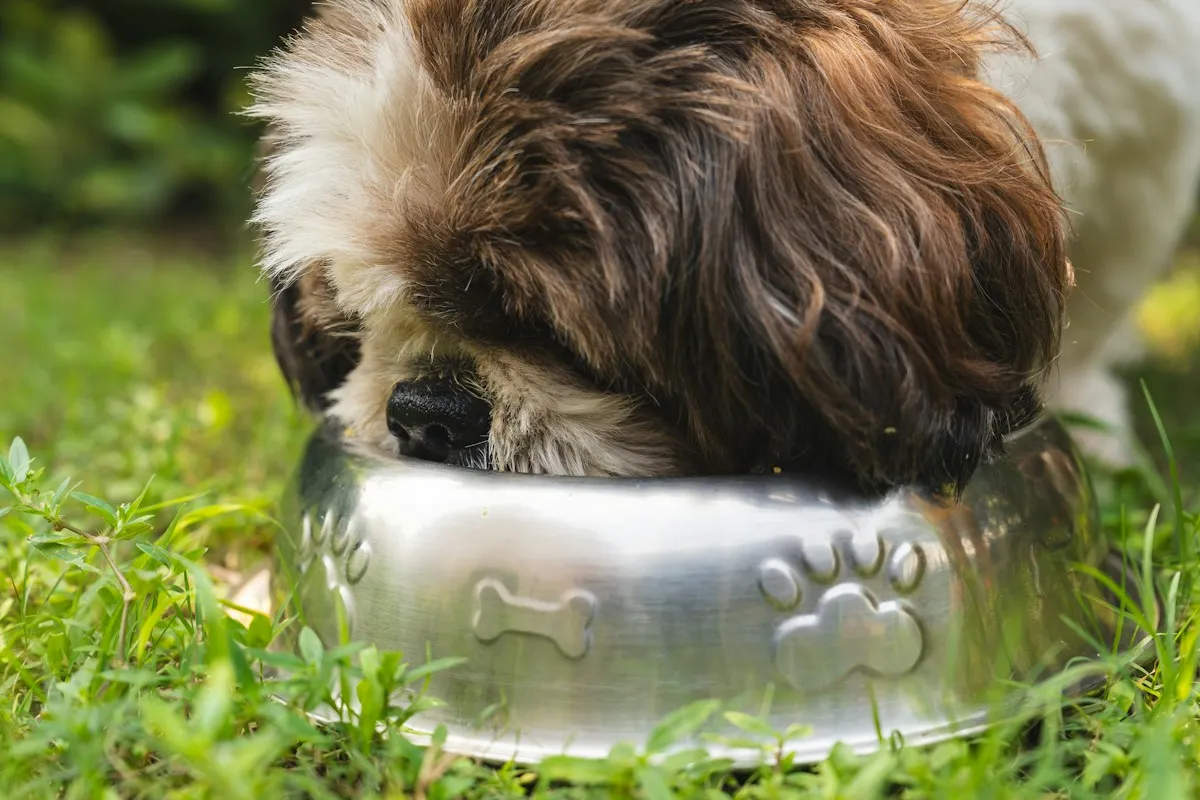
- Keep clean drinking water available. Do not force water if the dog is vomiting.
- Collect a fresh stool sample and take clear photos.
- Note the time of onset, number of stools, vomiting episodes, diet and anything your dog may have eaten.
- Do not give human medicines: no loperamide (Imodium), Pepto-Bismol, Metrogyl, Norflox-TZ, ORS sachets with added sugar in large volumes, or painkillers.
- Keep sick puppies away from other dogs, and disinfect the area if parvo is possible (see below).
- If your vet advises home care for a mild case, offer small meals of plain boiled chicken and rice, 3 to 4 times a day, rather than a long fast. Modern evidence shows that early feeding with a bland, easily digestible diet helps the gut lining heal faster.
How vets diagnose bloody diarrhoea
Diagnosis starts with history, a full physical exam, abdominal palpation and a rectal exam to check for masses, anal gland disease and stool character. Common tests include:
- PCV and total protein: the fastest way to spot AHDS (high PCV, normal or low protein) or significant blood loss (low PCV).
- Faecal flotation and wet smear: for worm eggs, Coccidia, Giardia.
- Parvo antigen test: rapid in-clinic test; note that very early infection or a recent vaccine can affect results.
- Complete blood count and biochemistry: white cells (very low in parvo), platelets, kidney and liver values, electrolytes, albumin.
- cPL test for pancreatitis.
- Faecal cytology or PCR panels for Clostridium and other pathogens; faecal culture for Salmonella or Campylobacter.
- X-rays and ultrasound for foreign bodies, intussusception, thickened bowel walls and tumours.
- ACTH stimulation test when Addison’s disease is suspected.
- Cobalamin (vitamin B12) and folate in chronic cases, as gut disease often causes deficiency.
- Endoscopy or colonoscopy with biopsies for recurring or chronic bloody diarrhoea.
Treatment of bloody diarrhoea in dogs
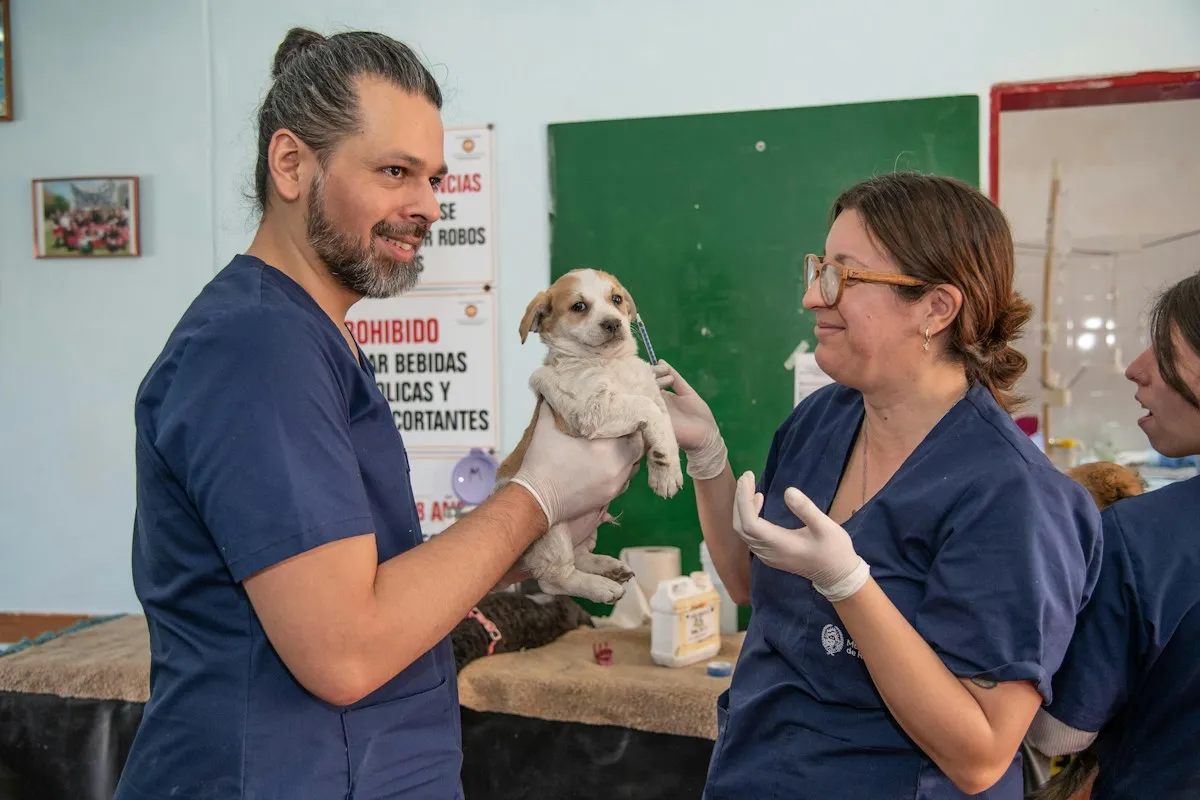
Fluid therapy
Fluids are the backbone of treatment. Mild cases may receive fluids under the skin. AHDS, parvo and dogs in shock need intravenous crystalloid fluids, sometimes at high rates initially, with careful monitoring of PCV, protein, electrolytes, blood glucose and urine output. Potassium and dextrose are added when needed. Dogs with very low protein may need colloids or plasma.
Medicines
- Anti-nausea drugs: maropitant, ondansetron.
- Gastroprotectants: pantoprazole, omeprazole, famotidine, sucralfate.
- Dewormers: fenbendazole, or combination dewormers, depending on the parasite.
- Antiprotozoal drugs: for Giardia or Coccidia (for example toltrazuril or sulfadimethoxine for Coccidia).
- Antibiotics: only when indicated, for example in parvo with low white cells, signs of sepsis, or a confirmed bacterial infection. Metronidazole is no longer recommended as a routine “diarrhoea tablet”.
- Pain relief: with drugs that are safe for the gut, never NSAIDs in a dog with bloody diarrhoea.
- Probiotics formulated for dogs.
Nutrition
A highly digestible, low-fat diet is started as soon as vomiting is controlled, often a veterinary gastrointestinal diet or a home-cooked bland diet. Dogs diagnosed with IBD or food allergy may need a hydrolysed protein or novel protein diet long term. For colitis, added fibre (for example a small amount of psyllium husk/isabgol or plain cooked pumpkin, on your vet’s advice) can help firm the stool.
Hospitalisation and surgery
Parvo, AHDS with shock, pancreatitis and Addison’s crisis usually need 24-hour intensive care for 2 to 7 days. Surgery is needed for intussusception, foreign bodies, perforation and some tumours.
Parvo: special precautions at home
Parvovirus is extremely tough. It resists most household cleaners, including phenyl and many floor cleaners. Use freshly prepared household bleach diluted 1 part bleach to 30 parts water on hard surfaces, with at least 10 minutes of contact time, after removing visible dirt. Wash bedding on a hot cycle or discard it. Keep the recovering puppy away from unvaccinated dogs for several weeks, and do not bring a new puppy into a parvo-contaminated home without discussing timing with your vet.
Recovery and long-term management
Many dogs with dietary or stress colitis recover within 1 to 3 days. AHDS dogs typically improve within 48 hours of fluid therapy. Parvo puppies that survive the first 3 to 4 days usually recover well. After surgery, recovery takes 10 to 14 days. IBD and Addison’s disease are lifelong conditions that are well controlled with medicine and diet. Always attend recheck appointments, and finish every prescribed medicine even if the stool looks normal.
Prevention
- Complete the puppy vaccination series (DHPPi with parvo) and do not take puppies to streets, parks or pet shops before 1 to 2 weeks after the final dose.
- Follow a regular deworming schedule.
- Avoid raw meat and offal unless prepared under veterinary guidance.
- No festival leftovers, sweets, fatty meat or cooked bones.
- Change diets slowly over a week.
- Keep dustbins, medicines and rat poison out of reach.
- Reduce stress during festivals: a quiet inner room, white noise, and prescribed calming medicine if your vet recommends it.
- Use tick prevention to avoid tick fever-related bleeding.
Frequently asked questions
Why is my dog pooping blood but acting fine?
Straining at the end of a bowel movement can burst tiny blood vessels in an inflamed colon, leaving a few drops of fresh blood. This is common in mild colitis. If blood is seen in more than 2 or 3 stools, lasts beyond 24 hours, or your dog is a puppy, see a vet.
Can a stomach bug cause bloody diarrhoea in dogs?
Yes. Viral and bacterial gastroenteritis inflame the gut lining and disturb normal gut bacteria, which can lead to bloody stool, vomiting, low appetite and lethargy.
What does raspberry jam poop in a dog mean?
Thick, red, jelly-like diarrhoea is typical of AHDS (HGE) and can also be seen with parvovirus and intussusception. It is an emergency, especially in small breeds.
Can I treat bloody diarrhoea at home?
Only a very mild case in an adult dog that is bright, eating and not vomiting can be watched at home for a short time, and only with your vet’s guidance. Most causes need specific medicines, and some, like parvo and AHDS, can be fatal within hours.
Is bloody diarrhoea in dogs contagious to people?
Some causes are. Salmonella, Campylobacter, Giardia and hookworm larvae can infect humans. Wear gloves when cleaning up, wash hands thoroughly, and keep children away from the dog’s stool.
This article is for education and does not replace a veterinary examination. Contact your vet or nearest emergency clinic if your dog has bloody diarrhoea.
Related Articles
- Lumps, Fatty Tumours, Warts and Cancer on Dogs: When a Lump Needs a Vet Check
- Dog Pooping Blood in India: Red Blood (Hematochezia) vs Black Tarry Stool (Melena), Causes and When To See a Vet
- Giardia and Coccidia in Dogs and Cats: Symptoms, Stool Tests, Treatment and Stopping Re-infection
- Dog Vomiting and Diarrhoea (Loose Motion): Causes, Vet Treatment and Home Care
References
- Diener M. Bloody Diarrhea in Dogs. PetMD, 2024.
- Fernandez C. Dog Pooping Blood: Common Causes and What To Do. PetMD, 2024.
- Unterer S, et al. Treatment of aseptic dogs with hemorrhagic gastroenteritis with amoxicillin/clavulanic acid: a prospective blinded study. J Vet Intern Med, 2011.
- Leipig-Rudolph M, et al. Intestinal lesions in dogs with acute hemorrhagic diarrhea syndrome associated with netF-positive Clostridium perfringens type A. J Vet Diagn Invest, 2018.
- Merck Veterinary Manual. Diseases of the stomach and intestines in small animals.
More on Dog Diseases and Infections

Metronidazole (Metrogyl, Flagyl) for Dogs and Cats: When Vets Use It for Loose Motion and Giardia, and Why Overdose Causes Wobbling
Metronidazole for dogs and cats: uses for Giardia and gut infections, when it is not needed, giving the bitter pill, and neurotoxicity…
Congestive Heart Failure in Dogs: Night Coughing, Sleeping Breath Count, Stages and Heart Care for Senior Dogs
Heart failure in dogs: mitral valve disease vs DCM, stages, murmurs, cough and fast breathing, medicines, and counting sleeping breaths at home.