 Written and reviewed by Dr. Vaishnavi Karmawat, B.V.Sc. & A.H., Registered Veterinary Practitioner

Rice is on the table in almost every Indian home, and oats have become a breakfast favourite. So when your dog sits beside you with pleading eyes, it is natural to wonder whether a spoonful of chawal or oatmeal is safe to share. Grains are also the base of the bland diet vets recommend for upset stomachs, which raises a second question: which grain is best when your dog has loose motions, and which is best for everyday homemade meals?
In this article
- Can Dogs Eat Rice?
- Is Rice Good for Dogs?
- White Rice vs. Brown Rice for Dogs
- Is Rice Bad for Dogs?
- Rice for Dogs With Diarrhoea: The Bland Diet
- How Much Rice Can a Dog Eat?
- How To Safely Feed Your Dog Rice
- Can Dogs Eat Oatmeal?
- Can Dogs Eat Dalia (Broken Wheat)?
- Rice vs. Oats vs. Dalia: Which Grain Is Best?
- Can Cats Eat Rice?
- What To Give Instead of Rice
- Frequently Asked Questions
- Related Articles
- References
Here is what the veterinary evidence says about white rice, brown rice, oats and dalia (broken wheat) for dogs, how much to serve, how to cook them safely, and why the answer is quite different for cats.
Key Takeaways
- Dogs can eat plain, cooked white rice, brown rice and oatmeal in small amounts.
- Plain white rice is the grain vets use most often in a bland diet for mild diarrhoea and vomiting, because it is low in fibre, low in fat and easy to digest.
- Oats must be cooked in water. Raw oats, instant flavoured packets, masala oats and oats cooked in milk can upset a dog’s stomach or contain toxic ingredients such as raisins, chocolate or xylitol.
- Never feed seasoned rice dishes such as biryani, pulao, fried rice or kheer. Onion, garlic, excess salt, ghee and sugar are the real dangers.
- Grains are a side dish, not a meal. Treats and extras should stay under 10 percent of daily calories unless your vet has designed a homemade diet.
- Cats can eat a tiny amount of plain rice, but it gives them almost no nutritional benefit and it is not a good remedy for a cat’s upset stomach.
Can Dogs Eat Rice?
Yes, dogs can eat rice. Rice is non-toxic to dogs, and it already appears as an ingredient in many commercial dog foods. Dogs, unlike cats, are omnivores. Over thousands of years of living beside people, dogs evolved extra copies of the AMY2B gene, which makes the enzyme pancreatic amylase that breaks down starch. That is why most dogs digest cooked rice well.
What matters is the type of rice and how it is prepared. Rice should always be fully cooked, plain and unseasoned, and given in small portions alongside a complete and balanced dog food.
Is Rice Good for Dogs?
Plain rice can be genuinely useful for dogs, especially for the gut. Here is why vets like it:
- It is bland. Plain rice has no strong flavours or fats, so it is less likely to trigger nausea in an irritated stomach.
- It is easy to digest. Cooked white rice is mostly gelatinised starch, which the small intestine absorbs quickly, leaving little residue for an inflamed colon to deal with.
- It firms up stool. Rice starch absorbs water in the gut, which helps make loose stool more formed.
- It is low in fat. Fat slows stomach emptying and can worsen vomiting or pancreatitis. Plain rice has well under 1 gram of fat per 100 grams cooked.
- It is cheap and available everywhere. Every Indian kitchen already has it, which makes it practical for short-term home care.
White Rice vs. Brown Rice for Dogs
Both are safe when plain and cooked, but they suit different situations.
| Feature | White rice | Brown rice |
|---|---|---|
| Processing | Bran and germ removed (polished) | Bran and germ kept (whole grain) |
| Fibre (per 100 g cooked) | About 0.4 g | About 1.6–1.8 g |
| Calories (per 100 g cooked) | About 130 kcal | About 120 kcal |
| Digestibility | Very easy; ideal for an upset stomach | Slower; the bran can irritate an inflamed gut |
| Blood sugar effect | High glycaemic index; raises blood sugar quickly | Lower glycaemic index |
| B vitamins, magnesium, manganese | Lower (unless enriched) | Higher |
| Inorganic arsenic | Lower | Higher, because arsenic concentrates in the bran |
| Best use | Bland diet for diarrhoea or vomiting | Occasional extra for a healthy dog |
Basmati, sona masoori, jasmine and other long-grain white varieties are all types of white rice and are fine for dogs. Parboiled (sela) rice is also safe and has slightly more fibre and a lower glycaemic index than ordinary white rice.
A note on arsenic in rice
Rice plants take up more arsenic from soil and water than most other crops, and brown rice holds more of it because arsenic collects in the outer bran. The occasional spoonful is not a concern. But if rice is a large daily part of your dog’s homemade diet, two simple habits reduce the risk: cook rice in plenty of water (about six parts water to one part rice) and drain the extra, the way many Indian households already do, and rotate rice with other carbohydrate sources rather than feeding it at every meal.
Is Rice Bad for Dogs?
Plain cooked rice is not bad for most dogs. Problems come from the way rice is cooked or from a dog’s existing health condition.
Seasoned and fried rice dishes
Most rice dishes we eat are not safe to share. Biryani, pulao, jeera rice, fried rice, lemon rice and tamarind rice usually contain one or more of these:
- Onion and garlic (including powders and fried onions). These contain sulphur compounds that damage a dog’s red blood cells and can cause haemolytic anaemia, even when cooked.
- Excess salt and masala, which irritate the stomach and, in large amounts, can cause salt toxicity.
- Ghee, oil and butter. Rich, fatty food is a common trigger for pancreatitis in dogs.
- Chicken or mutton bones hidden in biryani, which can splinter and block or puncture the gut.
- Raisins and cashews in pulao, biryani and kheer. Raisins can cause sudden kidney failure in dogs, and no safe amount is known.
Dogs with diabetes or excess weight
White rice has a high glycaemic index, so it raises blood sugar quickly. For a diabetic dog on insulin, an unplanned bowl of rice can push blood glucose up and make insulin dosing unpredictable. Diabetic dogs do best on the same food, in the same amount, at the same times each day. Ask your vet before giving rice to a diabetic dog.
Rice is also calorie-dense. A quarter cup of cooked rice adds roughly 50 kcal, which is a meaningful amount for a small, overweight dog. If your dog needs to lose weight, choose lower-calorie extras such as cucumber or green beans instead.
Uncooked rice and stale leftovers
- Raw rice is hard to digest and can cause vomiting, bloating and diarrhoea. Always serve rice fully cooked.
- Leftover rice kept at room temperature can grow Bacillus cereus, a bacterium whose toxins survive reheating and cause vomiting and diarrhoea. Refrigerate cooked rice within an hour or two and use it within a day.
Rice for Dogs With Diarrhoea: The Bland Diet
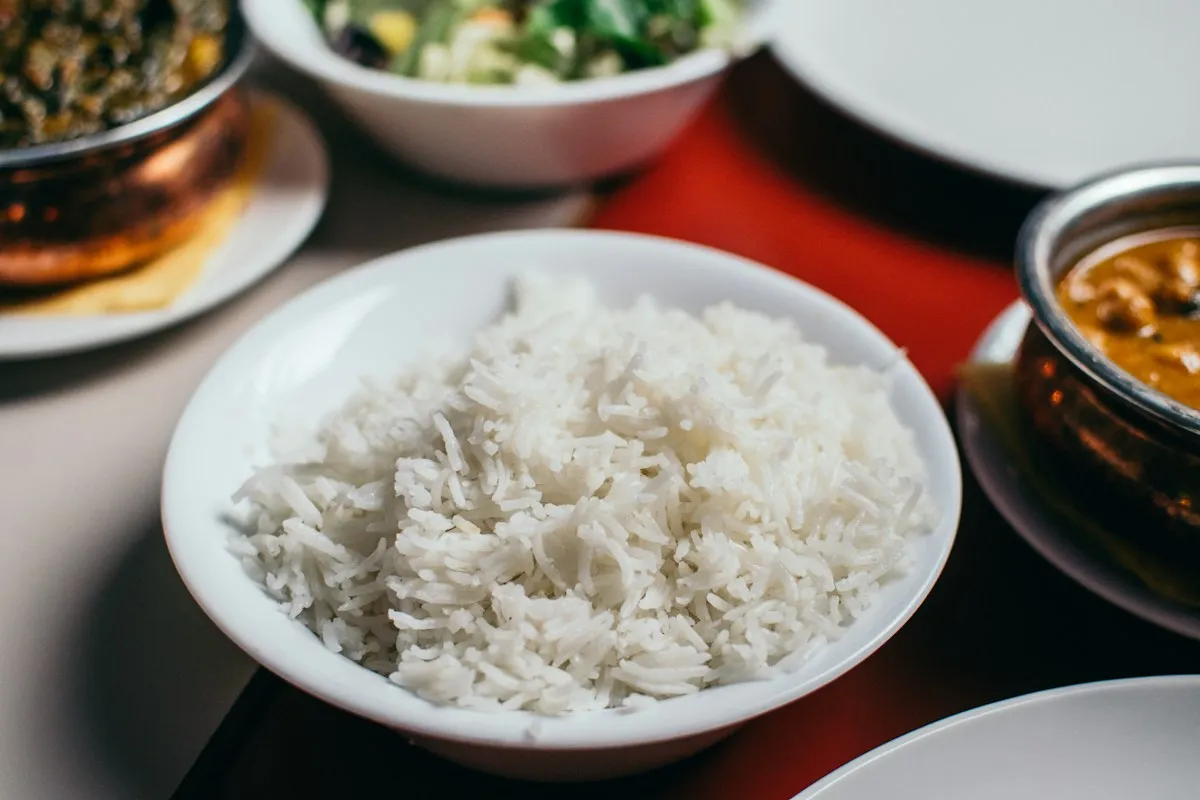
For a dog with mild, short-term diarrhoea or vomiting who is otherwise bright and drinking, many vets suggest a few days of bland food. The classic recipe is plain boiled white rice mixed with a lean, boiled protein.
- Rest the stomach briefly. For an adult dog that has vomited, a short pause of a few hours before offering food is usually enough. Do not fast puppies or toy breeds for long, because they can quickly develop low blood sugar. Keep fresh water available throughout.
- Cook the protein. Boil boneless, skinless chicken breast (see our guide to feeding chicken), or very lean meat, with no salt, oil or spices. Drain off the fat.
- Cook the rice. Boil white rice until soft, a little softer than you would eat it, and drain the excess water.
- Mix in the right ratio. Use about 2 to 3 parts rice to 1 part protein. More rice helps bind stool; the protein keeps the meal nutritious.
- Feed small, frequent meals. Offer 3 to 4 small meals a day, starting with about a quarter of the normal amount at each meal.
- Transition back slowly. Once stools firm up, usually in 2 to 3 days, mix the bland diet with your dog’s regular food over 3 to 5 days, gradually reducing the rice.
Plain cooked pumpkin can be added for extra soluble fibre. For step-by-step home care and hydration, see our guide to dog vomiting and diarrhoea.
When a bland diet is not enough
A bland diet is for mild upsets only. It does not treat infections, parasites or poisoning. Take your dog to a vet straight away if you notice any of the following:
- Blood in the stool or black, tarry stool (read more on why a dog poops blood and bloody diarrhoea in dogs)
- Repeated vomiting, or vomiting with diarrhoea
- A puppy, especially one not fully vaccinated, with diarrhoea; parvovirus can be fatal within days
- Lethargy, weakness, pale gums or a swollen or painful belly
- Diarrhoea lasting more than 48 hours, or that returns when the bland diet stops
- A dog that is very young, very old, tiny, or has diabetes, kidney or heart disease
Diarrhoea that keeps coming back is often caused by parasites such as Giardia or coccidia, a food intolerance or chronic gut disease, and needs a proper work-up rather than repeated rounds of rice.
Is rice water (maand) good for dogs?
The starchy water drained from cooking rice is safe if it is plain, unsalted and cooled, and some dogs drink it willingly when unwell. It provides a little energy and fluid, but it does not contain the balance of sodium, potassium and glucose needed to correct dehydration. It is not a substitute for an oral rehydration solution or fluids prescribed by your vet.
How Much Rice Can a Dog Eat?
As a treat or topper for a healthy dog, keep rice to small portions a few times a week. Together with all other extras, it should stay under 10 percent of your dog’s daily calories. These are general guidelines for cooked, plain rice:
| Dog size | Example breeds | Cooked rice per serving | Approx. calories | How often |
|---|---|---|---|---|
| Extra-small (1–4.5 kg) | Chihuahua, Pomeranian, Yorkie | 1–2 tablespoons | 15–35 kcal | 2–3 times a week |
| Small (5–9 kg) | Shih Tzu, Pug, Lhasa Apso | 2–3 tablespoons | 30–50 kcal | 2–3 times a week |
| Medium (10–22 kg) | Beagle, Indian Pariah (Indie), Cocker Spaniel | About ¼ cup | About 50 kcal | 2–3 times a week |
| Large (23–40 kg) | Labrador, German Shepherd, Golden Retriever | About ½ cup | About 100 kcal | 2–3 times a week |
| Extra-large (41 kg +) | Great Dane, Saint Bernard, Mastiff | About ⅔ cup | About 135 kcal | 2–3 times a week |
These amounts do not apply to a vet-recommended bland diet, where rice temporarily makes up most of the meal for a few days, or to a balanced homemade diet formulated by a vet or veterinary nutritionist.
How To Safely Feed Your Dog Rice
- Wash the rice and cook it in plain water until soft. Do not add salt, oil, ghee, haldi, hing or masala.
- Drain the excess water and let the rice cool to room temperature.
- Serve a small portion on its own, or mix it into your dog’s regular food.
- If you like, add a little boiled, boneless, skinless chicken, plain boiled egg, or a spoonful of plain cooked pumpkin.
- Refrigerate leftovers promptly and discard any rice that is more than a day old.
Plain khichdi made only from rice and moong dal, boiled in water with no ghee, onion, garlic, salt or tadka, is also generally well tolerated by dogs in small amounts. Curd rice is best avoided for dogs with diarrhoea, because some dogs do not digest milk sugar (lactose) well.
Can Dogs Eat Oatmeal?
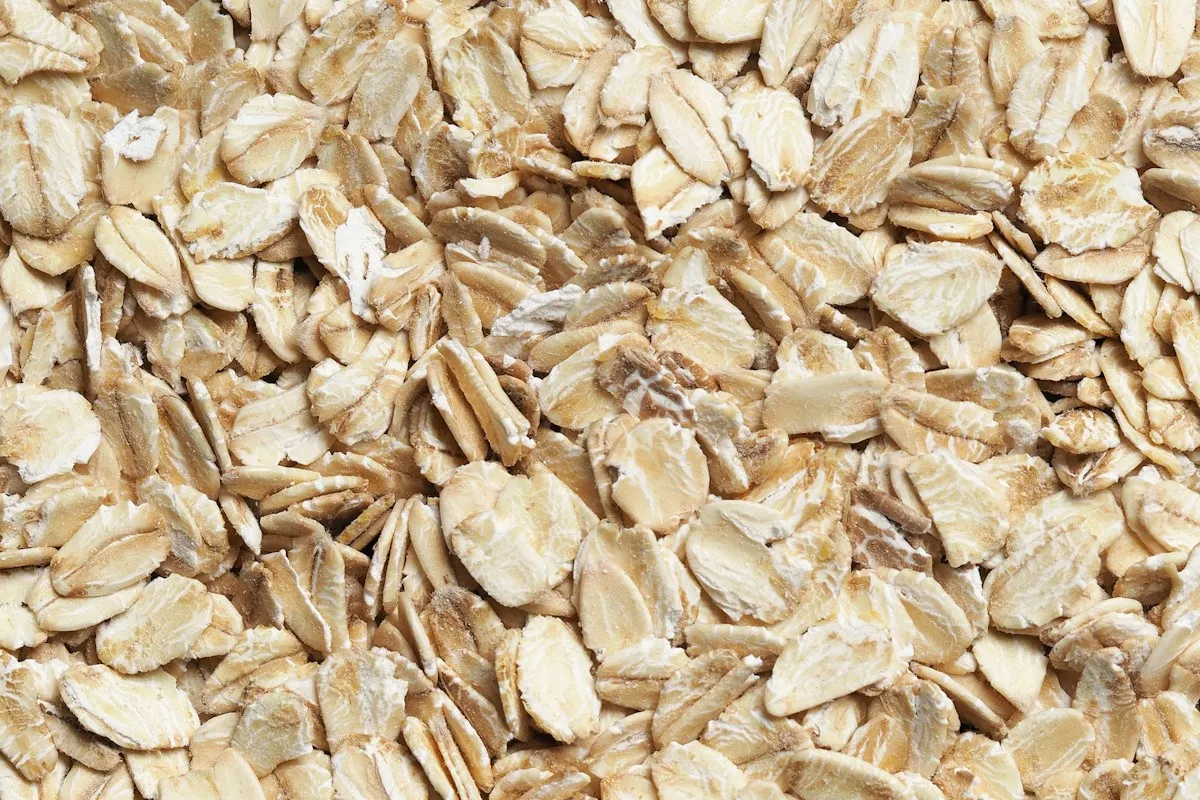
Yes, dogs can eat oatmeal, as long as it is plain, cooked in water and served in moderation. Oats are a whole grain with a useful nutrient profile, and they are a good alternative grain for dogs that do not tolerate wheat.
Is oatmeal good for dogs?
Plain cooked oats offer several benefits:
- Soluble fibre (beta-glucan). Beta-glucan forms a gel in the gut that slows digestion, helps regulate stool consistency in both directions, feeds beneficial gut bacteria, and helps dogs feel full, which can support weight management.
- Lower glycaemic response. Rolled and steel-cut oats raise blood sugar more slowly than white rice.
- Vitamins and minerals. Oats provide B vitamins (including pantothenic acid, vitamin B5), iron, zinc, magnesium and manganese.
- Linoleic acid. Oats contain more fat than most grains, including linoleic acid, an omega-6 fatty acid that supports healthy skin and coat.
- Antioxidants. Oats contain avenanthramides, plant compounds with antioxidant and anti-itch effects in lab studies.
Can dogs eat raw oats?
Raw, uncooked oats are not recommended. They are hard to digest, can swell in the stomach and often cause gas, bloating or loose stools. Always cook oats in water first and let them cool before serving.
Oatmeal products to avoid
Check the packet carefully. Many oat products sold in India are not dog-safe:
- Masala and savoury instant oats, which usually contain onion powder, garlic powder, salt and flavour enhancers.
- Flavoured or sweetened instant oats with sugar, chocolate, raisins or added fruit. Some sugar-free products contain xylitol, which can cause a dangerous drop in a dog’s blood sugar and liver failure.
- Oats cooked in milk. Many adult dogs digest lactose poorly, and milk can cause gas and diarrhoea. Use water.
- Oatmeal cookies, granola and muesli, which are high in sugar and fat and often contain raisins, chocolate, nutmeg or nuts such as macadamia.
How much oatmeal can a dog eat?
Oats are high in fibre, so too much at once can cause loose stools. Start small and offer oatmeal no more than once or twice a week as a treat:
| Dog size | Cooked oatmeal per serving |
|---|---|
| Extra-small and small (1–9 kg) | 1 teaspoon to 1 tablespoon |
| Small to medium (10–14 kg) | 1–2 tablespoons |
| Medium (15–22 kg) | Up to ¼ cup |
| Large (23–40 kg) | Up to ½ cup |
| Extra-large (41 kg +) | Up to ⅔ cup |
How to prepare oatmeal for dogs
- Choose plain rolled oats or steel-cut oats with a single ingredient: oats.
- Cook them in water, with no milk, sugar, salt or butter, until soft.
- Cool to room temperature before serving.
- Mix a small amount into your dog’s regular food, or serve it on its own.
Can Dogs Eat Dalia (Broken Wheat)?
Plain dalia cooked in water is safe for most dogs. It is a whole-wheat grain with more fibre and protein than white rice, and it is a common ingredient in Indian homemade dog meals. Two cautions apply:
- Wheat is a common food allergen in dogs. Studies of dogs with food allergy list beef, dairy, chicken and wheat as the most frequently reported triggers. If your dog has itchy skin, recurring ear infections or chronic soft stools, ask your vet whether a food trial without wheat makes sense.
- Gluten problems are rare but real. Most dogs digest gluten without trouble, but Irish Setters can inherit gluten-sensitive enteropathy, and Border Terriers can have a gluten-related movement disorder. Dogs with these conditions need a wheat-free diet.
Sweet dalia made with milk, sugar or jaggery, ghee and dry fruits is not suitable for dogs.
Rice vs. Oats vs. Dalia: Which Grain Is Best?
| Situation | Best choice | Why |
|---|---|---|
| Mild diarrhoea or vomiting | White rice | Lowest fibre and fat; easiest to digest; helps bind stool |
| Occasional treat for a healthy dog | Any, plain and cooked | All are safe in small amounts |
| Dog with diabetes | Ask your vet first; oats are usually preferred over white rice | Oats raise blood sugar more slowly |
| Overweight dog | Small amounts of oats | Soluble fibre improves fullness; keep portions tiny |
| Suspected wheat allergy | Rice or oats | Both are wheat-free |
| Constipation | Oats (or pumpkin) | Soluble fibre softens stool |
For dogs fed mostly home-cooked food, grains are only one part of the bowl. A homemade diet also needs adequate protein, calcium, essential fatty acids and a vitamin-mineral supplement, and should be planned with your vet.
Can Cats Eat Rice?
Rice is not toxic to cats, so a few grains picked off your plate are no cause for alarm. But rice is not good for cats either. Cats are obligate carnivores: their bodies are built to get energy from protein and fat, not starch.
- Cats produce very little salivary amylase and have lower pancreatic and intestinal starch-digesting enzyme activity than dogs.
- The feline liver has little glucokinase activity, an enzyme other mammals use to handle a large glucose load after a meal.
- Extra carbohydrate calories add to the risk of obesity in indoor cats, and obesity is a major risk factor for diabetes, arthritis and other diseases in cats.
If you do share, keep it to plain, well-cooked white or brown rice, less than a tablespoon a week, alongside a complete commercial cat food. Brown rice has slightly more nutrients, but cats digest it poorly.
Can kittens eat rice?
No. Kittens need dense, high-protein, nutrient-rich food for growth, and their small stomachs have no room for empty starch calories. Feed a complete kitten food. If you are caring for a stray or rescued kitten, ask your vet about a suitable diet.
Is rice a good remedy for a cat’s upset stomach?
Not really. The rice-and-chicken bland diet that works for dogs does not work as well for cats, because cats digest rice poorly. Vomiting in cats is also more often a sign of an underlying medical problem than in dogs, which more commonly vomit after eating something they should not have. Causes include hairballs, inflammatory bowel disease, kidney or thyroid disease, and intestinal lymphoma.
If your cat vomits more than once or twice a month, has diarrhoea, is losing weight, or seems lethargic, see your vet. For short-term home care, vets usually recommend a prescription gastrointestinal cat food or plain boiled chicken rather than rice. Read more about diarrhoea in cats.
Signs your cat ate too much rice
If your cat eats a large amount of cooked rice, or any uncooked rice, watch for:
- Vomiting or diarrhoea
- Gas, bloating or a tense, uncomfortable belly
- Straining in the litter box
- Lethargy or loss of appetite
Call your vet if any of these appear. A cat that strains in the litter box and passes little or no urine needs emergency care, because a urinary blockage can look similar to constipation.
Can cats eat oatmeal?
A small lick of plain, water-cooked oatmeal is not harmful, but like rice it adds little to a cat’s diet. Never give cats oats cooked in milk or flavoured instant oats.
What To Give Instead of Rice
For dogs: rice is a perfectly good occasional food, so there is no need to avoid it. If you want lower-calorie extras, try plain cooked pumpkin, carrots or cucumber. Complete dog foods that use rice or oats as their main grain are also widely available.
For cats: small pieces of plain, cooked, boneless chicken, fish or egg are far more appropriate than grains. Remove all bones and skin, and do not add salt, oil, onion or garlic.
Frequently Asked Questions
Can dogs eat white rice every day?
Small amounts of plain rice can be part of a daily homemade diet, but only if the whole diet has been balanced by a vet or veterinary nutritionist. Rice alone, or rice with dal, is low in protein, calcium and essential fatty acids and will cause deficiencies over time.
Can dogs eat basmati or jasmine rice?
Yes. Both are long-grain white rice and are safe when plain and cooked.
Can puppies eat rice?
Puppies can have a small amount of plain cooked rice, but they need a complete puppy food for growth. A puppy with diarrhoea should see a vet rather than be managed at home with rice, because infections such as parvovirus progress quickly in puppies.
Is rice or roti better for dogs?
Plain rice is usually easier to digest than roti. Plain roti made only from atta and water is safe in small pieces (see can dogs eat roti), but roti with ghee, butter or salt is not ideal, and wheat-allergic dogs should avoid it.
Can dogs eat oats every day?
A small daily spoonful of plain cooked oats is fine for most healthy dogs, but larger amounts can cause loose stools and add unnecessary calories. Two or three times a week is a sensible routine for a treat.
Can rice cause constipation in dogs?
It can. Because white rice is low in fibre and binds stool, a dog on a bland diet for several days may pass fewer, firmer stools. Return to the regular diet gradually and ask your vet if your dog strains or has not passed stool for more than two days.
Can I give my diabetic dog rice?
Only after speaking to your vet. Consistent meals matter for diabetic dogs on insulin, and white rice raises blood sugar quickly.
For more on everyday staples, see can dogs eat peanut butter, rice and potato.
This article is for education and does not replace veterinary advice. Always check with your vet before changing your pet’s diet, especially for pets with diabetes, kidney disease, food allergies or on prescription diets.
Related Articles
- Can Dogs Eat Broccoli, Cauliflower and Cabbage? Benefits, Risks and Safe Serving Sizes (Plus Cats)
- How to Read Pet Food Labels in India: Complete and Balanced, Dry Matter, Life Stage and Marketing Claims
- Can Dogs Eat Tomatoes? Ripe vs Green Tomatoes, Tomato Plant Poisoning and Foods To Avoid
- Can Dogs Eat Pineapple (Ananas)? Bromelain Benefits, Core and Rind Obstruction Risks, Serving Chart and Papaya (Papita) Comparison
References
- Arnold VL, Kleszynski B. Can Dogs Eat Rice? PetMD, 2026.
- Saylor A, Mitchell SC. Can Dogs Eat Oatmeal? PetMD, 2023.
- Mitchell SC. Can Cats Eat Rice? PetMD, 2023.
- Axelsson E, et al. The genomic signature of dog domestication reveals adaptation to a starch-rich diet. Nature, 2013;495:360–364.
- Mueller RS, Olivry T, Prélaud P. Critically appraised topic on adverse food reactions of companion animals (2): common food allergen sources in dogs and cats. BMC Veterinary Research, 2016;12:9.
- Verbrugghe A, Hesta M. Cats and carbohydrates: the carnivore fantasy? Veterinary Sciences, 2017;4(4):55.
- US Food and Drug Administration. Arsenic in Rice and Rice Products: Risk Assessment Report, 2016.
- USDA FoodData Central. Rice, white, cooked; Rice, brown, cooked; Oats, cooked in water.
- National Research Council. Nutrient Requirements of Dogs and Cats. National Academies Press, 2006.
More on Cats

Dog and Cat Spay/Neuter Guide: Right Age, Laparoscopic vs Traditional Spay, 10-Day Stitch Care and Cone Rules
When to spay or neuter dogs and cats, open vs laparoscopic surgery, a day-by-day recovery plan, cone rules and warning signs at…

Are Essential Oils, Nilgiri Oil, Camphor, Dettol and Phenyl Safe for Dogs and Cats? Toxic Oils and Signs of Allergic Reactions
Which essential oils and household products like camphor, Dettol and phenyl are toxic to dogs and cats, poisoning signs, and safe cleaning…