 Written and reviewed by Dr. Vaishnavi Karmawat, B.V.Sc. & A.H., Registered Veterinary Practitioner
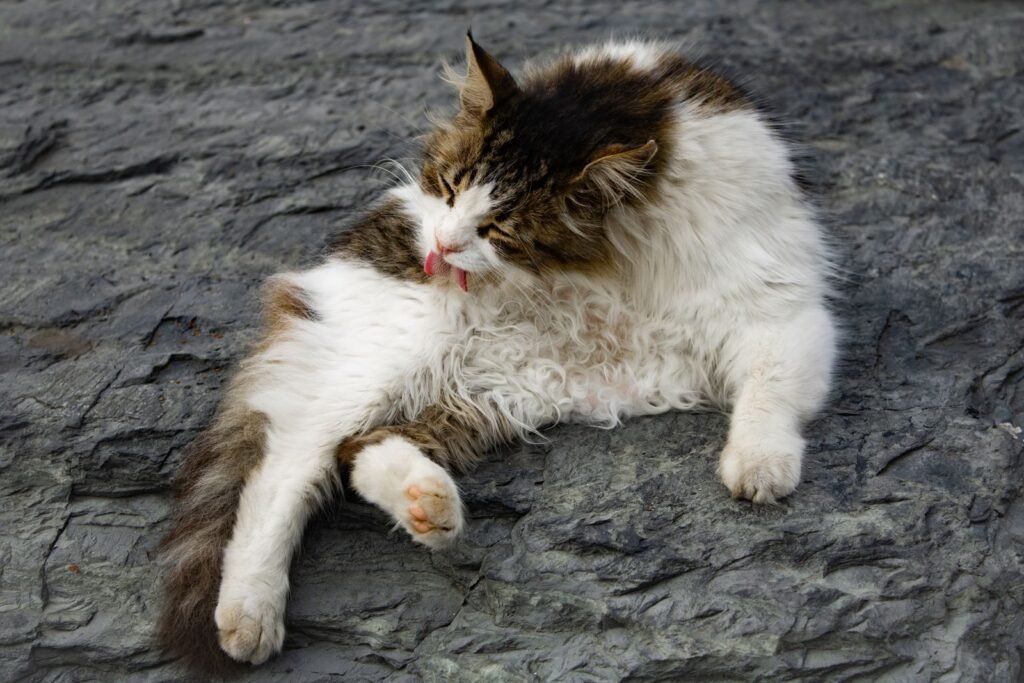
Cats vomit more often than dogs, and many owners come to think of it as “just a cat thing”. An occasional hairball is common, but vomiting more than once or twice a month, or any vomiting with weight loss, poor appetite or diarrhoea, is not normal and deserves a vet check. Because cats hide illness, vomiting is often the first visible sign of a disease such as kidney failure, an overactive thyroid or inflammatory bowel disease. This guide explains how to tell vomiting from regurgitation, what the colour and contents can mean, the causes vets look for, and safe home care for Indian cat parents.
In this article
Go to a vet now if your cat vomits more than two or three times in a day, cannot keep water down, vomits blood or black material, has a swollen or painful belly, or may have eaten string, a toxic plant (especially lilies) or a human medicine.
Vomiting, regurgitation or coughing?
| Vomiting | Regurgitation | Coughing or gagging | |
|---|---|---|---|
| How it looks | Active. The cat crouches, the belly heaves, often with loud retching | Passive. Food comes back up with little effort | Crouched, neck stretched, hacking; often mistaken for a hairball attempt |
| Contents | Partly digested food, bile, liquid, hair | Undigested food, often tube-shaped, soon after eating | Little or nothing, or a small amount of froth |
| Common causes | Stomach and intestinal disease, organ disease, toxins | Eating too fast, oesophagus problems | Feline asthma, airway infection, heartworm |
A cat that repeatedly “tries to bring up a hairball” but produces nothing may actually be coughing from feline asthma. A short phone video is very useful for your vet.
Acute and chronic vomiting
- Acute vomiting starts suddenly and lasts a few days at most. Causes include eating something unsuitable, swallowing string, toxins, infections, pancreatitis and parasites.
- Chronic vomiting keeps happening over weeks or months, for example once or twice a week. Common causes in adult and older cats are inflammatory bowel disease, intestinal lymphoma, chronic kidney disease, hyperthyroidism, diabetes, liver disease and food allergy.
A cat that vomits every week is not “normal”, even if it eats and plays. Studies of cats with chronic vomiting often find inflammatory bowel disease or low-grade lymphoma when biopsies are taken, and both are much easier to manage when found early.
Cat vomit colour and contents guide
| What you see | What it may mean | What to do |
|---|---|---|
| Hair in a tube shape (hairball) | Swallowed fur from grooming; more common in long-haired cats and over-groomers | Occasional is common; more than about twice a month needs a vet check |
| Yellow or green liquid or foam | Bile on an empty stomach, or repeated vomiting | Feed smaller, more frequent meals; vet if repeated |
| White foam | Stomach or intestinal irritation, or empty stomach | Watch; vet if repeated or with other signs |
| Clear liquid | Stomach fluid or water drunk quickly | Vet at once if water will not stay down |
| Undigested food soon after eating | Eating too fast (“scarf and barf”) or regurgitation | Slow-feeder, smaller meals; vet if daily |
| Worms (spaghetti-like) | Roundworms, common in kittens and outdoor cats | Vet visit and deworming |
| Red blood | Irritated stomach lining or mouth, sometimes ulcers | Same-day vet |
| Black or brown “coffee grounds” | Digested blood from an ulcer, foreign body or tumour | Urgent vet |
| Grass or plant pieces | Plant chewing; some plants are toxic | Identify the plant; lilies are an emergency |
| String, thread, ribbon, tinsel | Linear foreign body | Emergency; never pull it out |
Common causes of vomiting in cats
Gut causes
- Hairballs, especially in long-haired breeds such as Persians, and in cats that over-groom because of fleas, skin allergy or stress.
- Eating too fast, or eating a large meal after a long gap.
- Diet change, spoiled food, human food such as gravy, fried food or milk.
- Food allergy or intolerance.
- Intestinal parasites: roundworms, hookworms, tapeworms and Giardia.
- Infections: feline panleukopenia (feline parvovirus) in unvaccinated cats is a serious cause of vomiting and diarrhoea.
- Swallowed objects: string and thread with a needle, hair ties, rubber bands, tinsel. String can anchor under the tongue or in the stomach and saw through the intestine as it moves.
- Inflammatory bowel disease (IBD) and intestinal lymphoma, the most common causes of chronic vomiting in middle-aged and older cats.
- Pancreatitis, often with poor appetite and lethargy rather than obvious pain.
- Constipation, especially in older cats.
Causes outside the gut
- Chronic kidney disease, very common in cats over 10 years. Look also for increased thirst, weight loss and a dull coat. See kidney disease in dogs and cats.
- Hyperthyroidism (overactive thyroid) in older cats: vomiting with weight loss despite a big appetite.
- Diabetes mellitus, especially if diabetic ketoacidosis develops.
- Liver disease, including fatty liver (hepatic lipidosis) in overweight cats that stop eating.
- Toxins: lilies (all parts, even pollen, can cause kidney failure), paracetamol, permethrin dog tick products, essential oils, rat poison and some houseplants.
- Medicines given for other conditions.
- Urinary blockage in male cats can cause vomiting with straining in the litter box. See cat peeing outside the litter box.
- Motion sickness and stress.
When to call a vet
- More than two or three vomits in a row, or more than two in 24 hours
- Vomiting with diarrhoea, poor appetite or weight loss
- Vomiting once a week or more over several weeks
- Not eating for more than 24 hours. Cats, especially overweight cats, can develop life-threatening fatty liver disease if they do not eat for a few days. See cat not eating.
- Blood, black material, worms or string in the vomit
- Dullness, hiding, a painful belly or dehydration
- A kitten, a senior cat, or a cat with diabetes, kidney disease or hyperthyroidism
How vets find the cause
- History: onset, frequency, timing in relation to meals, what the vomit looks like, diet, treats, plants at home, indoor or outdoor life, medicines, vaccination and deworming.
- Physical exam: weight and body condition, hydration, mouth (including under the tongue for string), thyroid gland in the neck, belly, and heart rate.
- Blood tests: complete blood count, biochemistry (kidney and liver values, glucose, electrolytes) and total T4 for hyperthyroidism in cats over about 7 years.
- Urine test: concentration and protein for kidney disease, and glucose for diabetes.
- Faecal test for parasites.
- Feline pancreatic lipase test if pancreatitis is suspected.
- X-rays and abdominal ultrasound: for foreign bodies, thickened intestine, enlarged lymph nodes and organ changes.
- Food trial with a hydrolysed or novel protein diet for 6 to 8 weeks.
- Endoscopic or surgical biopsies to tell inflammatory bowel disease from lymphoma when vomiting is chronic.
Veterinary treatment
- Fluids under the skin or by drip for dehydration.
- Anti-nausea medicines such as maropitant, ondansetron or mirtazapine (which also stimulates appetite).
- Acid reducers such as famotidine or omeprazole when there is stomach irritation.
- Dewormers for parasites.
- Diet: an easily digested gastrointestinal diet in the short term; a hydrolysed or novel protein diet for food-responsive disease; a renal diet for kidney disease.
- Inflammatory bowel disease: diet first, then often prednisolone and sometimes other immune-modulating drugs; vitamin B12 (cobalamin) injections if levels are low.
- Hyperthyroidism: methimazole or carbimazole tablets, special iodine-restricted diet, or radioactive iodine where available.
- Surgery or endoscopy to remove string and other foreign bodies.
Hairballs: practical prevention
- Brush daily for long-haired cats and at least twice a week for short-haired cats. This removes the loose hair the cat would otherwise swallow.
- Address over-grooming: fleas, skin allergy and stress all increase grooming. Use a cat-safe flea product from your vet.
- Fibre: a hairball-control diet or a small amount of fibre helps hair move through the gut instead of coming back up.
- Hairball gels or pastes (petroleum or malt based) may help some cats occasionally; ask your vet before regular use.
- Water intake: wet food and a water fountain or several water bowls help.
Safe home care for a mild, one-off vomit
For an adult cat that vomited once or twice, then is bright and interested in food:
- Remove food for 2 to 4 hours only. Do not fast cats for long, because of the risk of fatty liver.
- Offer small amounts of water or a few licks of ice.
- Then offer a small portion (about a teaspoon or two) of a bland, easily digested food: plain boiled chicken without skin or bones, or a veterinary gastrointestinal wet food. Repeat every 2 to 3 hours if it stays down.
- Return to the normal diet over 1 to 2 days.
- See a vet if vomiting returns, your cat refuses food, or becomes quiet or hides.
Do not give human anti-vomiting tablets, antacid syrups, aspirin, paracetamol or other painkillers. Paracetamol is deadly to cats even in small amounts. Do not give cow’s milk, which often causes diarrhoea in adult cats.
🩺 Dr. Vaishnavi’s Clinical Picks (Available on Amazon India)
Products I suggest to pet parents for this. For illness, always get your pet checked by a vet first.
Removes loose hair and lets you feel the skin for lumps
Grow cat grass at home to help hairballs pass
Helps swallowed hair pass instead of being vomited up
Extra fibre for cats that bring up hairballs often
As an Amazon Associate, I earn from qualifying purchases. This costs you nothing extra.
Prevention
- Feed measured meals at regular times, split into 3 to 4 small meals or using a puzzle feeder for fast eaters.
- Change foods slowly over 7 to 10 days.
- Keep string, thread, needles, hair ties and tinsel out of reach; never let a cat play with string unsupervised.
- Remove lilies and other toxic plants from the house.
- Never use dog tick products on cats; many contain permethrin, which is toxic to cats.
- Keep vaccination (including panleukopenia) and deworming up to date. See our deworming schedule.
- Take senior cats for a check-up with blood and urine tests at least once a year.
Frequently asked questions
How often is it normal for a cat to vomit hairballs?
An occasional hairball is common, especially in long-haired cats. More than about twice a month, or hairballs with poor appetite, weight loss or constipation, should be checked by a vet.
My cat vomits right after eating but seems fine. Why?
This is often eating too fast. Try smaller meals, a slow-feeder or puzzle feeder, and raise the bowl slightly. If the food comes up undigested without any heaving, it may be regurgitation, which needs a vet check.
Why is my cat vomiting yellow liquid?
Usually bile from an empty stomach or after several vomits. Feed smaller, more frequent meals. If it happens repeatedly, or with poor appetite, see a vet.
Can I give my cat curd or milk for an upset stomach?
Most adult cats are lactose intolerant, so milk often makes things worse. A small amount of plain curd is tolerated by some cats, but boiled chicken or a veterinary gastrointestinal food is safer.
My older cat vomits and is losing weight even though she eats well. What could it be?
Hyperthyroidism, inflammatory bowel disease, intestinal lymphoma and diabetes are common causes. Your vet will usually check blood (including T4) and urine.
Is grass-eating and vomiting normal for a cat?
Many cats chew grass and sometimes vomit afterwards. Offer safe cat grass, remove toxic plants, and see a vet if vomiting becomes frequent.
Recommended reading
- The Ultimate Cat Owner’s Handbook by Dr. Vaishnavi Karmawat (Kindle eBook on Amazon)
- See all titles on the Books page.
Related Articles
- Cat Constipation (Kabz) and Straining in the Litter Box: Causes, Safe Home Hydration and Fibre, and Why Human Enemas Are Deadly
- Heartworm in Dogs and Cats in India: Life Cycle, Stages, Tests, Treatment and Prevention
- Giardia and Coccidia in Dogs and Cats: Symptoms, Stool Tests, Treatment and Stopping Re-infection
- How To Tell If Your Cat Is in Pain: 8 Subtle Signs Indian Cat Parents Miss
References
- Merck Veterinary Manual. Diseases of the Stomach and Intestines in Small Animals.
- Little SE, ed. The Cat: Clinical Medicine and Management. St. Louis: Elsevier Saunders; 2012.
- Batchelor DJ, Devauchelle P, Elliott J, et al. Mechanisms, causes, investigation and management of vomiting disorders in cats: a literature review. Journal of Feline Medicine and Surgery. 2013;15(4):237-265.
- Norsworthy GD, Estep JS, Kiupel M, et al. Diagnosis of chronic small bowel disease in cats: 100 cases (2008-2012). Journal of the American Veterinary Medical Association. 2013;243(10):1455-1461.
- International Cat Care. Vomiting in cats.
- Cornell Feline Health Center. Vomiting.
More on Cat Health and Symptoms
FIP (Feline Infectious Peritonitis) in Kittens and Cats: Wet vs Dry Signs, A:G Ratio Test and Modern Antiviral Treatment
FIP in cats: how coronavirus mutates, wet vs dry signs, key blood and fluid tests, modern antiviral treatment, and prevention in multi-cat…
Heart Disease (HCM) in Cats: Silent Signs, Open-Mouth Breathing and Sudden Back-Leg Paralysis (Saddle Thrombus)
HCM heart disease in cats: at-risk breeds, open-mouth breathing, saddle thrombus paralysis, diagnosis, treatment and home breath counting.