 Written and reviewed by Dr. Vaishnavi Karmawat, B.V.Sc. & A.H., Registered Veterinary Practitioner
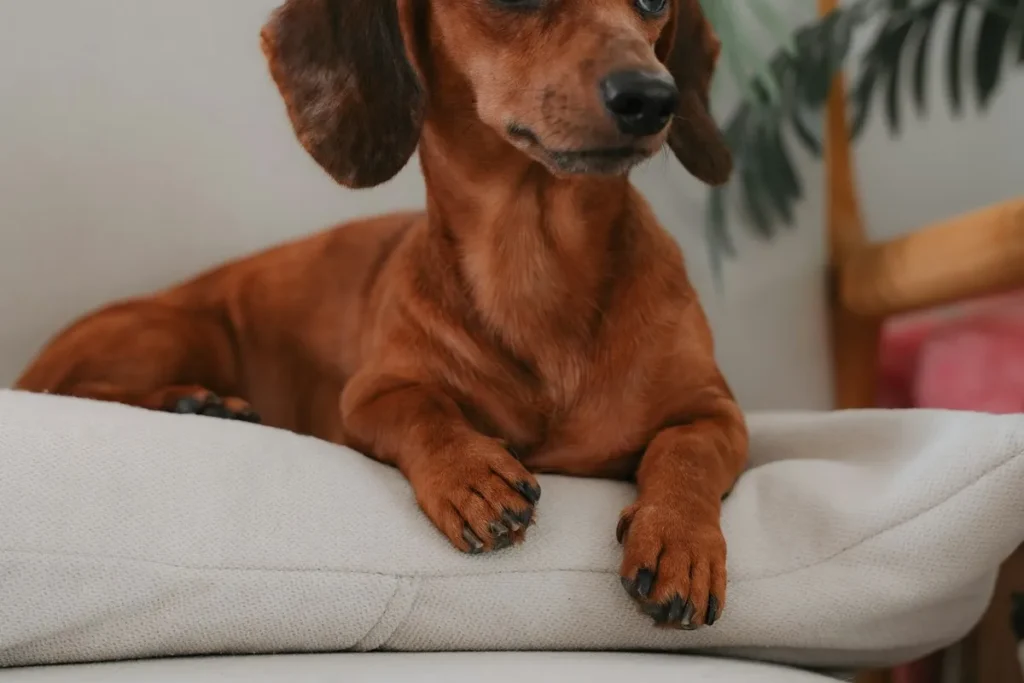
One moment your Dachshund jumps off the sofa, and a few hours later they are crying, shivering with a hunched back, or dragging their back legs. This is the classic picture of a “slipped disc,” or intervertebral disc disease (IVDD), the most common cause of sudden back-leg paralysis in small dogs.
In this article
IVDD is common in some of India’s most popular city breeds, including Shih Tzus, Lhasa Apsos, Beagles, Dachshunds, Pugs and French Bulldogs. Acting quickly matters: dogs treated early have the best chance of walking normally again.
Key Takeaways
- IVDD happens when a disc between the bones of the spine bulges or bursts and presses on the spinal cord.
- Signs range from back or neck pain and a hunched posture to wobbly walking, dragging the legs, loss of bladder control and paralysis.
- Short-legged, long-backed breeds can have sudden disc ruptures (Type I), often when young; large older dogs may get slow disc bulges (Type II).
- Mild cases may recover with 4 to 6 weeks of strict crate rest and medicines. Dogs that cannot walk, or that are getting worse, often need urgent surgery.
- Loss of pain feeling in the toes is an emergency; surgery within 24 to 48 hours gives the best chance of recovery.
What Is IVDD in Dogs?
The spine is made of bones (vertebrae) with cushioning discs between them. Each disc has a tough outer ring (annulus fibrosus) and a soft, jelly-like centre (nucleus pulposus). The spinal cord runs through a canal just above the discs.
In IVDD, the disc degenerates and either bursts outward or bulges upward into the spinal canal. The disc material bruises and squeezes the spinal cord, causing pain and interrupting the nerve signals to the legs, bladder and bowels.
Type I vs. Type II IVDD

| Feature | Hansen Type I (disc extrusion) | Hansen Type II (disc protrusion) |
|---|---|---|
| What happens | The disc centre hardens early and bursts suddenly through the outer ring | The outer ring slowly thickens and bulges over months or years |
| Typical dogs | Chondrodystrophic breeds: Dachshund, Shih Tzu, Lhasa Apso, Beagle, French Bulldog, Pekingese, Corgi, Basset Hound, Cocker Spaniel | Large, older dogs such as German Shepherds and Labradors |
| Typical age | 3 to 7 years (can be younger) | Middle-aged to older |
| Onset | Sudden, often after jumping or rough play | Gradual, slowly worsening weakness |
| Pain | Often severe | Often milder |
Chondrodystrophic (“short-legged”) breeds carry a gene that causes early disc degeneration. As many as one in four Dachshunds develops IVDD during life.
Where in the spine?
Most disc ruptures happen in the middle of the back (thoracolumbar region, around the last ribs), affecting the back legs. About 15 percent occur in the neck (cervical region), causing neck pain and sometimes weakness in all four legs.
Symptoms of IVDD in Dogs
Signs depend on where the disc is and how much it presses on the cord. They can worsen over hours.
- Pain: crying when picked up or touched, shivering, panting, reluctance to move
- A hunched back, tense belly, or a stiff neck held low
- Reluctance to jump, climb stairs or lower the head to eat
- Wobbly, drunken back legs; knuckling or scuffing the back paws; crossing the legs
- Weakness or inability to stand on the back legs
- Dragging the back legs
- Loss of bladder or bowel control, dribbling urine, or inability to urinate
- In neck disease: neck pain, holding the head low, front-leg limping, or weakness in all four legs
IVDD grades
| Grade | What you see | Usual approach |
|---|---|---|
| 1 | Pain only; walks normally | Strict rest and medicine |
| 2 | Pain with wobbly walking, but can walk | Strict rest and medicine; surgery if it worsens or keeps recurring |
| 3 | Cannot walk; some leg movement | Surgery often recommended |
| 4 | Paralysed, but can still feel pain in the toes | Surgery strongly recommended, ideally urgently |
| 5 | Paralysed with no deep pain feeling | Emergency surgery within 24–48 hours gives the best chance |
Vets test “deep pain” by firmly pinching a toe and watching for the dog to turn, cry or react, not just pull the leg away (a reflex). This test predicts recovery better than anything else, which is why any dog that suddenly cannot walk needs a vet the same day.
How Vets Diagnose IVDD
- Neurological examination: checking walking, paw placement (proprioception), reflexes, pain location and deep pain sensation to pinpoint where the problem is and how severe it is
- X-rays: can show calcified discs and narrowed disc spaces and rule out fractures or bone tumours, but cannot show the spinal cord itself
- MRI or CT scan (available at referral centres in many Indian cities): shows exactly where the disc material is and is essential before surgery
- Blood tests before anaesthesia and medicines
Other conditions can look like IVDD, including tick paralysis, spinal strokes (fibrocartilaginous embolism), spinal infections, fractures and tumours. See also our guide to tick paralysis and sudden back-leg weakness.
Treatment of IVDD in Dogs
Conservative (non-surgical) treatment
For dogs with pain only, or mild wobbliness while still walking (grades 1 and 2), vets often start with:
- Strict crate rest for 4 to 6 weeks. This is the most important part, because it lets the torn disc scar over.
- Pain relief: an NSAID such as carprofen or meloxicam or a short course of steroid such as prednisolone (never both together), plus gabapentin for nerve pain
- Muscle relaxants such as methocarbamol for painful back spasms
- Gentle physiotherapy after the first couple of weeks, as advised
Most dogs with mild IVDD recover with this approach, but some relapse later. If a dog gets worse at any point, surgery should be reconsidered immediately.
The strict crate rest protocol
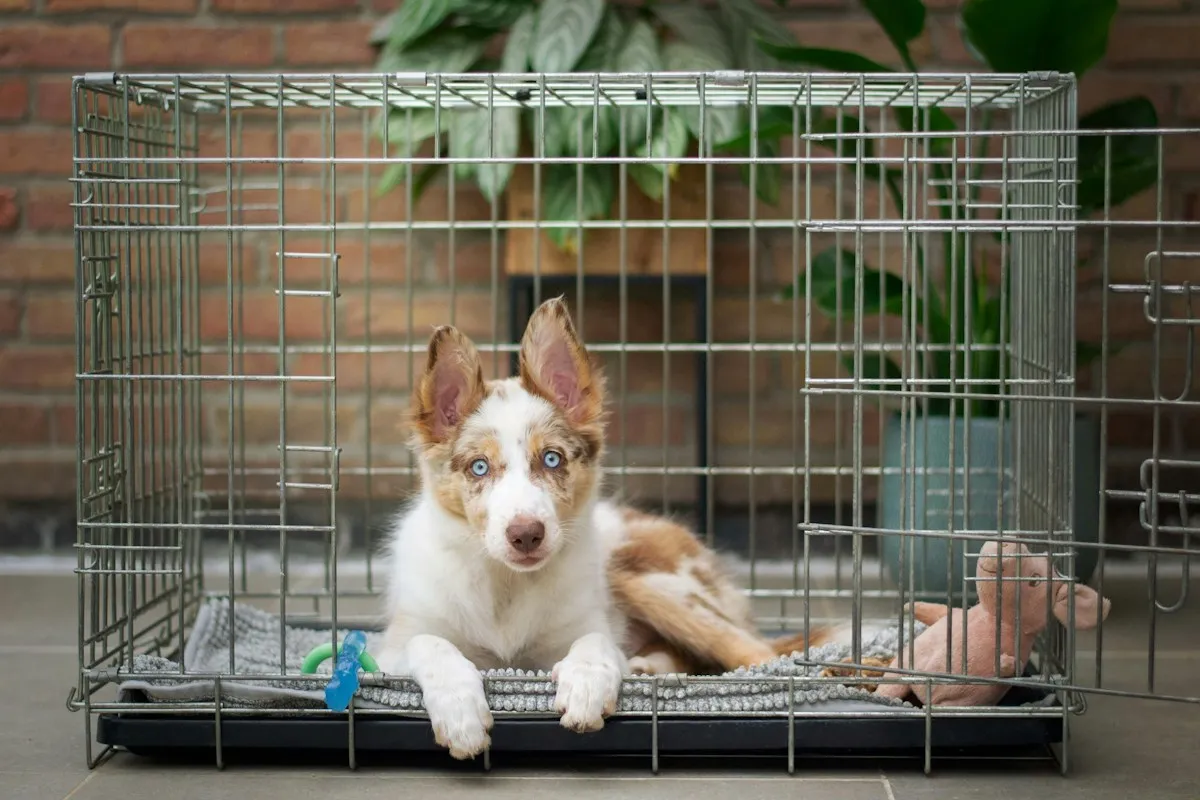
- Use a crate or a small pen just big enough for the dog to stand, turn and lie flat. No free roaming, even indoors.
- Carry your dog outside for toilet breaks, supporting the back and keeping the spine level. Use a short leash and a harness, never a neck collar.
- No stairs, jumping, sofas, beds, play or running, even if your dog seems better after a few days. Pain medicines can make dogs feel well before the disc has healed.
- Place the crate where your dog can see the family, and use chews or lick mats for calm enrichment.
- Give medicines exactly as prescribed and attend all rechecks.
- After 4 to 6 weeks, increase activity slowly over several more weeks as your vet advises.
Surgery
Surgery is recommended for dogs that cannot walk, are getting worse, have uncontrollable pain or keep relapsing. The surgeon removes the disc material pressing on the cord through a window in the bone (a hemilaminectomy in the back, or a ventral slot in the neck). Neighbouring at-risk discs may be treated at the same time (fenestration).
| Situation | Chance of walking again (approximate) |
|---|---|
| Grades 1–3 with conservative or surgical care | Good to excellent, most dogs recover |
| Paralysed but deep pain present, with surgery | About 85–95% |
| No deep pain, surgery within 24–48 hours | About 50–60% |
| No deep pain and no surgery | Low |
Home Care During Recovery
- Bladder care: some paralysed dogs cannot empty their bladder. Your vet will show you how to express it gently, usually 3 to 4 times a day. A full bladder can lead to infection or damage.
- Prevent pressure sores: thick padded bedding, turning a paralysed dog every 4 hours, and keeping the skin clean and dry
- Keep the dog clean if they leak urine or stool, using pads and gentle wipes
- Physiotherapy: passive leg movements, assisted standing, hydrotherapy and, later, balance exercises. Rehabilitation speeds recovery.
- Support slings and wheelchairs help dogs that recover slowly or permanently lose leg function to stay active and happy.
Avoid massage by untrained people, “bone setters,” spinal manipulation and hot oil treatments on the back. They can push more disc material into the spinal canal and make paralysis worse.
How To Reduce the Risk of IVDD
- Keep your dog lean; extra weight strains the spine.
- Use ramps or steps for beds, sofas and cars. Discourage jumping down from heights.
- Carry small breeds up and down stairs, supporting the chest and back end together.
- Use a harness instead of a neck collar, especially for breeds prone to neck disc problems.
- Keep your dog fit with regular walks to build core and back muscles.
- Put non-slip mats on tile and marble floors.
Frequently Asked Questions
Can a dog recover from IVDD without surgery?
Yes, many dogs with mild signs recover with strict rest and medicines. Dogs that cannot walk have a much better chance with surgery.
How do I know if my dog’s back pain is IVDD?
Crying when lifted, a hunched back, shivering and reluctance to move, especially in a short-legged breed, strongly suggest it. Only a vet examination and imaging can confirm it.
Is IVDD an emergency?
Yes, if your dog cannot walk, is dragging its legs, cannot urinate or is getting worse. Go to a vet the same day.
Can IVDD happen again?
Yes. Dogs prone to IVDD can rupture another disc later, especially Dachshunds. Weight control and avoiding jumping reduce the risk.
How long does recovery take after surgery?
Usually 6 to 8 weeks of restricted activity, with gradual improvement over several months. Some dogs take longer to regain full strength.
This article is for education and does not replace veterinary advice. Sudden weakness, paralysis or inability to urinate is an emergency.
Related Articles
- Pancreatitis in Dogs: Symptoms, cPL Test, Treatment and Low-Fat Diet (India)
- Heart Disease (HCM) in Cats: Silent Signs, Open-Mouth Breathing and Sudden Back-Leg Paralysis (Saddle Thrombus)
- Congestive Heart Failure in Dogs: Night Coughing, Sleeping Breath Count, Stages and Heart Care for Senior Dogs
- Distemper in Dogs and Puppies: Symptoms, Stages, Treatment and DHPPi Vaccine
References
- Morrison BJ, Koehler R. Canine Intervertebral Disc Disease (IVDD): Symptoms, Treatment, and Recovery. PetMD.
- Moore SA, Tipold A, Olby NJ, et al. Current approaches to the management of acute thoracolumbar disc extrusion in dogs. Frontiers in Veterinary Science, 2020;7:610.
- Olby NJ, Moore SA, Brisson B, et al. ACVIM consensus statement on diagnosis and management of acute canine thoracolumbar intervertebral disc extrusion. Journal of Veterinary Internal Medicine, 2022;36(5):1570–1596.
- Brown EA, et al. FGF4 retrogene on CFA12 is responsible for chondrodystrophy and intervertebral disc disease in dogs. PNAS, 2017;114(43):11476–11481.
- Merck Veterinary Manual. Intervertebral Disk Disease in Dogs.
More on Dog Diseases and Infections
Pyometra in Dogs and Cats: Early Signs After Heat, Open vs Closed Pyometra, Surgery Cost in India and Why Heat-Stopping Injections Are Risky
Unspayed dog drinking more, off food or with discharge after heat? Pyometra signs, why it is an emergency, surgery cost in India…
UTI in Dogs: Signs, Urine Tests, Right Antibiotics and Why Chemist Norflox or Cipro Can Backfire
Dog peeing often or with blood? Signs of urinary infection, urine culture, antibiotics, why UTIs recur, and when straining is an emergency.