 Written and reviewed by Dr. Vaishnavi Karmawat, B.V.Sc. & A.H., Registered Veterinary Practitioner
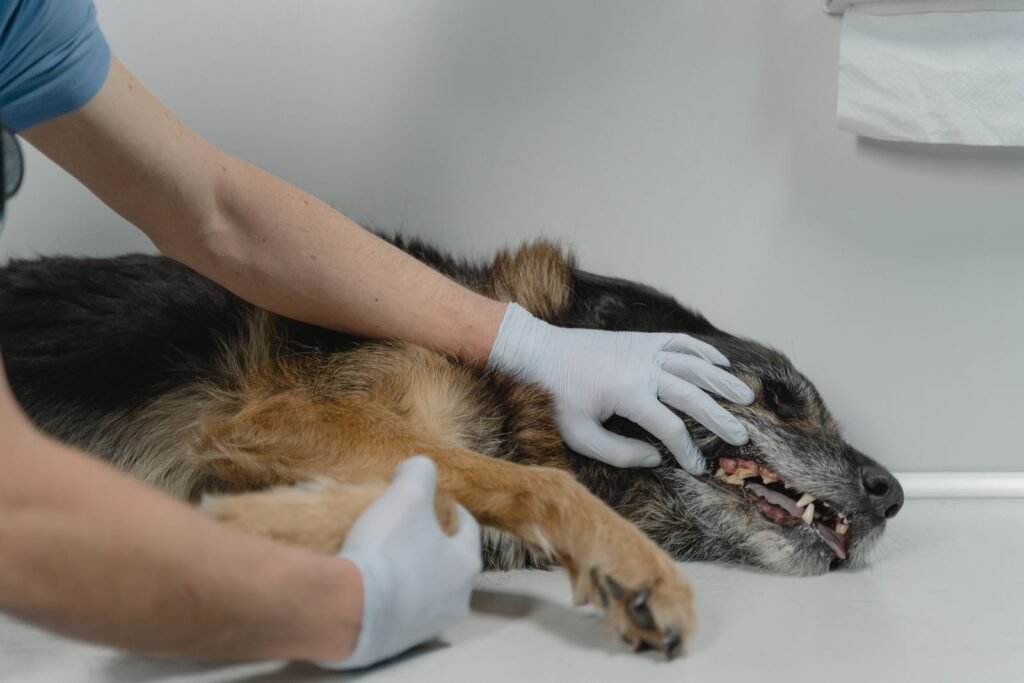
Vomiting and diarrhoea (loose motion) are among the most common reasons Indian pet parents call a vet. Dogs scavenge, change foods, pick up infections and get stressed, and the gut reacts. Many mild upsets settle in one to three days with simple care. Others, especially in puppies, can turn dangerous within hours because of dehydration, parvovirus or a blockage. This guide explains the different types of diarrhoea, the causes vets look for, the tests and treatments used in clinics and how to manage a mild case safely at home.
In this article
- What counts as diarrhoea?
- Small-bowel or large-bowel diarrhoea?
- How diarrhoea happens: the four mechanisms
- Common causes in Indian dogs
- When to see a vet straight away
- Signs of dehydration
- How vets find the cause
- Veterinary treatment
- Home care for a mild upset
- Preventing tummy upsets
- Frequently asked questions
Is it an emergency? Use our free dog emergency checker to see in one minute whether your dog needs a vet today.
For vomiting in detail, including what each vomit colour means, see our dog vomiting colour guide. This page focuses mainly on diarrhoea and on dogs that have both.
What counts as diarrhoea?
Diarrhoea means passing stools that are looser or more watery than normal, more often than normal, or in larger amounts. It is a sign, not a disease. The job is to find the cause. A useful way to describe it to your vet is with a simple stool score:
| Score | What the stool looks like |
|---|---|
| 1 | Hard, dry pellets |
| 2 | Firm, well-formed, easy to pick up (ideal) |
| 3 | Soft but still holds shape |
| 4 | Very soft, loses shape when picked up |
| 5 | Pudding-like piles |
| 6 to 7 | Watery, no shape, may be pure liquid |
Small-bowel or large-bowel diarrhoea?
Vets divide diarrhoea by which part of the gut seems to be affected. It changes which tests and treatments make sense.
| Feature | Small intestine | Large intestine (colitis) |
|---|---|---|
| Volume | Large amounts each time | Small amounts each time |
| Frequency | Normal or slightly more often | Many times a day, often urgent |
| Mucus | Uncommon | Common, jelly-like coating |
| Blood | Black, tarry (digested) | Fresh red streaks |
| Straining | Rare | Common; often mistaken for constipation |
| Weight loss | Common if chronic | Uncommon |
| Vomiting | Can occur | Less common |
How diarrhoea happens: the four mechanisms
- Osmotic diarrhoea: food that is not absorbed (a fatty meal, too much milk, a sudden diet change) pulls water into the gut. It usually improves when food is withheld briefly.
- Secretory diarrhoea: bacterial toxins or viruses make the gut lining pump out fluid. Stools are very watery and it does not stop with fasting.
- Exudative or inflammatory diarrhoea: the gut wall is damaged (for example in parvovirus, severe colitis or inflammatory bowel disease), so protein, mucus and blood leak into the stool.
- Fast transit: the gut moves contents too quickly to absorb water, for example with stress or some hormonal diseases.
Common causes in Indian dogs
- Dietary indiscretion: garbage, spoiled food, festival sweets, fried and spicy leftovers, too much milk or ghee. The single most common cause.
- Sudden food change or a new treat.
- Intestinal parasites: roundworms, hookworms, whipworms, tapeworms, and the protozoa Giardia and Isospora (coccidia). Very common in puppies and street dogs.
- Viral infections: canine parvovirus, distemper and coronavirus. Parvovirus causes foul-smelling, often bloody diarrhoea with vomiting in young dogs. See our parvovirus guide.
- Bacterial infections: Salmonella, Campylobacter and toxin-producing Clostridium, often from raw meat, contaminated water or scavenging.
- Swallowed objects causing partial blockage. See dog swallowed a sock, toy or bone.
- Toxins and medicines: chocolate, grapes, onion, rat poison, human painkillers, some antibiotics.
- Pancreatitis after a fatty meal.
- Food allergy or intolerance, which more often causes itching but can cause chronic loose stools.
- Stress colitis after travel, boarding, fireworks or a new pet.
- Chronic diseases: inflammatory bowel disease, kidney or liver disease, Addison’s disease, exocrine pancreatic insufficiency (pale, greasy, bulky stools with weight loss) and intestinal tumours in older dogs.
- Tick fever (ehrlichiosis or babesiosis) can sometimes cause bloody stools and weakness. See tick fever in dogs.
When to see a vet straight away
Go to a vet the same day if your dog:
- Is a young puppy, especially if not fully vaccinated
- Has blood in the stool (red or black, tarry), or blood in vomit
- Is vomiting as well as having diarrhoea, or cannot keep water down
- Is dull, weak, collapsed, or has pale, dry or tacky gums
- Has a painful, swollen or tight belly
- Has a fever (rectal temperature above 39.2 °C)
- May have eaten a poison, a medicine, a bone, toy or cloth
- Is old, very small, or already has diabetes, kidney, heart or liver disease
- Has diarrhoea lasting more than 48 hours, or keeps coming back over weeks
Signs of dehydration
- Dry, sticky gums instead of wet, slippery gums
- Skin over the shoulders stays tented when gently lifted and released
- Sunken, dull eyes
- Gum colour takes more than 2 seconds to return after you press it
- Weakness, cold paws, fast heartbeat
Dehydrated dogs need fluids from a vet, usually by drip. Oral fluids alone are not enough for a dog that is vomiting or very weak.
How vets find the cause
- History and examination: diet, scavenging, deworming and vaccination status, medicines, stool score, frequency, blood or mucus, and a full check of temperature, hydration, belly and rectum.
- Faecal tests: flotation for worm eggs and coccidia, and a Giardia antigen test. Because parasites are shed on and off, your vet may test more than one sample.
- Parvovirus rapid test in puppies and unvaccinated dogs.
- Blood tests (CBC and biochemistry): look for dehydration, infection, low protein, anaemia and kidney, liver or pancreas problems. Some dogs need a canine pancreatic lipase test, a cortisol test for Addison’s disease, or B12 and folate levels in chronic cases.
- X-rays and ultrasound: for suspected blockage, intussusception (the gut telescoping into itself), thickened intestines or tumours.
- Food trial: an 8 week trial with a hydrolysed or novel protein diet for suspected food-responsive diarrhoea.
- Endoscopy and biopsy: for chronic cases that do not respond, to diagnose inflammatory bowel disease or cancer.
Veterinary treatment
- Fluids by drip or under the skin, with potassium and glucose if needed.
- Dietary therapy: a highly digestible, low-fat gastrointestinal diet in the short term; hydrolysed or novel protein diets for food-responsive cases; added fibre for colitis.
- Probiotics to support recovery of healthy gut bacteria.
- Dewormers and antiprotozoals: for example fenbendazole for many worms and Giardia, or other drugs your vet chooses for coccidia.
- Anti-nausea medicines and gut protectants when vomiting is present.
- Antibiotics only when truly needed, such as bloody diarrhoea with fever, low white cells, parvovirus or a confirmed bacterial cause. For most simple acute diarrhoea, antibiotics do not speed recovery and can upset the gut’s bacteria.
- Specific treatment for pancreatitis, inflammatory bowel disease (diet and sometimes steroids), Addison’s disease or exocrine pancreatic insufficiency (enzyme supplements).
- Monoclonal antibody therapy and intensive hospital care for parvovirus, where available.
Home care for a mild upset
Only for an adult dog that is bright, eating, drinking and has no blood in the stool and no vomiting:
- Short rest for the gut: skip one meal (about 6 to 12 hours) in adult dogs. Never fast puppies, toy breeds or diabetic dogs without your vet’s advice.
- Keep water available at all times. Plain clean water is most important. A vet may suggest an oral rehydration solution (ORS, such as the WHO-formula sachets sold in Indian pharmacies) made up exactly as the packet says. Do not use sweetened sports drinks.
- Bland diet: boiled skinless boneless chicken or boiled egg with soft-cooked rice, roughly 1 part protein to 2 to 3 parts rice. Many Indian vets also suggest curd rice (plain unsweetened curd mixed with soft rice) because curd contains live cultures, but use a small amount at first because some dogs do not tolerate dairy. No oil, ghee, salt, masala, onion or garlic.
- Feed small portions 4 to 6 times a day.
- Add fibre for large-bowel signs: a teaspoon to a tablespoon (depending on size) of plain boiled and mashed pumpkin (kaddu), or a small amount of psyllium husk (isabgol) mixed with water and food, can firm up stools. Ask your vet for the right amount.
- Dog probiotics for 5 to 7 days.
- Return to normal food over 3 to 5 days, mixing in more of the usual food each day.
- Keep a log: time, stool score, blood or mucus, appetite and energy. If there is no clear improvement in 24 to 48 hours, see a vet.
Do not give human loose-motion tablets (such as loperamide), bismuth or “stomach syrups”, painkillers or antibiotics without a vet’s advice. Loperamide can be dangerous for some breeds and can hide serious illness; bismuth products contain salicylate, related to aspirin.
🩺 Dr. Vaishnavi’s Clinical Picks (Available on Amazon India)
Products I suggest to pet parents for this. For illness, always get your pet checked by a vet first.
Digestive support for puppies, kittens and dogs off their food
Pet probiotic to settle the gut after an upset stomach
As an Amazon Associate, I earn from qualifying purchases. This costs you nothing extra.
Preventing tummy upsets
- Keep dustbins closed and festival sweets, chocolates and leftovers out of reach.
- No cooked bones, fried snacks, spicy food or large amounts of milk.
- Change foods slowly over 7 days.
- Keep vaccinations and deworming up to date; see our deworming schedule.
- Use tick and flea control year-round.
- Do not let your dog drink from puddles, drains or ponds, especially in the monsoon.
- Pick up stools promptly to stop reinfection with worms and Giardia.
- Supervise walks so your dog does not scavenge.
Frequently asked questions
Is it normal for a dog to vomit yellow foam in the morning?
Often it is bile irritating an empty stomach. A later dinner, a small bedtime snack and smaller meals often help. If it continues, or your dog seems unwell, see a vet. Our vomit colour guide explains more.
Can I give my dog rice and curd for diarrhoea?
Plain curd rice in small portions suits many dogs once vomiting has stopped. If the stools get worse, switch to boiled chicken or egg with rice. Never add salt, tadka, onion or garlic.
Can I give ORS to my dog?
A plain ORS solution made exactly as the packet says can help a mildly affected dog that is drinking. It does not replace a vet visit for a dog that is vomiting, weak, or a puppy. Avoid flavoured electrolyte drinks with high sugar or artificial sweeteners.
My dog has diarrhoea but is acting normal. What should I do?
A single episode in a bright adult dog can be watched at home with a short gut rest, water and a bland diet. If it lasts more than 48 hours, contains blood or mucus, or keeps coming back, see a vet.
Why does my dog have mucus and blood in the stool but seems fine?
This is typical of large-bowel diarrhoea (colitis), often from stress, scavenging, whipworms or Giardia. It needs a stool test and treatment of the cause, even if your dog is active.
When is diarrhoea in a puppy an emergency?
Always treat it seriously. Puppies dehydrate fast and may have parvovirus or a heavy worm burden. If there is vomiting, blood, dullness or refusal to feed, go to a vet the same day.
Recommended reading
- The Ultimate Dog Owner’s Handbook by Dr. Vaishnavi Karmawat (Kindle eBook on Amazon)
- See all titles on the Books page.
Related Articles
- Cat Diarrhoea (Loose Motion): Causes, Why Milk Upsets Cats, Vet Treatment and Home Care
- Dog Vomiting: Colour Guide, Causes, Vet Treatment and When To Worry
- Dog Pooping Blood in India: Red Blood (Hematochezia) vs Black Tarry Stool (Melena), Causes and When To See a Vet
- Bloody Diarrhoea in Dogs (Raspberry Jam Stool): Colitis vs Hookworms vs Parvo vs AHDS in Indian Dogs
References
- Merck Veterinary Manual. Diseases of the Stomach and Intestines in Small Animals.
- Werner M, Suchodolski JS, Straubinger RK, et al. Effect of amoxicillin-clavulanic acid on clinical scores, intestinal microbiome, and amoxicillin-resistant Escherichia coli in dogs with uncomplicated acute diarrhea. Journal of Veterinary Internal Medicine. 2020;34(3):1166-1176.
- Candellone A, Cerquetella M, Girolami F, Badino P, Odore R. Acute Diarrhea in Dogs: Current Management and Potential Role of Dietary Polyphenols Supplementation. Antioxidants. 2020;9(8):725.
- Jergens AE, Heilmann RM. Canine chronic enteropathy: current state-of-the-art and emerging concepts. Frontiers in Veterinary Science. 2022.
- Companion Animal Parasite Council (CAPC). Giardia and Coccidia guidelines.
- VCA Animal Hospitals. Gastroenteritis in Dogs.
More on Dog Symptoms and What They Mean
Nursing Mother Dog Trembling (Milk Fever / Eclampsia), Distemper Twitching and Swollen Glands in Dogs: Indian Vet Triage Guide
Nursing mother dog trembling? Eclampsia (milk fever) vs seizures, distemper twitching, poisoning, swollen lymph nodes and when to rush.
Dog Eye Infection, Red Eyes, Yellow Discharge (Kichad) and Cherry Eye: Causes, Safe Cleaning and Why Human Steroid Eye Drops Can Blind Dogs
Red eyes, yellow discharge or cherry eye in dogs? Types of eye discharge, ulcers, dry eye, safe cleaning, and why steroid drops…