 Written and reviewed by Dr. Vaishnavi Karmawat, B.V.Sc. & A.H., Registered Veterinary Practitioner
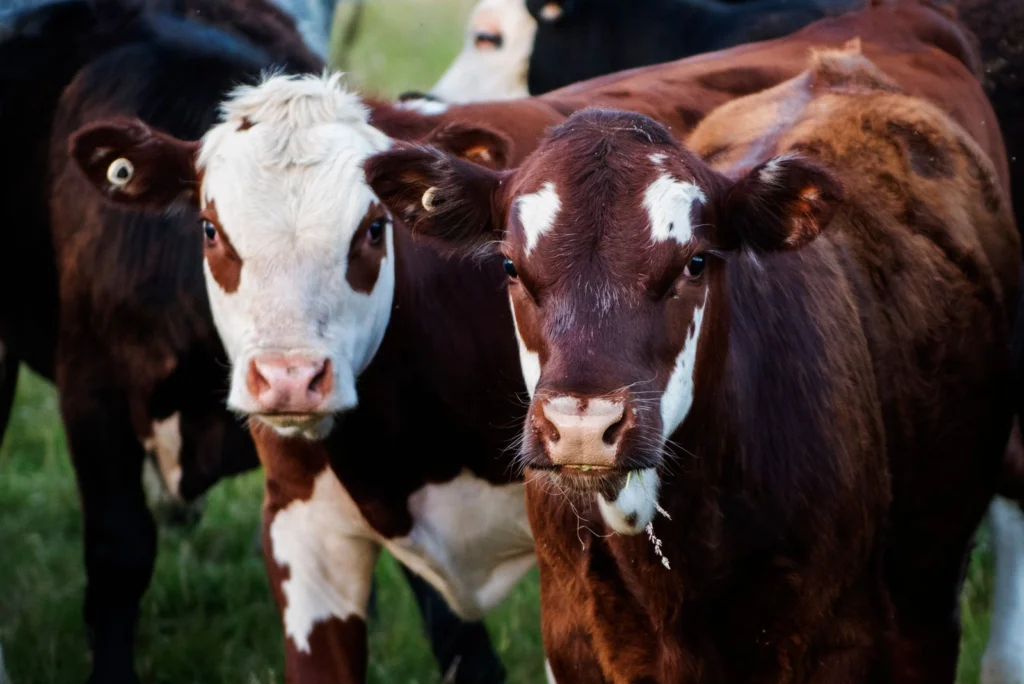
Milk fever is one of the most common emergencies in dairy animals around calving. Despite its name, there is no fever. The real problem is a sudden drop in blood calcium (hypocalcaemia) when milk production starts. Calcium is needed for muscles to work, so the animal becomes weak, cold and unable to stand. Without treatment, many cases die within hours. With fast treatment by a vet, most recover. Good feeding in the last weeks of pregnancy prevents most cases.
In this article
Key Takeaways
- Milk fever is a sudden drop in blood calcium around calving; despite the name, there is no fever.
- The cow becomes weak, cold and unable to stand; without treatment many die within hours.
- High-yielding, older and over-fat animals, and those with past milk fever, are at higher risk.
- Call a vet immediately; intravenous calcium must be given only by a vet.
- Correct dry-period feeding and oral calcium at calving prevent most cases.
Why milk fever happens
At calving, a high-yielding cow or buffalo suddenly needs large amounts of calcium for colostrum and milk. If her body cannot release calcium from her bones and absorb it from food fast enough, blood calcium falls.
Animals at higher risk:
- High-yielding cows and crossbreds, and high-yielding buffaloes
- Older animals in their third or later calving
- Animals that had milk fever before
- Fat (over-conditioned) animals at calving
- Animals fed a lot of calcium in the dry period
- Jersey crossbreds are often more affected
When it happens
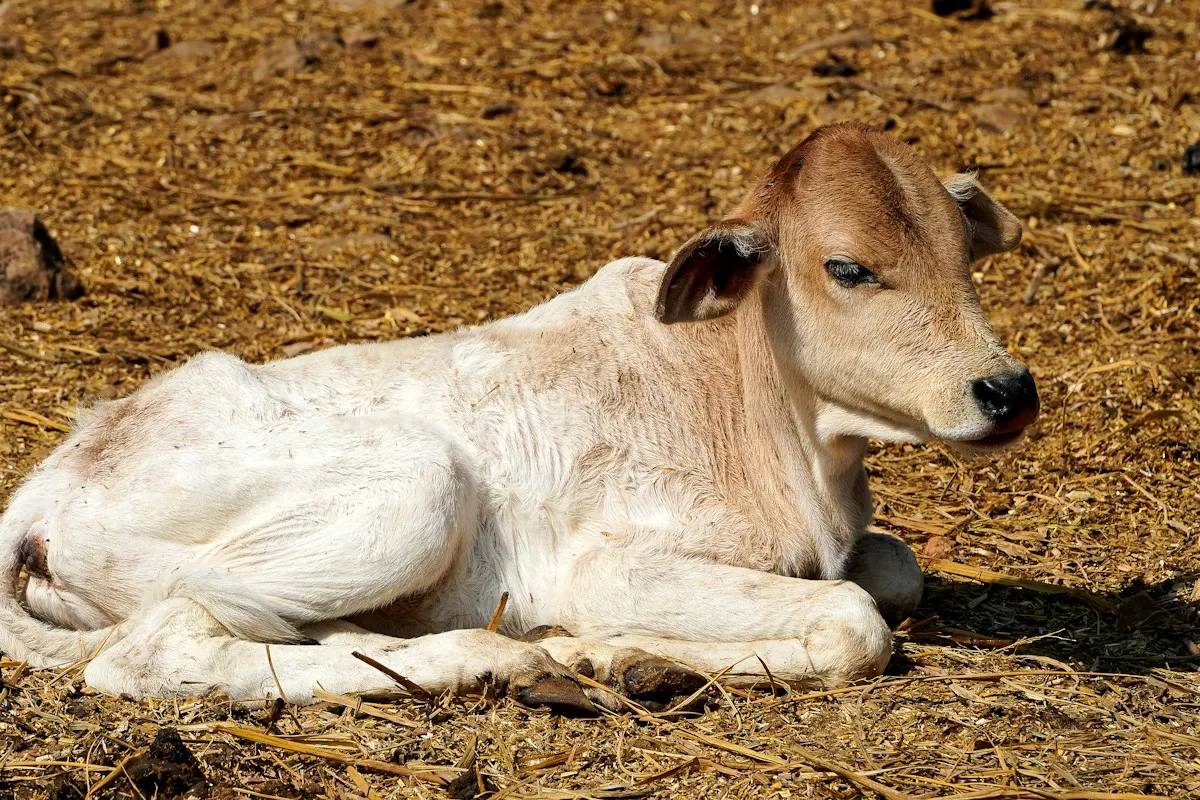
Most cases occur within 72 hours of calving, often in the first 24 hours. Some occur just before calving or during labour, and a few several weeks after calving.
The three stages of milk fever
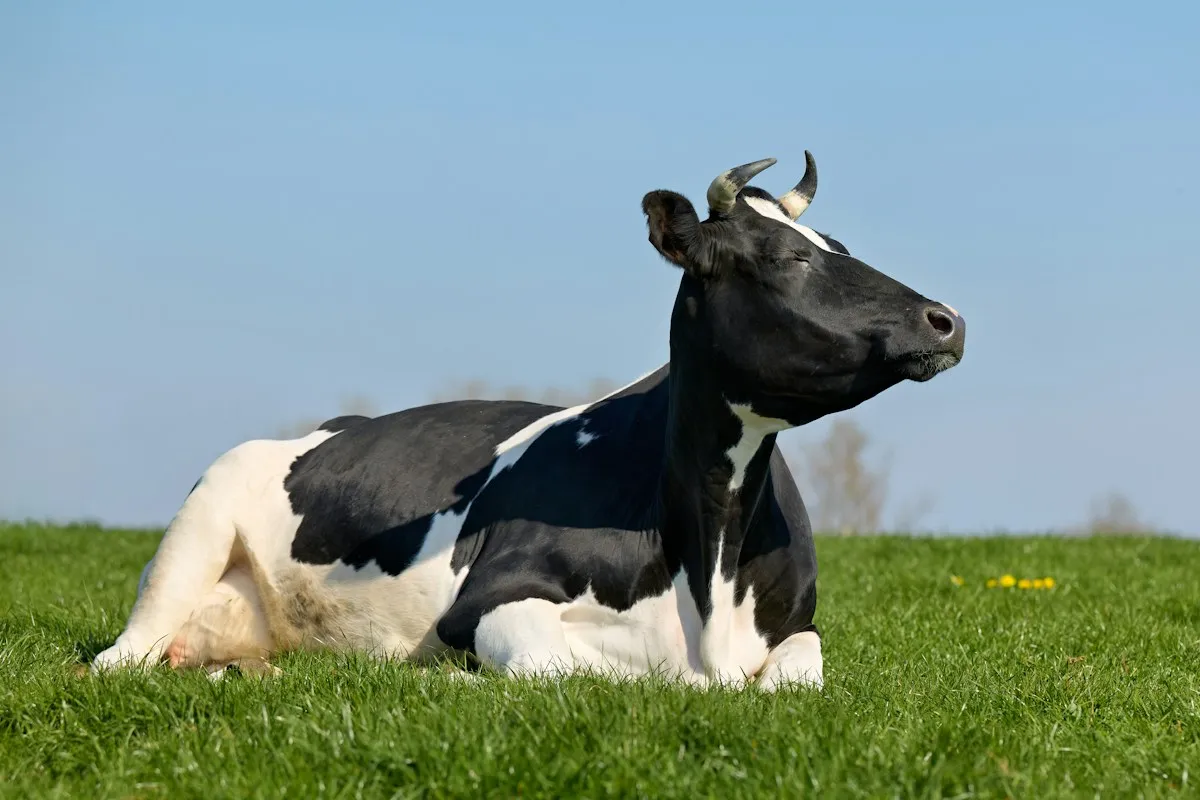
| Stage | Signs |
|---|---|
| Stage 1: early | Restless, nervous, trembling, stiff walk, grinding teeth, still standing |
| Stage 2: down | Sitting on the chest (sternal recumbency), head turned into the flank in an "S" shape, cold ears and legs, dry muzzle, dilated pupils, stops chewing cud, constipation, mild bloat |
| Stage 3: flat out | Lying flat on the side, severe bloat, barely conscious, weak heartbeat; death can follow within hours |
Milk fever is an emergency. Call your vet or the 1962 mobile veterinary helpline as soon as a freshly calved animal is weak or cannot stand.
What to do while waiting for the vet
- Call the vet immediately.
- If the animal is down, prop her on her chest (sternal position) with sacks of straw or bales on one side, and the head pointing forward. Lying flat on the side causes bloat and can be fatal.
- Move her off slippery or hard floors if possible, onto soft bedding or sand. Provide shade.
- Do not pour liquids into the mouth of an animal that is down or cannot swallow properly. Liquid can go into the lungs.
- Do not try to make her stand by beating or twisting the tail.
- Keep the calf safe and feed it colostrum by hand. See our newborn calf care guide.
Treatment by the vet
- Calcium given slowly into a vein is the standard treatment. It must be given by a vet, because calcium given too fast can stop the heart
- Many animals get up within minutes to a few hours of treatment
- Some animals relapse within 24 to 48 hours and need further treatment
- Your vet may also give calcium under the skin or by mouth and treat related problems such as bloat, retained placenta or low magnesium
- Animals that stay down for long periods can suffer muscle and nerve damage, so early treatment matters
After treatment
- Milk the animal only partly (not fully) for the first day or two if your vet advises; this reduces the calcium drain
- Offer fresh water, good-quality green and dry fodder
- Watch closely for relapse, retained placenta, mastitis and not eating. See our guides on retained placenta and mastitis
Subclinical milk fever
Many fresh animals have low calcium without going down. This hidden problem reduces appetite and milk, and increases retained placenta, mastitis, displaced abomasum and fertility problems. Good dry-period feeding prevents both the visible and the hidden forms.
Prevention: it starts in the dry period
| Do | Avoid |
|---|---|
| Give a dry period of about 60 days | Calving fat animals; aim for good but not fat body condition |
| In the last 2 to 3 weeks before calving, feed a diet low in calcium, as your vet or nutritionist advises | Feeding large amounts of calcium-rich fodder such as berseem (Egyptian clover) and lucerne (alfalfa) or calcium supplements in the last weeks |
| Ask about special close-up (pre-calving) mineral mixtures or anionic salts for high-yielding herds | Sudden feed changes around calving |
| Ask your vet about oral calcium at calving for high-risk animals | Stress, crowding and slippery floors at calving |
| Provide a clean, dry calving area and watch high-risk animals closely for 72 hours | Leaving a freshly calved high-yielder unobserved overnight |
Your vet may also suggest vitamin D or other preventive treatments for animals with a history of milk fever.
🩺 Dr. Vaishnavi’s Clinical Picks (Available on Amazon India)
Products I suggest to dairy farmers for this. For a sick animal, call your vet first.
Calcium and phosphorus support for milking cows and buffaloes
Vitamins A, D3, E and B12, often mixed with liquid calcium
As an Amazon Associate, I earn from qualifying purchases. This costs you nothing extra.
Frequently asked questions
Does milk fever cause fever?
No. Body temperature is often normal or below normal, with cold ears and legs. The name comes from its link with the start of milk production.
Can buffaloes get milk fever?
Yes, especially high-yielding buffaloes, though signs can be less typical. Treat any weak or down buffalo after calving as an emergency.
Should I give calcium tablets or gel myself?
Oral calcium can help prevent milk fever in standing animals when your vet advises. Never pour calcium or other liquids into the mouth of an animal that is down.
Why did my cow get milk fever again after treatment?
Relapse within a day or two is common. Your vet may give further treatment and advise partial milking for a short time.
Is milk fever the same as a downer cow?
Milk fever is one common cause of a downer cow, but injuries, infections and other problems can also cause it. A vet needs to examine the animal.
When should you call a vet?
Call immediately if a cow or buffalo is weak, trembling, unsteady or unable to stand around calving, or lies with her head turned into her flank. Milk fever can kill within hours, and fast treatment saves most animals.
Recommended reading
- Dr. Vaishnavi’s animal-care books are available on her Amazon author page.
- See all titles on the Books page.
Related Articles
- Heat Signs in Cows and Buffaloes: Best Time for AI
- Milk Fever and Retained Placenta in Cows: Prevention Diet
- Mastitis in Cows: Symptoms, Treatment, and NDDB Herbal Remedy
- Winter Care for Cows and Buffaloes: Keep Milk Yield Up
- How To Increase Milk Production in Cows and Buffaloes Naturally
References
- Merck Veterinary Manual. Parturient Paresis in Cows.
- Goff JP. The monitoring, prevention, and treatment of milk fever and subclinical hypocalcemia in dairy cows. The Veterinary Journal. 2008;176(1):50-57.
- Radostits OM, et al. Veterinary Medicine: A Textbook of the Diseases of Cattle, Horses, Sheep, Pigs and Goats, 10th ed. Saunders; 2007.
More on Cows and Buffaloes
Cows Eating Plastic: Symptoms, Treatment, and Prevention
Cows often swallow plastic and festival waste. Learn the signs of plastic in the stomach, how vets treat it and how to…
Repeat Breeding in Crossbred Cows: 7 Causes and Vet Treatment
Cow not conceiving after 3 AI cycles? Understand repeat breeding in crossbred cows causes and treatment in India, from subclinical endometritis to…