 Written and reviewed by Dr. Vaishnavi Karmawat, B.V.Sc. & A.H., Registered Veterinary Practitioner
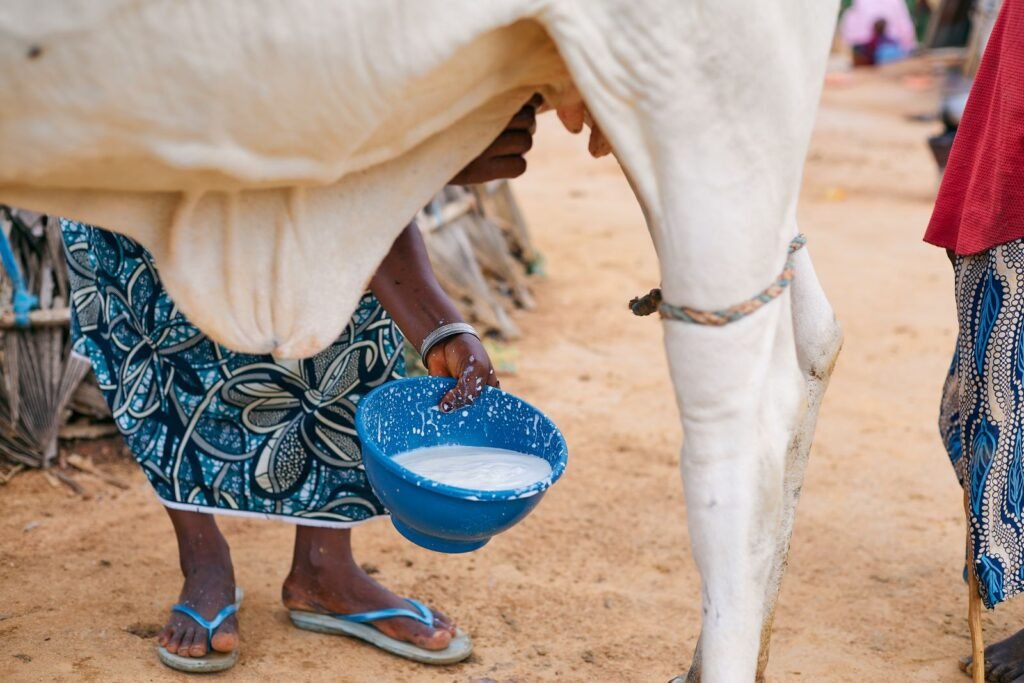
Mastitis (thanaila) is the most costly disease in Indian dairy farming. It reduces milk yield, spoils milk quality, and can permanently damage a quarter of the udder. For every cow with visible mastitis, several more usually have hidden (subclinical) mastitis that silently cuts milk by 10 to 20%. This guide explains how to detect it early, the scientifically validated NDDB herbal formula, and when antibiotics are essential.
In this article
- Subclinical vs clinical mastitis
- Early detection: the California Mastitis Test (CMT)
- The NDDB ethnoveterinary formulation for mastitis
- When herbal care is enough and when antibiotics are mandatory
- Antibiotic withdrawal period: protect your milk payments
- Prevention: the five daily habits
- Frequently asked questions
- Related Articles
- References
Subclinical vs clinical mastitis
| Type | What you see | Milk | What to do |
|---|---|---|---|
| Subclinical | Udder looks normal | Looks normal, but somatic cell count is high and yield drops | Detect with CMT; start herbal care and fix hygiene |
| Mild clinical | Slight swelling or warmth in one quarter | Flakes or small clots | Herbal paste plus vet check |
| Severe clinical | Hard, hot, painful quarter; cow may have fever, stop eating | Watery, yellow, bloody or pus-like | Call the vet the same day; antibiotics needed |
Early detection: the California Mastitis Test (CMT)
The CMT kit is cheap and gives results at the farm in one minute.
- Strip the first few streams of milk from each quarter into the four cups of the paddle.
- Add an equal amount of CMT reagent.
- Swirl gently for 10 seconds.
- If the mixture thickens or turns gel-like, that quarter has a high somatic cell count, meaning mastitis.
Test every cow once a week, and every fresh cow after calving. The first few streams can also be checked on a black cloth or strip cup for flakes and clots before every milking.
The NDDB ethnoveterinary formulation for mastitis
The National Dairy Development Board (NDDB) has validated a simple herbal paste for early and subclinical mastitis.
Ingredients for one cow, one day:
- Aloe vera (Gwarpatha), fresh leaves: 250 g
- Turmeric (Curcuma longa) powder: 50 g
- Chuna (slaked lime, calcium hydroxide): 15 g, a small lump the size of a groundnut
Method:
- Wash the aloe vera leaves and chop them.
- Grind all three together into a smooth red paste.
- Take one handful of the paste and mix it with 150 to 200 ml of water.
- After milking, wash and dry the udder, then apply the paste over the entire affected quarter and teat.
- Apply 10 times a day for 5 days.
Prepare fresh paste every day. Many farmers also feed lemon (2 lemons cut in half, daily for 3 days) along with the paste, as advised in NDDB brochures. Stop and call your vet if the cow develops fever, stops eating, or the quarter becomes hard and very painful.
When herbal care is enough and when antibiotics are mandatory
| Situation | Herbal NDDB paste | Vet and antibiotics |
|---|---|---|
| CMT positive, udder normal | Yes, plus hygiene | Not usually needed |
| Few flakes, slight swelling, cow eating normally | Yes, start immediately | Vet check if no improvement in 2 to 3 days |
| Blood in milk only, no swelling | Yes (NDDB also has a formula for blood in milk) | If it continues beyond 3 to 4 days |
| Hard, hot, painful quarter | Can be used alongside | Yes, intramammary and often systemic (parenteral) antibiotics |
| Fever, cow off feed, watery or yellow milk | No, not alone | Emergency: same-day vet visit |
Chronic mastitis caused by Staphylococcus aureus responds poorly to treatment and often needs culling of the quarter or the cow, so early detection is everything.
Antibiotic withdrawal period: protect your milk payments
After intramammary antibiotic tubes or injections, milk must be thrown away for the full intramammary antibiotic withdrawal period on the label, usually 3 to 5 days after the last dose. Selling this milk risks antibiotic residue penalties at the dairy society and is unsafe for children.
Prevention: the five daily habits
- Full-hand milking technique: hold the teat with the whole hand and squeeze from top to bottom. Avoid the thumb-folding (knuckling) method common in India, which damages teat tissue.
- Post-milking teat dipping: dip each teat in povidone-iodine teat dip right after milking. The teat canal stays open for about 30 minutes.
- Feed after milking: give fodder right after milking so the cow stands while the teat canal closes, rather than lying in dirt.
- Clean, dry floor and bedding: wet dung-covered floors are the main source of infection.
- Milk infected cows last, and wash hands between cows.
🩺 Dr. Vaishnavi’s Clinical Picks (Available on Amazon India)
Test your herd regularly so mastitis is caught early, before it shows in the milk.
Check all four teats for hidden mastitis in about a minute
As an Amazon Associate, I earn from qualifying purchases. This costs you nothing extra.
Frequently asked questions
Can mastitis in cows be cured at home?
Early and subclinical mastitis often responds to the NDDB herbal paste and good hygiene. Severe mastitis with fever needs a vet and antibiotics.
Is milk from a mastitis cow safe to drink?
No. Discard milk from affected quarters, and from treated cows during the withdrawal period.
How long does the NDDB herbal treatment take?
Five days, applying 10 times a day. Most early cases improve within 3 to 5 days.
Why does mastitis keep coming back in my cows?
Usually because of dirty floors, poor milking technique, no teat dipping, or chronic Staphylococcus infection. Ask your vet for a milk culture.
Facing repeated mastitis on your farm? Contact Dr. Vaishnavi Karmawat for a herd mastitis check.
Related Articles
- Repeat Breeding in Crossbred Cows: 7 Causes and Vet Treatment
- Winter Care for Cows and Buffaloes: Keep Milk Yield Up
- FMD in Cows and Buffaloes: Symptoms, Treatment, and Free Vaccine
- Milk Fever in Cows and Buffaloes: Symptoms, Treatment, and Prevention
References
- Merck Veterinary Manual. Mastitis in Large Animals.
- National Mastitis Council. Laboratory Handbook on Bovine Mastitis, 3rd ed. 2017.
- Radostits OM, et al. Veterinary Medicine: A Textbook of the Diseases of Cattle, Horses, Sheep, Pigs and Goats, 10th ed. Saunders; 2007.
More on Cows and Buffaloes
Cows Eating Plastic: Symptoms, Treatment, and Prevention
Cows often swallow plastic and festival waste. Learn the signs of plastic in the stomach, how vets treat it and how to…
Repeat Breeding in Crossbred Cows: 7 Causes and Vet Treatment
Cow not conceiving after 3 AI cycles? Understand repeat breeding in crossbred cows causes and treatment in India, from subclinical endometritis to…