 Written and reviewed by Dr. Vaishnavi Karmawat, B.V.Sc. & A.H., Registered Veterinary Practitioner
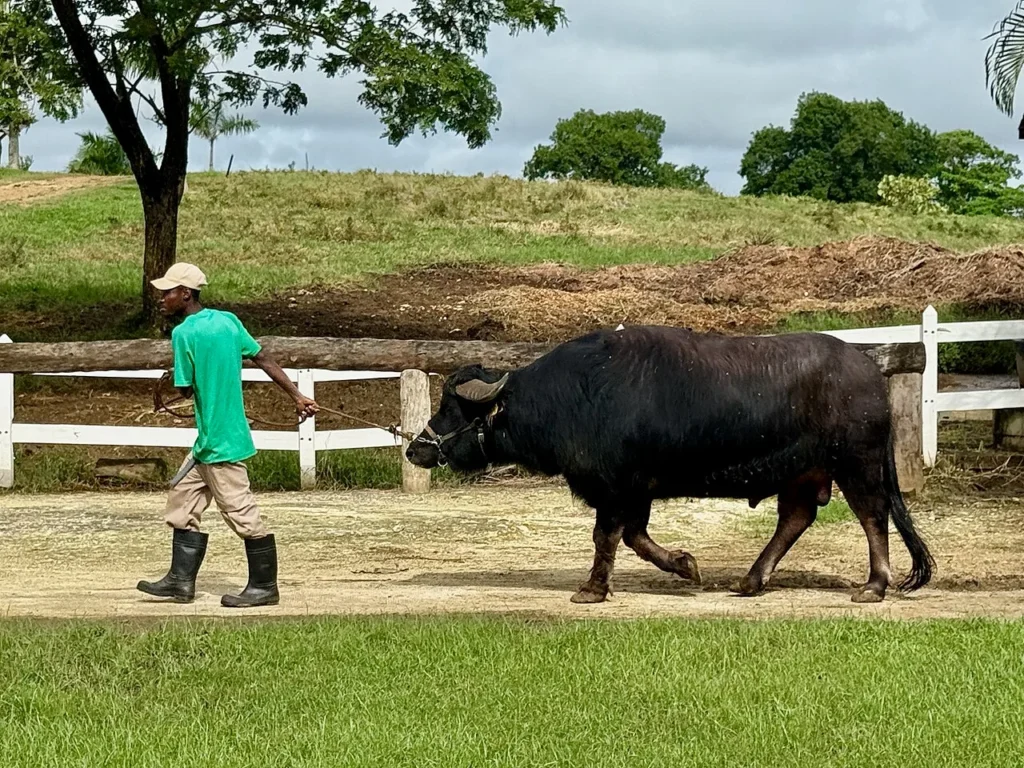
Murrah buffaloes are India’s best milk animals, but they suffer badly in summer. Their dark skin absorbs heat, and they have far fewer sweat glands than cows. From April to August many farmers see milk drop by 20 to 30% and buffaloes that simply stop showing heat (summer anestrus or “silent heat”). Both problems can be greatly reduced with good shelter, cooling, night feeding and the right minerals.
In this article
Measure heat stress: the Temperature-Humidity Index (THI)
Heat stress depends on both temperature and humidity. The Temperature-Humidity Index (THI) combines them.
| THI | Stress level | What you see |
|---|---|---|
| Below 72 | Comfortable | Normal feeding and milk |
| 72 to 78 | Mild stress | Faster breathing, seeking shade |
| 79 to 88 | Moderate to severe | Panting, drooling, eating less, milk drops |
| Above 89 | Dangerous | Open-mouth panting, high body temperature, risk of death |
In much of North and Central India, THI stays above 80 for most days from May to July. A simple rule: if the shed feels hot and sticky to you, your buffalo is already stressed.
Shelter engineering: ICAR-IVRI recommendations
The ICAR-IVRI extension guidance on management of buffaloes in summer, along with GADVASU thermal stress guidelines, gives practical shed rules:
- Roof: thatch, or a tin or asbestos roof painted with white reflective paint on top. A layer of straw or thatch on top of a tin roof cools the shed a lot.
- Height: at least 10 to 12 feet at the eaves for air movement.
- Ventilation: one ventilator of about 3 x 1 ft per animal near the roof so hot air can escape.
- Wet gunny bag barriers: hang wet jute bags on the open sides facing the hot west wind (loo) and keep them wet.
- Trees: plant shade trees on the south and west sides of the shed.
Wallowing vs misting and fogging
| Method | How it works | Notes |
|---|---|---|
| Wallowing in a pond | Buffalo’s natural way to cool down | Very effective, but dirty ponds raise mastitis and parasite risk |
| Showers or sprinklers | Wet the body for 2 to 3 minutes every 1 to 2 hours, with a fan | Simple and cheap |
| Misting and fogging with fans | Fine water spray plus air flow, every 15 to 30 minutes in the hottest hours | Best for commercial farms; needs good ventilation |
| Bathing twice daily | Bucket or pipe bath at noon and afternoon | Minimum for small farmers |
Always combine wetting with air movement. Wet skin without wind in a closed shed raises humidity and makes stress worse.
Nocturnal feeding schedule
Digestion produces heat. In summer, shift feeding to cooler hours:
| Time | Feeding |
|---|---|
| 5 to 7 AM | Concentrate (half) and green fodder |
| 10 AM to 5 PM | Only water and a little green fodder; no heavy feeding |
| 7 to 9 PM | Concentrate (half) and most of the green fodder |
| Night | Dry fodder available |
Give 70 to 90 litres of cool, clean drinking water a day, with water available at all times. Keep water tanks in shade.
High-density electrolyte and mineral ration
During heat stress, buffaloes lose potassium and sodium through panting and urine, and eat less.
- Feed a potassium-rich mineral mixture in summer, along with 30 to 50 g of common salt daily.
- Add electrolytes to drinking water during heatwaves.
- Increase energy density with a little bypass fat for high yielders, since they eat less.
- Give plenty of green fodder; it adds water and vitamins.
Fixing silent heat (summer anestrus)
Many buffaloes do cycle in summer but show no outward signs. Others truly stop cycling because of heat and poor nutrition.
How to detect silent estrus: buffaloes show heat mostly at night and in the early morning. Check every buffalo carefully at 4:00 AM and 10:00 PM, not only during the day. Look for:
- Clear, stringy cervical mucus discharge from the vulva, often seen on the tail or floor
- Swollen, moist, slightly red vulva
- Frequent urination and restlessness
- A drop in milk and bellowing
Keeping a bull nearby (a teaser bull) helps reveal silent heat.
To help buffaloes cycle again:
- Cool them well with the steps above.
- Feed a good mineral mixture daily, especially phosphorus, copper and cobalt.
- Deworm the herd before summer.
- Ask your vet about a vitamin E and selenium injection, which supports fertility under heat stress.
- If a buffalo shows no heat for 60 to 90 days after calving, have your vet examine her. Hormone protocols for anestrus are available.
🩺 Dr. Vaishnavi’s Clinical Picks (Available on Amazon India)
Useful tools for farmers working on this. For a sick animal, call your vet first.
Fine water mist cools the shed in peak summer
Lets animals take salt and minerals they crave
As an Amazon Associate, I earn from qualifying purchases. This costs you nothing extra.
Frequently asked questions
How do I reduce milk loss in buffaloes in summer?
Provide shade, cooling (wallowing, showers or misting with fans), cool water at all times, and feed during the night and early morning.
Why don’t buffaloes show heat in summer?
Heat stress lowers reproductive hormones, and many buffaloes show heat silently at night. Check at 4 AM and 10 PM.
What is the best time to inseminate a buffalo in summer?
About 12 to 18 hours after the start of heat, usually the next morning if heat was seen at night. Inseminate in the cool hours.
How many times should I bathe a buffalo in summer?
At least twice a day in the hottest months, or use showers every 1 to 2 hours during peak heat.
Losing milk or heats this summer? Contact Dr. Vaishnavi Karmawat for a herd fertility check.
Related Articles
- Heat Stroke in Broiler Chickens: How To Prevent Summer Deaths
- Winter Care for Cows and Buffaloes: Keep Milk Yield Up
- FMD in Cows and Buffaloes: Symptoms, Treatment, and Free Vaccine
- Milk Fever in Cows and Buffaloes: Symptoms, Treatment, and Prevention
References
- Marai IFM, Haeeb AAM. Buffalo’s biological functions as affected by heat stress: a review. Livestock Science. 2010;127(2-3):89-109.
- ICAR-Central Institute for Research on Buffaloes, Hisar. Summer management of buffaloes.
- National Research Council. Nutrient Requirements of Dairy Cattle, 7th rev. ed. Washington, DC: National Academies Press; 2001.
More on Livestock

Pneumonia in Goats and Kids: Symptoms, Treatment, and Winter Care
Pneumonia kills many goat kids in winter. Learn the early signs, treatment your vet may give, and simple housing steps to prevent…
Cows Eating Plastic: Symptoms, Treatment, and Prevention
Cows often swallow plastic and festival waste. Learn the signs of plastic in the stomach, how vets treat it and how to…