 Written and reviewed by Dr. Vaishnavi Karmawat, B.V.Sc. & A.H., Registered Veterinary Practitioner
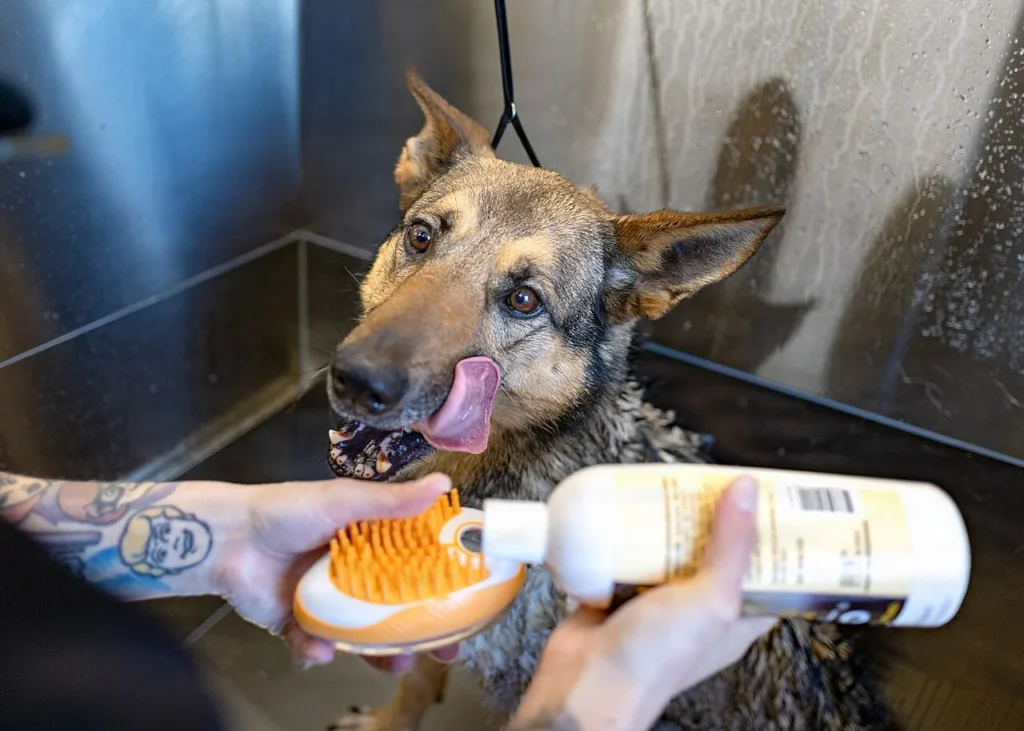
From July to September, my clinic fills with dogs scratching, licking their paws and smelling musty. Indian monsoon humidity keeps the skin and coat damp for days, which is perfect for fungus and yeast. Most cases can be controlled with the right baths and drying routine, but some need a vet. Here is how to tell them apart and what you can safely do at home.
In this article
Fungus, yeast or bacteria? How to tell
| Problem | What it looks like | Smell | Common spots |
|---|---|---|---|
| Ringworm (dermatophyte fungus) | Round, coin-shaped patches of hair loss with scaly edges | Little or none | Face, ears, legs |
| Yeast infection (Malassezia dermatitis) | Red, greasy skin, brown staining, thick or dark skin over time | Strong, musty, “cheesy” | Paws, ears, armpits, neck folds |
| Hot spot (acute moist dermatitis) | Wet, raw, red patch that appears in hours, very painful | Can smell bad | Neck, hips, base of tail |
| Bacterial infection (pyoderma) | Small pimples, pus, crusts, rings of peeling skin | Mild | Belly, groin, back |
Yeast and fungal problems often lead to secondary bacterial pyoderma, so many monsoon dogs have more than one problem at once. Ringworm can spread to people, especially children, so wash your hands after touching the patches.
Paw licking in monsoon (interdigital pododermatitis)
Wet paws after walks are the number one cause of red, itchy feet in the rains. The skin between the toes stays damp, yeast grows, and the dog licks, which makes it wetter.
- Wipe and dry between every toe after each walk, with a cotton towel.
- Trim the hair between the pads.
- Use dog booties on very wet days if your dog accepts them.
The safe monsoon home-care protocol
- Medicated bath: use a vet-recommended ketoconazole chlorhexidine shampoo, usually 2 times a week. Lather and leave it on the skin for 10 minutes before rinsing. This contact time is what makes it work.
- Neem leaf rinse: boil a handful of fresh neem leaves in 2 litres of water, cool completely, strain, and pour over the coat as a final rinse. It helps mild itch and keeps the coat fresh.
- Apple cider vinegar dilution: for paws only, mix 1 part apple cider vinegar with 2 parts water, dip or wipe the paws, then dry. Never use it on raw or broken skin, as it stings.
- Blow-drying the undercoat: this is the most important step. Use a hair dryer on cool or warm (not hot) setting until the skin under the coat is fully dry. A coat that looks dry on top can stay wet underneath for hours.
- Elizabeth collar (cone): stops licking and chewing so the skin can heal.
- Omega-3 fatty acids: a fish-oil supplement from your vet helps build a healthier skin barrier over 4 to 8 weeks.
Do not use human steroid creams
Creams like Quadriderm, Betnovate, Panderm and other mixed steroid-antifungal creams are often used on dogs by mistake. The steroid hides the redness for a few days but lets the fungus spread deeper. Dogs also lick the cream off. Please use only what your vet prescribes.
Monsoon grooming routine
- Dry your dog fully after every walk or bath, including ears, armpits and between the toes.
- Brush daily to remove dead undercoat, which holds moisture.
- Wash bedding weekly and dry it in sun when possible.
- Keep long-coated dogs trimmed shorter in monsoon, but do not shave to the skin.
- Clean ears weekly with a vet ear cleaner. Floppy ears trap moisture.
When to see the vet
- The patch is growing, bleeding, oozing pus, or very painful
- Hair loss is spreading in round patches (possible ringworm)
- Your dog is not eating, has a fever, or is very tired
- No improvement after 2 weeks of home care
- Repeated infections every monsoon (allergy or hormone problems may be behind it)
Your vet may do a skin scraping, tape test or fungal culture and prescribe tablets if needed.
🩺 Dr. Vaishnavi’s Clinical Picks (Available on Amazon India)
Helpful for minor skin and ear care in monsoon. Spreading or smelly patches need a vet check.
First-aid spray for minor wounds and to keep flies away
Safe routine ear cleaning, especially in humid monsoon weather
As an Amazon Associate, I earn from qualifying purchases. This costs you nothing extra.
Frequently asked questions
Can I use coconut oil for my dog’s fungal infection?
Coconut oil can soothe dry skin, but it does not treat yeast, and its greasiness can make yeast worse in humid weather. Use a medicated shampoo instead.
How often should I bathe my dog in monsoon?
Once a week for a healthy dog. Dogs with fungal problems may need 2 medicated baths a week, as your vet advises. Always dry fully afterwards.
Is neem safe for dogs?
A diluted neem leaf rinse is safe on the skin. Do not give neem oil by mouth.
Is dog fungal infection contagious to humans?
Ringworm can spread to people and other pets. Yeast (Malassezia) usually does not.
Itchy dog this monsoon? Book a skin check with Dr. Vaishnavi Karmawat.
References
- Moriello KA, et al. Diagnosis and treatment of dermatophytosis in dogs and cats: Clinical Consensus Guidelines of the World Association for Veterinary Dermatology. Veterinary Dermatology. 2017;28(3):266-e68.
- Miller WH, Griffin CE, Campbell KL. Muller and Kirk’s Small Animal Dermatology, 7th ed. Elsevier; 2013.
- Merck Veterinary Manual. Dermatophytosis in Dogs and Cats.
More on Pets

Vomiting and Acidity Medicines for Dogs and Cats: Maropitant (Cerenia), Ondansetron, Pantoprazole and Famotidine
How vets use maropitant, ondansetron, famotidine and pantoprazole for vomiting and acidity in dogs and cats, and why diagnosis must come first.

Bravecto vs Simparica vs NexGard for Dogs: Tick and Flea Tablets, Weight Charts, Fake Tablet Checks and Seizure Precautions
Bravecto vs Simparica vs NexGard: how each kills ticks and fleas, how long it lasts, weight bands, seizure precautions and spotting fake…