 Written and reviewed by Dr. Vaishnavi Karmawat, B.V.Sc. & A.H., Registered Veterinary Practitioner
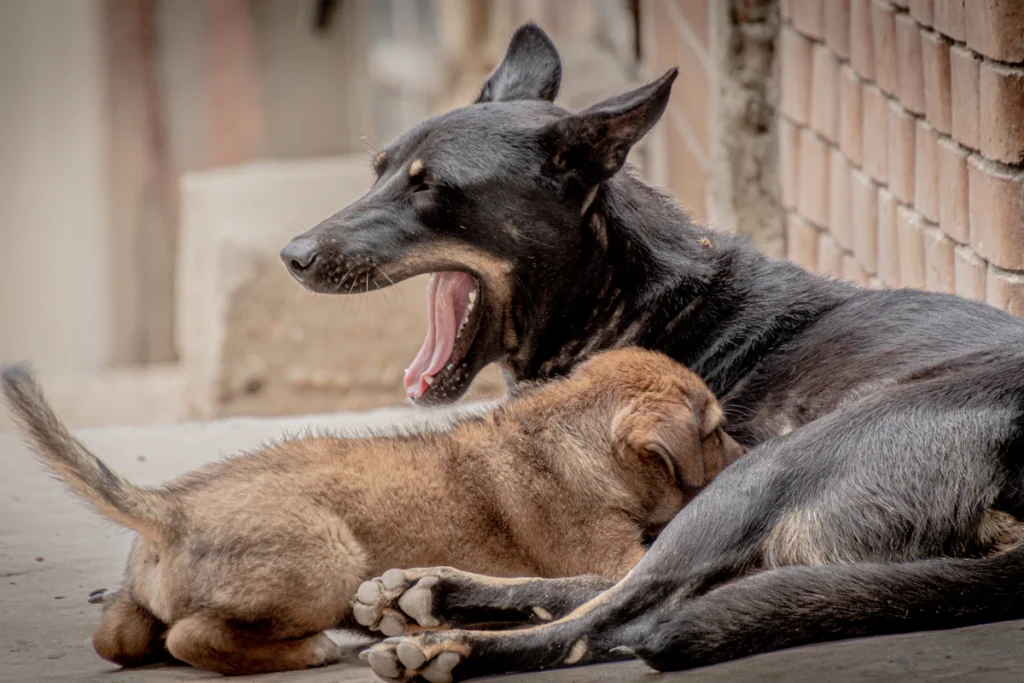
Short answer: most female dogs come into heat (season) about every 6 months, starting between 6 and 24 months of age. Pregnancy lasts about 63 days (roughly 9 weeks, range 58–68 days from mating). An ultrasound from about day 25 confirms pregnancy, and an X-ray after day 45 counts the puppies. Feed a growth or puppy diet in the last 3–4 weeks, prepare a whelping box, and know the signs of a difficult birth (dystocia), because they need a vet urgently.
In this article
- The heat cycle (oestrous cycle)
- Managing a dog in heat
- Pregnancy in dogs: week by week
- Nutrition and care during pregnancy
- Preparing for birth (whelping)
- Signs labour is near
- The three stages of labour
- Call a vet immediately (dystocia) if
- After birth: mother and puppy care
- False pregnancy (pseudocyesis)
- How vets confirm pregnancy
- Newborn puppy milestones
- Frequently asked questions
- When to call a vet
- Related Articles
- References
Key takeaways
- The heat cycle has four stages: proestrus (bleeding, about 9 days), oestrus (fertile, about 9 days), dioestrus (about 2 months) and anoestrus (rest, about 4 months).
- A dog is most fertile in oestrus, often when the bleeding becomes lighter or straw-coloured, not when it is heavy.
- Signs of pregnancy are subtle until about week 5–6. Many unmated dogs also show “false pregnancy”.
- Call a vet if strong straining lasts 30 minutes without a puppy, more than 2–4 hours pass between puppies, there is green-black discharge before the first puppy, or the mother is weak or trembling.
The heat cycle (oestrous cycle)
| Stage | Length | What you see | Fertile? |
|---|---|---|---|
| Proestrus | About 9 days (3–17) | Swollen vulva, bloody discharge, males attracted but the female refuses mating, frequent urination | No |
| Oestrus (standing heat) | About 9 days (3–21) | Discharge lighter or straw-coloured, vulva softer, female accepts the male and “flags” her tail to the side | Yes; ovulation usually 1–3 days into oestrus, eggs mature over the next 2–3 days |
| Dioestrus | About 60 days | Discharge stops; progesterone is high whether pregnant or not | No |
| Anoestrus | About 4–5 months | Reproductive rest | No |
- First heat: small breeds often at 6–9 months; large and giant breeds up to 18–24 months.
- Frequency: usually twice a year. Basenjis and some Indian native dogs may cycle once a year.
- Dogs do not go through menopause; older females keep cycling, though less regularly.
- For planned breeding, vets time mating using vaginal cytology and blood progesterone tests to pinpoint ovulation.
Managing a dog in heat
- Keep her on a leash and supervised. Males can smell a female in heat from far away and will climb walls and gates.
- Use washable dog diapers or period pants for hygiene.
- Avoid dog parks and off-leash areas for about 3 weeks.
- Watch for pyometra (womb infection), a serious risk in unspayed females 2–8 weeks after heat: increased thirst, vomiting, lethargy, with or without a smelly discharge. It is an emergency.
- Spaying prevents heats, unwanted litters and pyometra, and greatly reduces mammary tumour risk if done early. Discuss timing with your vet.
Pregnancy in dogs: week by week
| Days after mating | What happens | What you may notice |
|---|---|---|
| 0–21 | Fertilisation; embryos travel to the uterus and implant around day 18–21 | Usually nothing; some dogs are slightly quieter |
| 21–35 | Organs form; this is the most sensitive time for drugs and infections | Mild morning sickness, appetite dip, nipples pinker; ultrasound from about day 25 confirms pregnancy and heartbeats |
| 35–45 | Rapid foetal growth; skeletons start to calcify | Belly enlarging, weight gain, increased appetite |
| 45–58 | Foetal skeletons visible | X-ray after about day 45–55 counts puppies (useful to know when birth is finished); visible puppy movement |
| 58–68 | Birth (whelping) approaching | Nesting, milk in the glands, restlessness, appetite drop, temperature drop |
Nutrition and care during pregnancy
- First 5–6 weeks: keep her normal diet, at a healthy weight. Do not overfeed early.
- From about week 6: gradually switch to a high-quality puppy (growth) food or a pregnancy and lactation diet. Increase food by about 10–15% per week, so she is eating roughly 25–50% more by birth. Smaller, more frequent meals help as the belly fills.
- Lactation: energy needs can rise to 2–4 times normal, depending on litter size. Feed puppy food freely, with plenty of water.
- Do NOT give extra calcium during pregnancy. It can suppress her own calcium regulation and actually increase the risk of eclampsia after birth.
- Deworming: your vet may advise fenbendazole from about day 40 of pregnancy until 2 days after whelping to reduce roundworms and hookworms passing to pups. See worms in dogs.
- Avoid vaccines, most medicines and flea products during pregnancy unless your vet confirms they are safe.
- Gentle walks are fine; avoid rough play, jumping and heat.
Preparing for birth (whelping)
Whelping box
- Set it up 1–2 weeks before the due date, in a quiet, warm, draught-free room.
- Size: big enough for the mother to lie stretched out with space around her, with sides high enough to keep puppies in.
- A “pig rail” (a ledge about 10 cm from the floor and walls) prevents the mother accidentally crushing puppies.
- Washable bedding (old sheets, newspaper underneath), changed often.
- Newborn pups cannot regulate their temperature. Keep the room at about 29–32°C in the first week (a safe heat lamp or heating pad under part of the box only), and protect them from Indian summer heat with ventilation.
Supplies to keep ready
- Clean towels
- Digital thermometer
- Unwaxed dental floss and clean scissors for umbilical cords
- Iodine for umbilical stumps
- Gloves
- Your vet’s phone number and the nearest 24-hour clinic
- Puppy milk replacer and feeding bottles, just in case
Signs labour is near
- Rectal temperature drops below about 37.8°C (100°F), usually 12–24 hours before labour. Check twice daily from day 57.
- Nesting, digging bedding, restlessness, panting, shivering
- Refusing food, vomiting
- Clear vaginal discharge
The three stages of labour
| Stage | What happens | Normal duration |
|---|---|---|
| Stage 1 | Cervix dilates; restlessness, panting, nesting, shivering | 6–12 hours (up to 24 in first-time mothers) |
| Stage 2 | Visible straining; puppies born, each in its membrane sac | Each puppy usually within 30–60 minutes of strong straining; 30 minutes to 2 hours between puppies (up to 4 hours with rests) |
| Stage 3 | Placenta (afterbirth) delivered after each puppy | Usually within 15 minutes of each puppy |
The mother usually breaks the sac, licks the puppy to start breathing, and chews the cord. If she does not, open the sac at the face, clear fluid from the nose and mouth, rub the puppy briskly with a towel, and tie the cord with floss about 1–2 cm from the belly before cutting.
Call a vet immediately (dystocia) if
- strong, continuous straining for 30 minutes without a puppy
- weak, intermittent straining for 2–4 hours without a puppy
- more than 2–4 hours between puppies and you know more remain
- a puppy is stuck in the birth canal
- green-black discharge (placental separation) before the first puppy is born
- foul-smelling or heavily bloody discharge
- the mother is collapsing, very weak, or in severe pain
- pregnancy has gone beyond 68–70 days from the first mating
- no labour within 24 hours of the temperature drop
Flat-faced breeds (Pug, Bulldog, French Bulldog) and very small breeds with large puppies often need a planned caesarean section. Never give oxytocin injections at home; given to a blocked birth canal, they can rupture the uterus.
After birth: mother and puppy care
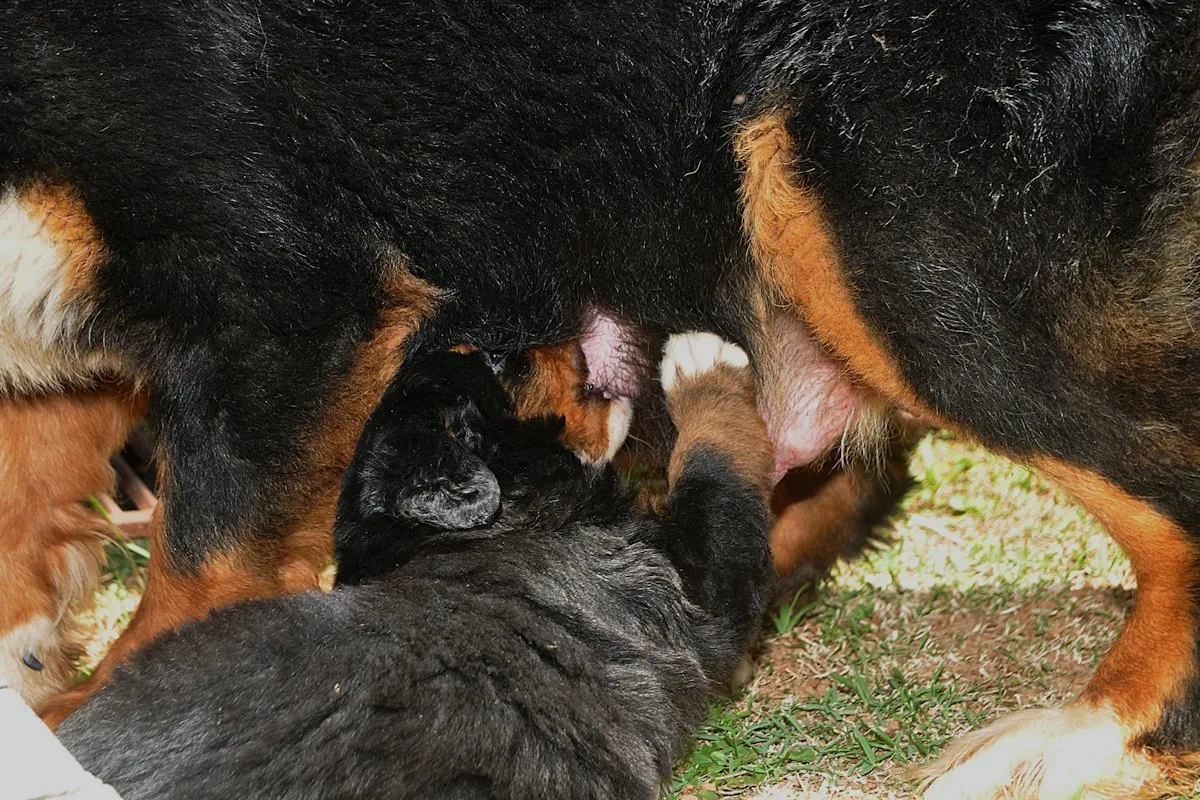
- Make sure every puppy suckles within the first few hours to receive colostrum (immunity).
- Weigh puppies daily; they should gain weight every day and double their birth weight by about 10–14 days.
- Normal discharge after birth is reddish-brown (lochia) for up to 3–6 weeks. Foul smell, fever or lethargy may mean a uterine infection (metritis).
- Check the mammary glands daily for hard, hot, red or painful areas (mastitis).
- Eclampsia (milk fever): 1–4 weeks after birth, especially in small breeds with large litters. Restlessness, panting, trembling, stiffness and seizures. Emergency; needs IV calcium.
False pregnancy (pseudocyesis)
Many unspayed females show pregnancy-like signs 6–12 weeks after heat, even without mating: nesting, mothering toys, swollen glands, even milk. It is caused by the normal fall in progesterone and rise in prolactin. Most cases resolve in 2–3 weeks. Avoid stimulating the glands (licking, massaging), and see a vet if it is severe, prolonged or recurrent.
How vets confirm pregnancy
| Method | Best time | What it tells you |
|---|---|---|
| Abdominal palpation | About days 21 to 35 after mating | Small swellings in the uterus can sometimes be felt by an experienced vet; less reliable in large or tense dogs |
| Ultrasound | From about day 25 | Confirms pregnancy and shows that puppies are alive (heartbeats); not accurate for counting |
| Relaxin blood test | From about day 25 to 30 | Detects a hormone made only in pregnancy; useful when ultrasound is not available |
| X-ray | After about day 45 | Puppy skeletons are visible; the best way to count puppies, so you know when whelping is complete |
| Progesterone timing | During heat | Blood tests during heat pinpoint ovulation, which gives the most accurate due date and is used in planned breeding |
Newborn puppy milestones

| Age | What is normal |
|---|---|
| Birth | Eyes and ears closed; puppy should suckle within a few hours to receive colostrum |
| First 2 days | Weight may dip slightly, then should rise daily |
| 1 week | Birth weight roughly doubled; weigh puppies daily on a kitchen scale |
| 10 to 14 days | Eyes open |
| 2 to 3 weeks | Ears open, starts to stand and wobble; first deworming |
| 3 to 4 weeks | Starts lapping soft food; teeth begin to appear |
| 6 to 8 weeks | Weaned; first vaccination; ready for gradual socialisation |
Warning signs in newborns: a puppy that cries constantly, is cold to the touch, does not suckle, or loses weight. Newborns cannot control their body temperature for the first weeks, so keep the whelping box warm (about 29 to 32 degrees Celsius in the first week) without overheating, and see a vet quickly if a puppy fades.
Frequently asked questions
How long is a dog pregnant?
About 63 days from ovulation, which is roughly 58–68 days from the date of mating, because sperm can survive several days and mating dates may not match ovulation.
Can I spay my dog while she is pregnant?
Yes, in early pregnancy a vet can perform a spay, which ends the pregnancy. Discuss the risks and timing with your vet; it is higher risk later in pregnancy.
My dog was accidentally mated. What can be done?
See your vet within a few days. Options include confirming pregnancy by ultrasound at around day 25–30 and then choosing between continuing, spaying, or medical termination with veterinary drugs. Avoid old oestrogen injections, which carry serious risks.
How many puppies will my dog have?
It depends on breed and size: small breeds often have 1–4 and large breeds 6–10 or more. An X-ray after day 45 gives a reliable count.
When to call a vet
Book a vet check before breeding, at about day 25–30 to confirm pregnancy, and around day 50 for an X-ray and birth plan. Call immediately for any dystocia sign, pyometra signs after a heat, or trembling or seizures in a nursing mother.
Related Articles
- Nursing Mother Dog Trembling (Milk Fever / Eclampsia)
- Parvo in Dogs and Puppies: Stages, Treatment, Recovery Diet and Home Care (Day by Day)
- Dog Pooping Blood in India: Red Blood (Hematochezia) vs Black Tarry Stool (Melena), Causes and When To See a Vet
- Heartworm in Dogs and Cats in India: Life Cycle, Stages, Tests, Treatment and Prevention
- Is My Dog or Cat Dehydrated? 1-Minute Gum and Skin Tent Check, ORS and When To See a Vet
References
- Concannon PW. Reproductive cycles of the domestic bitch. Anim Reprod Sci 2011;124:200–210.
- Johnston SD, Root Kustritz MV, Olson PNS. Canine and Feline Theriogenology. Saunders.
- Davidson AP. Dystocia management in the bitch. Vet Clin North Am Small Anim Pract.
- Merck Veterinary Manual: Breeding and reproduction of dogs; Dystocia in small animals; Puerperal hypocalcemia.
- WSAVA Global Nutrition Committee: Nutritional assessment and feeding during gestation and lactation.
- Root Kustritz MV. Pregnancy diagnosis and abnormalities of pregnancy in the dog. Theriogenology. 2005;64(3):755-765.
More on Dogs

Vomiting and Acidity Medicines for Dogs and Cats: Maropitant (Cerenia), Ondansetron, Pantoprazole and Famotidine
How vets use maropitant, ondansetron, famotidine and pantoprazole for vomiting and acidity in dogs and cats, and why diagnosis must come first.

Bravecto vs Simparica vs NexGard for Dogs: Tick and Flea Tablets, Weight Charts, Fake Tablet Checks and Seizure Precautions
Bravecto vs Simparica vs NexGard: how each kills ticks and fleas, how long it lasts, weight bands, seizure precautions and spotting fake…