 Written and reviewed by Dr. Vaishnavi Karmawat, B.V.Sc. & A.H., Registered Veterinary Practitioner
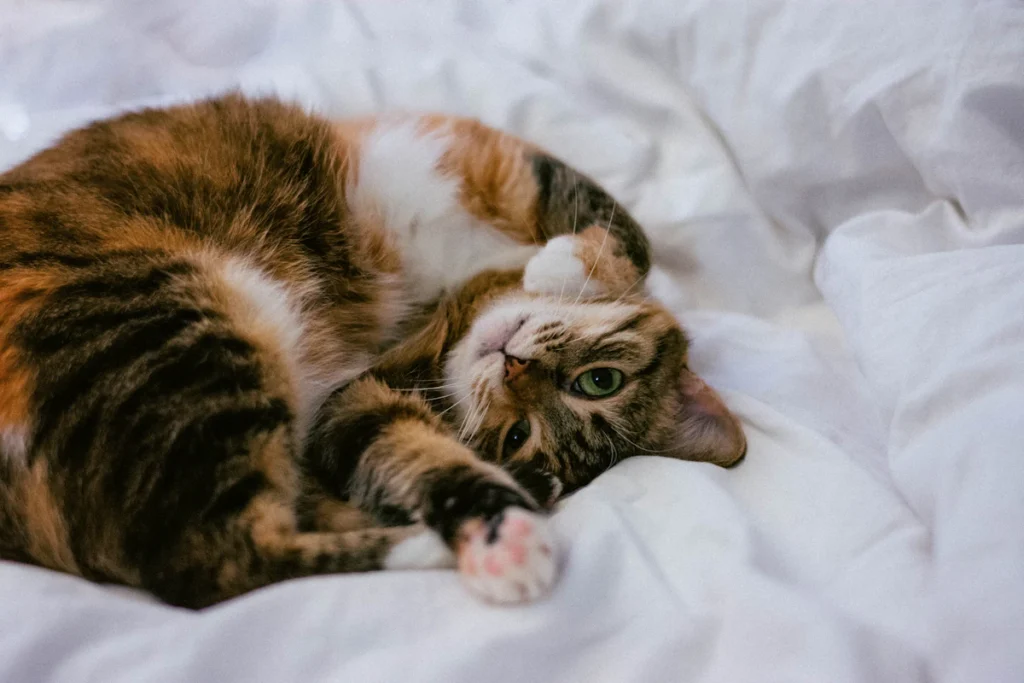
Short answer: cats purr and knead (“make biscuits”) mainly when they feel content and safe, behaviours that start in kittenhood while nursing. But purring is not always a sign of happiness. Cats also purr when stressed, in pain, giving birth, or even when very ill. Knowing the context helps you read your cat correctly and spot hidden illness.
In this article
Key takeaways
- Purring is made by rapid twitching of the muscles of the voice box (larynx), controlled by a neural “oscillator”, while the cat breathes in and out.
- Cats purr to signal contentment, to communicate with their mother or kittens, to ask for food or attention, and to soothe themselves when stressed or in pain.
- Kneading is a leftover nursing behaviour that also marks territory with scent glands in the paws and prepares a comfortable resting spot.
- Purring in a cat that is hiding, not eating, breathing fast or behaving unusually can be a sign of pain. Look at the whole picture.
How do cats purr?
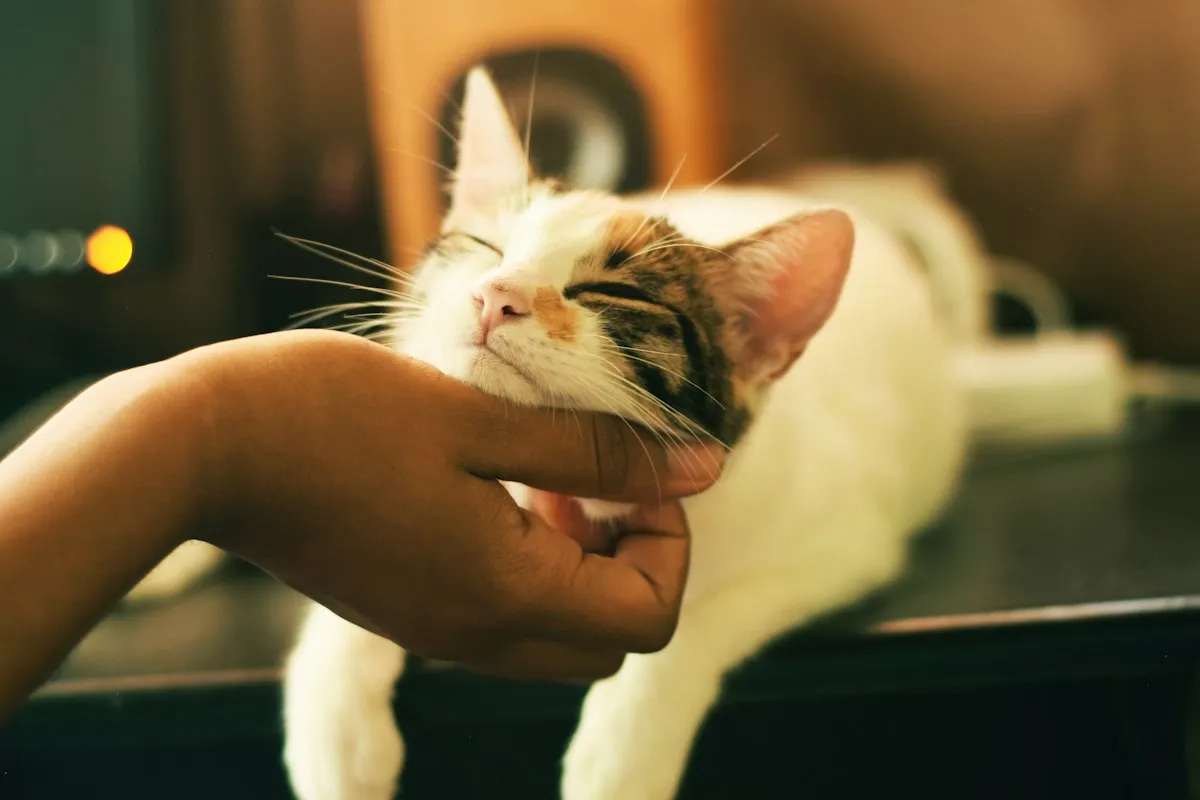
A cat’s brain sends regular nerve signals (about 20–30 times per second) to the muscles of the larynx and diaphragm. The vocal folds rapidly open and close, so air vibrates as it flows in and out. That is why the purr is continuous. Purring frequency is roughly 25–150 Hz. Cats can purr with their mouth closed and even while eating.
Five reasons cats purr
| Reason | Context | What else you’ll see |
|---|---|---|
| Contentment | Being stroked, lying in the sun, curled up with you | Relaxed body, slow blinks, kneading |
| Mother–kitten communication | Kittens purr while nursing from a few days old; the mother purrs to guide them | Kittens kneading the mother’s belly |
| Asking for something | Morning “food time” or attention | A “solicitation purr” with a high-pitched, cry-like sound mixed in, which is very hard for humans to ignore |
| Self-soothing in stress | Vet visits, car travel, new places | Tense body, dilated pupils, crouching, ears sideways |
| Pain or serious illness | Injury, labour, illness, even end of life | Hiding, not eating, hunched posture, squinting. See signs your cat is in pain |
Can purring help healing?
Researchers have noticed that purr frequencies overlap with the vibration frequencies used in human therapy to stimulate bone and soft-tissue healing. Some suggest purring may help cats maintain bone and muscle while resting, or ease pain. This idea is interesting but not yet proven. A purring cat with an injury still needs a vet.
Why do cats knead?
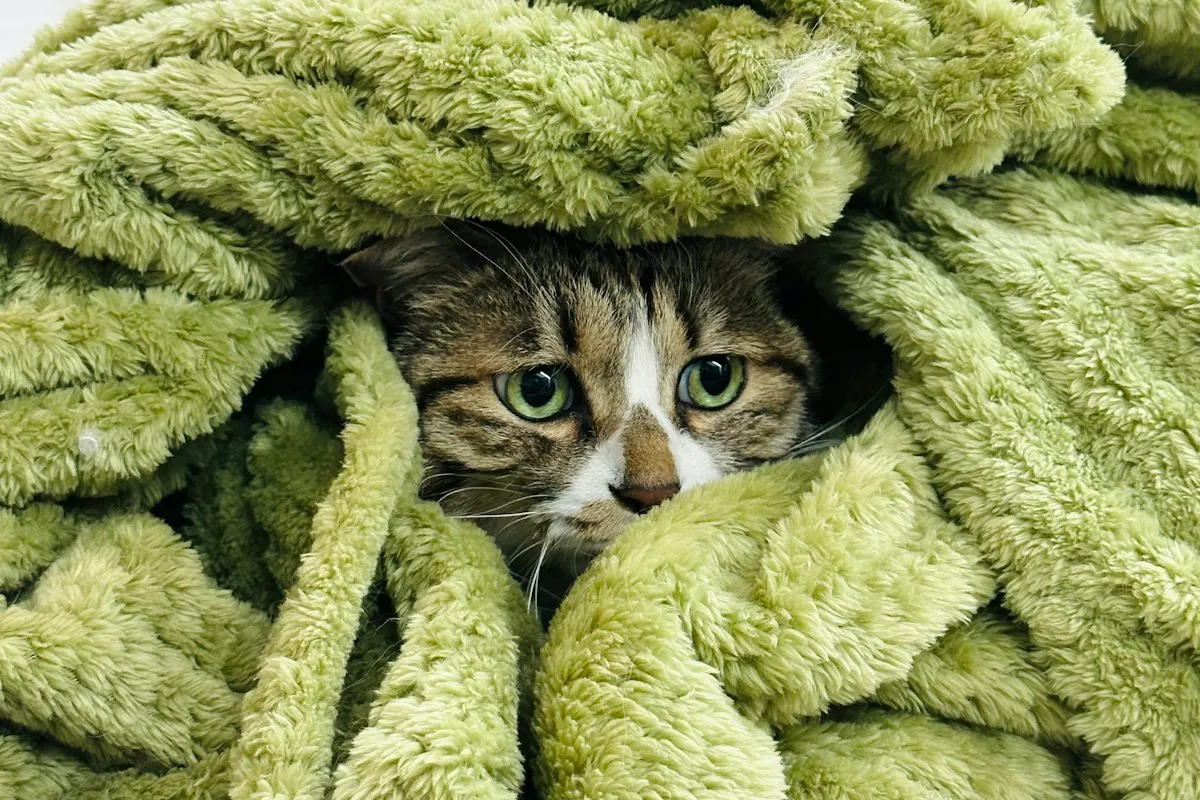
- Kittenhood instinct: kittens push their paws against the mother’s belly to stimulate milk flow. Adult cats knead when they feel the same comfort and security.
- Scent marking: glands between the toe pads leave a scent on blankets, beds and you, marking them as safe and “theirs”.
- Making a bed: wild ancestors flattened grass and leaves to make a resting spot.
- Stretching the muscles of the front legs and back.
- Affection: kneading on your lap often shows trust.
- Before giving birth: pregnant cats knead while nesting.
Some cats drool or suckle on fabric while kneading. This is usually harmless, but cats that chew or swallow wool or fabric (pica) can develop an intestinal blockage. Talk to your vet if your cat eats non-food items.
If kneading hurts
- Place a thick blanket on your lap before your cat settles.
- Trim nails every 2–3 weeks, and provide scratching posts.
- Gently redirect rather than punishing; kneading is a sign of trust.
- Do not declaw. It is an amputation of the toe bones, causes long-term pain, and is considered unethical by veterinary bodies.
When purring may mean a problem
Look beyond the purr. Contact your vet if your cat is purring and:
- hiding more than usual or avoiding the family
- not eating or drinking, or losing weight
- breathing fast or with open mouth (always an emergency in cats)
- straining in the litter box (possible urinary blockage). See cat urinary blockage.
- sitting hunched with squinted eyes and fur fluffed up
- vomiting repeatedly or has diarrhoea
- suddenly purring constantly in an unusual way, or a change in voice
Other cat body language
| Signal | Usually means |
|---|---|
| Slow blink | Relaxed and trusting; try slow-blinking back |
| Tail straight up with a hooked tip | Friendly greeting |
| Rubbing the head and cheeks on you | Scent marking, affection |
| Showing the belly | Relaxed, but not always an invitation to touch |
| Flattened ears, twitching tail, dilated pupils | Irritated or fearful; give space |
| Puffed-up fur, arched back, hissing | Frightened; do not approach |
Kneading, sucking and early weaning
- Kneading begins in the first days of life, when kittens press on their mother’s belly to start the milk flow. Adult cats keep the behaviour as a sign of comfort.
- Kittens taken from their mother too early, which is common with rescued street kittens in India, are more likely to suck on blankets, clothes or skin while kneading as adults. This is usually harmless.
- Wool sucking or eating fabric (pica) is different. If a cat swallows threads or cloth, see a vet, because swallowed fabric can block the intestine. Burmese and Siamese cats are especially prone.
- Keeping kittens with their mother and litter mates until about 8 weeks, and providing play, scratching posts and puzzle feeders, reduces these habits.
Purring in big cats and other animals
Domestic cats, cheetahs, servals and some other small wild cats purr continuously while breathing in and out. Lions and tigers can roar but generally do not purr in the same way. Scientists still debate exactly why the ability differs, but it is related to the structure of the voice box and the hyoid bones in the throat.
Frequently asked questions
Why does my cat purr and then bite me?
Many cats enjoy stroking only up to a point, then become overstimulated. Watch for a twitching tail, skin rippling or ears turning back, and stop before the bite.
Do all cats purr?
Almost all domestic cats purr, but some purr very quietly. Big cats like lions and tigers roar instead and cannot purr continuously in the same way.
Why does my cat knead and suckle on blankets?
It is a comforting kitten behaviour, more common in cats weaned early, as many rescued kittens are. It is harmless unless your cat swallows fabric.
My cat is purring loudly but not eating. Should I worry?
Yes. Cats that stop eating can develop serious liver problems (hepatic lipidosis) within days, and purring can mask pain. See a vet within 24 hours.
When to call a vet
Purring and kneading are normal. Call a vet if purring comes with hiding, not eating, breathing difficulty, litter-box straining, or any sudden change in behaviour.
Related Articles
- Cat Peeing Outside the Litter Box: Medical Causes, Spraying, 10 Litter Box Rules and How To Litter Train a Kitten
- Heat Stroke in Broiler Chickens: How To Prevent Summer Deaths
- Heat Stress in Murrah Buffaloes: Boost Summer Milk and Fix Silent Heat
References
- Remmers JE, Gautier H. Neural and mechanical mechanisms of feline purring. Respir Physiol 1972.
- McComb K, et al. The cry embedded within the purr. Curr Biol 2009;19:R507–R508.
- von Muggenthaler E. The felid purr: a healing mechanism? J Acoust Soc Am 2001.
- Bradshaw J, Ellis S. The Trainable Cat, and Bradshaw J. Cat Sense: feline communication.
- AVMA policy on declawing of domestic cats.
More on Cat Litter and Behaviour
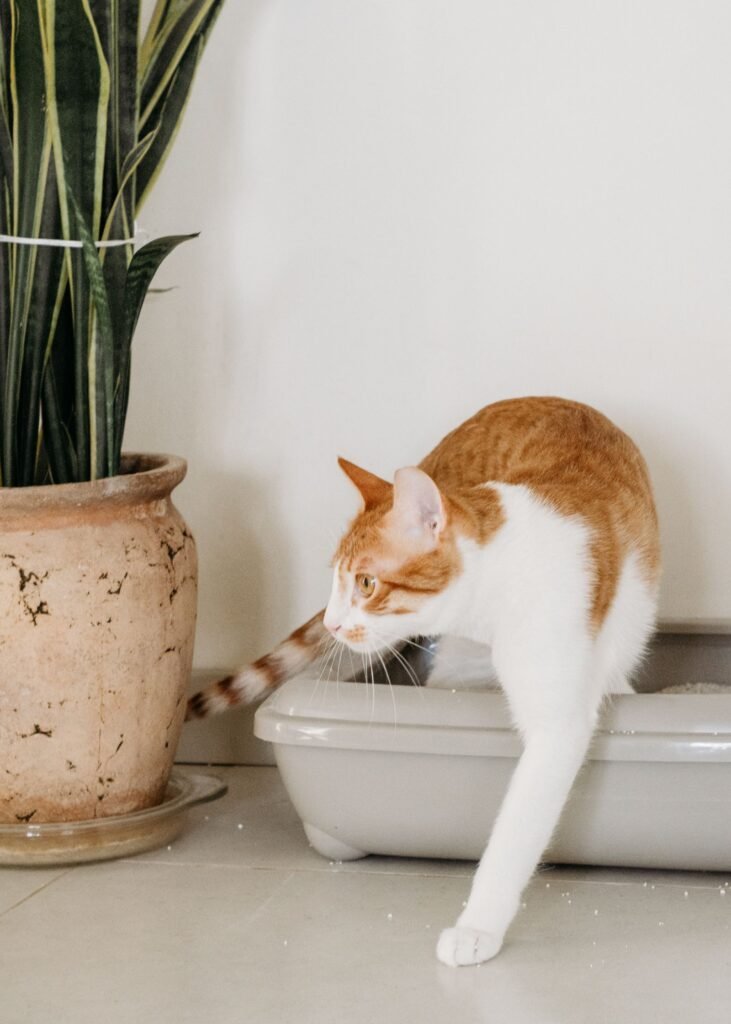
Cat Peeing Outside the Litter Box: Medical Causes, Spraying, 10 Litter Box Rules and How To Litter Train a Kitten
Cat peeing outside the litter box? Medical causes first, spraying vs peeing, 10 litter box rules, enzyme cleaning, stress and neutering.