 Written and reviewed by Dr. Vaishnavi Karmawat, B.V.Sc. & A.H., Registered Veterinary Practitioner
Short answer: an occasional yellow, bile-stained vomit in a dog that is otherwise bright and eating is usually mild. Repeated retching with little or nothing coming up, vomit with fresh blood or “coffee grounds”, or vomiting in a young puppy needs a vet the same day.
In this article
- Vomiting, regurgitation or coughing: what are you seeing?
- Signs your dog is about to vomit
- Dog vomit colour chart
- Yellow foam in the morning: bilious vomiting
- White foam and retching with nothing coming up: think of bloat
- Common causes of vomiting in dogs
- Which dogs are at higher risk
- Go to a vet now if
- How vets find the cause
- Veterinary treatment
- Safe home care for a mild, one-off vomit in an adult dog
- Preventing vomiting
- Frequently asked questions
- Related Articles
- References
Key Takeaways
- An occasional yellow, bile-stained vomit in a bright, eating dog is usually mild.
- Retching with nothing coming up, especially with a swollen belly, can be bloat: an emergency.
- Fresh blood, “coffee grounds” vomit, vomiting in young puppies, or repeated vomiting need a vet the same day.
- Vomiting is different from regurgitation and coughing; the difference changes the likely causes.
- Common serious causes include parvovirus, swallowed objects, poisoning, pancreatitis and kidney disease.
Vomiting is one of the most common reasons Indian pet parents call a vet. In most dogs it is a short-lived reaction to something they ate. In some, it is the first sign of parvovirus, a swallowed object, poisoning, pancreatitis, kidney disease or bloat. This guide explains what the colour and look of the vomit can tell you, which signs mean you should go to a clinic now, what tests your vet may run and how mild cases can be managed safely at home.
Is it an emergency? Use our free dog emergency checker to see in one minute whether your dog needs a vet today.
Vomiting, regurgitation or coughing: what are you seeing?
Vets first decide whether a dog is truly vomiting, because each problem has different causes.
| Vomiting | Regurgitation | Coughing up phlegm | |
|---|---|---|---|
| How it happens | Active. The belly heaves and the dog retches | Passive. Food simply slides out, often without warning | A cough or gag, then a little froth is spat out |
| Warning signs before | Drooling, lip-licking, swallowing, restlessness | Usually none | Coughing fits, honking |
| What comes up | Partly digested food, yellow bile, liquid | Undigested food, often tube-shaped, covered in mucus | White foam or phlegm |
| Common causes | Stomach or intestinal upset, infection, toxins, organ disease | Eating too fast, problems of the food pipe (oesophagus) such as megaoesophagus | Kennel cough, heart disease, airway problems |
If you are unsure, take a short phone video. It helps your vet more than any description.
Signs your dog is about to vomit
Nausea comes before vomiting. Watch for drooling, repeated lip-licking and swallowing, a hunched or tucked-up posture, pacing, eating grass frantically and strong heaving movements of the belly. Spotting these early lets you move your dog outside or onto a washable surface, and lets you note how often it happens.
Dog vomit colour chart
The colour is a clue, not a diagnosis. Always look at the whole dog: energy, appetite, gums and stools.
| What it looks like | What it often means | How urgent |
|---|---|---|
| Yellow or yellow-green liquid or foam | Bile from an empty stomach, often early morning (bilious vomiting) or after repeated vomiting | Usually mild if a one-off; see a vet if it happens often or with other signs |
| White foam | Saliva and mucus mixed with air; stomach irritation, reflux, kennel cough. Repeated unproductive retching with a swollen belly suggests bloat | One-off: watch. Unproductive retching: emergency |
| Clear liquid | Water or stomach fluid, often after drinking a lot quickly | Mild if single; vet if water will not stay down |
| Slimy mucus | Stomach or oesophagus irritation, spoiled food, regurgitation | Vet if repeated |
| Undigested food soon after eating | Eating too fast or regurgitation | Vet if it happens daily |
| Grass with foam | Grass eating, often with mild upset | Usually mild; vet if frequent |
| Red streaks or fresh blood | Irritated stomach lining or throat, sometimes from forceful vomiting | Same-day vet |
| Brown “coffee grounds” | Digested blood from a stomach ulcer, toxin (for example painkillers) or tumour | Same-day vet, urgent |
| Brown, foul-smelling, faecal odour | Possible intestinal blockage, or the dog ate stool | Urgent vet |
| Worms (spaghetti-like) | Heavy roundworm burden, common in puppies | Vet visit and deworming |
| Pieces of cloth, plastic, bone | Swallowed object | Vet now, as more may remain inside |
Yellow foam in the morning: bilious vomiting
Some dogs vomit a small amount of yellow foam early in the morning or late at night, then eat breakfast happily. This pattern is often called bilious vomiting syndrome. Bile flows back from the small intestine into an empty stomach and irritates it. It is usually managed by giving the last meal later in the evening, adding a small bedtime snack and splitting food into three or four smaller meals. If it continues despite this, your vet may check for gastritis, inflammatory bowel disease or reflux and may prescribe an antacid.
White foam and retching with nothing coming up: think of bloat
In large and deep-chested dogs (German Shepherd, Great Dane, Dobermann, Labrador, Saint Bernard, Rottweiler and others), repeated retching that brings up only foam, with a tight or swollen belly, restlessness and drooling, can mean gastric dilatation-volvulus (GDV). The stomach fills with gas and twists. This is fatal within hours without surgery. Do not wait to see if it settles. Read our full guide on bloat (GDV) in dogs.
Common causes of vomiting in dogs
Acute (sudden) vomiting
- Dietary indiscretion: eating rubbish, spoiled food, festival sweets, fried leftovers, cooked bones. This is the most common cause in India.
- Sudden food change, or a new treat.
- Infections: canine parvovirus and distemper (especially unvaccinated puppies), bacterial gastroenteritis, and intestinal worms or Giardia.
- Swallowed objects: socks, toy parts, mango stones (guthli), corn cobs, bones. See dog swallowed a sock, toy or bone.
- Poisons and medicines: chocolate, grapes and raisins, onion and garlic, xylitol, rat poison, paracetamol and ibuprofen. See dog ate chocolate, grapes or onion and paracetamol (Crocin/Dolo) in dogs.
- Acute pancreatitis, often after a fatty meal such as ghee-rich food or biryani leftovers.
- Heatstroke in Indian summers. See heatstroke in dogs.
- Motion sickness during car travel.
- Bloat (GDV) in large breeds.
Chronic (repeated over weeks) vomiting
- Chronic gastritis and inflammatory bowel disease (IBD)
- Food allergy or intolerance
- Kidney disease and liver disease, which build up toxins in the blood. See kidney disease in dogs and cats.
- Hormonal disorders such as Addison’s disease and diabetes (especially when ketoacidosis develops)
- Stomach ulcers, often linked to long-term painkiller or steroid use
- Tumours of the stomach or intestines, more common in older dogs
- Partial intestinal blockage
Which dogs are at higher risk
Take vomiting more seriously in puppies under six months (risk of parvovirus, low blood sugar and fast dehydration), senior dogs, small toy breeds, unvaccinated dogs and dogs with existing diseases such as diabetes, kidney or heart disease.
Go to a vet now if
- Your dog is a puppy or is not fully vaccinated
- Vomiting happens more than two or three times in a day, or continues for more than 24 hours
- There is blood, coffee-ground material, or a faecal smell
- Your dog retches without producing anything, especially with a swollen belly
- Your dog cannot keep even small sips of water down
- There is diarrhoea too, especially with blood
- Your dog is dull, weak, has pale, yellow or very red gums, or seems to be in pain (hunched, praying position)
- You suspect a poison, medicine or swallowed object
How vets find the cause
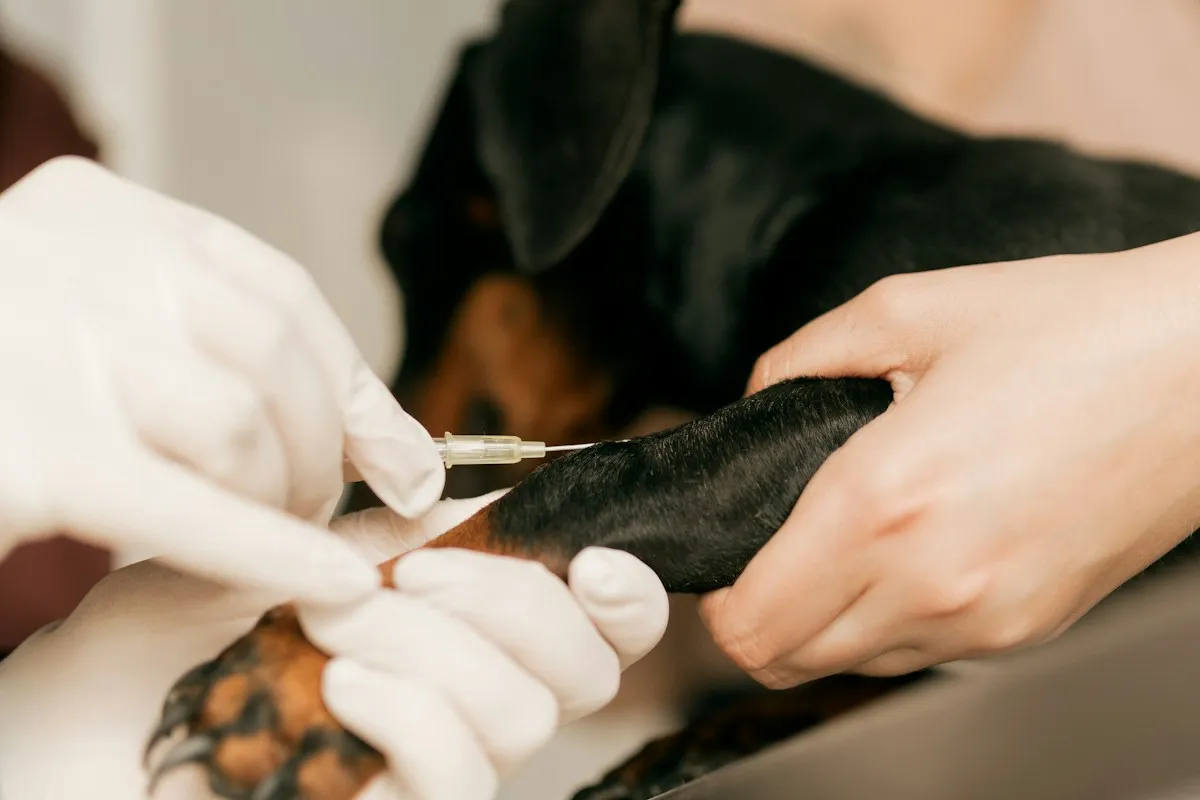
Your vet starts with a careful history (what your dog ate, vaccination and deworming status, medicines, how often and what the vomit looks like) and a full physical examination, including temperature, hydration, gum colour and gentle feeling of the belly. Depending on what they find, tests may include:
- Stool examination for worms, Giardia and other parasites
- Rapid parvovirus antigen test (SNAP or similar kit) in puppies and unvaccinated dogs
- Complete blood count (CBC) and serum biochemistry to check for infection, anaemia, dehydration, kidney and liver function and electrolyte losses
- Pancreatic lipase test (for example a cPL test) if pancreatitis is suspected
- Urine test to assess kidney function and hydration
- Abdominal X-rays, to look for foreign bodies, gas patterns of blockage or a twisted stomach
- Abdominal ultrasound, to look at the stomach wall, intestines, pancreas, liver and lymph nodes
- Endoscopy in chronic cases, to view the stomach and take biopsies, or to remove some swallowed objects without surgery
Veterinary treatment
Treatment is aimed at the cause, plus supportive care:
- Fluid therapy: by drip (IV) or under the skin to correct dehydration and electrolyte losses.
- Anti-nausea medicines (antiemetics): commonly maropitant, ondansetron or metoclopramide. Metoclopramide is avoided if an obstruction is possible.
- Stomach protectants: acid reducers such as famotidine, pantoprazole or omeprazole, and coating agents such as sucralfate when ulcers are suspected.
- Dewormers or antiprotozoal drugs when parasites are found.
- Antibiotics only when there is a clear bacterial cause or the gut barrier is damaged (for example in parvovirus); they are not needed for most simple upsets.
- Endoscopic removal or surgery for swallowed objects, and emergency surgery for GDV.
- Specific long-term care for kidney disease, pancreatitis, IBD or hormone diseases.
All of these medicines need a vet’s prescription and dose based on weight and diagnosis.
Safe home care for a mild, one-off vomit in an adult dog
This is only for an adult dog that has vomited once or twice, is bright and alert, has normal gums and normal stools.
- Rest the stomach for a few hours (about 4 to 8 hours for an adult dog). Do not fast puppies, toy breeds or diabetic dogs without a vet’s advice, because their blood sugar can drop.
- Offer water in small amounts. Give a few spoons or an ice cube every 20 to 30 minutes. If that stays down for a few hours, let your dog drink normally.
- Start a bland diet. Boiled, skinless, boneless chicken breast with plain boiled rice (about 1 part chicken to 2 to 3 parts rice), or rice with a little boiled egg. No oil, ghee, salt, masala or onion. Feed small portions 4 to 6 times a day.
- Probiotics made for dogs can help the gut recover.
- Return to normal food slowly over 3 to 5 days by mixing more of the usual food into the bland diet each day.
- Stop and see a vet if vomiting returns, if new signs appear, or if your dog is not clearly better within 24 hours.
Do not give human anti-vomiting medicines, antacid syrups, painkillers or antibiotics from a medical shop without your vet’s advice. Some, such as ibuprofen, diclofenac and paracetamol, can cause stomach ulcers, liver damage or kidney failure in dogs. Also do not try to make your dog vomit at home unless a vet tells you to.
🩺 Dr. Vaishnavi’s Clinical Picks (Available on Amazon India)
A thermometer helps you give your vet facts; a slow feeder helps dogs that vomit after gulping food.
Check temperature at home before calling the vet
Makes fast eaters slow down and swallow less air
Pet probiotic to settle the gut after an upset stomach
As an Amazon Associate, I earn from qualifying purchases. This costs you nothing extra.
Preventing vomiting
- Keep dustbins closed and festival sweets, chocolates and leftovers out of reach.
- Never feed cooked bones, fried snacks or spicy curries.
- Change food gradually over 7 days.
- Feed fast eaters with a slow-feeder bowl or a scatter feed.
- Keep vaccinations and deworming on schedule; see our deworming schedule and vaccination schedule.
- Do not leave socks, small toys or mango stones where dogs can reach them.
- For large breeds, avoid heavy exercise for an hour after meals.
Frequently asked questions
Why does my dog vomit yellow foam in the morning?
Usually because the stomach has been empty for many hours and bile irritates it. A later dinner, a small bedtime snack and smaller, more frequent meals often help. If it continues for more than a week or two, ask your vet to check for gastritis or reflux.
My dog vomited once but is acting normal. Should I worry?
A single vomit in an adult dog that then eats, drinks and plays normally is usually not serious. Rest the stomach briefly, offer small amounts of water and a bland meal, and watch for 24 hours. Puppies are an exception and should be checked.
Can I give my dog curd rice after vomiting?
Once vomiting has stopped, a small amount of plain curd with boiled rice is tolerated by many dogs, but some are lactose sensitive. Boiled chicken and rice is the safer first choice.
Is vomiting with diarrhoea in a puppy dangerous?
Yes. In puppies it can be parvovirus, worms or a swallowed object, and they dehydrate fast. Take your puppy to a vet the same day. Read our parvovirus guide.
Should I take a sample to the vet?
A clear photo of the vomit, and a fresh stool sample in a clean container, are very helpful. If you think your dog swallowed something, bring the packaging or remaining pieces.
How long can a dog go without food after vomiting?
Healthy adult dogs can safely miss a meal or two, but a dog that refuses food for more than 24 hours, or a puppy that refuses food for more than 12 hours, should see a vet.
Related Articles
- Dog Vomiting and Diarrhoea (Loose Motion): Causes, Vet Treatment and Home Care
- Dog Pooping Blood in India: Red Blood (Hematochezia) vs Black Tarry Stool (Melena), Causes and When To See a Vet
- Dog Suddenly Dull, Tired and Not Eating? 10 Causes of Lethargy in India and When To Worry
- Is My Dog or Cat Dehydrated? 1-Minute Gum and Skin Tent Check, ORS and When To See a Vet
References
- Merck Veterinary Manual. Diseases of the Stomach and Intestines in Small Animals.
- Merck Veterinary Manual. Gastric Dilatation and Volvulus in Small Animals.
- Ettinger SJ, Feldman EC, Côté E, eds. Textbook of Veterinary Internal Medicine. 8th ed. St. Louis: Elsevier; 2017 (chapters on vomiting, regurgitation and gastric disease).
- Elwood C, Devauchelle P, Elliott J, et al. Emesis in dogs: a review. Journal of Small Animal Practice. 2010;51(1):4-22.
- Merck Veterinary Manual. Canine Parvovirus.
- VCA Animal Hospitals. Vomiting in Dogs.
More on Dog Symptoms and What They Mean

Nursing Mother Dog Trembling (Milk Fever / Eclampsia), Distemper Twitching and Swollen Glands in Dogs: Indian Vet Triage Guide
Nursing mother dog trembling? Eclampsia (milk fever) vs seizures, distemper twitching, poisoning, swollen lymph nodes and when to rush.
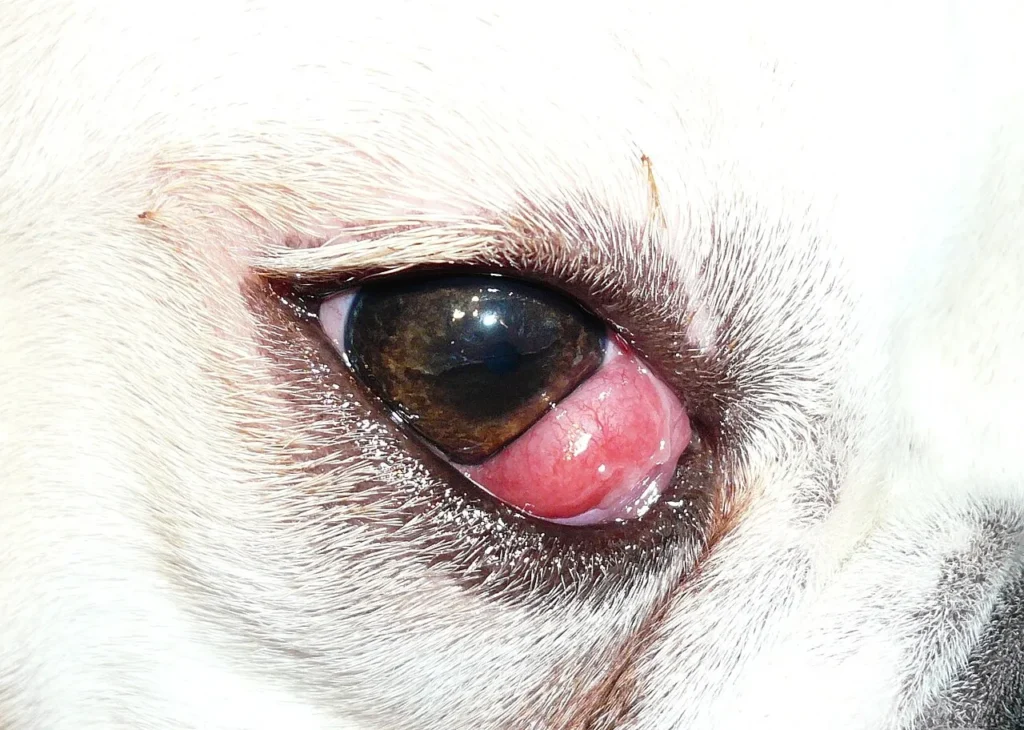
Dog Eye Infection, Red Eyes, Yellow Discharge (Kichad) and Cherry Eye: Causes, Safe Cleaning and Why Human Steroid Eye Drops Can Blind Dogs
Red eyes, yellow discharge or cherry eye in dogs? Types of eye discharge, ulcers, dry eye, safe cleaning, and why steroid drops…