 Written and reviewed by Dr. Vaishnavi Karmawat, B.V.Sc. & A.H., Registered Veterinary Practitioner
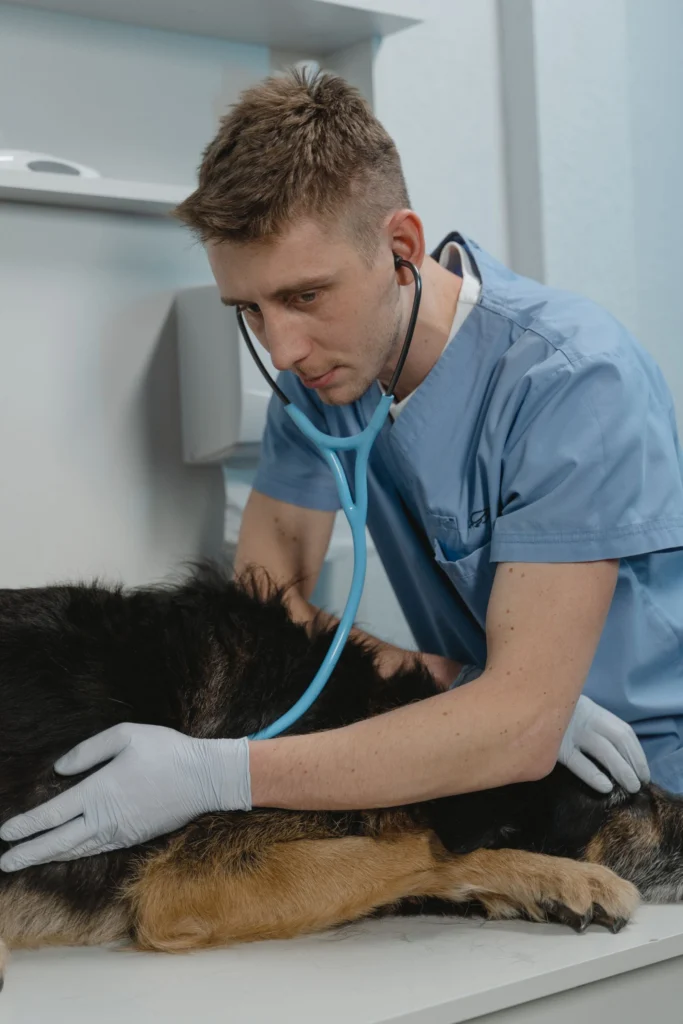
Bloat is one of the true emergencies of dog medicine. In its most serious form, gastric dilatation-volvulus (GDV), the stomach fills with gas and twists on itself. Blood flow to the stomach and back to the heart is cut off, and a dog can go into shock and die within a few hours. Large, deep-chested breeds popular in India, such as German Shepherds, Great Danes, Dobermanns, Labradors, Rottweilers and Saint Bernards, are most at risk. Knowing the early signs, and getting to a clinic that can do surgery without delay, is what saves lives.
In this article
Key Takeaways
- Bloat with a twisted stomach (GDV) can kill a dog within hours; it needs emergency surgery.
- Retching with nothing coming up, a swollen tight belly, restlessness and drooling are the key warning signs.
- Large, deep-chested breeds such as German Shepherds, Great Danes, Dobermanns, Labradors and Rottweilers are most at risk.
- Go to a veterinary hospital immediately and call ahead; do not wait overnight or try home remedies.
- Feed two or three smaller meals, avoid exercise around meals, and ask your vet about preventive gastropexy for high-risk dogs.
Emergency: if your dog is retching or trying to vomit but bringing up nothing or only white froth, with a swollen or tight belly, restlessness and drooling, go to a veterinary hospital now. Call ahead so the team can prepare. Do not wait overnight.
Simple bloat and GDV: what is the difference?
- Gastric dilatation (simple bloat): the stomach stretches with gas, food or fluid but stays in its normal position. It is painful and can still be dangerous, but dogs usually respond to medical treatment.
- Gastric dilatation-volvulus (GDV): the swollen stomach rotates, usually clockwise when viewed from behind the dog, by 180 to 360 degrees. Both the entrance (from the food pipe) and the exit (to the intestine) are twisted shut, so gas cannot escape by burping or vomiting. The spleen, which is attached to the stomach, often twists with it.
What happens inside the body
- The stomach balloons. Trapped gas keeps building up as food ferments and air is swallowed.
- Pressure on big veins. The swollen stomach squeezes the large veins (caudal vena cava and portal vein) that return blood to the heart. Less blood reaches the heart, so blood pressure falls and the dog goes into shock.
- The stomach wall starts to die. Stretching and twisting cut off its blood supply. Areas of the wall can become necrotic and may rupture, leading to fatal peritonitis.
- The spleen may twist and fill with blood, sometimes needing removal.
- Breathing becomes difficult as the stomach pushes on the diaphragm.
- Toxins and heart rhythm problems. When circulation is poor, toxins and lactic acid build up. Abnormal heart rhythms (especially ventricular arrhythmias) are common during and after treatment, and are a major cause of death in the first 1 to 3 days.
Without treatment, GDV is usually fatal. With prompt treatment, most dogs survive. Large veterinary studies report survival to discharge of roughly 80 to 90 percent in dogs that receive surgery, falling when there is a long delay, stomach wall death, or the dog arrives collapsed.
Signs of bloat and GDV
Early signs
- Repeated retching or trying to vomit, with nothing or only white foam coming up (unproductive retching)
- Restlessness, pacing, getting up and lying down repeatedly, looking at the belly
- Heavy drooling and panting
- A belly that looks or feels swollen, tight or drum-like, especially behind the ribs on the left side. In deep-chested dogs the swelling may be hard to see at first.
- Standing with the front end down and back end raised, or stretching
Late signs (shock)
- Pale, grey or muddy gums, or gums that take more than 2 seconds to pink up after pressing
- Fast, weak pulse and fast heartbeat
- Fast, shallow breathing
- Weakness, cold paws, collapse
If you see the late signs, every minute counts.
Which dogs are at risk?
Breed and body shape
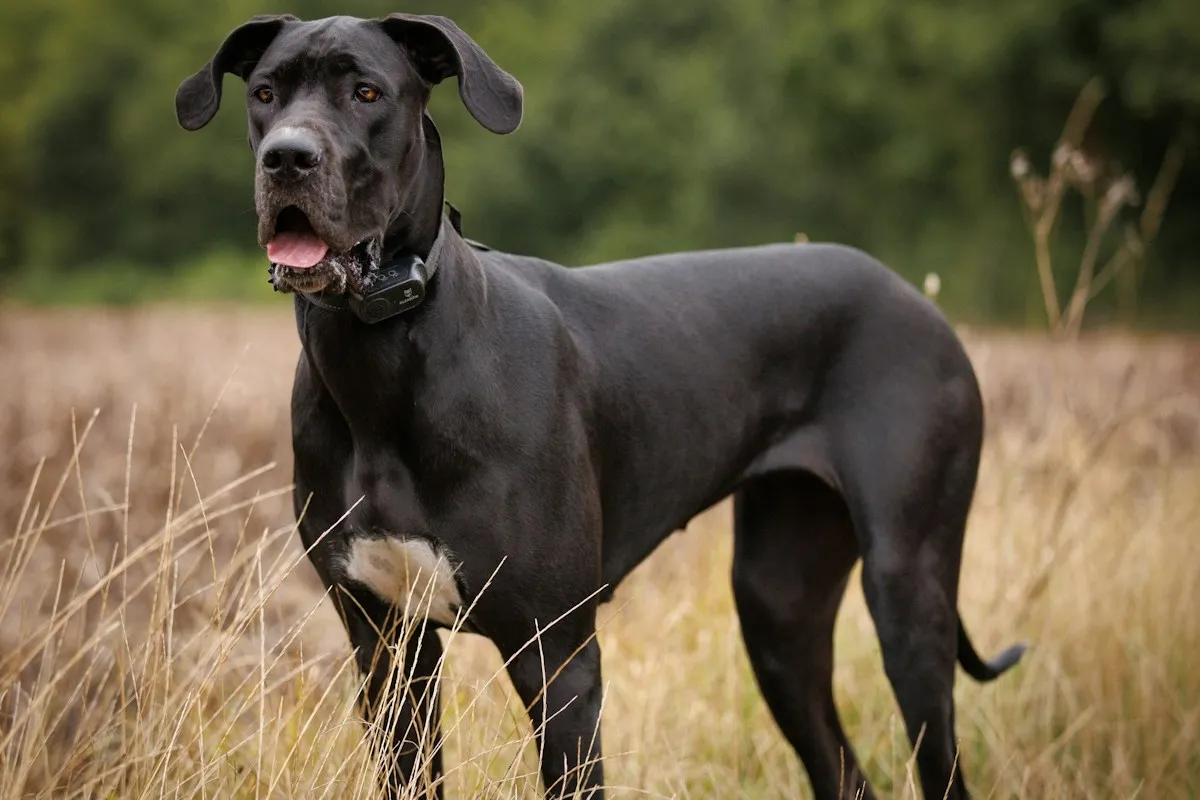
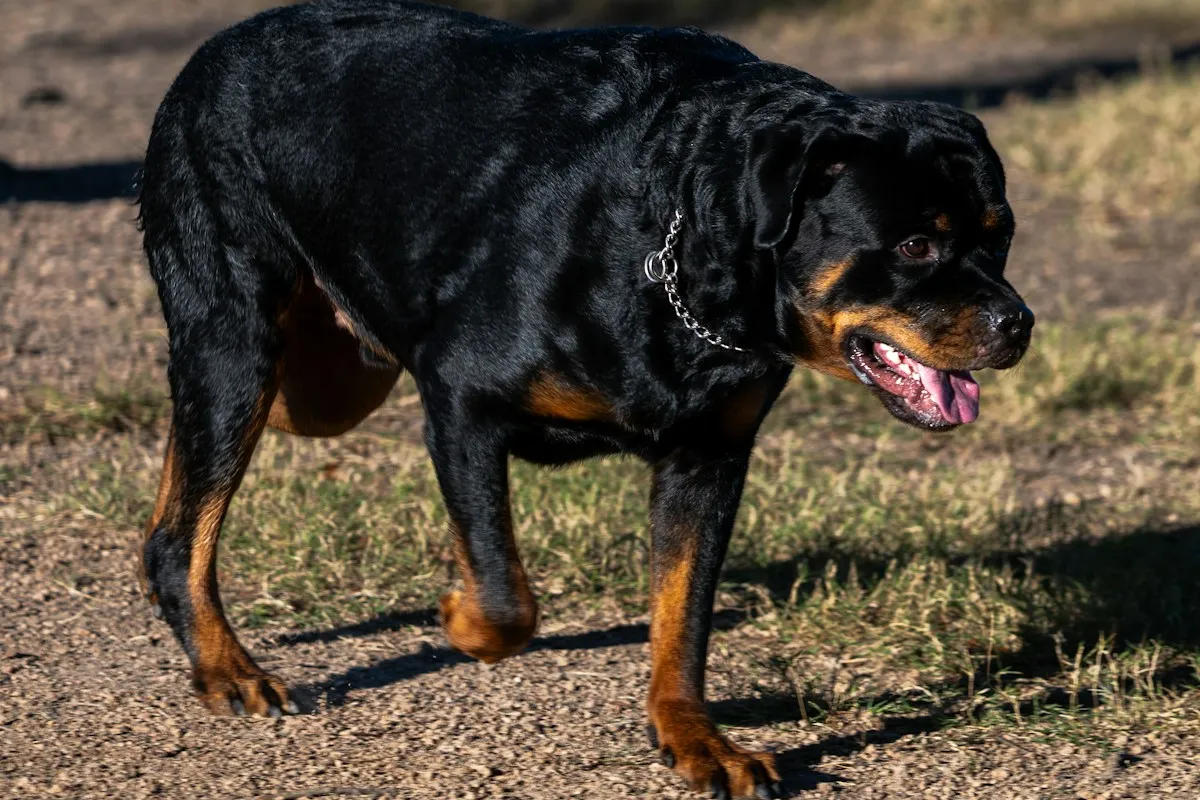
The main risk is a deep, narrow chest, where the chest is much deeper than it is wide. Breeds at higher risk include Great Dane (the highest reported risk), Saint Bernard, Weimaraner, Irish Setter, Gordon Setter, Standard Poodle, Bloodhound, Dobermann, German Shepherd, Akita, Boxer, Rottweiler and Labrador. Large mixed-breed dogs with this shape are also at risk. Small breeds such as Dachshunds and Basset Hounds occasionally develop GDV.
Other risk factors
- Weight over about 45 kg (99 lb)
- Increasing age, especially over 7 years
- A parent, brother or sister that has had GDV
- Eating one large meal a day, or eating very fast
- Drinking large amounts of water quickly after a meal
- Exercise, play or excitement soon after eating
- Feeding from a raised bowl (associated with higher risk in one large study)
- Dry foods that list fat or oil among the first four ingredients
- A nervous or fearful temperament, and stress such as boarding or travel
- Thin body condition in large breeds
No single food is proven to cause GDV, and many dogs with no risk factors still develop it.
How vets diagnose bloat
- Clinical signs and examination: retching without producing anything, a swollen belly that sounds hollow (tympanic) when tapped, and shock.
- Right lateral abdominal X-ray: in GDV, the stomach appears as a hugely dilated gas-filled shape divided by a fold of tissue into two compartments, often called the “double bubble” or “Popeye’s arm” sign. Simple bloat shows a large round stomach in the normal position.
- ECG (heart tracing): checks for dangerous heart rhythms before and after surgery.
- Blood tests: packed cell volume, total protein, electrolytes, kidney values, clotting tests and blood lactate. A high lactate that does not fall with fluids suggests the stomach wall may be dying, and helps guide prognosis.
Emergency treatment
Treatment begins immediately, often before X-rays:
- Shock treatment: large-bore intravenous catheters in the front legs and rapid IV fluids to restore blood flow.
- Pain relief, usually with opioid drugs.
- Decompression to let the gas out, either by passing a stomach tube through the mouth if possible, or by trocarisation, where a wide needle is inserted through the skin into the gas-filled stomach to release pressure quickly.
- Oxygen, antibiotics in many cases, and close ECG monitoring.
- Emergency surgery once the dog is stable enough for anaesthesia.
Surgery
During surgery the vet:
- Untwists the stomach and returns it to the normal position
- Checks the stomach wall and removes any dead tissue (partial gastrectomy) if needed
- Checks the spleen and removes it if it is badly damaged (splenectomy)
- Performs a gastropexy: stitching the stomach to the inside of the right body wall so that it cannot twist again. Without gastropexy, GDV recurs in a large proportion of dogs; with it, recurrence is uncommon.
After surgery
Dogs usually stay in hospital for 2 to 5 days for fluids, pain relief, ECG monitoring and treatment of heart rhythm problems, and gradual re-feeding with small, soft meals. At home, they need 10 to 14 days of restricted activity, wound checks and a cone or recovery suit to stop licking.
Simple bloat (no twist)
Dogs with gas or food distension but no twist are usually hospitalised for fluids, pain relief, anti-nausea medicine and sometimes passing a stomach tube. Short, gentle leash walks may help gas move along. Because a simple bloat can turn into GDV, these dogs need monitoring and a repeat X-ray if signs return.
What not to do at home
- Do not wait to “see if it passes”
- Do not give home remedies, antacids, oil, baking soda or “gas” medicines
- Do not try to make the dog vomit
- Do not try to pass a tube or needle yourself
- Do not give food or water
- Keep your dog calm and get to a hospital with surgical facilities. In Indian cities, call the hospital on the way so the team is ready.
Prevention
Preventive (prophylactic) gastropexy
For high-risk breeds, the most effective prevention is a preventive gastropexy, a planned operation to tack the stomach to the body wall. It can be done at the same time as spaying or neutering, or by laparoscopy (keyhole surgery) in some referral centres. Studies suggest it greatly reduces the chance of a fatal twist. It does not prevent simple gas bloat, so the signs above still need attention. Discuss this with your vet if you have a Great Dane, German Shepherd, Dobermann, Saint Bernard or a dog with a family history of GDV.
Feeding and routine
- Feed two or three smaller meals a day rather than one large meal
- Slow down fast eaters with a slow-feeder bowl or puzzle feeder
- Feed from a bowl on the floor unless your vet advises a raised bowl for a medical reason
- Avoid vigorous exercise, play or excitement for at least one hour before and two hours after meals
- Avoid letting your dog gulp large amounts of water at once, especially after meals
- Store food bags and grain bins where your dog cannot break in and overeat
- Reduce stress during travel and boarding
- When buying a large-breed puppy, ask the breeder about bloat in the parents and littermates
🩺 Dr. Vaishnavi’s Clinical Picks (Available on Amazon India)
Slower eating is one of the simple ways to lower bloat risk.
Makes fast eaters slow down and swallow less air
As an Amazon Associate, I earn from qualifying purchases. This costs you nothing extra.
Frequently asked questions
How fast does bloat kill a dog?
GDV can cause shock and death within a few hours of the first signs. The sooner a dog reaches surgery, the better the chance of survival.
Can a dog with bloat still poop or burp?
In simple bloat, a dog may still burp, pass gas or have a bowel movement. In GDV the stomach is twisted shut, so gas cannot escape upward. Passing stool does not rule out GDV.
What does bloat look like in a dog?
Unproductive retching, drooling, restlessness and a swollen, tight belly are the classic early signs. Later the dog becomes weak, with pale gums and a fast heart rate.
Can small dogs get bloat?
It is uncommon but possible, especially in deep-chested smaller breeds. Any dog showing unproductive retching and a swollen belly needs urgent care.
Does wetting dry food prevent bloat?
There is no strong evidence that soaking kibble alone prevents GDV. Smaller, more frequent meals, slower eating, rest after meals and, in high-risk breeds, preventive gastropexy are more important.
How much does GDV surgery cost in India?
It varies widely by city and hospital, from tens of thousands of rupees in private clinics to more in multi-speciality hospitals with intensive care. Government veterinary colleges may be less expensive. Ask for an estimate on the phone, but do not delay treatment while comparing prices.
Recommended reading
- The Ultimate Dog Owner’s Handbook by Dr. Vaishnavi Karmawat (Kindle eBook on Amazon)
- See all titles on the Books page.
Related Articles
- Dog Seizures (Mirgi / Fits) First Aid Guide in India: What To Do During a Fit, Distemper vs Epilepsy and Safe Anti-Seizure Care
- Can Dogs Eat Grapes or Kishmish (Raisins)? Why Even a Few Can Cause Kidney Failure
- Can I Give My Dog Paracetamol (Crocin or Dolo)? A Vet Explains
- Dog Bite in India: First Aid and Rabies Vaccine Schedule
References
- Merck Veterinary Manual. Gastric Dilatation and Volvulus in Small Animals.
- Glickman LT, Glickman NW, Schellenberg DB, Raghavan M, Lee T. Incidence of and breed-related risk factors for gastric dilatation-volvulus in dogs. Journal of the American Veterinary Medical Association. 2000;216(1):40-45.
- Glickman LT, Glickman NW, Schellenberg DB, Raghavan M, Lee TL. Non-dietary risk factors for gastric dilatation-volvulus in large and giant breed dogs. Journal of the American Veterinary Medical Association. 2000;217(10):1492-1499.
- Raghavan M, Glickman NW, Glickman LT. The effect of ingredients in dry dog foods on the risk of gastric dilatation-volvulus in dogs. Journal of the American Animal Hospital Association. 2006;42(1):28-36.
- Beck JJ, Staatz AJ, Pelsue DH, et al. Risk factors associated with short-term outcome and development of perioperative complications in dogs undergoing surgery because of gastric dilatation-volvulus: 166 cases (1992-2003). Journal of the American Veterinary Medical Association. 2006;229(12):1934-1939.
- Mackenzie G, Barnhart M, Kennedy S, DeHoff W, Schertel E. A retrospective study of factors influencing survival following surgery for gastric dilatation-volvulus syndrome in 306 dogs. Journal of the American Animal Hospital Association. 2010;46(2):97-102.
More on Dog Poisoning and Emergencies
Vomiting and Acidity Medicines for Dogs and Cats: Maropitant (Cerenia), Ondansetron, Pantoprazole and Famotidine
How vets use maropitant, ondansetron, famotidine and pantoprazole for vomiting and acidity in dogs and cats, and why diagnosis must come first.
How To Induce Vomiting in Dogs (And 6 Situations Where Making a Dog Vomit Is Deadly)
When and how vets make a poisoned dog vomit, when you must never induce vomiting, why cats are different, and which home…