 Written and reviewed by Dr. Vaishnavi Karmawat, B.V.Sc. & A.H., Registered Veterinary Practitioner
Tomatoes (tamatar) go into almost every Indian meal, from dal and sabzi to chutney and salad. So it is no surprise that dogs often get a chance to sneak a slice, or that owners wonder whether tomato is safe to share.
In this article
- Can Dogs Eat Tomatoes?
- Are Tomatoes Good for Dogs?
- Are Tomatoes Bad for Dogs?
- Signs of Tomato Poisoning in Dogs
- Do Tomatoes Cause Kidney Stones in Dogs?
- How Many Tomatoes Can a Dog Eat?
- How To Safely Feed Your Dog Tomatoes
- Tomato Foods Dogs Should Not Eat
- Are Tomato Plants Poisonous to Dogs?
- Can Cats Eat Tomatoes?
- What To Give Your Dog Instead of Tomatoes
- Frequently Asked Questions
- Related Articles
- References
The answer depends on which part of the tomato your dog eats and how ripe it is. Here is what you need to know about feeding tomatoes to dogs, the signs of tomato plant poisoning, and the tomato dishes to keep off your dog’s plate.
Key Takeaways
- Dogs can eat ripe, red tomatoes in small amounts as an occasional treat.
- Green, unripe tomatoes and the leaves, stems, vines and flowers of the tomato plant contain tomatine and solanine, which can make dogs sick.
- Serious tomato poisoning is rare, because a dog would need to eat a large amount of the green plant parts, but stomach upset is common.
- Never share ketchup, chutney, sauces, curries, rasam, sambar, soup or pizza. Onion, garlic, salt and sugar in these foods are the bigger danger.
- Tomatoes do not cause kidney stones in healthy dogs, but dogs with kidney disease or a history of stones should follow their vet’s diet.
- Cats can have a tiny bite of ripe tomato, but there is no benefit, and the plant is just as risky for them.
Can Dogs Eat Tomatoes?
Yes, dogs can eat ripe red tomatoes in moderation. The ripe flesh is non-toxic, low in calories and contains some useful nutrients. But tomatoes belong to the nightshade family (Solanaceae), along with potato, brinjal and chilli, and the green parts of the plant contain natural defence chemicals that can harm dogs.
So the rule is simple: ripe red fruit, yes, in small amounts; green fruit and the plant, no.
Are Tomatoes Good for Dogs?
Ripe tomatoes are not necessary in a dog’s diet, because a complete and balanced dog food already supplies everything a dog needs. But as an occasional treat, a few pieces offer some benefits:
- Low in calories. A medium tomato (about 120 g) has only about 20 to 25 kcal and is around 94 percent water, which makes it a reasonable treat for dogs watching their weight.
- Lycopene. This red carotenoid pigment is a potent antioxidant. Cooking tomato with a little fat increases how much lycopene the body absorbs, though dogs should never be given oily tomato dishes.
- Beta-carotene and vitamin C. Beta-carotene is a precursor of vitamin A. Dogs make their own vitamin C, so tomato is not needed for it, but it adds antioxidant value.
- Potassium and folate, which support muscle, nerve and cell function.
- Fibre, which supports regular bowel movements.
Are Tomatoes Bad for Dogs?
Ripe tomato flesh is not bad for most dogs. The risks come from unripe tomatoes, the tomato plant, the dishes tomatoes are cooked into, and individual sensitivity.
Green tomatoes and tomato plants: tomatine and solanine
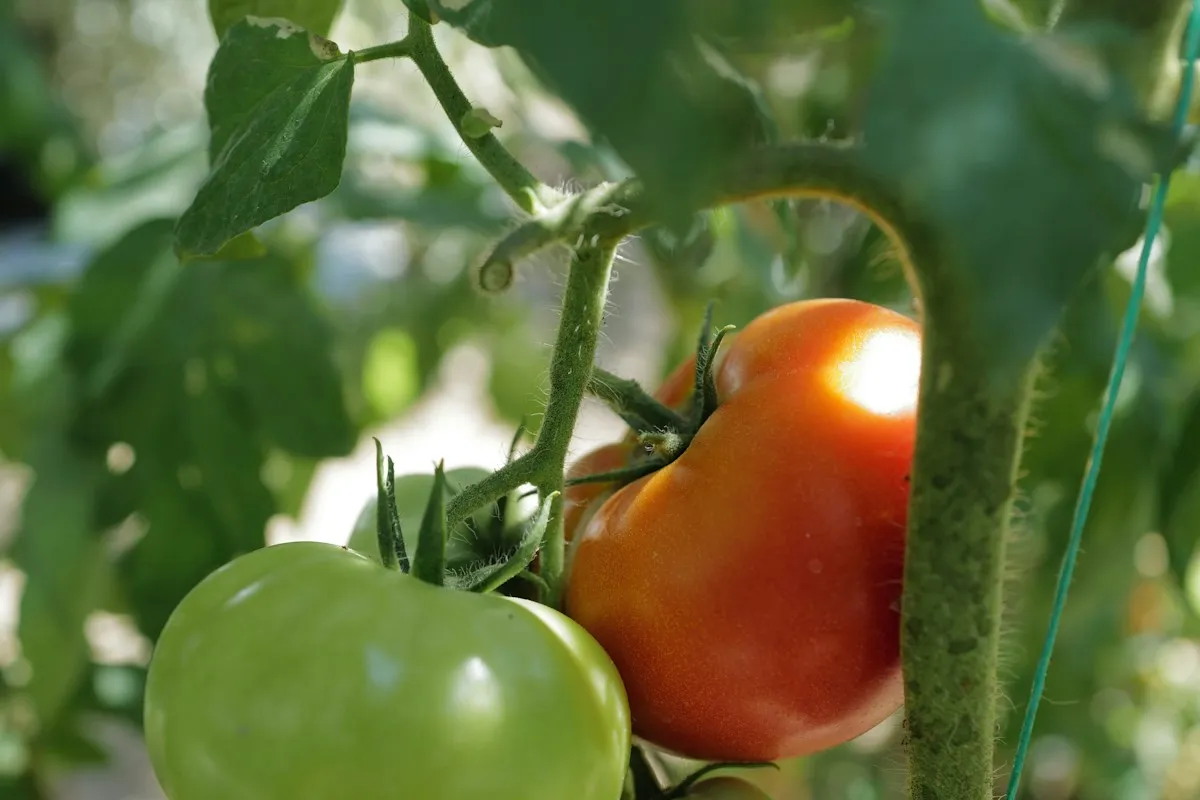
Tomato plants make glycoalkaloids, mainly tomatine (with smaller amounts of the related compound solanine), to protect themselves from insects and fungi. These compounds are concentrated in the leaves, stems, vines, flowers and small green fruit. As the tomato ripens and turns red, the tomatine in the fruit breaks down to very low levels.
| Part of the tomato | Glycoalkaloid level | Safe for dogs? |
|---|---|---|
| Ripe red tomato flesh | Very low | Yes, in small amounts |
| Green, unripe tomato | Moderate to high | No |
| Leaves, stems and vines | High | No |
| Flowers and the green cap (calyx) on top of the fruit | High | No; remove the cap before serving |
Glycoalkaloids irritate the lining of the stomach and intestines, and in larger doses they interfere with nerve signalling by inhibiting the enzyme cholinesterase. They are also poorly absorbed, which is why serious poisoning in dogs is uncommon and usually involves eating a lot of the plant.
Acidity and sensitive stomachs
Tomatoes are acidic. Some dogs, especially those prone to acid reflux, gastritis or pancreatitis, may vomit or have loose stools even after ripe tomato. If your dog reacts this way, simply avoid tomatoes.
Allergy
Food allergy to tomato is uncommon in dogs, but any new food can trigger a reaction. Watch for itching, ear scratching, facial swelling or hives after the first taste, and stop if they appear.
Signs of Tomato Poisoning in Dogs
If your dog has chewed tomato plants or eaten green tomatoes, watch for these signs, which usually appear within a few hours:
- Vomiting and diarrhoea
- Drooling and loss of appetite
- Abdominal pain
- Lethargy and weakness
- Wobbly walking (ataxia) or muscle tremors
- Dilated pupils
- Slow or irregular heartbeat (rare, with large amounts)
- Seizures (rare, with large amounts)
What to do: remove any remaining plant material from your dog’s mouth, note roughly how much was eaten, and call your vet. Mild stomach upset after a nibble often settles with rest and fresh water, but contact your vet straight away if your dog is small, ate a lot, or shows weakness, tremors or repeated vomiting. Do not try to make your dog vomit at home. Your vet may induce vomiting, give activated charcoal, provide fluids and monitor the heart.
Do Tomatoes Cause Kidney Stones in Dogs?
This is a common worry in India, where people often hear that tomato seeds cause kidney stones. In healthy dogs, the answer is no. Ripe tomatoes contain only small to moderate amounts of oxalate, the compound found in calcium oxalate stones, and the tiny portions given as a treat do not cause stones.
However, dogs that have already had calcium oxalate bladder or kidney stones, or that have chronic kidney disease, usually need a carefully controlled diet. Small breeds such as Shih Tzu, Lhasa Apso, Pomeranian and Miniature Schnauzer are more prone to oxalate stones. For these dogs, check with your vet before giving tomato or any other extras.
How Many Tomatoes Can a Dog Eat?
Like all treats, tomato should stay within the 10 percent rule: extras should make up no more than 10 percent of your dog’s daily calories. Start with a single small piece and wait 24 hours to check for stomach upset.
| Dog size | Example breeds | Ripe tomato per serving | How often |
|---|---|---|---|
| Extra-small (1–4.5 kg) | Chihuahua, Pomeranian | 1 cherry tomato or 1 small cube | Once or twice a week |
| Small (5–9 kg) | Shih Tzu, Pug, Lhasa Apso | 1–2 cherry tomatoes or 2 small slices | Once or twice a week |
| Medium (10–22 kg) | Beagle, Indie, Cocker Spaniel | 2–3 slices (about ¼ medium tomato) | Once or twice a week |
| Large (23–40 kg) | Labrador, German Shepherd | About ½ medium tomato | Once or twice a week |
| Extra-large (41 kg +) | Great Dane, Mastiff | Up to 1 medium tomato | Once or twice a week |
How To Safely Feed Your Dog Tomatoes
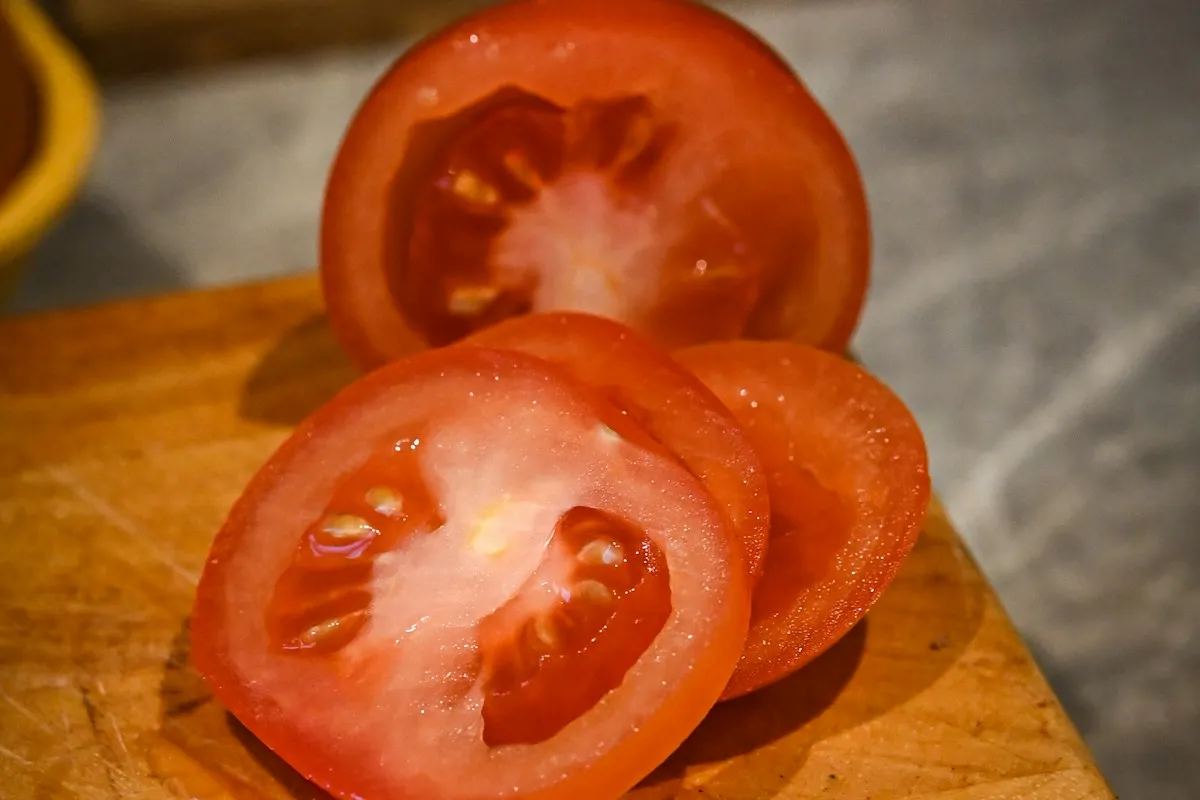
- Choose a fully ripe, red tomato with no green patches.
- Wash it well to remove pesticide residue and dirt.
- Remove the green cap, stem and any leaves.
- Cut it into small cubes or slices. Halve or quarter cherry tomatoes so small dogs do not choke.
- Serve it raw, or lightly cooked in plain water with no salt, oil, onion, garlic or spices.
- Offer a small piece first and watch your dog for 24 hours.
Serving ideas: add a few cubes of ripe tomato to your dog’s regular food, mix them with plain boiled chicken and cucumber as a summer salad topper, or freeze small pieces as a cooling treat.
Tomato Foods Dogs Should Not Eat
| Food | Why it is unsafe |
|---|---|
| Tomato ketchup and sauce | Sugar, salt, vinegar, onion and garlic powder; some “sugar-free” versions may contain sweeteners |
| Tamatar chutney, tomato pickle | Garlic, chilli, mustard, salt, oil, jaggery or sugar |
| Rasam, sambar, tomato dal | Onion, garlic, tamarind, salt, spices, oil tadka |
| Curries, gravies, chole, rajma, paneer butter masala | Onion-tomato masala base with garlic, ginger, cream and spices |
| Pav bhaji, pizza, pasta sauce, Maggi masala | Onion, garlic, salt, butter, cheese, spice mixes |
| Tomato soup (packet or restaurant) | Onion, garlic, salt, cream, MSG |
| Salsa, bruschetta | Raw onion, garlic, chilli, lime |
| Sun-dried or canned tomatoes | Very concentrated, often salted or in oil with herbs and garlic |
Onion and garlic in any form, including powder in sauces, damage dogs’ red blood cells and can cause anaemia. If your dog eats a large amount of curry, gravy or sauce, call your vet.
Are Tomato Plants Poisonous to Dogs?
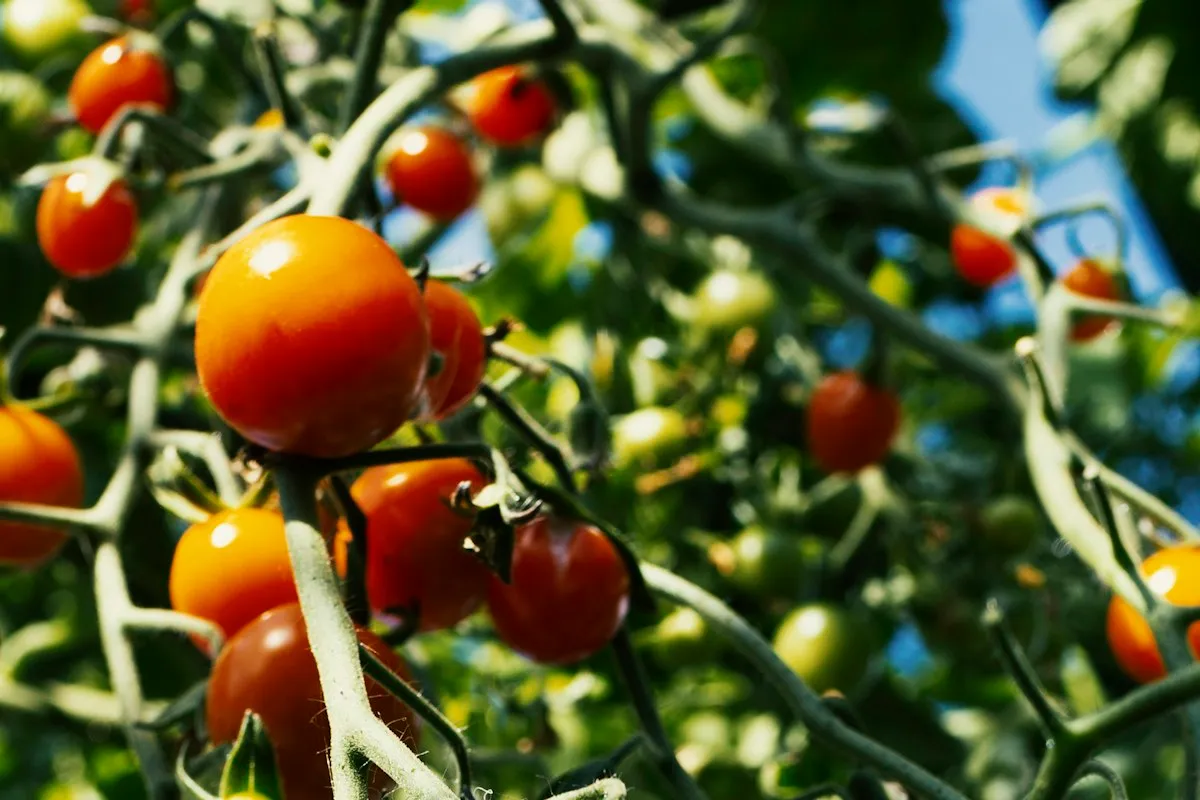
Yes. The leaves, stems and vines are the most toxic part of the tomato for dogs. Many Indian families grow tomatoes in pots on terraces and balconies or in kitchen gardens, where curious puppies and bored dogs can chew them.
- Fence off vegetable beds or keep tomato pots out of your dog’s reach.
- Pick up fallen green tomatoes promptly.
- Do not leave pulled plants, vines or pruned leaves in a pile where your dog can chew them.
- Keep fertilisers, snail bait and pesticides used in the garden locked away; these are often more dangerous than the plant itself.
- Other nightshades, such as raw potato sprouts and green potato skin, brinjal leaves and ornamental nightshades, carry similar risks.
Can Cats Eat Tomatoes?
A tiny piece of ripe, red tomato is not toxic to cats. But cats are obligate carnivores, and tomato offers them no nutritional benefit, so there is no reason to add it to their diet. Cats are also often bothered by the acidity.
Green tomatoes and the tomato plant are harmful to cats too, and cats that nibble houseplants and balcony greens are at risk. Signs are similar to those in dogs: drooling, vomiting, diarrhoea, lethargy and, rarely, weakness or a slow heart rate. Call your vet if your cat has chewed a tomato plant. See our guide to what human food cats can eat.
What To Give Your Dog Instead of Tomatoes
If your dog does not tolerate tomatoes, or you would rather avoid them, these low-calorie fruits and vegetables are safe alternatives: cucumber, carrots, plain cooked pumpkin, apple without the seeds, and seedless watermelon.
Frequently Asked Questions
Can dogs eat cherry tomatoes?
Yes, ripe red cherry tomatoes are safe in small numbers. Cut them in half or quarters for small dogs, because a whole cherry tomato can be a choking hazard.
Can dogs eat cooked tomatoes?
Plain cooked tomato with nothing added is safe. The problem is that cooked tomato at home is almost always part of a dish with onion, garlic, salt, oil or spices, which dogs should not eat.
My dog ate ketchup. Is it dangerous?
A lick of ketchup is unlikely to cause harm in a large dog. But ketchup contains sugar, salt and often onion and garlic powder. If a small dog ate a lot, or the product is sugar-free and may contain xylitol, call your vet.
My dog ate a green tomato. What should I do?
One green tomato rarely causes serious problems in a medium or large dog, but it can cause vomiting or diarrhoea. Watch your dog closely for 24 hours and call your vet if your dog is small, ate several, or shows weakness, tremors, drooling or repeated vomiting.
Can puppies eat tomatoes?
Puppies can have a very small piece of ripe tomato, but their stomachs are more sensitive, and they need a complete puppy food for growth. Keep puppies well away from tomato plants.
Do tomatoes cause gas or diarrhoea in dogs?
They can if a dog eats too much or has a sensitive stomach. Stick to small amounts and stop if you notice loose stools.
This article is for education and does not replace veterinary advice. Always check with your vet before adding new foods, especially for dogs with kidney disease, bladder stones, reflux or on prescription diets.
Related Articles
- Why Is My Dog Shaking, Trembling or Panting at Night? Cold, Fear, Fever, Pain and Poisoning
- Heatstroke in Dogs in India: Stages, First Aid, Vet Treatment and 10 Cooling Foods
- What Can Dogs Eat? Safe and Toxic Indian Foods for Dogs
- Can Dogs Eat Broccoli, Cauliflower and Cabbage? Benefits, Risks and Safe Serving Sizes (Plus Cats)
References
- Saylor A, Mitchell SC. Can Dogs Eat Tomatoes? Benefits, Risks, and Feeding Tips. PetMD, 2025.
- Friedman M. Tomato glycoalkaloids: role in the plant and in the diet. J Agric Food Chem, 2002.
- USDA FoodData Central. Tomatoes, red, ripe, raw.
- Lulich JP, et al. ACVIM small animal consensus recommendations on the treatment and prevention of uroliths in dogs and cats. J Vet Intern Med, 2016.
More on Dog Food and Diet

Best Supplements for Dogs in India: Calcium for Puppies vs Glucosamine and Omega-3 for Joints vs Probiotics
Which dog supplements work: calcium risks in puppies, glucosamine and omega-3 for joints and skin, probiotics, and human supplements that poison dogs.
Homemade Diet Chart for Indie Puppies in India: Month by Month
Need a homemade diet chart for Indie puppies in India? Dr. Vaishnavi shares a month-by-month desi puppy nutrition plan, toxic foods &…