 Written and reviewed by Dr. Vaishnavi Karmawat, B.V.Sc. & A.H., Registered Veterinary Practitioner
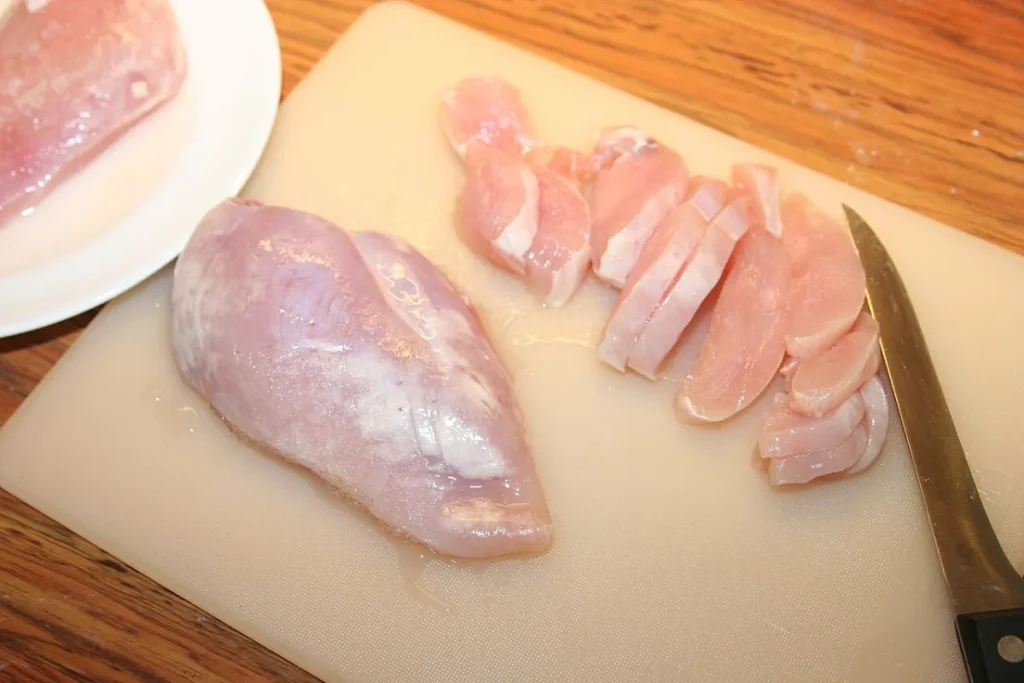
- Yes, dogs can eat chicken that is plain, boneless, skinless and fully cooked, ideally boiled.
- Never give cooked chicken bones: they splinter and can pierce or block the throat, stomach or intestines.
- Avoid chicken curry, tandoori, butter chicken, biryani and fried chicken; onion, garlic, spices, salt and fat cause problems.
- Raw chicken carries a high risk of Salmonella and Campylobacter for dogs and the family.
- Chicken is one of the more common food allergens in dogs; ongoing itching, ear infections or soft stools may be a sign.
Chicken is the most common meat fed to dogs in India and the base of many commercial dog foods. Plain boiled chicken with rice is also the classic bland diet vets recommend after a stomach upset. But the way chicken is cooked in most Indian homes, with masala, onion, garlic, oil and bones, makes leftovers unsafe. This guide explains how to prepare chicken safely, how much to give, the truth about bones and chicken feet (panje), and how to recognise chicken allergy.
In this article
Nutrition
100 g of boiled, skinless chicken breast gives roughly 160 to 165 kcal, 31 g protein and 3.5 g fat, with B vitamins (niacin, B6), phosphorus and selenium. Thigh meat and skin have much more fat.
How to boil chicken for dogs
- Use boneless, skinless breast or thigh. Trim visible fat.
- Place in a pan and cover with plain water. No salt, haldi in large amounts, ginger-garlic paste, onion, masala or oil.
- Bring to the boil, then simmer for 15 to 20 minutes until the meat is white all the way through, with no pink.
- Cool, then shred or cut into small pieces.
- Store in the fridge for up to 2 to 3 days. The plain broth can be poured over food or frozen into ice cubes; skim off the fat.
For a bland diet after vomiting or diarrhoea, mix 1 part boiled chicken with 2 to 3 parts soft-cooked rice and feed small meals 4 to 6 times a day for a few days. See our vomiting and diarrhoea guide.
How much chicken can my dog have?
As a treat or topper on a complete diet:
| Dog’s weight | Cooked chicken per day |
|---|---|
| Up to 5 kg | 10 to 15 g (a tablespoon) |
| 5 to 10 kg | 15 to 30 g |
| 10 to 25 kg | 30 to 60 g |
| 25 to 40 kg | 60 to 90 g |
| Over 40 kg | 90 to 120 g |
Reduce the regular food to balance calories. If chicken and rice is the main food for more than a few days, the diet is unbalanced (low in calcium, vitamins and essential fatty acids). Ask your vet for a complete homemade diet plan.
Bones: the biggest danger

- Cooked bones (from curry, biryani, tandoori, roast chicken) become hard and brittle. They splinter into sharp shards that can lodge in the throat or food pipe, puncture the stomach or intestine, cause constipation with bleeding, or block the gut. Indian vets see these cases every week, especially after festivals and parties.
- Raw bones are softer but carry bacterial risk and can still cause fractures of teeth, choking and blockages.
- If your dog swallows cooked bones, call your vet. Do not make your dog vomit at home. Watch for gagging, drooling, vomiting, straining, belly pain or blood in stools. See dog swallowed a sock, toy or bone.
Chicken feet (panje) and other parts

- Chicken feet are sold cheaply in many Indian markets and as dried chews. They are mostly skin, cartilage and small bones, and contain collagen. Some dogs enjoy them safely, but they can cause choking or gut irritation, especially in small dogs and fast eaters, and raw feet carry Salmonella. If you choose to offer them, use well-cleaned feet with nails trimmed, cooked until soft or properly dehydrated, matched to your dog’s size and always supervised. Do not give them to dogs with a history of pancreatitis or sensitive stomachs.
- Chicken liver and gizzard: boiled and in small amounts, they are nutritious. Liver is very rich in vitamin A, so limit it to a small part of the diet.
- Chicken skin and fat: high in fat; can trigger vomiting and pancreatitis.
- Chicken neck: contains many bones; not recommended for most pet dogs.
Raw chicken
Raw chicken is often contaminated with Salmonella, Campylobacter and antibiotic-resistant bacteria. Dogs fed raw chicken can become ill or shed these bacteria at home without looking sick, risking children, elderly people and anyone with weak immunity. Raw chicken diets have also been linked in research to a paralysis condition in dogs (acute polyradiculoneuritis) associated with Campylobacter. Cooked chicken is the safer choice.
Chicken allergy
Chicken is one of the more frequently reported food allergens in dogs, along with beef, dairy and wheat. Signs include year-round itching (paws, face, ears, belly), repeated ear infections, licking, and sometimes soft stools or vomiting. The only reliable diagnosis is an 8-week elimination diet with a hydrolysed or novel protein food under a vet’s supervision, followed by a challenge. See why is my dog itching.
Chicken dishes to avoid
- Butter chicken, chicken curry, kadhai and Chinese-style chicken (onion, garlic, spices, fat, salt, soy sauce)
- Tandoori and tikka (masala, lemon, chilli, salt)
- Biryani and pulao (onion, garlic, ghee, whole spices, bones)
- Fried chicken, nuggets, momos and sausages (fat, salt, onion, preservatives)
- Chicken soup cubes and packet soups (onion powder, salt)
Frequently asked questions
Can I give my dog boiled chicken every day?
Yes, as part of the daily food if total calories and balance are right. If chicken is a large share of the diet, ask your vet to balance calcium, vitamins and fats.
Can dogs eat chicken bones if they are boiled?
No. Any cooked bone can splinter. Remove all bones.
Is chicken good for a dog with loose motion?
Plain boiled chicken with rice is a standard bland diet once vomiting has stopped. If diarrhoea lasts more than 48 hours or contains blood, see a vet.
Can puppies eat chicken?
Yes, small pieces of boneless boiled chicken are fine as a topper for puppies on a complete puppy food.
Are chicken feet safe for dogs?
They can be given with care, supervised, nails trimmed and properly cooked or dehydrated, but they are not risk-free. Avoid them for small dogs, fast eaters and dogs with sensitive stomachs or pancreatitis.
Can cats eat chicken?
Yes. Plain cooked, boneless chicken is a good treat for cats. Never give cooked bones or seasoned chicken.
Related Articles
- Can Dogs Eat Peanut Butter, Rice and Aloo (Potato)? Safe Indian Staples vs Hidden Toxins
- Can Dogs Eat Orange (Santra) or Mosambi? Benefits, Risks and Safe Amounts
- Can Dogs Eat Blueberries, Strawberries and Jamun? Safe Berries Guide for Indian Dogs (and Why Jamun Seeds Must Be Removed)
- Can Dogs Eat Watermelon (Tarbooz) in Indian Summer? Safe Quantity and Rind Danger
References
- U.S. Department of Agriculture, Agricultural Research Service. FoodData Central: Chicken, broilers or fryers, breast, meat only, cooked.
- Mueller RS, Olivry T, Prélaud P. Critically appraised topic on adverse food reactions of companion animals (2): common food allergen sources in dogs and cats. BMC Veterinary Research. 2016;12:9.
- Martinez-Anton L, Marenda M, Firestone SM, et al. Investigation of the role of Campylobacter infection in suspected acute polyradiculoneuritis in dogs. Journal of Veterinary Internal Medicine. 2018;32(1):352-360.
- Thompson HC, Cortes Y, Gannon K, Bailey D, Freer S. Esophageal foreign bodies in dogs: 34 cases (2004-2009). Journal of Veterinary Emergency and Critical Care. 2012;22(2):253-261.
- Joffe DJ, Schlesinger DP. Preliminary assessment of the risk of Salmonella infection in dogs fed raw chicken diets. Canadian Veterinary Journal. 2002;43(6):441-442.
More on Dog Food and Diet

Best Supplements for Dogs in India: Calcium for Puppies vs Glucosamine and Omega-3 for Joints vs Probiotics
Which dog supplements work: calcium risks in puppies, glucosamine and omega-3 for joints and skin, probiotics, and human supplements that poison dogs.
Homemade Diet Chart for Indie Puppies in India: Month by Month
Need a homemade diet chart for Indie puppies in India? Dr. Vaishnavi shares a month-by-month desi puppy nutrition plan, toxic foods &…