 Written and reviewed by Dr. Vaishnavi Karmawat, B.V.Sc. & A.H., Registered Veterinary Practitioner
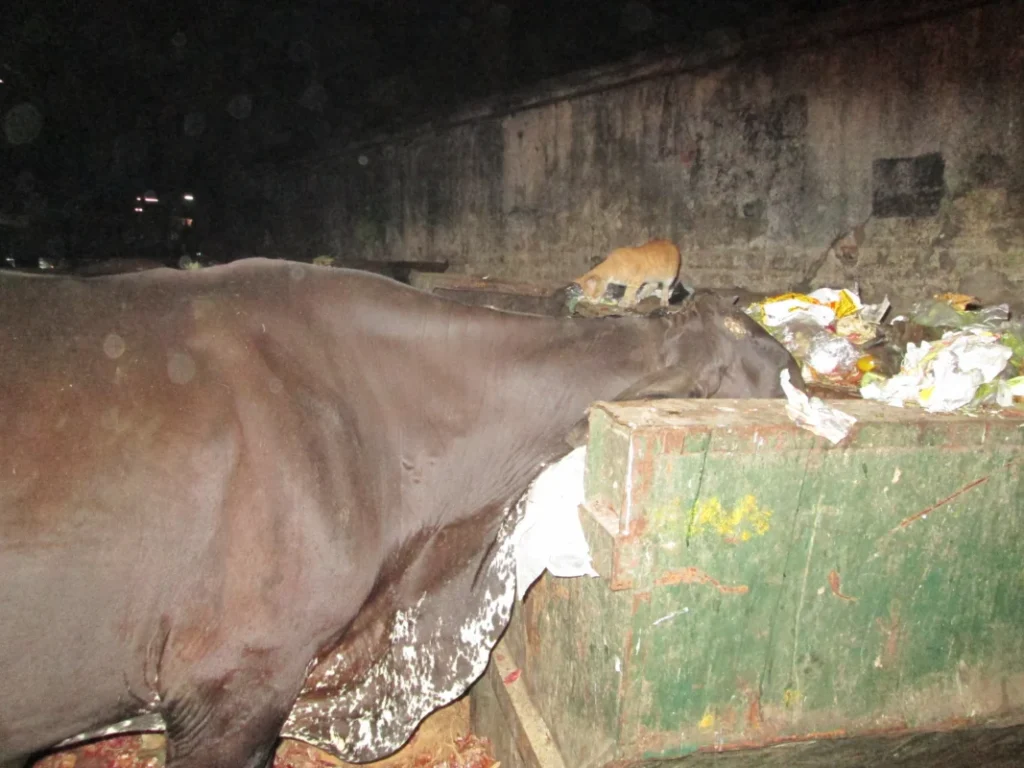
During Diwali and other festivals, homes and markets throw out huge amounts of leftover sweets, flowers, puja material and food, often tied up in polythene bags. Stray and free-roaming cows and buffaloes, looking for food, swallow the bags along with what is inside. Plastic cannot be digested. Over months, it builds up in the rumen (the first stomach) into a hard mass. Veterinary surgeons in India regularly remove many kilograms of plastic, rope and cloth from a single cow's stomach. Many of these animals suffer for a long time before anyone notices.
In this article
Why cows eat plastic
- Food inside bags: cows smell leftover food, fruit peels and sweets and swallow the whole bag
- Hunger: stray and abandoned cattle often have nothing else to eat
- Mineral deficiency: animals short of salt, phosphorus and other minerals develop *pica*, a craving to chew unusual things such as plastic, cloth, bones and walls
- Habit: once animals learn that bags contain food, they search garbage dumps regularly
What happens inside the stomach
- Plastic, ropes and cloth tangle into a hard ball in the rumen
- The rumen has less space for feed, so the animal eats less and digests poorly
- Gas cannot escape properly, causing repeated bloat
- The plastic can block the passage of food to the next stomach
- Sharp objects swallowed with garbage, such as nails, wire and pins, can pierce the stomach wall and even reach the heart. This is called hardware disease
Signs of plastic or wire in the stomach
| Plastic impaction | Hardware disease (wire or nail) |
|---|---|
| Gradual loss of appetite and weight | Sudden drop in appetite and milk |
| Repeated mild bloat, swollen left belly | Grunting when lying down or getting up |
| Less dung, or dry, small dung | Arched back, standing with elbows turned out |
| Less or no chewing of the cud | Reluctant to walk, especially downhill |
| Falling milk yield | Fever in some cases |
| Dull coat and weakness | Swelling under the chest or jaw in advanced cases |
A cow with repeated bloat, steady weight loss or grunting and arched back needs a vet examination. Long-standing plastic impaction can become fatal if not treated.
Read our guide on bloat in cattle and goats for emergency bloat signs.
How vets diagnose and treat it
- Examining the left side of the belly and rumen movements
- Feeling the rumen through the rectum and sometimes using ultrasound or X-ray
- Metal detectors to check for swallowed metal
- Rumenotomy: surgery to open the rumen and remove plastic, ropes and other objects. Many animals recover well when operated in time
- Treating dehydration, infection and nutritional deficiencies after surgery
- A rumen magnet may be given by mouth to collect swallowed metal and prevent hardware disease
Do not try to make the animal vomit or give large amounts of oil or home remedies to "push out" plastic. Plastic does not dissolve or pass, and these remedies can cause choking or pneumonia.
How families can help during festivals
- Never throw food, sweets or puja leftovers in polythene bags on the road or in open bins
- Give leftover food and fruit peels to gaushalas or put them out loose and clean, without plastic, only if safe for cattle
- Do not feed cows spoiled sweets, fried snacks, chocolates or large amounts of bread; sudden heavy starch can cause acidosis and bloat
- Put flowers, garlands and puja material in compost or a closed bin, after removing plastic and thread
- Separate dry waste and wet waste and hand it to municipal collectors
- Avoid bursting firecrackers near animals; read our guide on Diwali firecracker safety for pets, which also helps street animals
For dairy owners and gaushalas
- Do not let milking animals roam the streets to feed; they eat garbage and plastic
- Give a daily mineral mixture (a mineral supplement for livestock) and salt to prevent pica
- Keep sheds and fields free of plastic, wire, nails and broken tools
- Use a magnet over feed troughs and when chopping fodder to catch metal pieces
- Ask your vet about rumen magnets for animals at risk
- Feed enough dry and green fodder so animals are not hungry. See our guide on increasing milk production
Common myths
| Myth | Fact |
|---|---|
| "Cows can digest plastic." | Plastic never digests; it collects in the rumen for years. |
| "Feeding sweets and rotis to cows is always good." | Small amounts of clean food are fine, but sweets, fried food and sudden heavy starch can cause bloat and acidosis. |
| "Oil or home remedies will flush out plastic." | Plastic does not pass; surgery is the only way to remove a large mass. |
| "Only stray cows have this problem." | Dairy cows that roam or are fed garbage are also affected. |
🩺 Dr. Vaishnavi’s Clinical Picks (Available on Amazon India)
Animals short of salt and minerals are more likely to chew plastic.
Lets animals take salt and minerals they crave
As an Amazon Associate, I earn from qualifying purchases. This costs you nothing extra.
Frequently asked questions
How do I know if my cow has eaten plastic?
Watch for slow weight loss, poor appetite, repeated mild bloat, less dung and falling milk. Only a vet can confirm it, using rectal examination, ultrasound or X-ray.
Can a cow survive with plastic in its stomach?
Many survive for months but suffer and lose condition. Large masses can block digestion and cause death. Surgery can save many animals.
Is rumenotomy surgery safe?
It is a common surgery performed by trained vets and many animals recover well, especially if they are operated before becoming very weak.
What should I feed street cows instead?
Clean green fodder, dry fodder or small amounts of loose fruit and vegetable peels without plastic. Supporting a local gaushala is often the best help.
Who do I call for an injured or sick street cow?
Call the 1962 mobile veterinary helpline, your local veterinary hospital, the municipal animal department or a nearby animal welfare organisation or gaushala.
When to call the vet
Call your vet if a cow or buffalo has repeated bloat, steady weight loss, poor appetite, scanty dung, falling milk, grunting, an arched back or pain when moving. For street cattle, call the 1962 helpline or a local gaushala. Read our guide to free livestock services and the 1962 helpline.
Recommended reading
- Dr. Vaishnavi’s animal-care books are available on her Amazon author page.
- See all titles on the Books page.
Related Articles
More on Cows and Buffaloes
Repeat Breeding in Crossbred Cows: 7 Causes and Vet Treatment
Cow not conceiving after 3 AI cycles? Understand repeat breeding in crossbred cows causes and treatment in India, from subclinical endometritis to…
Winter Care for Cows and Buffaloes: Keep Milk Yield Up
Protect cows and buffaloes from the winter cold. Learn vet tips on shelter, feeding, water and calf care to keep milk yield…