 Written and reviewed by Dr. Vaishnavi Karmawat, B.V.Sc. & A.H., Registered Veterinary Practitioner
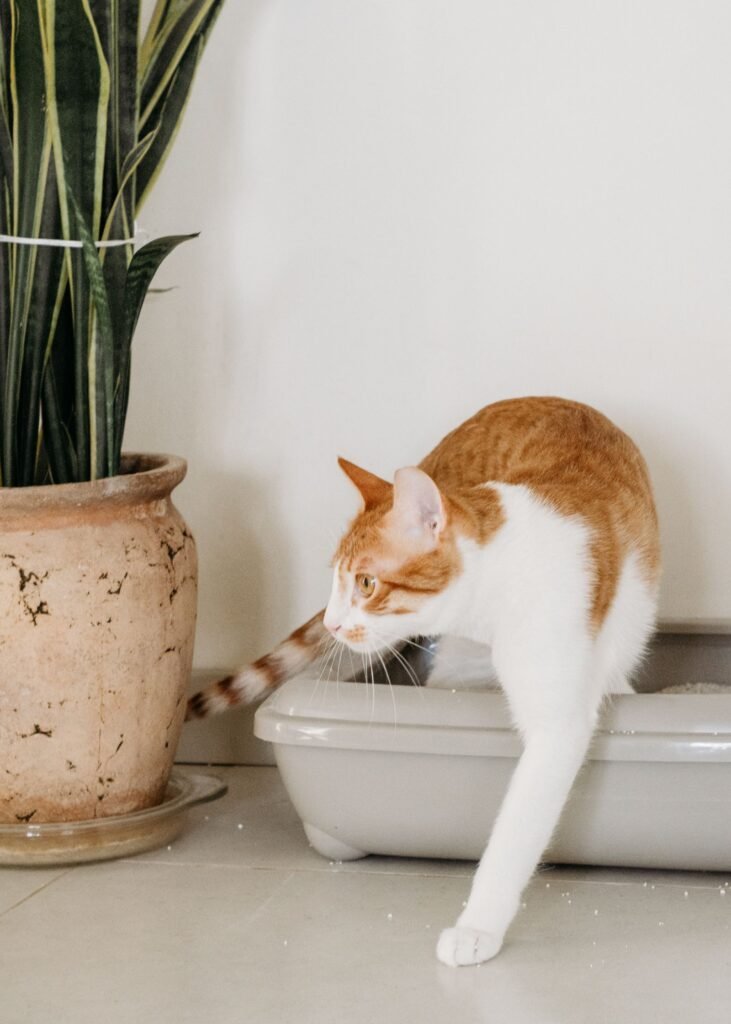
Finding cat urine on the bed, sofa, a pile of clothes or the bathroom floor is one of the most frustrating problems cat owners face, and it is one of the most common reasons cats are given up or put outside. But a cat that pees outside its litter box is not being naughty or taking revenge. It is telling you that something is wrong, with its body, its litter box or its environment.
In this article
Here is how to tell urine spraying from peeing, the medical problems to rule out first, the ten litter box rules that solve most cases, how to clean accidents properly, and how to litter train a kitten from day one.
Key Takeaways
- A cat that suddenly pees outside the box should see a vet first. Cystitis, urinary crystals and stones, infection, kidney disease, diabetes, hyperthyroidism and arthritis are common causes.
- A male cat straining in the litter box and passing little or no urine may have a urinary blockage. This is a life-threatening emergency.
- Spraying (marking on walls and doors) and peeing (squatting on floors, beds and rugs) have different causes and fixes.
- Most box problems come down to too few boxes, dirty boxes, the wrong litter, the wrong location, or stress.
- Clean accidents with an enzyme cleaner. Ammonia and phenyl-type cleaners can attract cats back to the same spot.
- Never punish a cat for accidents. Neutering by about five to six months greatly reduces spraying.
Spraying vs. Peeing: Which Is It?
| Clue | Urine spraying (marking) | Peeing outside the box |
|---|---|---|
| Posture | Standing, tail raised and quivering, backing up to the target | Squatting |
| Where | Vertical surfaces: walls, doors, curtains, windows, furniture legs | Horizontal surfaces: beds, sofas, rugs, clothes, bathtubs, tiles |
| Amount | Small squirts, often in several places | A normal or large puddle |
| Who does it most | Unneutered males, but also neutered cats and females | Any cat |
| Common triggers | Hormones, outdoor or neighbourhood cats, new pets, conflict between cats | Medical problems, litter box issues, stress |
Spraying is a form of communication: it leaves a scent message that says “this is my territory” or relieves anxiety. Neutering reduces spraying in most male cats, and reducing conflict with other cats, especially stray cats visible through windows or entering balconies, is often the key in India.
Step 1: Rule Out Medical Causes
Any change in a cat’s litter habits can mean illness, because cats often associate the box with pain and then avoid it. Your vet will examine your cat and usually test a urine sample (urinalysis with a sediment check for crystals and bacteria), and may recommend blood tests, X-rays or ultrasound.
| Condition | Signs to watch for |
|---|---|
| Feline idiopathic cystitis (stress-related bladder inflammation) | Frequent small pees, blood in urine, straining, licking the genitals; often triggered by stress |
| Urinary crystals and stones | Straining, blood in urine; can block the urethra in males |
| Urinary tract infection | More common in older cats, especially with kidney disease or diabetes |
| Kidney disease | Drinking and peeing more, weight loss, poor appetite, vomiting |
| Diabetes | Large amounts of urine, increased thirst and appetite, weight loss |
| Hyperthyroidism | Senior cat, weight loss despite eating well, restlessness, increased thirst |
| Arthritis | Older cat; avoids boxes with high sides, stairs or covered entrances |
| Constipation or diarrhoea | Pooping outside the box because passing stool is painful |
Emergency warning: a cat, especially a male, that keeps going in and out of the box, strains with little or no urine, cries, licks its genitals or vomits may have a blocked urethra. Without treatment this can be fatal within one to two days. Read about urinary blockage (FLUTD) in cats and go to a vet immediately.
Step 2: The 10 Litter Box Rules
- Have enough boxes. Provide one box per cat plus one extra (two boxes for one cat, three for two), placed in different parts of the home, ideally on each floor.
- Choose a big box. The box should be at least one and a half times the length of your cat, nose to base of tail. Many commercial boxes are too small; a large plastic storage tub with one side cut low works well.
- Prefer uncovered boxes. Most cats prefer open boxes. Covers trap odour inside and can make a cat feel trapped by another pet.
- Use the right litter. Most cats prefer fine, soft, unscented clumping litter. Avoid strongly perfumed litter and sudden changes. Offer two types side by side if you want to switch.
- Keep it deep enough. About 5 to 7.5 cm (2 to 3 inches) of litter lets the cat dig and cover.
- Scoop at least once, ideally twice, a day, and more often in multi-cat homes.
- Wash the box regularly with mild unscented soap and warm water every one to two weeks, and refill with fresh litter. Avoid strong-smelling disinfectants.
- Pick a quiet but easy location. Not next to a noisy washing machine, inverter or geyser, not in a dark dead-end where another pet can corner the cat, and never right next to food and water.
- Make access easy. Low entry for kittens and seniors, no long staircases, and doors that cannot close the cat out.
- Keep things predictable. Once your cat likes a box set-up, avoid moving it or changing litter suddenly.
Step 3: Reduce Stress
Cats are sensitive to change. Common triggers for litter problems in Indian homes include a new baby or relatives staying, renovation or shifting house, a new pet, festivals with firecrackers, stray cats fighting outside windows or entering balconies, and conflict between cats in the home.
- Give each cat its own resources: food, water, resting places, scratching posts and litter boxes, in separate locations.
- Add vertical space such as shelves and cat trees, and hiding places.
- Block your cat’s view of outdoor cats, and clean any spots where strays have sprayed near doors or windows.
- Keep play and feeding routines consistent; two short play sessions a day with a wand toy help reduce tension.
- Ask your vet about calming pheromone diffusers (such as Feliway) and, for cats with cystitis, increasing water intake with wet food and water fountains.
- For severe or persistent anxiety, your vet may recommend medication and a behaviour plan.
How To Clean Cat Urine Properly
Cats are drawn back to places that smell of urine. Cleaning thoroughly is as important as fixing the cause.
- Blot fresh urine with paper towels; do not rub.
- Use an enzymatic pet urine cleaner, which breaks down the uric acid and odour compounds. Soak the area as directed and let it air dry.
- Avoid ammonia-based cleaners and strong phenyl or bleach mixes. Ammonia smells similar to urine and can attract the cat back, and some disinfectants (especially phenol-based “phenyl” products) are toxic to cats.
- Find hidden spots with a UV torch in a dark room; old urine glows.
- Wash soiled bedding and clothes with an enzyme detergent and dry in the sun.
- Temporarily make the spot unattractive by placing a food bowl, a toy or furniture there, or covering it, while you work on the cause.
How To Litter Train a Kitten
Kittens learn quickly because the instinct to dig and cover is strong. Most kittens raised by their mother already use litter by 4 to 6 weeks of age.
- Set up a low-sided box in a quiet corner of the kitten’s room, with fine unscented litter.
- Place your kitten in the box after meals, after waking up and after play, and let it sniff and dig.
- Praise gently or offer a small treat when it uses the box.
- If you rescued a kitten that used soil or sand outdoors, start with soil or sand in the box and mix in more litter over a week or two.
- Confine a new kitten to one room with its box at first, then increase its space gradually.
- Never rub a kitten’s nose in mistakes; just clean up with an enzyme cleaner.
See our kitten care guide for more on settling a new kitten.
Does Neutering Help?
Yes, for spraying. Neutering stops or greatly reduces urine marking in most male cats, and spaying stops the urine marking and restlessness that come with heat in females. Neutering at around five to six months of age, before marking becomes a habit, works best. It does not fix peeing caused by illness, a dirty box or stress, so the other steps still apply.
Frequently Asked Questions
Is my cat peeing outside the box out of revenge?
No. Cats do not soil for spite. They avoid the box because of pain, a box they dislike, or stress. Punishment increases anxiety and makes it worse.
Why does my cat pee in the bathtub or washbasin?
Cool, smooth surfaces often attract cats with painful bladders (cystitis), so this is often a medical sign. See a vet.
Why is my old cat peeing next to the box?
Arthritis can make climbing into a box painful. Try a box with a low entry and a box on each floor, and ask your vet about pain relief.
Will a covered box stop the smell?
It may hide the smell from you but concentrates it for your cat, which can cause box avoidance. Frequent scooping is more effective.
Why is my cat peeing outside the box but still pooping in it?
This often points to a urinary problem, such as cystitis or crystals, or a dislike of how the box feels when urinating. See your vet promptly.
Why is my cat peeing on my bed?
Beds are soft, absorbent and smell of you. Cats with bladder pain, litter box aversion or anxiety often choose them. Rule out medical causes, fix the box set-up, and keep the bedroom door closed while you work on it.
Should I put my cat outside if it keeps peeing indoors?
No. Outdoor life exposes cats to road accidents, dog attacks, fights and infections, and does not treat the cause. Most cases can be solved with a vet check and better litter box management.
Can I use sand or soil instead of litter?
Some cats are happy with clean, dry sand, but it is heavy, does not clump well and is harder to keep clean. Never use soil from areas where pesticides or fertilisers have been used.
This article is for education and does not replace veterinary advice. If your cat is straining to pee, call your vet immediately.
Related Articles
- Cat Constipation (Kabz) and Straining in the Litter Box: Causes, Safe Home Hydration and Fibre, and Why Human Enemas Are Deadly
- Why Do Cats Purr and Knead (“Make Biscuits”)? 5 Meanings, Including Stress and Pain
- Puppy and Kitten Vaccination Schedule in India: Chart, Core vs Non-core Vaccines, Brands, Boosters and Side Effects
References
- PetMD Editorial, Morrison BJ. 6 Reasons Your Cat Is Peeing Outside the Litter Box and How To Stop It. PetMD, 2025.
- PetMD. Top 10 Ways To Stop Your Cat From Peeing Outside the Litter Box.
- Carney HC, et al. AAFP and ISFM guidelines for diagnosing and solving house-soiling behavior in cats. Journal of Feline Medicine and Surgery, 2014;16:579–598.
- Ellis SLH, et al. AAFP and ISFM feline environmental needs guidelines. Journal of Feline Medicine and Surgery, 2013;15:219–230.
- Guy NC, et al. Litter preferences of cats. Applied Animal Behaviour Science, 2014.
- Pryor PA, et al. Causes of urine marking in cats and effects of environmental management. JAVMA, 2001.
More on Cat Litter and Behaviour
Why Do Cats Purr and Knead (“Make Biscuits”)? 5 Meanings, Including Stress and Pain
Why do cats purr and knead? How purring works, 5 reasons cats purr including pain and stress, making biscuits, and when to…