 Written and reviewed by Dr. Vaishnavi Karmawat, B.V.Sc. & A.H., Registered Veterinary Practitioner
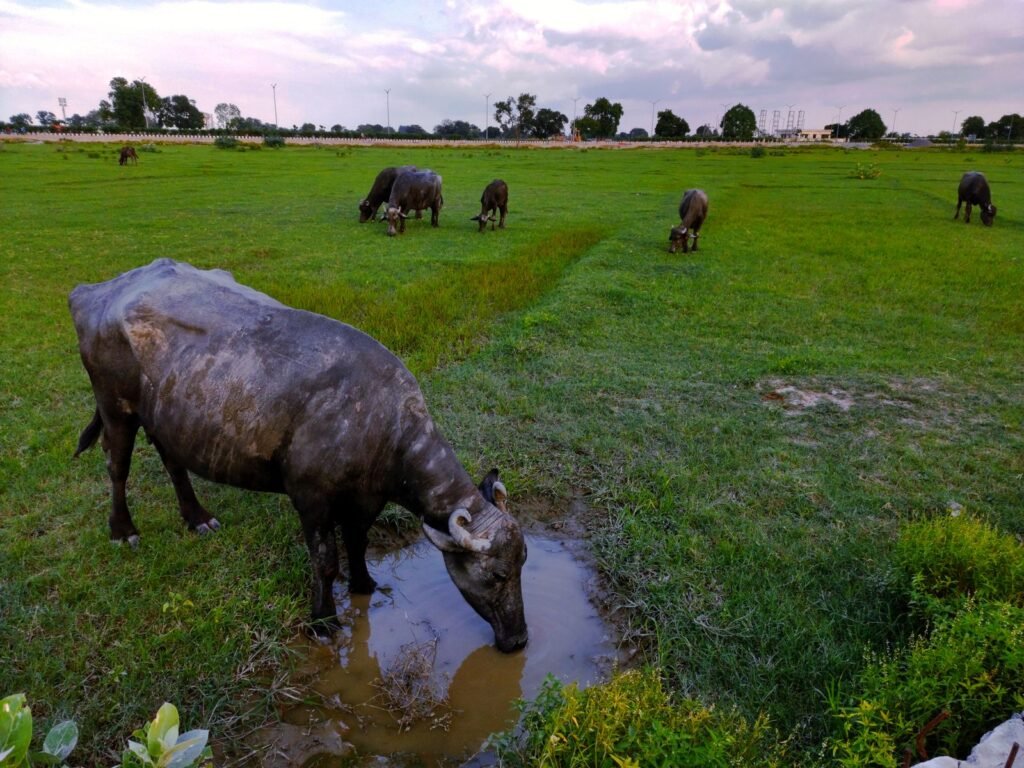
A dairy animal earns money only when she calves regularly. Every missed heat adds about three weeks to the calving interval and means less milk over her lifetime. Many fertility problems on Indian farms are not disease at all, but heats that were missed or inseminations done at the wrong time. This guide explains how to detect heat in cows and buffaloes and when to call the AI technician.
In this article
The heat cycle
- Cows and buffaloes come into heat about every 21 days (normally 18 to 24 days) when not pregnant
- In cows, heat usually lasts about 12 to 18 hours; in buffaloes it can be similar but the signs are much weaker
- After calving, the first heat usually comes within about 45 to 60 days in well-fed animals
- The aim is to get animals pregnant again within about 60 to 90 days after calving, for a calving interval of about 12 to 13 months in cows. Buffaloes often take longer.
Signs of heat in cows
- Standing to be mounted by other animals: the most reliable sign
- Mounting other animals
- Restlessness, frequent bellowing and walking around
- Clear, stringy, glass-like mucus from the vulva, often seen on the tail
- Swollen, reddish vulva
- Frequent urination
- Reduced appetite and a drop in milk
- Sniffing and licking other animals
Signs of heat in buffaloes
Buffaloes are famous for weak or silent heat. Signs are often mild and appear mainly at night or early morning:
- Frequent bellowing
- Clear mucus discharge, often seen only when the animal lies down
- Slight swelling of the vulva
- Frequent urination and restlessness
- Sudden drop in milk
Silent heat is more common in summer, so watch buffaloes closely in the cool hours.
How to detect heat reliably
- Observe animals carefully at least three times a day, especially early morning, late evening and at night, for 20 to 30 minutes each time
- Record heat dates in a notebook and expect the next heat about 21 days later
- Let animals loose for some time each day; tied animals show fewer signs
- In larger herds, a teaser bull or simple heat detection aids can help
When to inseminate: the AM-PM rule
Ovulation happens towards the end of heat. The common rule is:
| Heat first seen | Best time for insemination |
|---|---|
| Morning | Evening of the same day |
| Evening | Next morning |
In buffaloes, many technicians prefer inseminating in the second half of heat. Your AI technician can advise based on the signs.
Before and after insemination
- Keep the animal calm; avoid chasing or beating her before AI
- Provide shade and water; heat stress reduces conception
- Use quality semen from a recognised semen station
- Note the date and expect the next heat in about 21 days if she has not conceived
- Get pregnancy diagnosis done by a vet about 60 to 90 days after AI
Why animals fail to conceive
- Poor nutrition and low body condition, the most common cause on Indian farms
- Mineral deficiencies, especially phosphorus, copper and zinc; feed a good mineral mixture (a mineral supplement for livestock) every day
- Uterine infection after difficult calving or retained placenta
- Wrong timing of insemination
- Heat stress in summer
- Anoestrus (no heat at all), often due to poor feeding
An animal that does not conceive after three or more inseminations despite normal heat is called a repeat breeder. She needs a vet examination of the reproductive tract.
Government support for breeding
Under the Rashtriya Gokul Mission, artificial insemination services are being expanded to farmers' doorsteps, and sex-sorted semen and IVF pregnancies are supported to help farmers get more female calves. Ask your local veterinary hospital or AI technician about services in your village.
When should you call a vet?
Call your vet if an animal has not shown heat by about 90 days after calving, has abnormal discharge, has had three failed inseminations, or if you want pregnancy confirmed.
Recommended reading
- Dr. Vaishnavi’s animal-care books are available on her Amazon author page.
- See all titles on the Books page.
🩺 Dr. Vaishnavi’s Clinical Picks (Available on Amazon India)
Useful tools for farmers working on this. For a sick animal, call your vet first.
Mark treated animals or note heat signs on the tail head
Clean, safe handling during AI and calving checks
As an Amazon Associate, I earn from qualifying purchases. This costs you nothing extra.
Frequently asked questions
When is the best time for artificial insemination?
Follow the morning-evening rule: if a cow or buffalo is first seen in heat in the morning, inseminate in the evening; if first seen in the evening, inseminate the next morning.
How long does heat last in cows and buffaloes?
Heat usually lasts less than a day. Buffaloes often show weak or silent heat, especially in hot weather, so watch them closely in the early morning and late evening.
What should I do if my cow does not conceive after AI?
Watch for heat again about 21 days later. If the animal repeats heat three or more times, ask your vet to check for repeat breeding causes.
Related Articles
- Repeat Breeding in Crossbred Cows: 7 Causes and Vet Treatment
- Winter Care for Cows and Buffaloes: Keep Milk Yield Up
- FMD in Cows and Buffaloes: Symptoms, Treatment, and Free Vaccine
- Milk Fever in Cows and Buffaloes: Symptoms, Treatment, and Prevention
References
- Merck Veterinary Manual. Management of Reproduction: Cattle.
- Roelofs J, et al. When is a cow in estrus? Clinical and practical aspects. Theriogenology. 2010;74(3):327-344.
- Department of Animal Husbandry and Dairying, Government of India. Rashtriya Gokul Mission: scheme guidelines.
More on Cows and Buffaloes
Cows Eating Plastic: Symptoms, Treatment, and Prevention
Cows often swallow plastic and festival waste. Learn the signs of plastic in the stomach, how vets treat it and how to…
Repeat Breeding in Crossbred Cows: 7 Causes and Vet Treatment
Cow not conceiving after 3 AI cycles? Understand repeat breeding in crossbred cows causes and treatment in India, from subclinical endometritis to…