 Written and reviewed by Dr. Vaishnavi Karmawat, B.V.Sc. & A.H., Registered Veterinary Practitioner
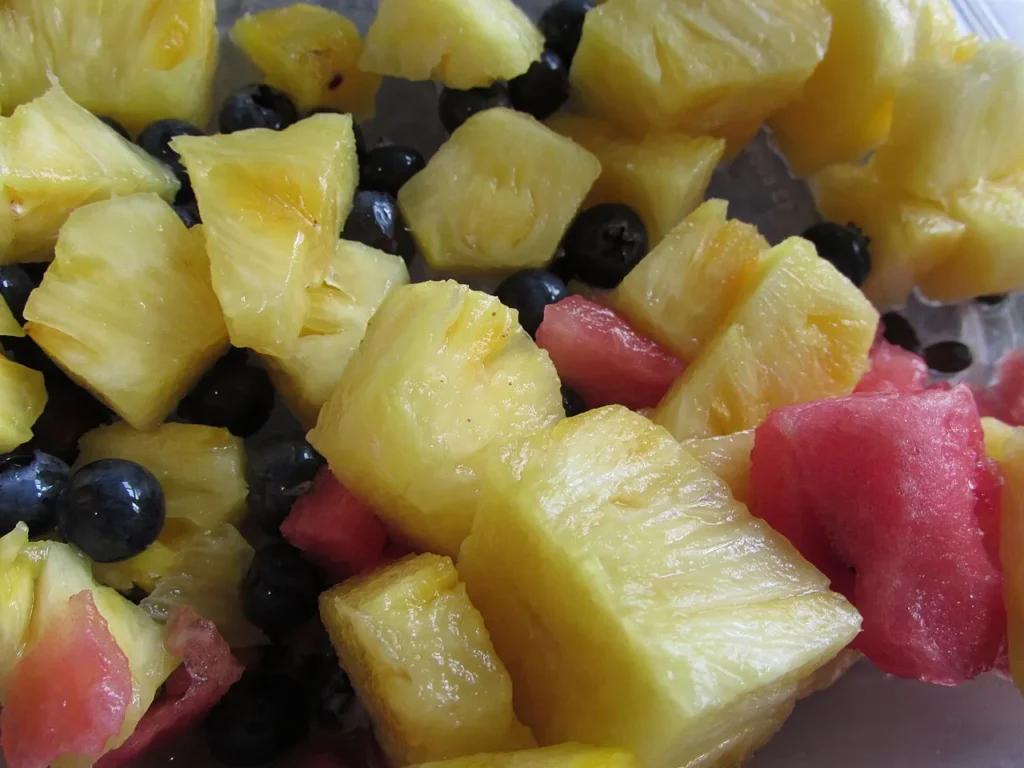
Quick answer: Yes, dogs can eat pineapple (ananas) in small amounts. The soft, ripe yellow flesh is safe and provides water, vitamin C, manganese and some fibre. But the spiky rind, the hard central core and the leafy crown must always be removed; they cannot be digested and can choke a dog or block the intestines. Pineapple is high in natural sugar and acid, so keep portions small, and never give canned pineapple in syrup, pineapple cake, pastry, sheera or roadside pineapple with salt and masala.
In this article
- Pineapple nutrition at a glance
- What is bromelain, and does it help dogs?
- Which parts of a pineapple are safe?
- How much pineapple can my dog eat?
- How to prepare pineapple for your dog
- Fresh, frozen, dried, canned and juice
- Indian pineapple foods to avoid
- Risks of pineapple for dogs
- Does pineapple stop dogs eating poop?
- Pineapple vs papaya: comparing two tropical fruits
- Can puppies and cats eat pineapple?
- Frequently asked questions
- Related Articles
- References
- Serve only peeled, cored, ripe flesh, cut into small cubes.
- Start with one piece and keep pineapple an occasional treat, not a daily one.
- Avoid in diabetic and overweight dogs unless your vet approves.
- Pineapple does not reliably stop dogs from eating poop.
- Papaya (papita) is another safe tropical fruit, with seeds and skin removed.
Pineapple nutrition at a glance
| Per 100 g raw pineapple flesh | Approximate amount | What it means for dogs |
|---|---|---|
| Water | About 86 g | Refreshing and hydrating in hot weather |
| Energy | About 50 kcal | Moderate; more than cucumber or watermelon |
| Natural sugars | About 10 g | The main reason to keep portions small |
| Fibre | About 1.4 g | Helpful in small amounts; too much causes loose stool |
| Vitamin C | About 48 mg | Antioxidant; dogs make their own vitamin C, so this is a bonus |
| Manganese | Rich source | Needed for bone, cartilage and enzyme function |
| Vitamin B6, thiamine, folate, copper, potassium | Small amounts | Minor contributions to a balanced diet |
What is bromelain, and does it help dogs?
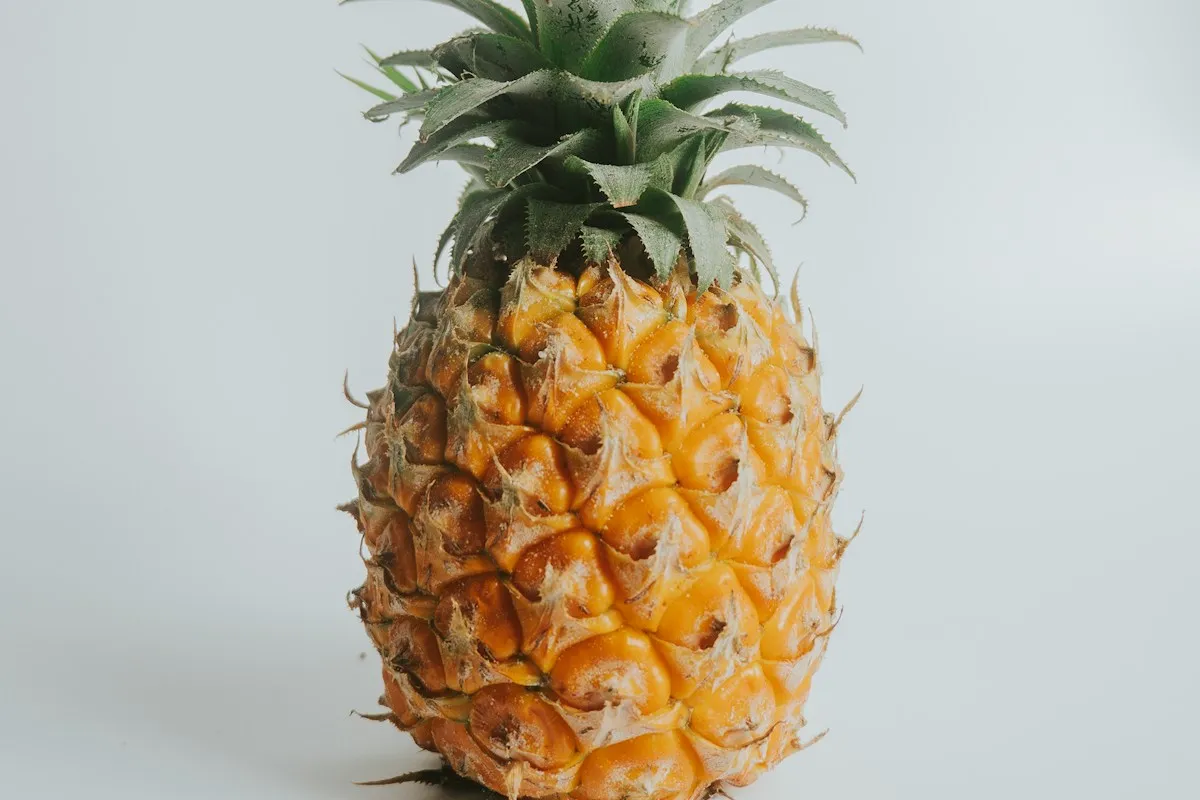
Pineapple contains bromelain, a group of protein-digesting (proteolytic) enzymes. In people, concentrated bromelain supplements have been studied for inflammation, swelling after injury and digestion. A few points matter for dog parents:
- Most bromelain is concentrated in the stem and core, the parts dogs should not eat. Ripe flesh contains less.
- Heat destroys bromelain, so cooked and canned pineapple contain little active enzyme.
- Bromelain is what makes your tongue tingle or sting after eating a lot of pineapple. Dogs can experience similar mouth irritation if they eat too much.
- There is no good evidence that the small amount of bromelain in a few pineapple cubes treats joint pain, digestion problems or any disease in dogs. Concentrated bromelain supplements should only be used on a vet’s advice, as they can interact with blood thinners and some antibiotics.
Which parts of a pineapple are safe?
| Part | Safe? | Why |
|---|---|---|
| Ripe yellow flesh | Yes, in small amounts | Soft, digestible, hydrating |
| Central core | No | Hard, fibrous and woody; can lodge in the throat or block the intestines |
| Rind (spiny skin) and “eyes” | No | Sharp and indigestible; can injure the mouth and cause obstruction |
| Crown (leafy top) | No | Tough, spiky leaves; a choking and blockage risk |
| Unripe green pineapple | No | Very acidic and harsh on the stomach |
Watch your kitchen waste. Many dogs in India steal pineapple peel and cores from the dustbin after the fruit is cut at home. A core is about the right size to block a dog’s intestine. If your dog has eaten a core or rind and then vomits, refuses food, has a painful belly or passes no stool, see a vet immediately.
How much pineapple can my dog eat?
Use cubes about 2.5 cm (1 inch) across and 5 mm (quarter-inch) thick. These are amounts for an occasional treat, a few times a week.
| Dog size | Examples | Amount per treat day |
|---|---|---|
| Toy (up to 5 kg) | Chihuahua, Pomeranian | 1 small piece, cut smaller |
| Small (5 to 10 kg) | Shih Tzu, Pug, Lhasa Apso | 1 to 2 pieces |
| Medium (10 to 20 kg) | Beagle, Indie, Cocker Spaniel | 2 to 4 pieces |
| Large (20 to 35 kg) | Labrador, Golden Retriever, German Shepherd | 4 to 6 pieces |
| Giant (over 35 kg) | Rottweiler, Great Dane | 6 to 8 pieces |
Keep all treats, including fruit, under 10 percent of your dog’s daily calories.
How to prepare pineapple for your dog
- Choose a ripe pineapple: golden colour, sweet smell at the base, and a leaf that pulls out easily from the crown.
- Wash the outside, then cut off the crown and base.
- Slice away the rind and remove the brown “eyes”.
- Cut the fruit into quarters lengthways and slice out the hard core.
- Cut the soft flesh into small cubes.
- Dispose of the rind, crown and core in a bin your dog cannot open.
Fresh, frozen, dried, canned and juice
| Form | Verdict | Notes |
|---|---|---|
| Fresh | Best | Small cubes of ripe flesh |
| Frozen | Yes | A cooling summer treat; let pieces soften slightly to protect teeth |
| Homemade dried | Rarely, tiny amounts | Drying concentrates sugar several-fold |
| Store-bought dried or candied | No | Added sugar, preservatives (sulphites) and sometimes colours |
| Canned in syrup | No | Heavy sugar; may cause diarrhoea |
| Packaged juice or tetra-pack drinks | No | Added sugar; very little fibre |
| Fresh juice | Only a spoonful | One to two teaspoons for a small dog, as a food topper at most |
Indian pineapple foods to avoid
- Pineapple cake, pastry and cream: sugar, butter, cream and sometimes xylitol in sugar-free versions; chocolate in some layers.
- Pineapple sheera or halwa: ghee and sugar can trigger pancreatitis; often contains raisins and cashews.
- Pineapple raita: often salted and spiced, sometimes with sugar.
- Roadside pineapple with salt, chilli and chaat masala.
- Pineapple chutney and pickles: sugar, salt, chilli, garlic.
- Fruit punch and mocktails: sugar, sometimes alcohol.
- Fruit custard or fruit salad with grapes or raisins.
Risks of pineapple for dogs
- Digestive upset: too much sugar and fibre cause loose stools, vomiting or gas.
- Acidity: can irritate the mouth and stomach; dogs with reflux or a sensitive stomach may vomit.
- Sugar: regular large amounts add calories and can worsen obesity and diabetes control.
- Dental: sugar and acid are not good for teeth when fed often.
- Choking and obstruction: from core, rind, crown or large chunks.
Does pineapple stop dogs eating poop?
A popular belief is that pineapple makes a dog’s stool taste unpleasant, stopping them from eating it (coprophagia). There is no good scientific evidence that this works. Dogs eat stool for many reasons, including puppy habit, hunger, stress, attention-seeking, worms and digestive enzyme problems. Deworming, a complete diet, prompt clean-up, training and a vet check are far more effective than pineapple.
Pineapple vs papaya: comparing two tropical fruits

| Feature | Pineapple (ananas) | Papaya (papita) |
|---|---|---|
| Safe part | Ripe flesh only | Ripe flesh only |
| Remove | Rind, core, crown | Skin and black seeds |
| Calories per 100 g | About 50 kcal | About 43 kcal |
| Natural sugar per 100 g | About 10 g | About 8 g |
| Digestive enzyme | Bromelain | Papain |
| Texture | Firm, fibrous, acidic | Soft, mild, easy to mash |
| Best for | Occasional cooling treat | Gentle treat for most dogs, including seniors |
| Main risks | Core and rind obstruction, acidity, sugar | Seeds and skin, loose stool in excess |
For a detailed guide to papaya, including unripe papaya, seeds and serving sizes, read can dogs eat papaya. You may also like our guides to mango, watermelon and cucumber for summer.
Can puppies and cats eat pineapple?
Puppies: once fully weaned onto solid food, a tiny piece of soft pineapple occasionally is fine. Their stomachs are sensitive, so start with one small piece. Never give fruit to puppies still on milk or milk replacer.
Cats: pineapple is not toxic to cats, but cats cannot taste sweetness and gain nothing from fruit. A tiny lick is harmless; it is not a useful treat.
Frequently asked questions
Can dogs eat pineapple every day?
It is better as an occasional treat a few times a week because of its sugar and acid content.
My dog ate a pineapple core. What should I do?
Call your vet. Watch closely for vomiting, retching, refusing food, a painful or swollen belly, and lack of stool over the next 24 to 72 hours. Do not try to make your dog vomit without your vet’s advice.
Can dogs eat cooked pineapple?
Plain cooked pineapple is safe in small amounts, but most dishes that include it also contain sugar, salt, onion or garlic.
Is pineapple good for diabetic dogs?
Generally best avoided. Lower-sugar options such as cucumber or a few blueberries are better, with your vet’s approval.
Can pineapple cause diarrhoea in dogs?
Yes, if fed in large amounts or to a dog not used to it. Stop feeding it and offer plain water; call your vet if diarrhoea continues beyond a day or contains blood.
This article is for education and does not replace veterinary advice. Always check with your vet before adding new foods, especially for dogs with health conditions or on prescription diets.
Related Articles
- Can Dogs Eat Banana (Kela)? Serving Chart by Weight, Benefits, Risks and the Loose Motion Myth
- Can Dogs Eat Mango (Aam)? Benefits, Risks, Serving Sizes and the Stone (Guthli) Danger
- Can Dogs Eat Papaya? Benefits, Risks and How Much
- Can Dogs Eat Orange (Santra) or Mosambi? Benefits, Risks and Safe Amounts
References
- Arnold VL, Price M. Can Dogs Eat Pineapple? PetMD, updated 2024.
- USDA FoodData Central. Pineapple, raw, all varieties; Papaya, raw.
- Pavan R, et al. Properties and therapeutic application of bromelain: a review. Biotechnol Res Int, 2012.
- National Research Council. Nutrient Requirements of Dogs and Cats. National Academies Press, 2006.
More on Dog Food and Diet

Best Supplements for Dogs in India: Calcium for Puppies vs Glucosamine and Omega-3 for Joints vs Probiotics
Which dog supplements work: calcium risks in puppies, glucosamine and omega-3 for joints and skin, probiotics, and human supplements that poison dogs.

Homemade Diet Chart for Indie Puppies in India: Month by Month
Need a homemade diet chart for Indie puppies in India? Dr. Vaishnavi shares a month-by-month desi puppy nutrition plan, toxic foods &…