 Written and reviewed by Dr. Vaishnavi Karmawat, B.V.Sc. & A.H., Registered Veterinary Practitioner
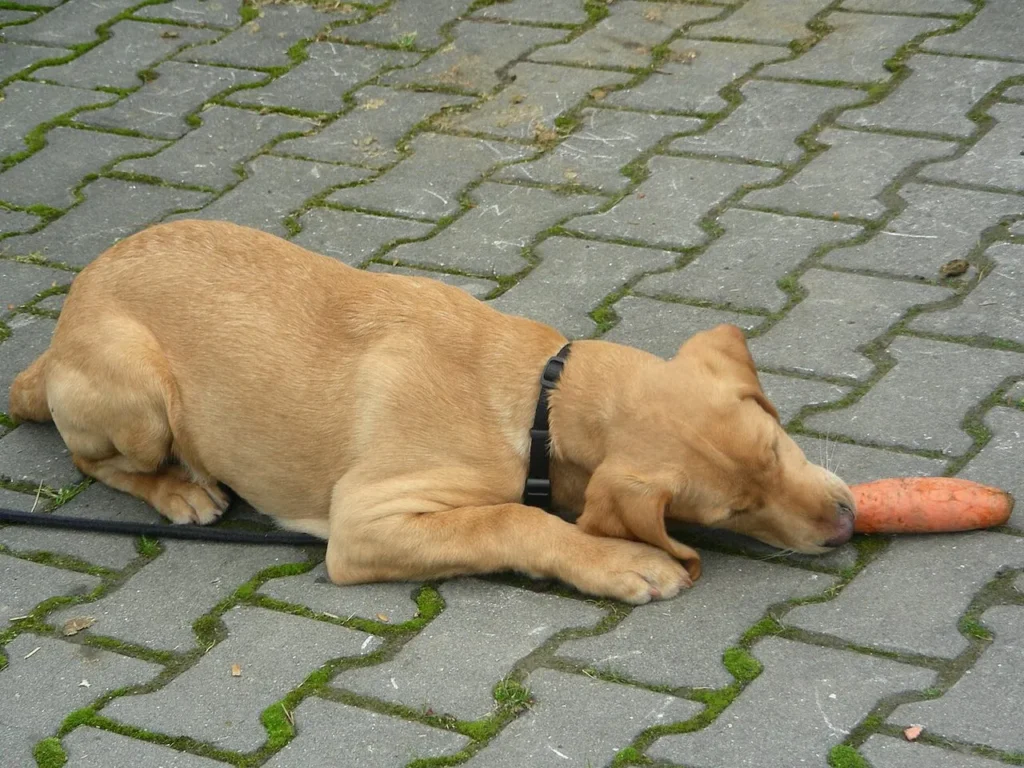
Quick answer: Yes, dogs can eat carrots (gajar) and green peas (matar). Both are low-fat, fibre-rich vegetables that make healthy treats or additions to homemade dog food. Carrots can be given raw as a crunchy snack (cut to size) or boiled and mashed, which makes their beta-carotene easier to absorb. A chilled whole carrot can soothe a teething puppy under supervision. Never give gajar halwa, gajar ka achar, or carrots and peas cooked in curries with onion, garlic and masala.
In this article
- Why carrots are good for dogs
- Raw vs cooked carrots
- Carrots for teething puppies
- How many carrots can my dog have?
- How to prepare carrots for your dog
- Can dogs eat peas (matar)?
- Indian carrot and pea dishes to avoid
- Other vegetables dogs can and cannot eat (India guide)
- Risks of carrots
- Can cats eat carrots and peas?
- Frequently asked questions
- Related Articles
- References
- Cut raw carrots into thin slices or sticks to prevent choking and blockage.
- Cooked carrots release more beta-carotene than raw.
- Peas are safe as a treat, but dogs with urate bladder stones (common in Dalmatians) should avoid them.
- Gajar halwa contains ghee, sugar, khoya and often raisins, which can cause pancreatitis and kidney failure.
Why carrots are good for dogs
- Beta-carotene: carrots are one of the richest sources. Dogs convert beta-carotene into vitamin A, needed for night vision, the health of the retina and cornea, skin and coat, and normal immune function.
- Low calorie and fat-free: roughly 40 kcal per 100 g raw. A medium carrot (about 60 g) has around 25 kcal, compared with 30 to 50 kcal in a single medium dog biscuit.
- Fibre: both soluble and insoluble fibre (about 2.8 g per 100 g), supporting stool quality and healthy gut bacteria.
- Potassium, vitamin K1 and antioxidants such as lutein.
- Chewing satisfaction: the crunch of raw carrot gives dogs something to chew without many calories, though carrots do not replace brushing for dental care.
Raw vs cooked carrots
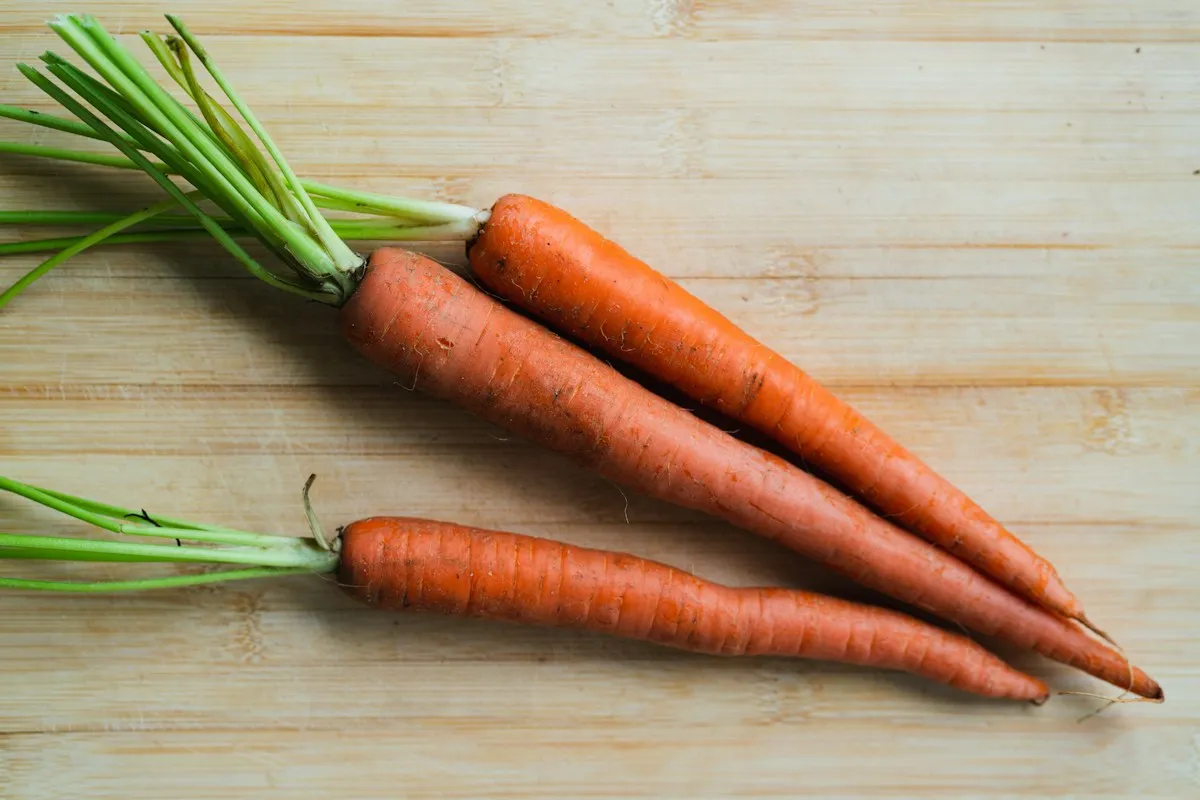
| Raw carrot | Boiled or steamed carrot | |
|---|---|---|
| Texture | Crunchy, good for chewing and training rewards | Soft, easy to mash into food |
| Nutrient absorption | Beta-carotene locked in tough plant cell walls; much passes through undigested (you may see orange bits in stool) | Cooking breaks cell walls, so more beta-carotene is absorbed |
| Best for | Healthy adult dogs, weight-loss treats, chewing enrichment | Puppies, senior dogs, dogs with dental problems, homemade meals, sensitive stomachs |
| Risk | Choking or blockage if pieces are too big | Low; avoid adding salt, butter, ghee or spices |
Carrots for teething puppies
Puppies teethe between roughly 3 and 6 months of age, and chewing on something cold soothes sore gums. A large, whole carrot chilled in the fridge (not rock-hard from the freezer) can be offered under supervision:
- Choose a carrot thicker than your puppy’s mouth can swallow.
- Stay with your puppy and take it away once it becomes small enough to swallow whole or when pieces break off.
- Avoid hard-frozen carrots; they can chip teeth and the broken chunks are a choking risk.
- Limit to one carrot a day to avoid loose stools.
How many carrots can my dog have?
Keep all treats under 10 percent of daily calories. These are daily guidelines for raw carrot slices about 5 mm (quarter-inch) thick:
| Dog size | Examples | Daily amount |
|---|---|---|
| Toy (up to 5 kg) | Chihuahua, Pomeranian | 2 to 3 thin slices |
| Small (5 to 10 kg) | Shih Tzu, Pug, Lhasa Apso | 3 to 5 slices |
| Medium (10 to 20 kg) | Beagle, Indie, Cocker Spaniel | 6 to 8 slices (about half a medium carrot) |
| Large (20 to 35 kg) | Labrador, German Shepherd, Golden Retriever | About 1 medium carrot |
| Giant (over 35 kg) | Rottweiler, Great Dane | 1 to 1.5 medium carrots |
For homemade dog food, vegetables such as carrots and peas usually make up around 10 to 25 percent of the meal by volume, with the rest being a protein source, a carbohydrate and a vet-recommended vitamin-mineral supplement. Homemade diets without a proper supplement are often deficient in calcium and other nutrients.
How to prepare carrots for your dog
- Wash well under running water and peel or scrub off dirt and pesticide residue.
- Trim off the green tops and the hard end.
- Raw: cut into thin round slices or matchstick-sized sticks. For toy breeds, grate the carrot.
- Cooked: boil or steam in plain water for 8 to 10 minutes until soft, then mash. No salt, ghee, butter, oil or spices.
- Cool completely before serving.
Can dogs eat peas (matar)?
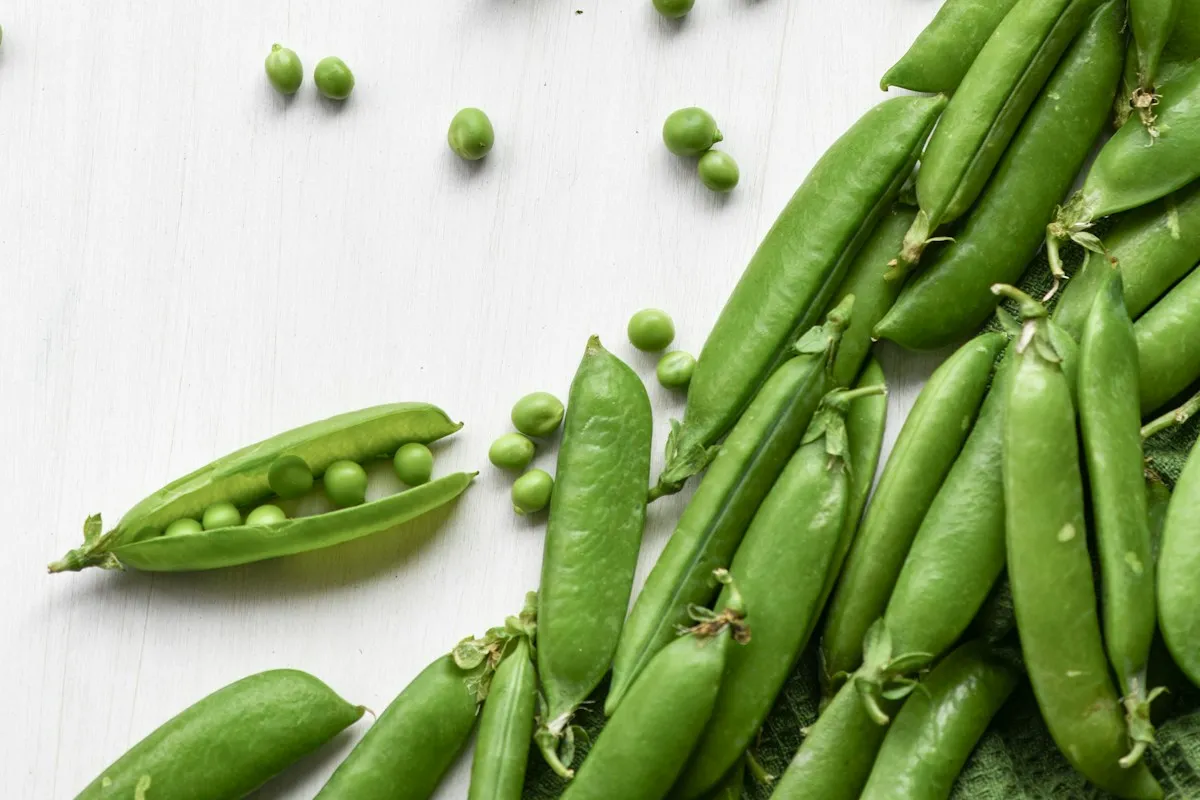
Yes. Fresh green peas, frozen peas (thawed) and plain boiled peas are safe. Snow peas and sugar snap peas, including the pods, are also fine in small amounts if cut up for small dogs. Peas provide plant protein, fibre, vitamins A, B and K, and minerals such as iron and potassium.
Peas: points to watch
- Purines: peas contain purines, which break down to uric acid. Dogs prone to urate bladder stones, such as Dalmatians and some Bulldogs, and dogs with liver shunts, should avoid peas.
- Kidney disease: peas add phosphorus and potassium; ask your vet first if your dog has kidney disease.
- Gas: large amounts cause flatulence and loose stools.
- Canned peas: usually salted; rinse well or avoid.
- Grain-free diets and heart disease: veterinary cardiologists have investigated a possible link between some commercial diets very high in peas, lentils and other pulses and a form of heart disease called dilated cardiomyopathy (DCM). Research is ongoing and no single ingredient has been proven to cause it. A spoonful of peas as a treat is not the same as a diet based on pulses, but if you feed a grain-free kibble, discuss it with your vet.
How many peas?
About 1 teaspoon of peas for toy dogs, 1 tablespoon for small dogs, 2 tablespoons for medium dogs and 3 to 4 tablespoons for large dogs, a few times a week.
Indian carrot and pea dishes to avoid
| Dish | Why it is unsafe |
|---|---|
| Gajar halwa | Ghee and khoya (high fat can trigger pancreatitis), lots of sugar, and often raisins, which can cause kidney failure in dogs |
| Gajar matar sabzi, aloo matar, matar paneer | Onion, garlic, salt, chilli, oil and spices |
| Gajar ka achar / kanji | Very salty, mustard, chilli, sometimes garlic; fermented kanji may contain alcohol |
| Carrot cake, muffins | Sugar, butter, raisins, nutmeg, possibly xylitol in sugar-free recipes |
| Vegetable pulao, biryani, samosa filling | Onion, garlic, spices, oil |
| Carrot juice from shops | Often contains sugar, salt or masala; also high in natural sugar |
Other vegetables dogs can and cannot eat (India guide)
| Vegetable | Safe? | Notes |
|---|---|---|
| Pumpkin (kaddu) | Yes, cooked | Great for stools; see can dogs eat pumpkin |
| Bottle gourd (lauki), ridge gourd (turai), tinda | Yes, cooked plain | Never use a lauki that tastes bitter |
| Cucumber (kheera) | Yes | Peeled slices, great in summer |
| Sweet potato (shakarkandi) | Yes, cooked | Never raw |
| Green beans, French beans | Yes | Cooked plain or raw, chopped |
| Beetroot (chukandar) | Small amounts | Turns stool and urine red, which can mimic blood |
| Spinach (palak) | Small amounts | Contains oxalates; avoid in dogs with bladder stones or kidney disease |
| Cauliflower, cabbage, broccoli | Small amounts, cooked | Can cause gas |
| Potato (aloo) | Cooked only | Raw potato and green potatoes contain solanine; see our aloo guide |
| Onion, garlic, leeks, spring onion, chives | No | Damage red blood cells and cause anaemia, even in cooked or powdered form |
| Wild mushrooms | No | Some are deadly |
| Karela (bitter gourd) | Avoid | Very bitter and can upset the stomach; not useful for dogs |
Risks of carrots
- Choking and blockage: whole carrots or large chunks can lodge in the throat or intestines, especially in dogs that gulp.
- Stomach upset: introduce slowly; too much fibre causes gas and loose stools.
- Natural sugar: moderate; count carrots in the daily treat allowance for diabetic and overweight dogs.
- Orange-tinged stool: harmless, from undigested carrot pigment.
Can cats eat carrots and peas?
Cats can eat small amounts of plain cooked carrot and peas, and peas are a common ingredient in cat foods. Cats are obligate carnivores and gain little from vegetables, so treat them as an occasional extra. Raw carrot is too hard for most cats and can be a choking risk.
Frequently asked questions
Are carrots good for dogs’ teeth?
Chewing raw carrot provides a little mechanical cleaning, but it does not replace daily tooth brushing or professional dental care.
Can carrots cause diarrhoea in dogs?
Yes, if a dog eats too many at once or is not used to them. Start with a few slices.
Can dogs eat carrot tops (leaves)?
Carrot greens are not toxic, but they can irritate the stomach and are often sprayed with pesticides. It is simpler to remove them.
Can puppies eat peas and carrots?
Yes, in small, soft, mashed amounts once they are eating solid food. They should never replace a complete puppy diet.
My dog ate gajar halwa. What should I do?
Check whether it contained raisins (kishmish). If it did, call your vet immediately, as raisins can cause kidney failure. Even without raisins, watch for vomiting, belly pain and lethargy over the next 1 to 3 days, which can signal pancreatitis from the fat.
This article is for education and does not replace veterinary advice. Always check with your vet before adding new foods, especially for dogs with health conditions or on prescription diets.
Related Articles
- Can Dogs Eat Eggs (Anda)? Boiled vs Raw, Daily Limit for Puppies and the Summer Myth
- Can Dogs Eat Pumpkin (Kaddu) in India? Vet Dosage Chart for Loose Motion, Constipation and Anal Glands (Fresh Boiled Kaddu Prep)
- How to Read Pet Food Labels in India: Complete and Balanced, Dry Matter, Life Stage and Marketing Claims
- Can Dogs Eat Cucumber (Kheera) and Kakdi in Indian Summer? Best Zero-Fat Treat for Overweight Labradors and Pugs
References
- Arnold VL, Coates J. Can Dogs Eat Carrots? PetMD, updated 2025.
- National Research Council. Nutrient Requirements of Dogs and Cats. National Academies Press, 2006.
- Freeman LM, et al. Diet-associated dilated cardiomyopathy in dogs: what do we know? J Am Vet Med Assoc, 2018.
- USDA FoodData Central. Carrots, raw; Peas, green, raw.
More on Dog Food and Diet

Best Supplements for Dogs in India: Calcium for Puppies vs Glucosamine and Omega-3 for Joints vs Probiotics
Which dog supplements work: calcium risks in puppies, glucosamine and omega-3 for joints and skin, probiotics, and human supplements that poison dogs.
Homemade Diet Chart for Indie Puppies in India: Month by Month
Need a homemade diet chart for Indie puppies in India? Dr. Vaishnavi shares a month-by-month desi puppy nutrition plan, toxic foods &…