 Written and reviewed by Dr. Vaishnavi Karmawat, B.V.Sc. & A.H., Registered Veterinary Practitioner
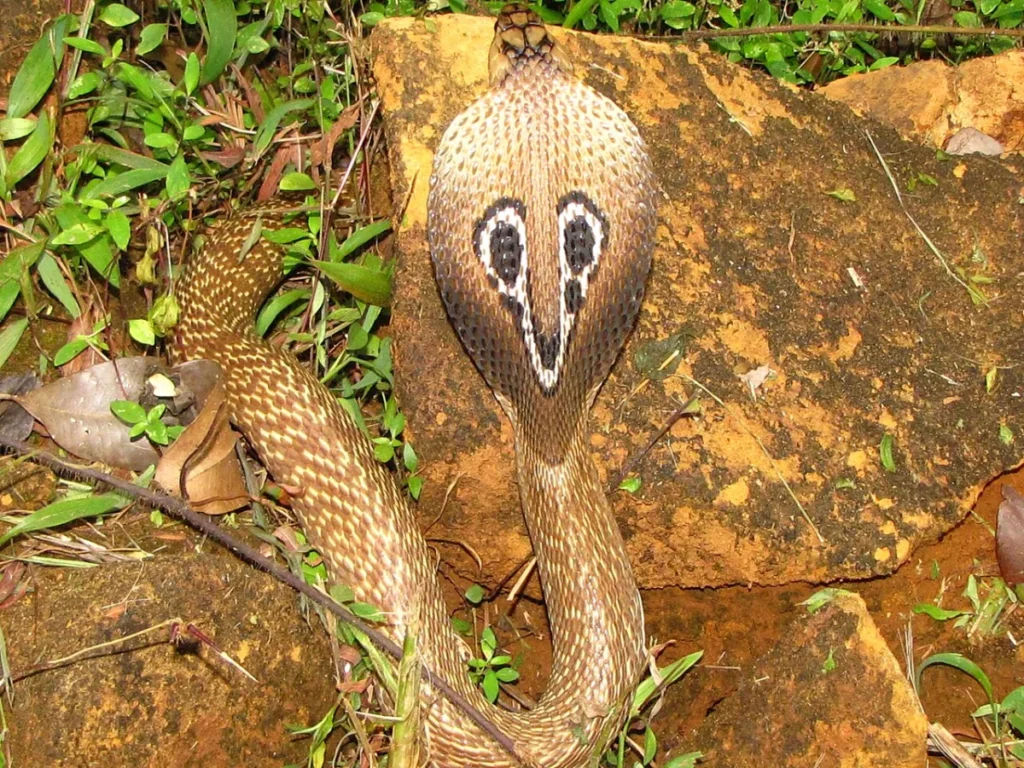
Quick answer: If a snake bites your dog or cat, keep the pet as still and calm as possible, carry it if you can, and go to the nearest vet immediately, even if the snake might be harmless. Do not cut the wound, suck it, apply a tight tourniquet, ice, chilli, herbs or go to a faith healer. In India, bites from the “Big Four” (spectacled cobra, common krait, Russell’s viper and saw-scaled viper) can kill a dog within hours. Antivenom and hospital care save most pets that arrive early.
In this article
- Note the time of the bite. Take a photo of the snake only if it is completely safe; never try to catch or kill it.
- Krait bites are often painless and happen at night, so a dog may simply be found weak or paralysed in the morning.
- Swelling, bleeding gums, drooping eyelids, drooling, wobbliness or difficulty breathing are emergency signs.
- Most snake bites in India happen in the monsoon and after the rains, when snakes are flooded out of burrows.
Why dogs and cats get bitten
Snakes bite dogs and cats in self-defence. Curious dogs sniff, paw at and chase snakes in gardens, fields, construction sites and drains, so most bites are on the face, muzzle, neck and front legs. Cats hunt small snakes and are often bitten on the paws or face. Bites are commonest from June to October, when rain floods burrows and rats (snake food) move into homes and sheds.
India’s dangerous snakes and what their bites do
| Snake | Venom type | What you may see in a pet |
|---|---|---|
| Spectacled cobra (nag) | Mainly neurotoxic (paralyses nerves), plus local tissue damage | Pain and swelling at the bite, drooling, drooping eyelids, wobbling, difficulty swallowing, weakness progressing to paralysis and breathing failure within hours |
| Common krait (kalaa karait) | Strongly neurotoxic | Often no visible bite or swelling; bites at night while the pet sleeps on the floor; belly pain and vomiting, drooping eyelids, weakness, paralysis and breathing failure, sometimes many hours later |
| Russell’s viper (daboia) | Haemotoxic (destroys clotting) and damages kidneys | Rapid, severe, painful swelling and bruising, bleeding from the bite, gums or nose, blood in urine, collapse, later kidney failure |
| Saw-scaled viper | Haemotoxic | Local swelling and pain, bleeding that does not stop, bruising, blood in urine or stool |
| Pit vipers (green pit viper, hump-nosed viper; hills and Western Ghats) | Mostly local tissue damage; some cause bleeding and kidney injury | Painful swelling, blistering, bleeding |
Many snakes around Indian homes are non-venomous, for example the rat snake (dhaman), wolf snake (often mistaken for a krait), checkered keelback and trinket snake. Their bites can still cause painful, infected wounds, and it is impossible to be sure of the species in a panic, so every bite needs a vet.
Signs your pet may have been bitten
- Sudden yelp followed by limping, pawing at the face or licking a leg
- One or two puncture marks (often hidden by fur or swelling; small snakes may leave no visible marks)
- Fast-spreading swelling of the face, neck or leg; bruising or blood oozing from the wound
- Drooling, vomiting, restlessness, pain
- Drooping upper eyelids, dilated pupils, difficulty swallowing, a weak bark or meow
- Wobbling, weakness, inability to stand, paralysis
- Bleeding from gums or nose, red or brown urine, black stool
- Pale gums, cold paws, fast weak pulse, collapse (shock)
- Slow, shallow or laboured breathing: an emergency
Signs can begin within minutes or be delayed for several hours, especially with kraits. A pet that seems fine after a suspected bite still needs to be observed in a clinic for at least 12 to 24 hours.
First aid: what to do
- Move your pet away from the snake without putting yourself at risk.
- Keep the pet still and calm. Movement spreads venom faster. Carry small dogs and cats; use a blanket or board as a stretcher for large dogs.
- Remove the collar or harness if the bite is on the face or neck, because swelling can block breathing.
- Keep the bitten leg still and roughly at or slightly below heart level. A loose splint is fine; a tight band is not.
- Note the time and, only if safe, take a photo of the snake from a distance.
- Call ahead to the nearest vet clinic so they can arrange anti-snake venom (ASV). Many vets get ASV from government hospitals or pharmacies; the earlier they know, the better.
- Drive straight there. Do not stop for home treatment.
What NOT to do
- Do not cut the bite, suck out venom or use a “snake bite kit”
- Do not tie a tight tourniquet; it can cause gangrene and makes viper bites worse
- Do not apply ice, chilli, turmeric, herbs, cow dung, kerosene or a hot iron
- Do not give milk, alcohol, painkillers such as aspirin or Combiflam, or any home medicine
- Do not take the pet to a faith healer or wait to “see what happens”
- Do not try to kill or catch the snake; call a local snake rescuer if it is still in the house
How vets treat snake bite
Assessment
- Full examination, blood pressure, breathing, the bite site and swelling marked and measured
- 20-minute whole blood clotting test (20WBCT): a little blood is left in a clean glass tube for 20 minutes; if it does not clot, a viper bite is very likely and antivenom is needed
- Blood count, platelets, clotting tests, kidney and liver values, urine for blood and muscle pigments
Anti-snake venom (ASV)
India’s polyvalent ASV, made for people, covers the Big Four and is used by vets in dogs and cats. It works best when given early, ideally within the first few hours, and doses depend on the severity of signs, not the pet’s size. Repeat doses may be needed if bleeding or paralysis continues. Reactions to ASV are possible, so it is given slowly under observation with emergency drugs ready.
Supportive care
- Intravenous fluids for shock and to protect the kidneys
- Pain relief (opioids, not NSAIDs)
- Oxygen; in severe cobra or krait bites, breathing support with a ventilator may be needed until paralysis wears off
- Neostigmine with atropine can help reverse paralysis from cobra bites in some cases
- Blood or plasma transfusion for severe bleeding
- Wound care, antibiotics if the wound becomes infected, and a tetanus-aware approach to dead tissue
- Monitoring for kidney failure for several days after viper bites
Hospital stays usually range from 1 to 3 days, longer for paralysis or kidney damage.
Recovery and prognosis
Most dogs and cats survive snake bites when they reach a vet quickly and receive antivenom when needed. Outlook is worse with large venom doses, bites to the tongue or neck, small pets, delays of many hours, and krait bites found late. After viper bites, the bite area may slough skin and need wound care for 1 to 3 weeks. Kidney values should be rechecked after a Russell’s viper bite.
Prevention
- Keep grass short and clear piles of bricks, wood, debris and garbage near the house; these attract rats and snakes.
- Control rats with safe traps; rats draw snakes indoors.
- Use a torch and a short lead on night walks, especially in the monsoon, near fields, drains and construction sites.
- Give pets a raised bed rather than letting them sleep on the floor in rural areas, and check under beds and in corners; kraits often bite sleeping animals and people at night.
- Seal gaps under doors and drain openings.
- Teach a strong “leave it” and recall.
- Save the numbers of your nearest 24-hour vet and a local snake rescuer.
Frequently asked questions
How long after a snake bite will a dog show symptoms?
Viper bites usually cause pain and swelling within minutes. Cobra signs often begin within 1 to 2 hours. Krait bites may cause no signs for several hours. Any suspected bite needs a vet visit and observation.
Can a dog survive a cobra or krait bite without treatment?
Some dogs survive “dry bites” where little venom is injected, but there is no way to know at home. Untreated neurotoxic bites often cause death from breathing failure.
Is human anti-snake venom safe for dogs?
Indian polyvalent ASV is widely used by vets in dogs and cats and is often life-saving. Allergic reactions are possible, so it must be given by a vet with monitoring.
My dog killed a snake and seems fine. Should I worry?
Yes. Dogs are often bitten while fighting a snake, and bites inside the mouth or on the face are easy to miss. See a vet and watch closely for 24 hours.
Can cats survive snake bites?
Cats often tolerate venom slightly better than dogs relative to size, but they still need urgent veterinary care, especially after krait and cobra bites.
This article is for education and does not replace emergency veterinary care. If a snake has bitten your pet, go to a vet immediately.
References
- PetMD Editorial (Mitchell SC). What To Do if a Snake Bites Your Dog. PetMD, 2023.
- Ministry of Health and Family Welfare, Government of India. Standard Treatment Guidelines: Management of Snake Bite.
- Whitaker R, Captain A. Snakes of India: The Field Guide. Draco Books.
- Merck Veterinary Manual. Snakebite in animals.
More on Dog Poisoning and Emergencies
Dog or Cat Ate Rat Poison? Bromadiolone Cakes, Zinc Phosphide and Phosphorus Paste: Symptoms, What To Do Now and Treatment in India
Dog ate rat poison? Which Indian rat poisons are most dangerous, first steps, why vomiting must be induced fast, vitamin K treatment…

Pyometra in Dogs and Cats: Early Signs After Heat, Open vs Closed Pyometra, Surgery Cost in India and Why Heat-Stopping Injections Are Risky
Unspayed dog drinking more, off food or with discharge after heat? Pyometra signs, why it is an emergency, surgery cost in India…