 Written and reviewed by Dr. Vaishnavi Karmawat, B.V.Sc. & A.H., Registered Veterinary Practitioner
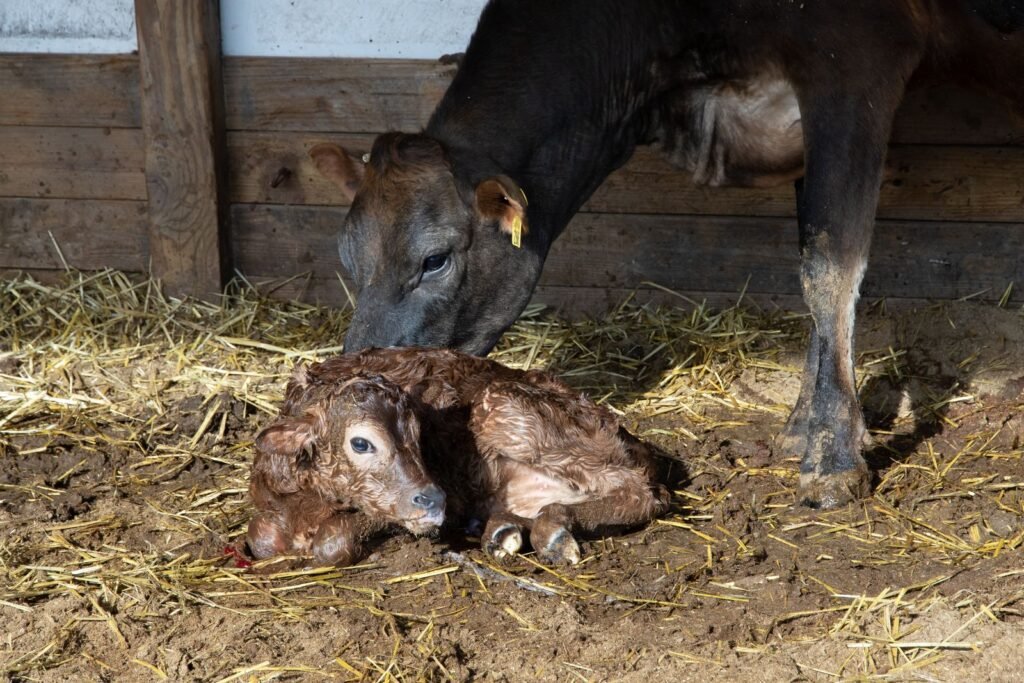
In many Indian dairy villages, 20 to 30% of buffalo calves die before 3 months of age, and male calves are lost even more often because they are neglected. Most of these deaths come from three problems: no colostrum in time, navel infection (naval ill), and roundworms passed through the mother’s milk. This standard operating procedure (SOP) is built on a simple framework: the Golden 2 Hours, the First 10 Days, and the First 90 Days.
In this article
The Golden 2 Hours
1. Colostrum: 10% of body weight within 2 hours
A calf is born with almost no immunity. It gets its protection (passive immunity transfer) only from colostrum, the first thick milk, and the gut can absorb these antibodies well only in the first few hours.
- Feed colostrum equal to about 10% of the calf’s body weight within 2 hours of birth. For a 30 kg buffalo calf, that is about 3 litres, split into 2 feeds in the first 6 to 12 hours if needed.
- If the calf cannot suckle, milk the mother and feed by bottle.
- Do not wait for the placenta to drop before feeding colostrum. This old belief kills many calves.
- Continue colostrum or mother’s milk for the first 3 to 4 days.
2. Navel care: umbilical cord tincture iodine dip
The wet navel cord is an open door for bacteria. Navel infection causes swollen navel, joint swelling and death.
- Cut the cord about 2 to 3 inches from the belly with a clean blade if it has not broken naturally.
- Dip the whole cord in tincture iodine (7%) immediately, and repeat daily until it dries and falls off, usually within a week.
- Keep the calf on clean, dry bedding.
3. Clear breathing and warmth: wipe mucus from the nose and mouth, let the mother lick the calf, and keep it out of cold wind.
The First 10 Days
Why buffalo calves need deworming at 10 to 14 days
Buffalo calves have a special problem: Toxocara vitulorum, a large roundworm. Larvae lie dormant in the mother’s tissues and pass to the calf through her milk (trans-mammary infection). Within 2 to 3 weeks, the calf’s gut fills with worms, causing pot belly, foul-smelling clay-coloured diarrhoea, weakness and death. It is one of the biggest killers of buffalo calves in India.
- Give piperazine citrate (or another vet-recommended dewormer) at 10 to 14 days of age (the Day-10 dose), dosed by the calf’s weight.
- Repeat at 1 month, then every month until 6 months.
Watch for calf scours (diarrhoea)
Calf scours from E. coli (white scours, first week) and rotavirus are the second big killer.
- Keep feeding milk in smaller, more frequent amounts. Do not stop milk completely.
- Give oral electrolytes (ORS for calves) 2 to 4 litres a day between milk feeds.
- Call your vet if the calf is weak, cannot stand, has cold mouth and legs, or has blood in stool.
Milk feeding: about 10% of body weight per day in milk (3 litres for a 30 kg calf), in 2 to 3 feeds, from a clean bucket or bottle.
The First 90 Days
| Age | Task |
|---|---|
| Week 2 | Offer calf starter ration and clean water |
| Week 2 to 3 | Disbudding (dehorning) with a hot iron, under vet guidance, if planned |
| 1 month | Second deworming; introduce tender green fodder |
| 1 to 3 months | Monthly deworming; iron and vitamin A supplementation if anaemic |
| 2 to 3 months | Gradually reduce milk as starter intake rises |
| 3 months | Wean slowly when the calf eats 1 kg of starter a day |
| 4 to 6 months | Vaccinations as per government schedule (FMD, HS, brucellosis for female calves at 4 to 8 months) |
Calf starter ration: a calf starter with about 20% digestible crude protein (DCP) should be offered from the second week. A simple home mix is crushed maize, groundnut cake, wheat bran, mineral mixture and salt. Starter builds the rumen and makes weaning easier.
Iron and vitamin A supplementation: calves on milk alone can become anaemic. Your vet may give iron and vitamin A, D and E supplements, especially in winter when green fodder is short.
Weaning stress: wean gradually over 2 to 3 weeks, not suddenly. Keep the calf near other calves and keep feed constant.
Do not neglect male calves
Male calves die more often because they get less milk. A well-reared male calf can be sold for breeding or work. At minimum, give every calf colostrum, navel care and deworming.
🩺 Dr. Vaishnavi’s Clinical Picks (Available on Amazon India)
Useful tools for farmers working on this. For a sick animal, call your vet first.
Bottle-feed colostrum and milk to weak calves and kids
Check temperature at home before calling the vet
As an Amazon Associate, I earn from qualifying purchases. This costs you nothing extra.
Frequently asked questions
Why do buffalo calves die in the first month?
Mostly from lack of colostrum, navel infection, roundworms (Toxocara vitulorum) from the mother’s milk, and diarrhoea.
When should I deworm a buffalo calf?
At 10 to 14 days of age, then monthly until 6 months.
How much milk should a buffalo calf drink?
About 10% of its body weight per day, in 2 to 3 feeds.
Should I give colostrum before the placenta drops?
Yes. Feed colostrum within 2 hours of birth, without waiting for the placenta.
Losing calves on your farm? Contact Dr. Vaishnavi Karmawat for a calf health plan.
Related Articles
- FMD in Cows and Buffaloes: Symptoms, Treatment, and Free Vaccine
- How To Increase Fat and SNF in Cow and Buffalo Milk Naturally
- Heat Stroke in Broiler Chickens: How To Prevent Summer Deaths
References
- Merck Veterinary Manual. Diarrhea in Neonatal Ruminants.
- Godden S. Colostrum management for dairy calves. Veterinary Clinics of North America: Food Animal Practice. 2008;24(1):19-39.
- Radostits OM, et al. Veterinary Medicine: A Textbook of the Diseases of Cattle, Horses, Sheep, Pigs and Goats, 10th ed. Saunders; 2007.
More on Cows and Buffaloes
Cows Eating Plastic: Symptoms, Treatment, and Prevention
Cows often swallow plastic and festival waste. Learn the signs of plastic in the stomach, how vets treat it and how to…
Repeat Breeding in Crossbred Cows: 7 Causes and Vet Treatment
Cow not conceiving after 3 AI cycles? Understand repeat breeding in crossbred cows causes and treatment in India, from subclinical endometritis to…