 Written and reviewed by Dr. Vaishnavi Karmawat, B.V.Sc. & A.H., Registered Veterinary Practitioner
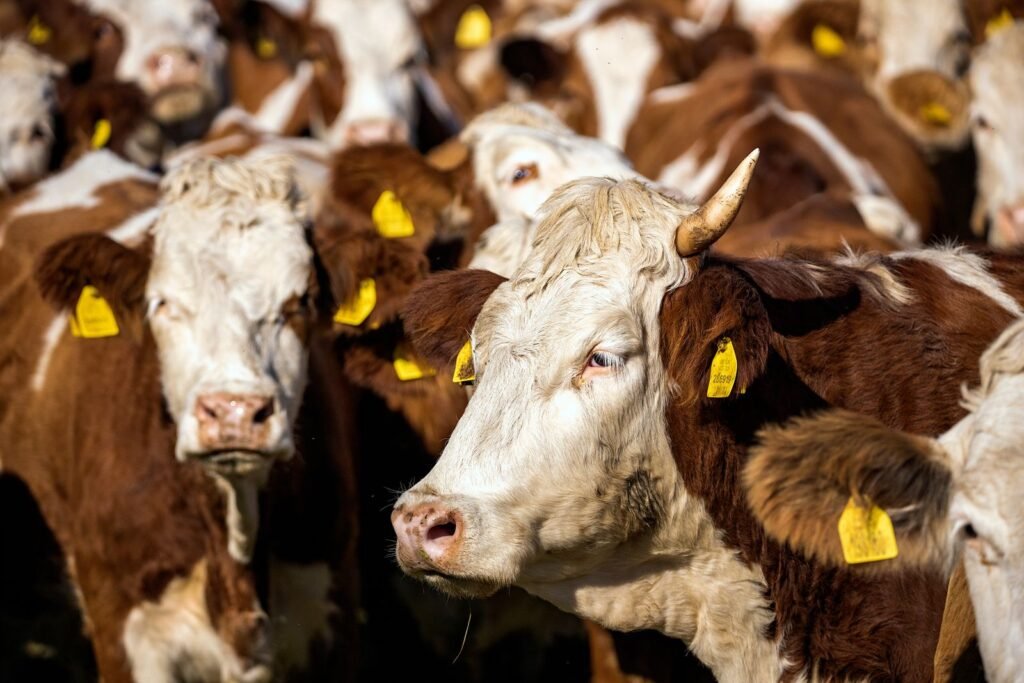
If you keep cattle or buffaloes, you may have seen vaccinators fixing yellow tags with long numbers in animals' ears. This is part of India's national livestock database under the National Digital Livestock Mission, called Bharat Pashudhan. The 12-digit tag number is often called Pashu Aadhaar. This guide explains what it is, how to get your animals registered and why it matters for you.
In this article
- What is Pashu Aadhaar?
- Why it matters for farmers
- How to get your animals tagged and registered
- How the system works: Bharat Pashudhan and the 1962 app
- What gets recorded against the tag
- How to check your animal’s records on the 1962 app
- Newborn calves: the temporary ID
- Looking after the tag
- Buying or selling an animal: transfer the ownership
- Ear tag wound care: a vet’s guide
- Common problems and what to do
- Frequently asked questions
Key Takeaways
- Pashu Aadhaar is a free, 12-digit bar-coded ear tag that gives each animal a permanent digital identity in the national Bharat Pashudhan database.
- Tagging is done by your government vet hospital, vaccinator or MAITRI worker, and every entry is confirmed by an OTP on the owner’s mobile.
- Vaccination, AI, pregnancy checks, treatment and ownership changes are all recorded against the tag.
- Farmers can view their animals’ records on the free 1962 Livestock Owner App, which replaced the old e-Gopala app.
- Newborn calves get a temporary ID that must be converted to a permanent tag within about 90 days.
- Report a lost tag, sale or death to your vet hospital so the record stays correct.
What is Pashu Aadhaar?
Each animal is given a unique 12-digit ear tag ID. The tag is linked to:
- The owner, registered with Aadhaar and a mobile number
- The animal's species, breed, sex and age
- Its vaccinations, deworming, artificial insemination, pregnancy checks, calvings and treatments
The ID works like a health and identity card for the animal. Newborn calves can be given a temporary ID that is later converted to a permanent 12-digit tag.
Why it matters for farmers
- Free vaccination records: campaigns such as foot-and-mouth disease vaccination are recorded against the tag. See our guide to free livestock vaccination.
- Insurance: most livestock insurance, including Rajasthan's Mangla Pashu Bima Yojana, requires tagged animals, and claims usually need the tag to match the policy
- Scheme benefits: many government benefits and compensation schemes require registered animals
- Breeding records: artificial insemination and calving records help track productive animals
- Buying and selling: a tagged animal with records can fetch a better price and is easier to trace
- Disease control: traceability helps contain outbreaks faster
How to get your animals tagged and registered
- Contact your nearest government veterinary hospital or dispensary, or the vaccinator or MAITRI (AI technician) who visits your village.
- Keep your Aadhaar and mobile phone ready. The field worker registers you as the owner and confirms with an OTP sent to your mobile.
- The worker fixes the ear tag, records the animal's details and uploads a photo.
- Keep a note of each animal's tag number along with your vaccination card and insurance papers.
Tagging is usually done during vaccination campaigns. Ask your veterinary hospital whether there is any charge in your state.
How the system works: Bharat Pashudhan and the 1962 app
Pashu Aadhaar is one part of the National Digital Livestock Mission (NDLM), run by the Department of Animal Husbandry and Dairying with the National Dairy Development Board (NDDB). It grew out of NDDB’s older INAPH system and now runs on a single national platform called Bharat Pashudhan.
There are two apps, and it helps to know which one is yours:
- Bharat Pashudhan app: used by field staff (veterinarians, vaccinators, AI technicians). They log in with a government user ID and record tagging, vaccination, breeding and treatment.
- 1962 Livestock Owner App: used by farmers. It is free on the Google Play Store. You log in with the mobile number registered as the animal’s owner and can see your animals and their records. It replaced the earlier e-Gopala app, and older records were moved to the new database.
The scale is large. In a Lok Sabha reply in December 2025, the government reported that about 9.5 crore livestock owners were registered and 35.96 crore animals had been issued Pashu Aadhaar. Most cattle and buffaloes are already tagged, so if yours are not, ask at the next vaccination drive.
What gets recorded against the tag
| Record | Who enters it | Why it helps you |
|---|---|---|
| Owner and animal registration (species, breed, sex, age, photo) | Vaccinator, vet or AI worker | Proof of ownership; needed for many schemes and insurance |
| Vaccination (FMD, brucellosis, LSD, HS-BQ and others) | Vaccination team | Shows the animal is protected; useful at sale and in outbreaks |
| Deworming and treatment (e-prescription) | Veterinarian | Treatment history travels with the animal |
| Artificial insemination, pregnancy diagnosis, calving | AI technician or vet | Breeding history, expected calving date, calf parentage |
| Milk recording and ration balancing (selected areas) | Trained field staff | Helps judge the animal’s true production and feed needs |
| Ownership transfer, tag change, death | Field staff after you inform them | Keeps the record clean so benefits go to the right owner |
How to check your animal’s records on the 1962 app
- Install 1962 (Livestock Owner App of the Department of Animal Husbandry and Dairying) from the Google Play Store. Check the publisher name to avoid look-alike apps.
- Register with the same mobile number the vaccinator used when tagging your animals and enter the OTP.
- Open the animal list. Each animal appears with its 12-digit tag number.
- Tap an animal to see vaccination, breeding and treatment entries.
- If an animal is missing or details are wrong, note the tag number and contact your veterinary hospital or the vaccinator. Farmers cannot edit records themselves; corrections are made by field staff.
You can also check a tag number on the Bharat Pashudhan web portal (bharatpashudhan.ndlm.co.in). Calling the toll-free number 1962 connects you to Mobile Veterinary Units for doorstep services.
Newborn calves: the temporary ID
Very young calves have small, soft ears and are not tagged immediately. When the calving is recorded, the calf is given an 11-digit virtual ID so that its early vaccinations and records can still be entered. Within about 90 days, this is converted to a permanent 12-digit ear tag through a tag change entry, and the history moves to the new tag for life. Ask for the permanent tag at the calf’s first vaccination visit so this step is not forgotten.
Looking after the tag
- Do not remove or cut tags. A missing tag can cause problems with insurance claims and scheme benefits.
- If a tag falls off or breaks, inform your veterinary hospital so a replacement can be linked to the same animal record.
- When you sell or buy an animal, ask the veterinary hospital to update the ownership record.
- Check that your mobile number is correct so you receive messages about vaccination and services.
🩺 Dr. Vaishnavi’s Clinical Picks (Available on Amazon India)
For fixing ear tags quickly and safely.
Fits most ear tags used for identification and insurance
As an Amazon Associate, I earn from qualifying purchases. This costs you nothing extra.
Buying or selling an animal: transfer the ownership
When an animal changes hands, the tag stays the same but the owner must be changed in the database. If this is not done, vaccination messages, scheme benefits and insurance claims may stay linked to the old owner.
- Buyer: before paying, ask for the tag number and check it matches the animal. A tagged animal with recent FMD and brucellosis vaccination entries is a safer purchase.
- Seller: inform the vet hospital or vaccinator after the sale. The transfer is confirmed through an OTP with the new owner.
- Insurance: livestock insurance policies usually record the ear tag number. If the owner changes, the policy also needs updating, or a claim can be rejected.
- Death: report the death so the record is closed. For insurance claims the tag is normally needed as proof, so do not throw it away.
Ear tag wound care: a vet’s guide
Most tag wounds heal within 2 to 3 weeks. Problems usually come from poor placement or fly strike in hot, humid months.
- Correct position: the tag should sit in the middle third of the ear, between the two main cartilage ridges, away from the large visible veins. Tags too close to the head or the ear tip tear out easily.
- Watch the first 2 weeks: mild swelling for 2 to 3 days is normal. Increasing swelling, pus, a bad smell or the animal holding its ear down suggests infection.
- Clean simply: if the area looks dirty, wipe it once a day with dilute povidone-iodine (light brown colour). Do not apply engine oil, kerosene, turmeric paste or chilli; these irritate the wound and attract flies.
- Fly control: in monsoon, check the tag hole for maggots (myiasis). Maggot wounds need prompt veterinary treatment.
- Torn ear: if a tag rips out, let the ear heal and ask for a replacement tag in a new spot. The new tag is linked to the same animal record.
Common problems and what to do
| Problem | What to do |
|---|---|
| Animal was never tagged | Ask at the next vaccination drive or visit the nearest government vet hospital with your Aadhaar and mobile. |
| Tag fell off or is unreadable | Report it; the vet team issues a new tag and links it to the old record. |
| Wrong mobile number linked | Ask field staff to update owner details; you will need an OTP on the correct number. |
| Vaccination done but not showing in the app | Note the date and ask the vaccinator to upload it; entries can be delayed by network problems. |
| Bought an animal tagged to someone else | Get the ownership transferred through the vet hospital as soon as possible. |
| Ear swollen with pus after tagging | Visit a vet; wound treatment or antibiotics may be needed. |
Dr. Vaishnavi’s advice: When I talk to livestock owners, I ask them to treat the ear tag like the animal’s identity card. Check your animals’ tags whenever you vaccinate or deworm, save the 1962 app on your phone, and report a lost tag the same week. A correct record costs you nothing today and can save an insurance claim tomorrow.
Frequently asked questions
Is ear tagging painful for animals?
Tagging causes brief discomfort, similar to ear piercing. Trained workers use proper tools and the ear heals quickly.
My animal's ear tag fell off. What should I do?
Inform your veterinary hospital so they can replace the tag and link it to the same animal record. Keep the old tag number if you have it.
Do goats and sheep get Pashu Aadhaar too?
The national system started with cattle and buffaloes. Coverage of other species varies; ask your veterinary hospital about your area.
Do I need tagged animals for insurance?
Yes, in most schemes. Ear tags are usually required for both enrolment and claims.
Recommended reading
- Dr. Vaishnavi’s animal-care books are available on her Amazon author page.
- See all titles on the Books page.
Related Articles
References
- National Dairy Development Board. Information Network for Animal Productivity and Health (INAPH) and Bharat Pashudhan.
- Department of Animal Husbandry and Dairying, Government of India. Animal identification and registration (Pashu Aadhaar) under Rashtriya Gokul Mission.
- Lok Sabha, unstarred question reply on the National Digital Livestock Mission, December 2025 (Ministry of Fisheries, Animal Husbandry and Dairying).
- NDDB and DAHD. Bharat Pashudhan portal and 1962 Livestock Owner App (bharatpashudhan.ndlm.co.in).
More on Government Schemes
NLM Poultry Farming Subsidy: ₹25 Lakh for a 1,000-Bird Parent Unit
Planning a hatchery? Check the NLM poultry farming subsidy 25 lakh eligibility and project report for a 1,000-bird parent farm & mother…
AHIDF Scheme: 3% Interest Subvention for Dairy and Feed Plants
Scaling your dairy business? Learn how the AHIDF scheme gives 3% interest subvention and a credit guarantee for dairy processing and cattle…