 Written and reviewed by Dr. Vaishnavi Karmawat, B.V.Sc. & A.H., Registered Veterinary Practitioner
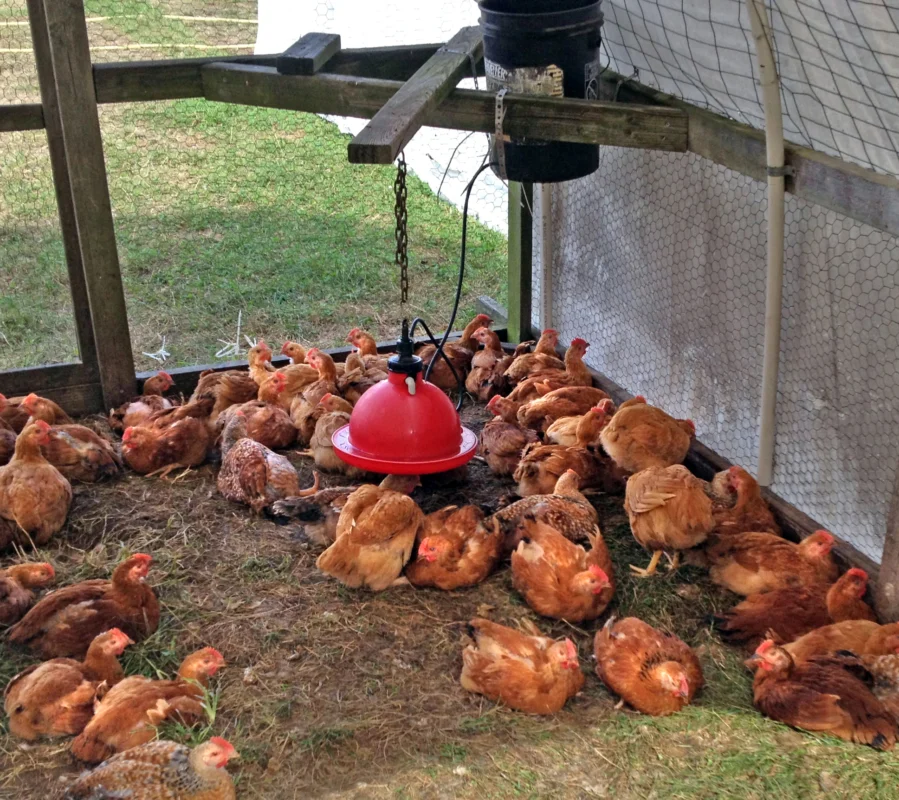
When winter fog sets in, many poultry farmers start hearing a “ghur-ghur” rattling sound (tracheal rales) in their sheds at night. Birds sneeze, have watery or swollen eyes and nasal discharge, eat less, and broilers stop gaining weight. The most common cause is Chronic Respiratory Disease (CRD), made worse by one big winter mistake: closing the shed completely.
In this article
The winter curtain mistake
To keep birds warm, farmers seal side curtains 100% shut. Within 24 to 48 hours, ammonia gas buildup in deep litter reaches harmful levels. Ammonia damages the lining of the windpipe and the tiny hairs that clear germs, and Mycoplasma and E. coli then take hold. This is why CRD outbreaks often start within 48 hours of sealing a shed.
Rule of thumb: if your eyes sting or you smell ammonia when you enter the shed at bird height, the birds are already being harmed.
The top-1-foot ventilation curtain rule
Hot, stale air and ammonia rise to the top of the shed. Leave a winter side-curtain ventilation gap at the top:
- Roll curtains up from the bottom so they cover the lower part of the side walls, where cold wind would hit the birds.
- Keep the top 1 foot of the curtain open (below the roof) along both sides, so stale air escapes above the birds.
- Open more during sunny afternoons; close a little more on very cold, windy nights, but never fully seal.
- In brooding, protect chicks with a chick guard and brooder heat rather than closing all ventilation.
Picture it like this: roof on top, then a 1-foot open strip, then the curtain covering the wall down to the floor.
What is causing the sound? Viral, bacterial or mycoplasmal
| Disease | Cause | Key signs | Spread | Response to antibiotics |
|---|---|---|---|---|
| CRD | Mycoplasma gallisepticum | Slow onset, rattling sound, foamy eyes, swollen face, slow growth, drop in eggs | Through eggs and from bird to bird | Yes, with tylosin, tiamulin and similar drugs |
| Complicated CRD | Mycoplasma plus E. coli co-infection | CRD signs plus higher deaths; post-mortem shows white cheesy layers on heart, liver and air sacs | Worse with ammonia and dust | Needs combined treatment and litter correction |
| Infectious Coryza | Avibacterium paragallinarum | Sudden swelling of the face and wattles, foul-smelling nasal discharge, eye closed | Fast, within days, between birds | Yes, with sulpha drugs or other antibiotics |
| Infectious Bronchitis | Virus | Rapid spread through the whole flock in 1 to 2 days, gasping, coughing; layers lay soft or misshapen eggs | Very fast, airborne | No; antibiotics only prevent secondary infection |
Because Ranikhet (Newcastle disease) and bird flu can also cause breathing problems, sudden high deaths, twisted necks or greenish diarrhoea need an urgent vet visit and laboratory test.
Treatment protocol (under veterinary guidance)
- Fix the air first: open the top curtain gap, remove wet litter, and stop ammonia. Medicines fail in an ammonia-filled shed.
- Antibiotics for CRD: tylosin tartrate or tiamulin in drinking water for 3 to 5 days are commonly used against Mycoplasma. For complicated CRD, your vet may add another antibiotic.
- Enrofloxacin withdrawal period: if enrofloxacin or other antibiotics are used, do not sell birds for meat or eggs for food until the withdrawal period on the label has passed.
- Eucalyptus and menthol expectorant spray: a respiratory spray or water additive with eucalyptus and menthol loosens mucus and reduces the rattling sound. Use at night when sounds are worst.
- Vitamins: add vitamin A and multivitamins to water for 5 days to help repair the airway lining.
Always ask your vet to choose the drug and dose; wrong or repeated antibiotic use breeds resistance.
Litter care: wet litter caking and lime powder treatment
- Rake the litter every 2 to 3 days to break up wet litter caking.
- Remove wet patches around drinkers immediately and replace with fresh dry rice husk or sawdust.
- Mix lime powder litter treatment (slaked lime, about 1 kg per 10 sq ft) into the litter to dry it and reduce ammonia.
- Fix leaking drinkers and do not overcrowd.
Prevention checklist for winter
- Buy chicks from Mycoplasma-free breeder flocks.
- Keep litter dry and ammonia low.
- Ventilate with the top-1-foot gap every day.
- Follow Ranikhet and Infectious Bronchitis vaccination schedules.
- Keep a single age group in one shed (all-in, all-out).
🩺 Dr. Vaishnavi’s Clinical Picks (Available on Amazon India)
Keeping birds warm and sheds clean helps prevent CRD.
Even, low-cost warmth for chicks and birds on cold nights
For spraying disinfectant in sheds
As an Amazon Associate, I earn from qualifying purchases. This costs you nothing extra.
Frequently asked questions
Why do my chickens make a rattling sound at night?
Usually CRD or another airway infection, often triggered by ammonia from a closed shed and wet litter.
What is the best medicine for CRD in poultry?
Tylosin and tiamulin are commonly used, but your vet should confirm the diagnosis and choose the drug.
Can CRD be cured completely?
Birds improve with treatment, but Mycoplasma often stays in the flock. Good ventilation and litter control prevent relapse.
Should I close all curtains in winter?
No. Keep the top 1 foot open for ventilation and cover the lower part of the walls to block cold wind.
Hearing ghur-ghur sounds in your shed? Contact Dr. Vaishnavi Karmawat for a flock check.
Related Articles
More on Poultry
Homemade Desi Poultry Feed Formula in India (100 kg Ration)
Cut poultry feed expenses by 30%! Use this vet-balanced low cost desi poultry feed formulation at home in India with maize, soy…

Bird Flu (Avian Influenza) in Chickens: Signs and Prevention
Learn the signs of bird flu in chickens and ducks, what to do if birds start dying suddenly and simple biosecurity steps…