 Written and reviewed by Dr. Vaishnavi Karmawat, B.V.Sc. & A.H., Registered Veterinary Practitioner
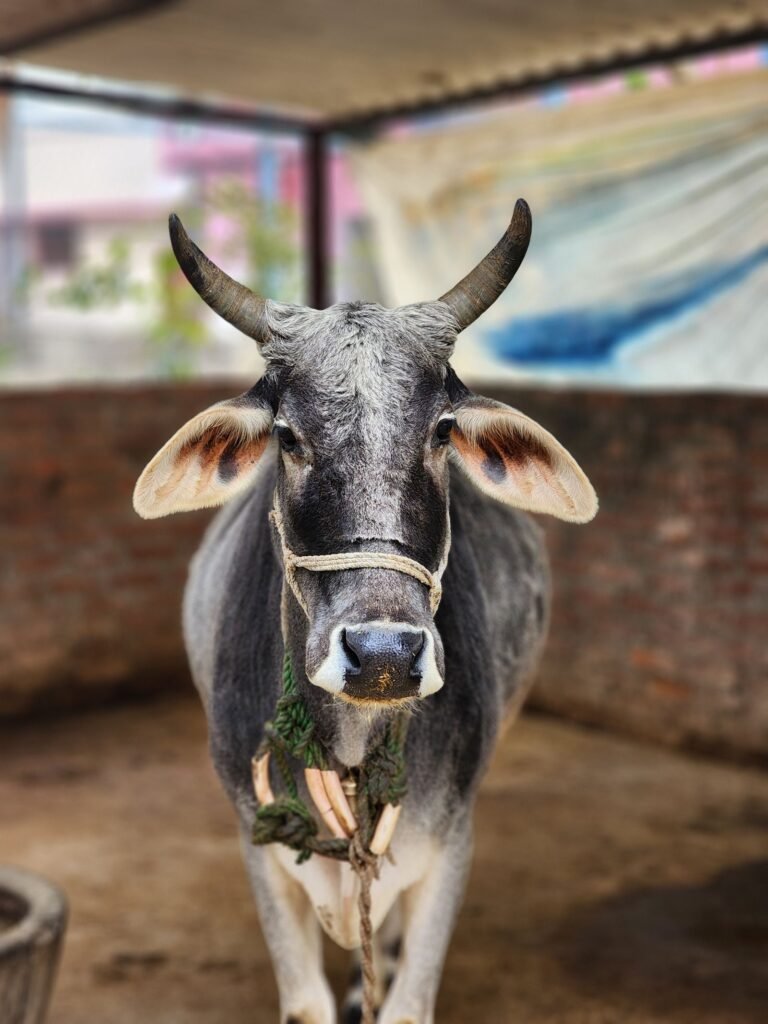
Dairy farming is the backbone of rural income in India, and several government schemes support it at every level, from a single farmer's breeding decisions to large milk and feed plants. This guide explains the Rashtriya Gokul Mission, the Animal Husbandry Infrastructure Development Fund (AHIDF) and how they connect with credit schemes such as the Kisan Credit Card.
In this article
- Rashtriya Gokul Mission
- What changed in the revised Rashtriya Gokul Mission
- Animal Husbandry Infrastructure Development Fund (AHIDF)
- Credit for everyday dairy costs
- Protection and health schemes
- Getting more milk from support schemes
- Which scheme fits your situation?
- How an application moves forward
- Where can you get help?
Key Takeaways
- The Rashtriya Gokul Mission helps individual farmers mainly through free or low-cost AI, sex-sorted semen at up to 50% of its cost, and IVF support.
- The revised mission (approved March 2025) added 3% interest subvention on loans to buy high-genetic-merit IVF heifers and support for heifer rearing centres.
- AHIDF gives 3% interest subvention for up to 8 years on loans for processing, chilling, feed and breeding infrastructure; it suits entrepreneurs, companies, FPOs and cooperatives.
- For day-to-day costs, a Kisan Credit Card for animal husbandry is usually the cheapest credit available to a dairy farmer.
- Choose the scheme by the size of your project, and prepare a realistic project report and healthy animals before you go to the bank.
Scheme details change. Confirm current terms with your veterinary officer, bank or the official websites before applying.
Rashtriya Gokul Mission
The Rashtriya Gokul Mission (RGM) aims to develop and conserve indigenous cattle and buffalo breeds such as Sahiwal, Gir, Tharparkar, Rathi and Murrah, and to raise milk production.
What farmers get
- Artificial insemination (AI) at the doorstep: the mission expands AI services through trained technicians (including MAITRIs, multipurpose AI technicians in rural India) so farmers can get quality semen without travelling
- Sex-sorted semen: semen sorted to give about a 90 percent chance of a female calf. Farmers can get support of up to 50 percent of its cost, helping them grow their herd with heifers instead of male calves.
- IVF (in vitro fertilisation) pregnancies: support of Rs 5,000 per IVF pregnancy to multiply high-yielding animals faster
- Breed improvement of indigenous cattle through progeny testing and high-quality bulls
What changed in the revised Rashtriya Gokul Mission
In March 2025 the Union Cabinet approved a revised Rashtriya Gokul Mission with a total outlay of ₹3,400 crore for 2021-22 to 2025-26, and the department has issued approval to continue it into 2026-27. Two new activities were added:
- Heifer rearing centres: one-time assistance of 35% of the capital cost to implementing agencies (such as milk unions) for 30 centres that together house about 15,000 heifers. Farmers can buy good heifers from these centres.
- Interest subvention for IVF heifers: farmers who take a loan from a milk union, bank or financial institution to buy high-genetic-merit heifers produced through IVF get 3% interest subvention.
Ongoing work continues: semen stations, the artificial insemination network, bull production, accelerated breed improvement with sex-sorted semen, and conservation of indigenous breeds.
Getting value from sex-sorted semen: a vet’s advice
- Use it on the right animals: healthy heifers and young cows with regular heats and no history of repeat breeding give the best results.
- Expect slightly lower conception than with conventional semen, so timing matters even more. Inseminate in the second half of standing heat, ideally with the help of a trained technician.
- Body condition: animals that are too thin or too fat conceive poorly. Correct mineral and protein deficiencies before the first insemination.
- Plan for the heifers: extra female calves need colostrum, deworming and good feeding, or the benefit is lost. Calf deaths in the first 3 months wipe out the gain.
- Record every insemination against the animal’s Pashu Aadhaar tag so the AI technician can follow up with a pregnancy check after about 2 to 3 months.
For entrepreneurs
- Breed multiplication farms: a capital subsidy of up to 50 percent, up to Rs 2 crore (1 crore = 10 million rupees), for setting up farms that produce high-quality heifers of indigenous breeds
Ask your local veterinary hospital or AI centre about sex-sorted semen and AI services in your village. Read our guide on heat detection and AI timing to make the most of each insemination.
Animal Husbandry Infrastructure Development Fund (AHIDF)
AHIDF supports larger investments in the dairy and livestock value chain.
Eligible activities
- Dairy processing and value-added products (milk plants, cheese, ghee (clarified butter), ice cream)
- Meat processing
- Animal feed and total mixed ration plants
- Breed improvement farms, IVF centres and sex-sorted semen facilities
- Veterinary vaccine and medicine production
- Animal waste-to-wealth projects
Who can apply
Individual entrepreneurs, private companies, MSMEs, farmer producer organisations, Section 8 companies and dairy cooperatives.
Benefits
- 3 percent interest subvention a year for up to 8 years, for borrowers who repay on time
- Loans for up to 90 percent of project cost for micro and small units (the borrower contributes 10 percent margin; higher for larger units)
- Repayment period of up to 10 years, including a moratorium of up to 2 years
- Credit guarantee support for eligible MSMEs and dairy cooperatives
Applications are made online through the Udyami Mitra portal and processed by banks.
Credit for everyday dairy costs
For feed, fodder and medicines, dairy farmers can use a Kisan Credit Card for animal husbandry. Since January 2025, loans of up to Rs 2 lakh (1 lakh = 100,000 rupees) can be given without collateral, and timely repayment brings the effective interest rate down to about 4 percent.
Protection and health schemes
- Free FMD and brucellosis vaccination under the National Animal Disease Control Programme. See our guide to free vaccination and the 1962 helpline.
- Livestock insurance under the National Livestock Mission and state schemes such as Rajasthan's Mangla Pashu Bima Yojana
Getting more milk from support schemes
Schemes work best on well-run farms. Combine them with good feeding, mineral mixture (a mineral supplement for livestock) and clean water. Read our guide on how to increase milk production.
Which scheme fits your situation?
| You are… | Start with | Why |
|---|---|---|
| A small farmer with 1 to 5 animals | AI and sex-sorted semen through RGM; Kisan Credit Card; free vaccination; livestock insurance | Improves your herd and cash flow without a large loan |
| Expanding to a commercial dairy of 10 to 50 animals | Bank term loan with a proper project report; RGM interest subvention if buying IVF heifers; state dairy schemes | Animals and sheds need term credit; check state top-ups |
| Planning a large indigenous breeding farm | RGM breed multiplication farm (capital subsidy up to 50%, maximum ₹2 crore) | Designed for entrepreneurs producing quality heifers |
| Setting up chilling, processing, a feed plant or a semen lab | AHIDF | 3% interest subvention on large infrastructure loans |
| A cooperative or FPO | AHIDF and dairy development schemes through your milk union | Group projects get credit guarantee and union support |
How an application moves forward
- Prepare a detailed project report (DPR): realistic costs for animals, sheds, equipment and working capital; expected milk yield and price; repayment plan.
- Collect documents: Aadhaar, PAN, bank statements, land ownership or lease papers, quotations, and for companies, registration papers.
- Apply online where required (for example on the Udyami Mitra portal for AHIDF and RGM entrepreneurship schemes) and choose your bank.
- Bank appraisal: the bank checks the project, your contribution (margin money) and repayment capacity, and may visit the site.
- Sanction and disbursement: the loan is released in stages as the project is built.
- Subsidy or interest subvention is claimed through the bank after the project meets the scheme conditions.
Common reasons applications stall
- Project report copied from the internet with unrealistic milk yields or prices
- No margin money arranged
- Land papers not in the applicant’s name or not clear
- Applicant’s credit score is poor or there are old unpaid loans
- Animals bought before sanction, which some schemes do not allow
- No veterinary planning for health, breeding and feed
Where can you get help?
- Your local veterinary hospital or AI centre
- Your district animal husbandry office or dairy cooperative union
- Department of Animal Husbandry and Dairying: dahd.gov.in
- Your bank's agriculture or MSME branch for AHIDF and KCC
Recommended reading
- Dr. Vaishnavi’s animal-care books are available on her Amazon author page.
- See all titles on the Books page.
Dr. Vaishnavi’s advice: I advise farmers to choose schemes by the size of their plan, not by the size of the subsidy advertised. For most small dairies, good AI service, timely pregnancy checks, healthy calves and a Kisan Credit Card make more difference than any one-time grant.
🩺 Dr. Vaishnavi’s Clinical Picks (Available on Amazon India)
Helpful resources and equipment while you plan and set up your farm.
Practical guide for planning and running a dairy farm
Soft, non-slip flooring that protects knees and hooves
Hygienic milk storage and transport
As an Amazon Associate, I earn from qualifying purchases. This costs you nothing extra.
Related Articles
- AHIDF Scheme: 3% Interest Subvention for Dairy and Feed Plants
- Dairy Farm Bank Loan in India: Step-by-Step Guide and Documents
- Is the NABARD Dairy Subsidy (DEDS) Still Available?
- Kisan Credit Card for Dairy and Animal Husbandry: Limit and Interest
References
- Department of Animal Husbandry and Dairying, Government of India. Rashtriya Gokul Mission: scheme guidelines.
- Department of Animal Husbandry and Dairying, Government of India. Animal Husbandry Infrastructure Development Fund (AHIDF): operational guidelines.
- NABARD. Dairy Entrepreneurship Development Scheme (DEDS): operational guidelines.
More on Government Schemes
NLM Poultry Farming Subsidy: ₹25 Lakh for a 1,000-Bird Parent Unit
Planning a hatchery? Check the NLM poultry farming subsidy 25 lakh eligibility and project report for a 1,000-bird parent farm & mother…
AHIDF Scheme: 3% Interest Subvention for Dairy and Feed Plants
Scaling your dairy business? Learn how the AHIDF scheme gives 3% interest subvention and a credit guarantee for dairy processing and cattle…