 Written and reviewed by Dr. Vaishnavi Karmawat, B.V.Sc. & A.H., Registered Veterinary Practitioner
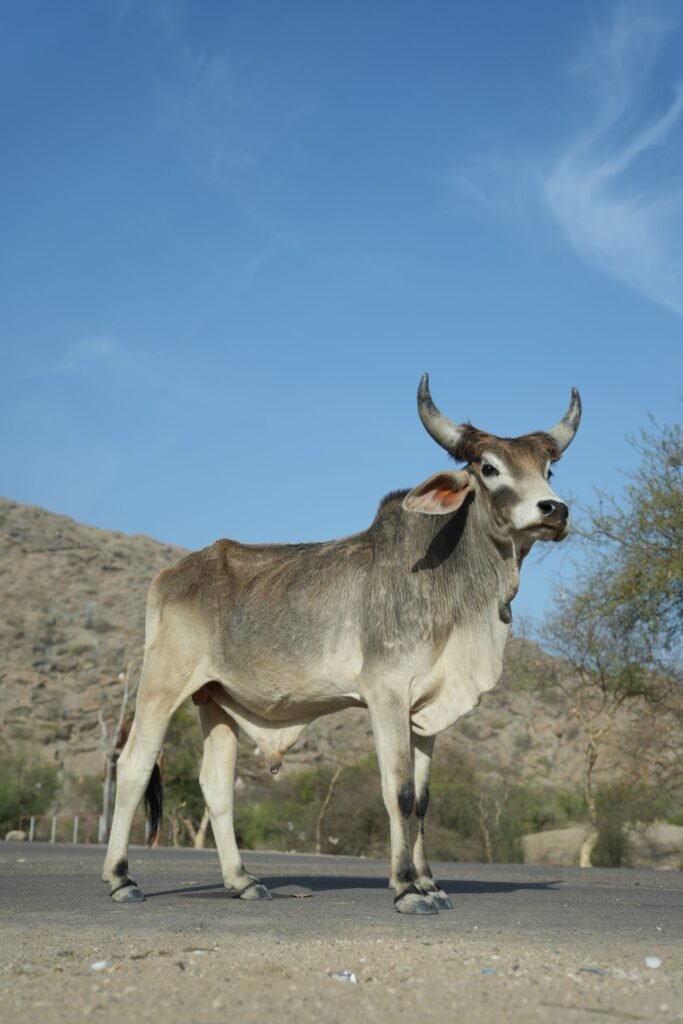
The death of a milch cow or buffalo can wipe out a small farmer's savings. The Mukhyamantri Mangla Pashu Bima Yojana is Rajasthan's free livestock insurance scheme, designed to protect livestock-rearing families from this loss. The family pays no premium. This guide explains which animals are covered, who can apply, how to register and how to claim.
In this article
- Which animals are covered?
- How much is each animal insured for?
- What kinds of death are covered?
- Who is eligible?
- Latest status of the scheme
- How do you apply?
- How to claim if an insured animal dies
- Tips to avoid claim problems
- The veterinarian’s role in a claim
- Common reasons claims are delayed or rejected
- Look after your animals too
- Mangla Pashu Bima or paid insurance?
- Where can you get help?
Key Takeaways
- Mangla Pashu Bima is Rajasthan’s free livestock insurance: the state pays the full premium and the family pays nothing.
- Cows and buffaloes are covered up to ₹40,000 each based on milk yield; goats and sheep up to ₹4,000 each; camels up to ₹40,000.
- Registering is not the same as being insured. Beneficiaries are chosen by lottery, and only animals with an issued policy are covered.
- Report any death at once (181, e-Mitra or the vet hospital) and keep the carcass and ear tag for inspection and post-mortem.
- The scheme’s cap is low for high-yielding animals, so consider separate paid insurance for valuable stock.
Registration windows, limits and rules can change each year. Always check the official portal (mmpby.rajasthan.gov.in) or your nearest veterinary hospital before applying.
Which animals are covered?
Each family can insure up to:
- 2 milch cows, or 2 milch buffaloes, or 1 cow and 1 buffalo
- 10 goats or 10 sheep
- 1 camel
How much is each animal insured for?
The insured value depends on the animal and, for cattle, on milk production:
| Animal | Age | Insured value |
|---|---|---|
| Milch cow | About 3 to 12 years | Up to Rs 40,000, based on daily milk |
| Milch buffalo | About 4 to 12 years | Up to Rs 40,000, based on daily milk |
| Female sheep or goat | About 1 to 6 years | Up to Rs 4,000 each |
| Camel | About 2 to 15 years | Up to Rs 40,000 |
What kinds of death are covered?
The policy pays when an insured animal dies during the policy year from natural or accidental causes. Typical covered events include:
- Disease (for example lumpy skin disease, haemorrhagic septicaemia, bloat or calving complications)
- Road accidents, falls and drowning
- Fire, lightning and floods
- Snakebite, insect bites and eating poisonous plants
Exclusions are listed in the policy document. In general, insurance schemes do not pay for animals that are sold, stolen or deliberately killed, for deaths outside the policy period, or where the ear tag cannot be matched with the policy. Read the policy SMS and document you receive.
Who is eligible?
- Residents of Rajasthan with a Jan Aadhaar card
- Families with annual income below Rs 8 lakh (1 lakh = 100,000 rupees)
- Animals must be ear-tagged and must not already be insured under another scheme
- Gopal Credit Card holders and Lakhpati Didis get preference
- Beneficiaries are selected by lottery from eligible applications, with reservations for SC and ST families
Latest status of the scheme
The scheme was announced in the Rajasthan budget for 2024-25 with a target of 21 lakh animals. A second phase began in December 2025, and the target for animals to be insured was raised to about 42 lakh. According to the state Animal Husbandry Department, as reported in early 2026, over 34 lakh animals had been registered, about 19.4 lakh policies issued, and more than 10,700 claims settled with payouts above ₹20 crore.
Two practical lessons follow. First, many registered animals do not get a policy, so check whether you received a policy SMS rather than assuming you are covered. Second, claims are being paid, but only when the paperwork is complete.
How do you apply?
Online
- Visit the official portal, mmpby.rajasthan.gov.in
- Choose the registration option and enter your Jan Aadhaar number
- Fill in your details and your animals' details, including ear tag numbers
- Upload the required documents and photos
- Submit the application; there is no fee
Offline
Visit your nearest e-Mitra centre or veterinary hospital and ask the operator to fill in the form.
Documents usually needed
- Jan Aadhaar card and Aadhaar card
- Mobile number
- Bank account details
- Ear tag numbers of the animals
- Photograph of the applicant with the animals
After verification, a lottery selects beneficiaries. Results and policy details are sent by SMS.
How to claim if an insured animal dies
- Report the death immediately by calling 181, visiting an e-Mitra centre or informing the nearest veterinary hospital. Do not dispose of the body before inspection.
- A veterinary officer and the insurance company's surveyor inspect the carcass, and a post-mortem is done.
- Collect the claim form from the surveyor or veterinary hospital.
- Submit the claim with documents within 21 days of the death.
- After approval, the claim amount is paid directly into your bank account.
Claim documents usually needed
- Jan Aadhaar and Aadhaar card
- Bank account details
- Policy details
- Post-mortem report
- Photograph of the dead animal showing the ear tag
Tips to avoid claim problems
- Keep the ear tag on the animal; claims usually need the tag to match the policy
- Do not sell or gift an insured animal during the policy year; it will not be covered
- Keep all SMS messages and policy papers safe
- Report deaths immediately; delays are the most common reason claims fail
The veterinarian’s role in a claim
A claim rests on veterinary evidence. Knowing what the vet needs helps you avoid delays:
- Do not move or bury the carcass until the veterinary officer and insurance surveyor have inspected it, unless told otherwise.
- Keep the ear tag in the ear. Take clear photos of the dead animal showing the tag number, and of the full body.
- Post-mortem: the veterinary officer examines the carcass and writes the probable cause of death. Give an honest history: when the animal fell sick, what treatment was given and by whom.
- Keep treatment papers: prescriptions, vaccination entries and the Pashu Aadhaar record support the claim, especially for deaths from disease.
- Submit within the time limit through e-Mitra or as instructed, with the post-mortem report, photos, policy details and bank details.
The scheme guidelines state that the insurance company should settle verified claims within about 21 working days.
Common reasons claims are delayed or rejected
| Problem | How to avoid it |
|---|---|
| Death reported late | Report the same day by calling 181, through e-Mitra or at the vet hospital |
| Carcass disposed of before inspection | Wait for the vet and surveyor; ask the vet hospital for guidance if delay is long |
| Ear tag missing or does not match the policy | Check tags regularly; report lost tags and get them replaced and updated |
| Animal not actually insured (registered but not selected) | Confirm the policy SMS or check status on the portal |
| Animal sold or transferred during the policy year | Insured animals should not be sold; ask the department about rules before any transfer |
| Bank or Jan Aadhaar details wrong | Verify names and account numbers at registration |
Look after your animals too
Insurance pays after a loss, but good care prevents it. Keep vaccinations up to date, especially against lumpy skin disease and foot-and-mouth disease, which are given free. Read our guide to free vaccination and the 1962 helpline.
Mangla Pashu Bima or paid insurance?
The free scheme is valuable for small families, but its ceiling of ₹40,000 per cow or buffalo is well below the market price of a good high-yielding animal. If you keep crossbred cows, Murrah buffaloes or other valuable stock:
- Insure animals beyond the scheme limit through a bank-linked or private livestock policy; dairy loans usually require this anyway.
- Ask your bank or milk union about central livestock insurance support under the National Livestock Mission, where the premium is partly subsidised.
- Never insure the same animal under two schemes unless the policies allow it; it can lead to rejection of both claims.
Where can you get help?
- Official portal: mmpby.rajasthan.gov.in
- Your nearest veterinary hospital or e-Mitra centre
- Rajasthan Animal Husbandry Department
Recommended reading
- Dr. Vaishnavi’s animal-care books are available on her Amazon author page.
- See all titles on the Books page.
Dr. Vaishnavi’s advice: I always tell families in Rajasthan: registering is only the first step. Check that you received the policy SMS, keep the ear tags in place, and if an animal dies, call 181 and your vet hospital before doing anything else. Many claim problems come from steps that could have been done on the first day.
🩺 Dr. Vaishnavi’s Clinical Picks (Available on Amazon India)
Insurance needs tagged animals. Tag every animal before you need to claim.
Fits most ear tags used for identification and insurance
As an Amazon Associate, I earn from qualifying purchases. This costs you nothing extra.
Related Articles
- Livestock Insurance Claim Rejected? Common Reasons and Fixes
- 1962 Mobile Veterinary Unit: How To Book and Get Free Vaccines
- Livestock Death Compensation for Floods and Disasters in India
- Pashu Aadhaar and Ear Tags: How To Register Your Animals
References
- Department of Animal Husbandry, Government of Rajasthan. Mukhyamantri Mangla Pashu Bima Yojana: scheme guidelines.
- Department of Animal Husbandry and Dairying, Government of India. Livestock insurance under the National Livestock Mission.
More on Government Schemes
NLM Poultry Farming Subsidy: ₹25 Lakh for a 1,000-Bird Parent Unit
Planning a hatchery? Check the NLM poultry farming subsidy 25 lakh eligibility and project report for a 1,000-bird parent farm & mother…
AHIDF Scheme: 3% Interest Subvention for Dairy and Feed Plants
Scaling your dairy business? Learn how the AHIDF scheme gives 3% interest subvention and a credit guarantee for dairy processing and cattle…