 Written and reviewed by Dr. Vaishnavi Karmawat, B.V.Sc. & A.H., Registered Veterinary Practitioner
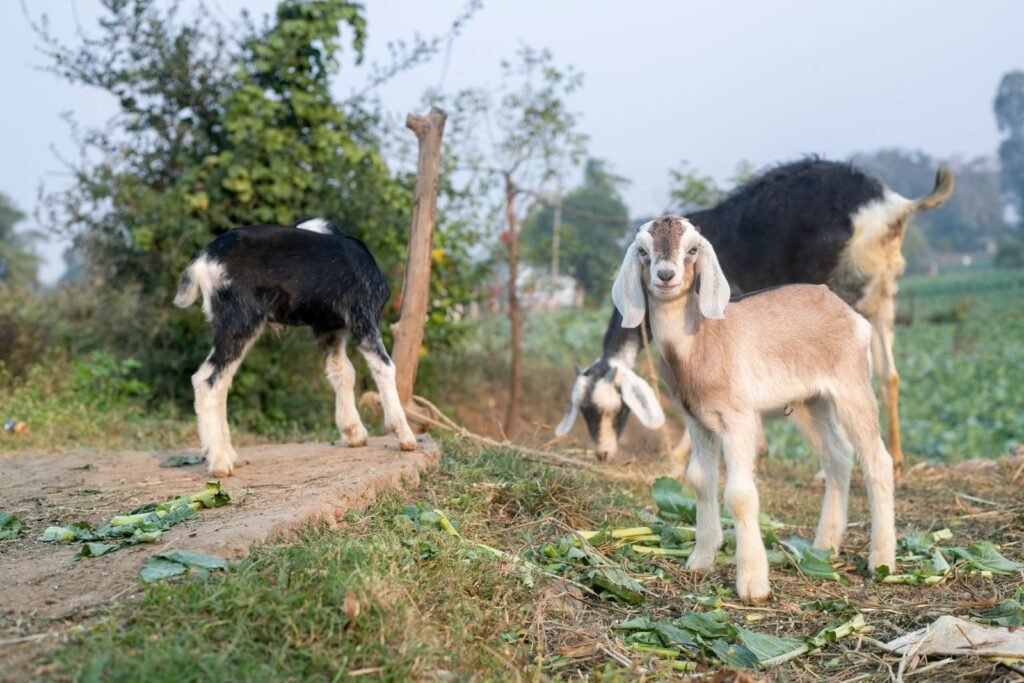
Goat farming suits small and landless farmers across India. Goats need little space, eat a wide range of plants, breed quickly and sell easily for meat, especially during festivals. A small flock can grow into a steady source of income. But goats also have specific needs, and many beginners lose animals to worms, PPR and poor housing. This guide covers the essentials for starting right.
In this article
Choosing a breed
Pick breeds that suit your climate and purpose. Popular Indian breeds include:
- Sirohi: hardy, from Rajasthan, good for meat, suits stall feeding and dry areas
- Marwari: hardy desert breed from Rajasthan, mainly meat
- Jamunapari: large breed with long ears, good for milk and meat, needs good feeding
- Beetal: from Punjab, good milk and meat, prolific
- Barbari: small, prolific, often twins, suits stall feeding and peri-urban farms
- Black Bengal: small, very prolific, excellent meat and skin quality, suits eastern India
- Osmanabadi: hardy meat breed from Maharashtra
Buy healthy animals from reliable breeders or government farms, and keep new animals separate for at least two weeks.
Housing
Goats hate wet floors and damp air, which cause pneumonia and foot rot.
- Build the shed on high, dry ground with good ventilation
- A raised slatted floor (about 3 to 4 feet off the ground) keeps goats dry and clean in wet regions
- Allow about 10 to 15 square feet per adult goat inside, plus space to move outdoors
- Separate areas for kids, pregnant does and the buck
- Protect against dogs and other predators at night
Feeding
Goats are browsers. They prefer leaves, shrubs and tree fodder over grass.
- Green fodder: tree leaves (such as subabul, neem, khejri, ber), legumes and grasses
- Dry fodder: good-quality hay or straw
- Concentrate: a grain-based mixture for growing kids, pregnant and milking does, and goats being fattened for sale
- Mineral mixture (a mineral supplement for livestock) and salt licks
- Clean water at all times
Change feed gradually. A sudden switch to rich feed or grain can cause enterotoxaemia (overeating disease) or bloat.
Avoid poisonous plants such as oleander (kaner), lantana and castor, and never feed mouldy fodder.
Breeding
- Does are usually bred at about 8 to 12 months of age, when they have reached good body weight
- Gestation is about 145 to 155 days (about 5 months)
- Many breeds give twins; some give triplets
- With good management, does can kid about three times in two years
- Keep one healthy buck for about 25 to 30 does, and replace or swap him every couple of years to avoid inbreeding
Kid care
- Make sure kids drink colostrum within the first hour of birth
- Dip the navel in antiseptic
- Keep kids warm, dry and protected from draughts
- Introduce soft green leaves and a little concentrate from about 2 weeks
- Wean at about 3 months
Vaccination
Common vaccines for goats in India include:
- PPR (peste des petits ruminants): the most important; kills many goats in unvaccinated flocks
- Enterotoxaemia (ET)
- Goat pox
- Foot-and-mouth disease (FMD), provided free under the national programme
- Haemorrhagic septicaemia (HS) in some areas
Your veterinary hospital will advise the age and frequency for each vaccine in your area.
Worms and deworming
Worms are the biggest health problem in goats. Watch for pale inner eyelids, bottle jaw, weight loss and diarrhoea. Deworm based on need, often before and after the monsoon, and ask your vet about dung tests and rotating grazing areas to slow resistance.
Other routine care
- Trim hooves every 4 to 8 weeks
- Check eyelid colour, body condition and droppings weekly
- Keep records of births, weights, vaccines, deworming and sales
Marketing
Goats sell well for meat, especially before festivals such as Eid. Plan breeding so kids reach market weight at the right time. Selling by weight rather than by guess usually gets a fairer price.
Loans and subsidies
The National Livestock Mission gives capital subsidy for sheep and goat breeding farms, and goat farmers can get a Kisan Credit Card for working capital. In Rajasthan, goats can be insured under the Mangla Pashu Bima Yojana.
Common mistakes beginners make
- Buying cheap animals from markets without a health check or quarantine
- Damp, crowded sheds that cause pneumonia and foot rot
- Skipping PPR and ET vaccines
- Deworming the whole flock blindly instead of checking eyelids and dosing by weight
- Relying only on grazing with no mineral mixture, then wondering why growth is slow
- Keeping no records of births, weights, treatments and sales
- Starting too big before learning the basics
Monthly care calendar for goats
| Month | Main tasks |
|---|---|
| January to February | Goat pox vaccine if due; protect kids from cold |
| March to April | Deworm if needed; plan sales around festivals |
| May | ET and HS vaccines before the monsoon; deworm; repair sheds |
| June to September | Keep sheds dry; watch for worms, foot rot and pneumonia; trim hooves |
| October | Deworm after the monsoon; tick and lice control |
| November to December | Plan breeding; check body condition |
| Every 6 months | FMD vaccine (free under the national programme) |
| Every 3 years | PPR vaccine, or during state campaigns |
See the full goat and sheep vaccination schedule.
🩺 Dr. Vaishnavi’s Clinical Picks (Available on Amazon India)
Useful basics for a new goat farm.
Goat farming basics in Hindi
Gives liquid dewormers and medicines by mouth without waste
Bottle-feed colostrum and milk to weak calves and kids
As an Amazon Associate, I earn from qualifying purchases. This costs you nothing extra.
Frequently asked questions
How many goats should a beginner start with?
A small unit of about 10 does and 1 buck is a common starting size. Many beginners start even smaller to learn before expanding.
Which goat breed is most profitable?
It depends on your area, market and feeding. Hardy breeds suited to your region usually do best; ask your veterinary officer or Krishi Vigyan Kendra.
How much space does a goat need?
About 10 to 15 square feet per adult goat inside the shed, plus space to move outdoors.
What is the most dangerous disease of goats?
PPR is one of the deadliest, so vaccinate every goat. Worms and enterotoxaemia also cause many deaths.
Can goats be raised with stall feeding?
Yes. Breeds such as Sirohi and Barbari suit stall feeding with cut fodder, tree leaves, concentrate and mineral mixture.
When should you call a vet?
Call your vet if goats have fever, discharge from the eyes and nose with diarrhoea (possible PPR), bloat, pale eyelids, sudden deaths or difficult kidding.
Recommended reading
- Dr. Vaishnavi’s animal-care books are available on her Amazon author page.
- See all titles on the Books page.
Related Articles
- PPR (Goat Plague) in Goats and Sheep: Symptoms, Care, and Free Vaccine
- Goat Vaccination and Deworming Schedule Chart for India
- NLM Goat Farming 50% Subsidy: How To Apply Online, DPR, and Bank Rules
References
- ICAR-Central Institute for Research on Goats, Makhdoom. Goat health management and vaccination calendar.
- Department of Animal Husbandry and Dairying, Government of India. National Livestock Mission: operational guidelines 2021-22 to 2025-26.
- World Organisation for Animal Health (WOAH). Peste des petits ruminants: technical disease card.
More on Goats and Sheep

Pneumonia in Goats and Kids: Symptoms, Treatment, and Winter Care
Pneumonia kills many goat kids in winter. Learn the early signs, treatment your vet may give, and simple housing steps to prevent…

PPR (Goat Plague) in Goats and Sheep: Symptoms, Care, and Free Vaccine
PPR spreads fast through goats and sheep. Learn the symptoms, how to care for sick animals, how to stop the spread and…